How to Style and Layer a Chili Pepper Necklace Perfectly
Learn how to style, layer, and care for a chili pepper necklace. Discover chain pairings, neckline matching, and material tips for this lucky charm.

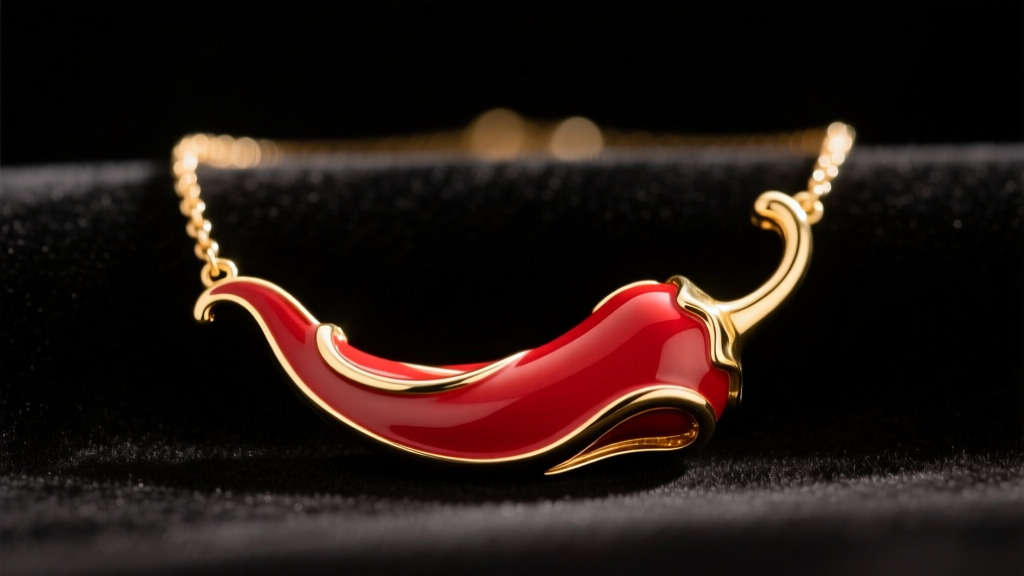
The peperoncino, or chili pepper necklace, is far more than a quirky botanical motif. Deeply rooted in Southern Italian folklore, this vibrant pendant is a potent symbol of luck, fertility, and protection against the malocchio (the evil eye). While often conflated with the traditional curved cornicello (Italian horn), the literal chili pepper shape has carved out its own niche in contemporary fine jewelry. In 2026, styling a chili pepper necklace requires balancing its bold, cultural significance with modern layering techniques. Whether you are wearing it as a protective talisman or a statement piece, understanding the material anatomy, chain mechanics, and proper care is essential for making this lucky charm work in your everyday rotation.
The Cultural and Material Anatomy of a Chili Pepper Necklace
Before layering, it is crucial to understand what you are wearing. The structural integrity of a chili pepper pendant dictates how it hangs, how it wears over time, and how it reacts to environmental factors. Most high-quality chili pepper necklaces are crafted in Italy, specifically in renowned jewelry hubs like Arezzo or Valenza, and feature distinct maker's marks (such as a star and a provincial code, e.g., '1 AR').
Decoding Metals: 14k vs. 18k Gold and Sterling Silver
The metal choice heavily influences the pendant's durability. According to the Gemological Institute of America (GIA), 14k gold (stamped 585) contains 58.5% pure gold, offering superior tensile strength. This makes 14k gold ideal for the delicate stems, caps, and bails of chili pepper pendants that endure daily friction. Conversely, 18k gold (stamped 750) provides a richer, warmer yellow hue but is significantly softer. If your 18k gold chili pepper exceeds 6 grams, the bail (the loop connecting the pendant to the chain) is prone to warping or thinning over 3 to 5 years of continuous wear due to chain friction. Sterling silver (925) is a popular, affordable alternative, but the crevices around the pepper's stem are highly susceptible to rapid tarnishing from skin acidity and sulfur exposure.
The Red Body: Enamel, Coral, and Resin
The iconic red hue of the chili pepper is achieved through three primary methods:
- Vitreous Enamel: Glass powder fused to metal at high temperatures. It is highly scratch-resistant and retains its glossy finish indefinitely, but it can shatter if subjected to blunt force or thermal shock.
- Mediterranean Coral: Carved natural coral offers deep cultural authenticity and a matte-to-satin luster. However, coral is porous (Mohs hardness of 3.5) and will dissolve if exposed to harsh chemicals or perfumes.
- Epoxy Resin: A modern, budget-friendly alternative. While vibrant, resin is prone to micro-scratches and will yellow or become brittle after prolonged UV exposure.
Step-by-Step: How to Layer Your Chili Pepper Pendant
Because of its distinct shape and vibrant color, a chili pepper necklace naturally demands attention. The key to layering it successfully is to build a structured, multi-length cascade that prevents the chains from tangling while allowing the pendant to remain the focal point.
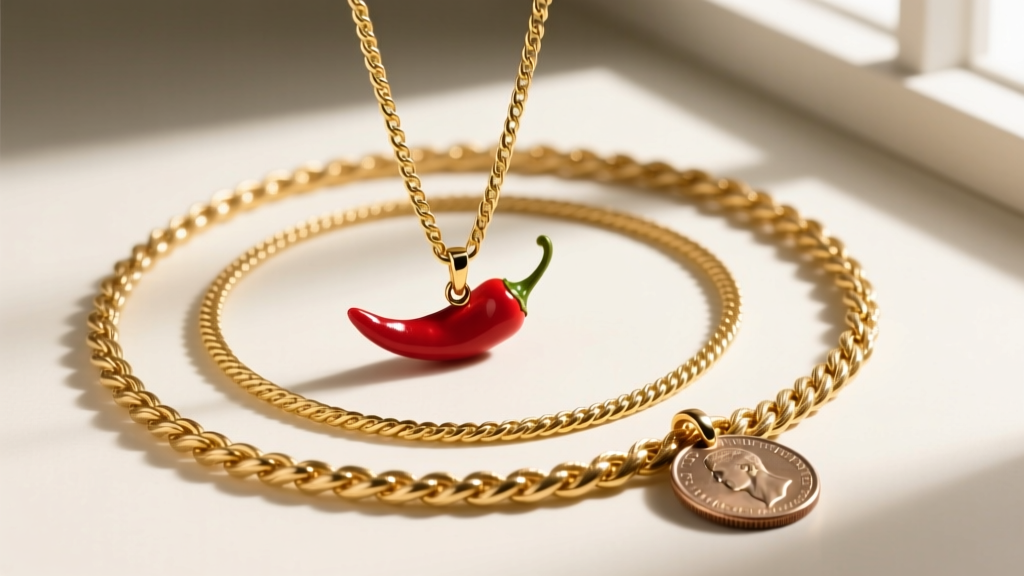
Step 1: Establish the 16-Inch Anchor Chain
Start with a 16-inch choker-length chain to frame the collarbone. Opt for a minimalist 1.2mm box chain or a delicate cable chain in the same metal tone as your chili pepper pendant. This chain should feature a small, understated clasp (like a 5mm lobster clasp) and no additional charms, serving purely as a structural base that draws the eye downward toward the focal piece.
Step 2: Position the 18-Inch Focal Point
Your chili pepper necklace should sit exactly at the 18-inch mark, resting on the upper sternum. For this layer, use a 2mm rope chain. The twisted, multi-link structure of a rope chain provides enough texture to grip the pendant's bail, preventing the chili pepper from sliding off-center or flipping upside down—a common failure mode when using smooth snake or herringbone chains. Ensure the jump ring connecting the pendant to the chain is at least 18-gauge to support the weight of the pepper without bending.
Step 3: Introduce 20-Inch Textural Contrast
To complete the trio, add a 20-inch or 22-inch chain featuring a heavier, textural link pattern, such as a 3mm Figaro, paperclip, or curb chain. This bottom layer adds visual weight and balances the bright red pop of the chili pepper pendant above it. If you wish to add a secondary charm to this bottom layer, choose something abstract or geometric (like a simple gold bead or a hammered disc) to avoid competing with the botanical theme of the pepper.
Matching Necklines with Chili Pepper Pendants
The visual impact of a chili pepper necklace changes drastically depending on the neckline of your garment. The pendant's length (typically ranging from 15mm to 30mm) must be matched to the negative space of your clothing.
| Neckline Type | Ideal Chain Length | Recommended Pendant Size | Styling Strategy |
|---|---|---|---|
| Crew Neck | 16 - 18 inches | 15mm - 20mm (Small) | Keep the pendant resting just below the collar seam. Avoid heavy layering to prevent a cluttered look against the high fabric line. |
| V-Neck | 18 - 20 inches | 20mm - 25mm (Medium) | Mirror the V-shape by allowing the chili pepper to sit precisely in the center of the neckline's plunge, acting as a natural terminus for the eye. |
| Scoop Neck | 16, 18, and 20 inches | Any (Layered) | The wide negative space of a scoop neck is the perfect canvas for the full three-chain layering technique detailed above. |
| Turtleneck | 22 - 24 inches | 25mm - 30mm (Large) | Wear a single, heavy chili pepper pendant on a long, thick rope chain over the dark fabric for a bold, high-contrast statement. |
Caring for Your Lucky Charm: Maintenance and Failure Modes
A chili pepper necklace is often worn daily as a protective amulet, meaning it is subjected to sweat, friction, and environmental pollutants. Proper maintenance is critical to avoid irreversible damage to the piece.
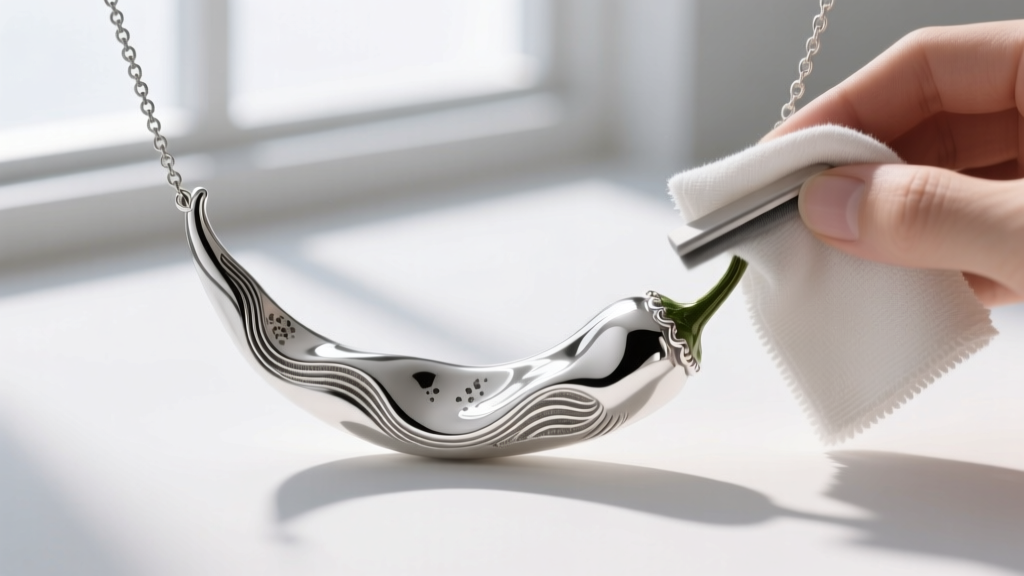
Avoiding Thermal and Chemical Shock
If your chili pepper features vitreous enamel or natural coral inlays, you must avoid ultrasonic cleaners and steamers. The high-frequency vibrations in ultrasonic baths will cause micro-fractures in the enamel, eventually leading to chipping. Similarly, thermal shock—such as jumping into a cold swimming pool while the metal pendant is heated by the summer sun—can cause the enamel to crack or pop off the gold base. The Jewelers of America recommends cleaning enameled and coral jewelry using only lukewarm water, a drop of mild, phosphate-free dish soap, and a soft baby toothbrush to gently dislodge debris from the stem crevices.
Monitoring Bail Wear and Jump Ring Integrity
The most common structural failure in heavy pendant necklaces is bail wear. Over time, the friction of the chain sawing back and forth through the gold bail can thin the metal until the pendant snaps off and is lost. Inspect the bail of your chili pepper necklace every six months. If the metal looks visibly grooved or paper-thin, take it to a jeweler to have a hardened steel or platinum sleeve soldered inside the bail, or replace the jump ring with a thicker 16-gauge alternative.
Expert Folklore Note: According to strict Neapolitan tradition, a chili pepper necklace or cornicello must be received as a gift to activate its protective properties against the malocchio. Purchasing one for yourself is said to dilute its luck. If you must buy it for yourself, folklore suggests having a friend 'gift' it to you in exchange for a coin to bypass this rule.
Final Thoughts on Sourcing and Styling
When shopping for an authentic chili pepper necklace, look beyond the aesthetic and scrutinize the craftsmanship. Check for clean, flush enamel lines without bubbling, ensure the stem is securely soldered (not merely glued), and verify the gold hallmarks. By treating this piece with the respect its cultural history demands and styling it with intentional, structured layering, your chili pepper necklace will serve as both a striking sartorial anchor and a lifelong protective companion.


