How to Style a Dangling Diamond Necklace: Layering & Care Guide
Master the art of wearing a dangling diamond necklace. Learn step-by-step layering techniques, anti-tangle rules, and expert care tips.


The Mechanics of the Drop: Understanding Your Necklace
A dangling diamond necklace is a cornerstone of fine jewelry, offering kinetic movement and brilliant light return that static pendants simply cannot match. However, the very mobility that makes a dangling drop so captivating also introduces mechanical challenges: tangling, flipping, and bail wear. To master the styling and maintenance of this specific silhouette, you must first understand its anatomy.
The critical component of any dangling diamond necklace is the bail—the finding that connects the pendant to the chain. For dangling drops, a standard loop bail often causes the diamond to slide too far down the chain, settling off-center. Conversely, a hidden bail (where the chain threads directly through a hollowed-out channel in the pendant's mounting) keeps the diamond anchored but restricts movement. The ideal compromise for a dangling piece is a V-bail or articulated drop bail, which features a hinged jump ring that allows the diamond to swing freely while maintaining a fixed position on the neckline.
Equally important is the chain gauge. A common mistake is pairing a heavy, multi-carat dangling drop with a flimsy 0.8mm cable chain. This creates a top-heavy pendulum effect that guarantees the necklace will flip upside down. For pendants weighing over 1.5 carats, upgrade to a 1.2mm to 1.5mm box or wheat chain. The structural rigidity of a box chain provides enough resistance to keep the bail centered without sacrificing the fluid drape required for a dangling silhouette.
Step-by-Step Layering Protocol to Prevent Tangling
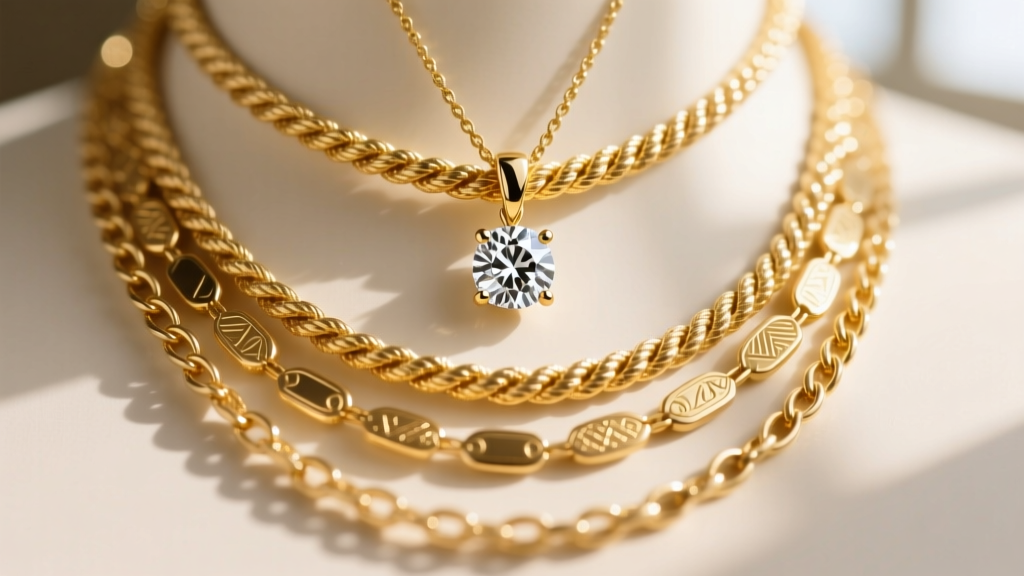
Layering a dangling diamond necklace requires strategic spacing. Because the dangling drop moves vertically and horizontally, it acts as a snare for adjacent chains if the spacing is incorrect. Follow this three-step protocol to achieve a curated, tangle-free stack.
Step 1: Establish the Base Anchor (14 to 16 Inches)
Start with a snug, non-dangling chain to anchor the stack. A 15-inch choker or collar necklace in a textured metal (like a herringbone or snake chain) sits flush against the collarbone. This provides a visual baseline and physically blocks the dangling pendant from sliding too high up the neck.
Step 2: Position the Dangling Diamond (18 Inches)
Your dangling diamond necklace should sit precisely in the middle of the stack. An 18-inch chain allows the pendant to rest in the sternal notch (the hollow at the base of the neck). Ensure the pendant's drop length does not exceed 1.5 inches; anything longer will encroach on the territory of the outer layer, creating friction points that lead to knotting.
Step 3: Add the Outer Perimeter (20 to 22 Inches)
The final layer must clear the dangling diamond by a minimum of two inches. If your diamond pendant drops down to 19.5 inches, your third chain must be at least 21.5 inches. Opt for a lightweight lariat or a simple station necklace with small, flush-set gems. Avoid adding a second dangling pendant to the outer layer, as two swinging weights will inevitably collide and tangle.
Neckline Pairing Matrix: Where Should the Diamond Fall?
The impact of a dangling diamond necklace is entirely dependent on how it interacts with the geometry of your clothing. A drop that flatters a V-neck will look cluttered on a crew neck. Use the matrix below to select the correct chain length and pendant carat weight for your outfit.
| Neckline Style | Ideal Chain Length | Pendant Drop Size | Carat Recommendation | Styling Notes |
|---|---|---|---|---|
| V-Neck / Plunge | 18 - 20 Inches | 1.0 - 1.5 Inches | 0.75ct - 1.50ct | Mirror the V-shape of the garment. The diamond should float exactly one inch above the fabric's lowest point. |
| Crew Neck | 16 - 18 Inches | 0.5 - 0.75 Inches | 0.25ct - 0.50ct | Keep the drop minimal to avoid looking heavy. The pendant should rest just below the collar rim. |
| Scoop Neck | 17 - 19 Inches | 0.75 - 1.0 Inches | 0.50ct - 1.00ct | Aim for the visual center of the exposed skin. A pear-shaped dangling drop works exceptionally well here. |
| Off-the-Shoulder | 14 - 16 Inches | 1.5 - 2.0 Inches | 1.00ct - 2.00ct | With a wide, exposed neckline, you can afford a dramatic, elongated dangling drop that acts as a solitary statement piece. |
Troubleshooting the "Flipping" Pendant
The most frequent complaint regarding a dangling diamond necklace is the pendant flipping upside down, hiding the diamond against the skin. This is a physics issue related to the center of gravity and the friction coefficient between the metal bail and the chain.
Why it happens: If the hole in the bail is significantly wider than the thickness of the chain, the pendant has too much lateral play. When you move, the chain slides through the bail, and the heavier bottom of the diamond pendant swings forward, flipping the piece upside down.
The Solutions:
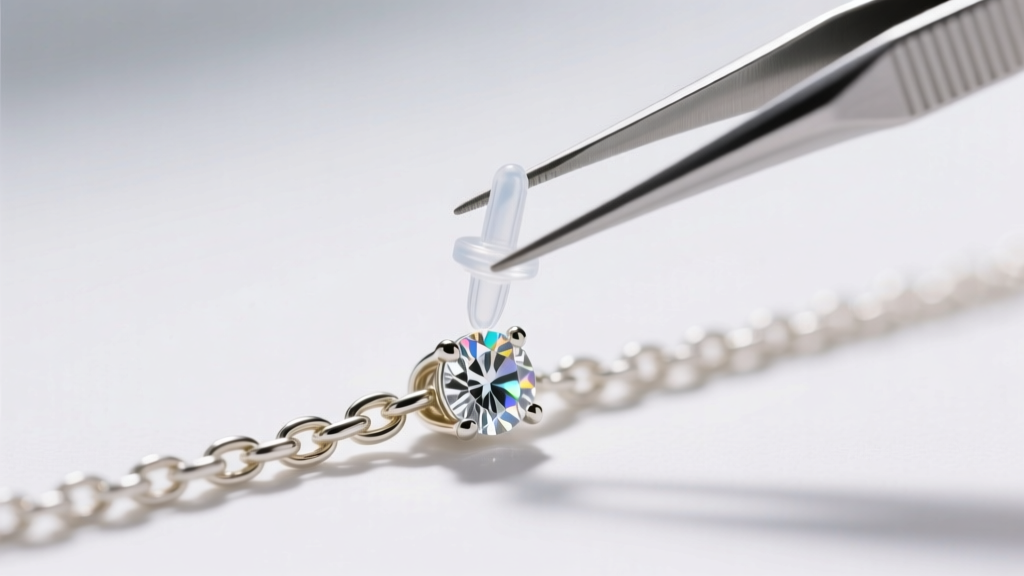
- The Silicone O-Ring Fix: For a quick, non-permanent solution, purchase jeweler's micro-silicone stoppers (often sold as necklace spacers). Slide one onto the chain on either side of the bail to restrict lateral movement. This forces the pendant to stay centered.
- The Soldered Jump Ring: Take the necklace to a bench jeweler and have them solder a small, fixed jump ring inside the bail. This reduces the inner diameter of the bail, gripping the chain more securely while still allowing the dangling drop to swing vertically.
- Chain Substitution: Switch from a rounded rope or cable chain to a flat box chain. The flat edges of a box chain create more surface friction against the inside of the bail, naturally resisting the sliding motion that causes flipping.
Safe Cleaning Routine for Dangling Settings
Dangling diamond necklaces, particularly those featuring halo settings or micro-pave bails, require meticulous cleaning protocols. Because the pendant moves constantly, it is subjected to more kinetic stress and skin-oil transfer than a static stud or ring.
According to the Gemological Institute of America (GIA), diamonds are lipophilic, meaning they readily attract and hold onto oils from your skin and cosmetics. A film of oil on the pavilion (the bottom of the diamond) will completely extinguish the stone's brilliance.
The Weekly Maintenance Protocol
- Prepare the Solution: Mix a few drops of mild, ammonia-free dish soap (like Dawn) into a bowl of warm, distilled water. Avoid harsh chemicals or chlorine, which can degrade the alloy metals in white gold settings.
- The Soak: Submerge the dangling necklace for 15 to 20 minutes. This softens the lipid buildup around the prongs and the bail hinge.
- Targeted Brushing: Using an extra-soft baby toothbrush, gently brush the underside of the dangling diamond. The pavilion is where 90% of the grime accumulates. Brush in small, circular motions, being careful not to catch the bristles on the micro-prongs of the bail.
- The Rinse and Dry: Rinse thoroughly under warm running water, ensuring the drain is securely plugged. Pat dry with a lint-free microfiber cloth. Do not air dry, as water spots will dull the metal.
Expert Warning on Ultrasonic Cleaners: While ultrasonic cleaners are excellent for solid metal jewelry, they pose a severe risk to dangling diamond necklaces with micro-pave bails or tension settings. The high-frequency vibrations can easily shake loose the tiny diamonds set into the bail or weaken the primary prongs holding the main drop. As advised by Jewelers of America, always default to manual, gentle cleaning for articulated and dangling fine jewelry pieces to preserve the structural integrity of the settings.
By understanding the mechanical nuances of the bail, adhering to strict layering spacing, and implementing a careful cleaning routine, your dangling diamond necklace will remain a flawless, brilliant focal point in your jewelry wardrobe for decades to come.


