How to Choose, Wear, and Maintain a Mens Padlock Necklace
Learn how to choose, style, and maintain a mens padlock necklace. Discover chain pairings, metal grades, and fit tips for any build.

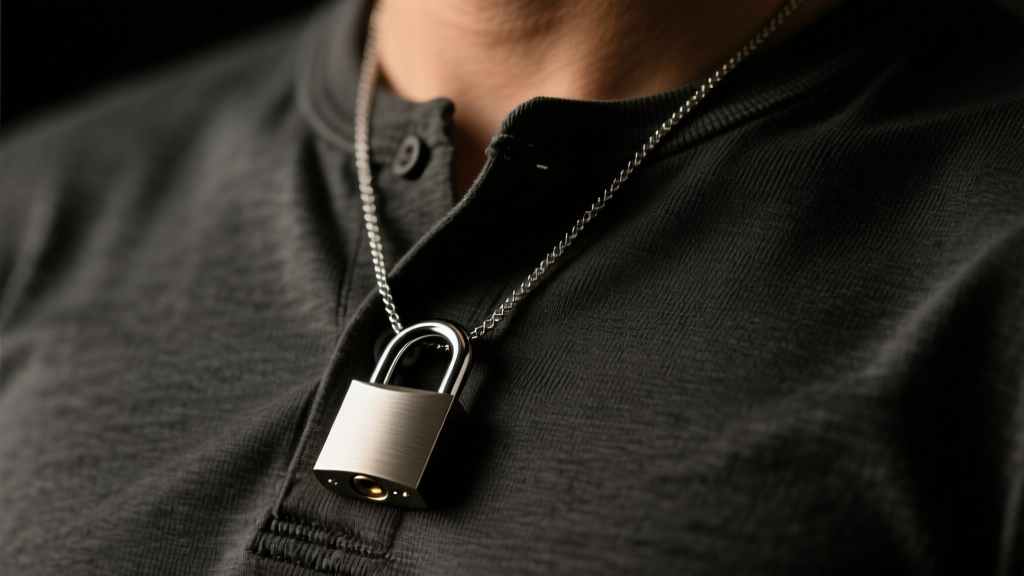
The Anatomy of a Hardware Staple
The hardware-inspired aesthetic has transcended its punk and skate origins to become a cornerstone of modern menswear. At the center of this movement is the mens padlock necklace—a piece that balances industrial grit with refined accessorizing. However, pulling off this look requires more than just buying the first heavy pendant you see. A poorly proportioned padlock on a flimsy chain will look cheap and fail structurally within months. To wear this piece with genuine authority, you need to understand metal grades, weight distribution, bail engineering, and drop lengths. This step-by-step guide will walk you through selecting, pairing, and maintaining a padlock pendant that elevates your wardrobe in 2026 and beyond.
Step 1: Selecting the Right Metal Grade and Finish
The longevity and skin-compatibility of your necklace depend entirely on its metallurgical composition. Many mass-market brands use zinc alloys with thin flash plating, which will oxidize and turn your skin green within weeks of exposure to sweat. According to the Gemological Institute of America (GIA), understanding metal purity and alloy compositions is critical for jewelry that withstands daily wear.
The Core Material Options
- 316L Surgical Stainless Steel: The undisputed king of everyday hardware. It contains molybdenum, which prevents pitting and corrosion from chlorides (like sweat and seawater). It is hypoallergenic, heavy, and highly affordable.
- 925 Sterling Silver: Composed of 92.5% pure silver and 7.5% copper. While it offers a brighter, more luxurious luster, the copper content means it will tarnish when exposed to sulfur and moisture. It requires regular polishing with a microfiber cloth.
- 14k Solid Gold: Containing 58.5% pure gold, 14k offers the perfect compromise between the rich color of pure gold and the tensile strength needed for heavy pendants. It will not tarnish and is an heirloom-grade investment.
PVD Coatings vs. Electroplating
If you want a black, gunmetal, or gold-toned padlock without paying solid gold prices, look for PVD (Physical Vapor Deposition) coatings. Unlike traditional electroplating, which dips metal into a chemical bath, PVD bonds the color at a molecular level in a vacuum chamber. A PVD-coated 316L steel padlock will resist scratching and fading up to ten times longer than standard plated alternatives.
| Material | Tarnish Resistance | Weight Profile | Average Price Range |
|---|---|---|---|
| 316L Stainless Steel | Excellent | Heavy / Dense | $45 - $120 |
| 925 Sterling Silver | Poor (Requires Care) | Medium | $150 - $350 |
| 14k Solid Yellow Gold | Excellent | Heavy / Premium | $800 - $2,500+ |
| Brass (Raw) | None (Patina Develops) | Very Heavy | $30 - $80 |
Step 2: Chain-to-Bail Engineering and Weight Ratios
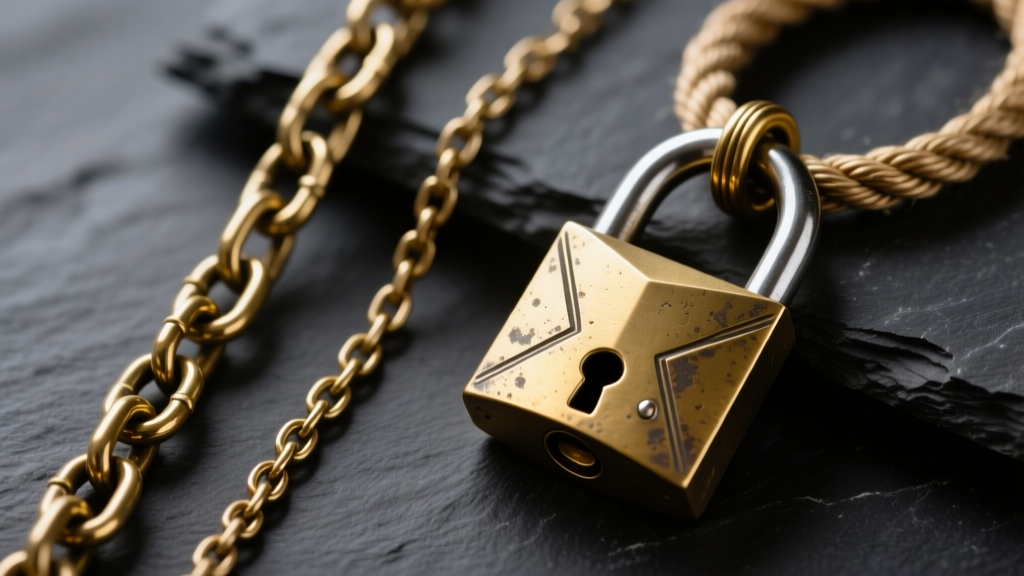
The most common failure point in a mens padlock necklace is not the chain snapping in half, but the bail (the loop at the top of the padlock) acting like a saw against the chain links. Heavy padlocks typically weigh between 15 and 35 grams. If paired with the wrong chain, the constant friction will wear through the metal over time.
Calculating the Bail Clearance
For a padlock to hang correctly and avoid binding, the inner diameter of the bail must be at least 1.5mm to 2mm wider than the thickness of your chain. If you are using a 5mm Cuban link chain, your padlock bail needs an inner opening of at least 7mm. If the fit is too tight, the chain will bunch up, causing severe friction and an unnatural, stiff drape.
Recommended Chain Pairings
- 4mm - 6mm Cuban Link: The gold standard for heavy padlocks. The flat, interlocking links distribute the pendant's weight evenly and resist kinking.
- 3mm - 4mm Figaro: Offers a more intricate, vintage pattern while maintaining high tensile strength. Excellent for medium-weight padlocks (15-20g).
- Avoid Thin Rope Chains: While rope chains look great, the twisted grooves act like a file against the inside of a heavy metal bail. If you must use a rope chain, ensure the padlock bail features a smooth, polished inner lining or a hidden ceramic insert.
"When styling heavy hardware, the chain should never compete with the pendant for attention. The chain is the structural suspension system; the padlock is the focal point." — Men's Style & Accessory Guidelines, GQ.
Step 3: Calibrating the Drop Length to Your Physique
A padlock necklace sits differently than a simple dog tag or a gemstone pendant. Because of its dense, bottom-heavy geometry, it pulls the chain downward into a sharper 'V' shape. Choosing the right length is critical for where the lock rests on your chest.
The Length Matrix
- 18 Inches (Choker/Collarbone): Generally too high for a heavy padlock unless you have a very slender build. It will sit awkwardly at the base of the throat and restrict movement.
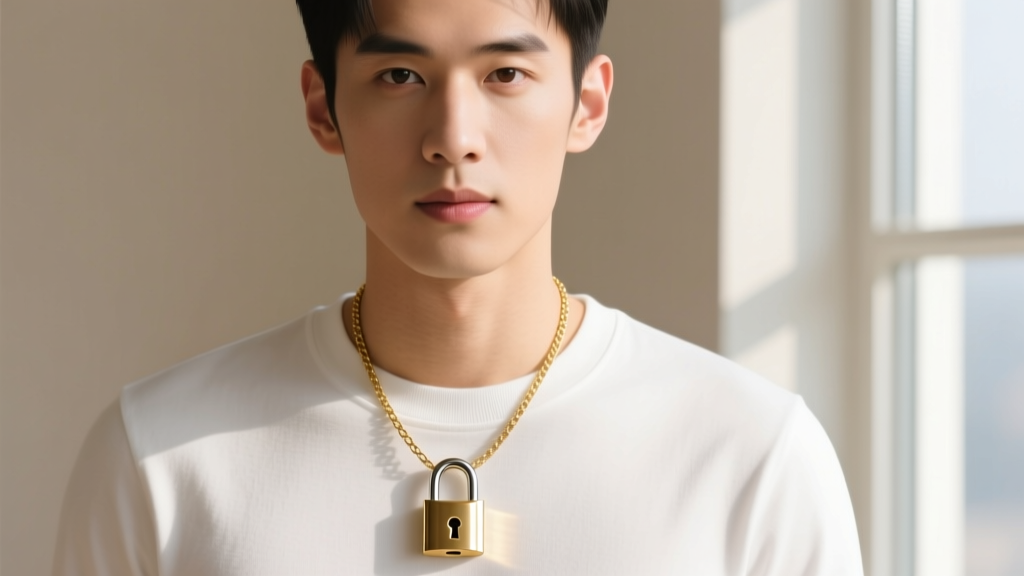
- 20 Inches (Standard/Collarbone Drop): The most versatile length. The padlock will rest just below the collarbone, making it visible above a crewneck t-shirt or peeking out from an unbuttoned Oxford shirt.
- 22 Inches (Upper Chest): Ideal for larger builds or broader chests. The padlock will rest on the upper pectoral line, offering a relaxed, streetwear-friendly silhouette.
- 24 to 26 Inches (Mid-Chest/Solar Plexus): Best reserved for layering over hoodies or longline tees. The heavy pendulum swing of a padlock at this length can be distracting if not styled intentionally.
Step 4: Maintenance and Clasp Troubleshooting
Hardware jewelry requires mechanical maintenance. The combination of dead skin cells, sebum, and environmental dust will accumulate inside the chain links and the padlock's keyhole or shackle mechanism, leading to a dull appearance and stiff clasps.
Deep Cleaning Protocol
Do not use harsh chemical dips or bleach on your jewelry. For 316L steel and solid gold, an ultrasonic jewelry cleaner filled with warm water and a few drops of mild dish soap will vibrate the microscopic debris out of the chain links in just three minutes. For oxidized sterling silver, use a dedicated silver polishing cloth to gently buff the high-polish areas while leaving the recessed areas dark for contrast.
Fixing Stiff Lobster Clasps
The lobster clasp is the most common closure for heavy chains, but the internal spring mechanism frequently seizes up due to sweat corrosion. If your clasp becomes difficult to pull back: 1. Rinse the clasp under warm tap water to remove salt buildup. 2. Apply a microscopic drop of synthetic watch oil (like Moebius 9010) to the hinge pin using a toothpick. 3. Work the lever back and forth to distribute the lubricant. 4. Wipe away any excess oil with a microfiber cloth to prevent dust attraction.
Scenario Guide: Dressing the Padlock Up or Down
The true test of a versatile accessory is its ability to cross sartorial boundaries. Here is how to integrate your mens padlock necklace into different wardrobe scenarios without looking out of place.
Streetwear and Casual
Pair a brushed steel or PVD black padlock on a 22-inch, 5mm Cuban link chain with a heavyweight vintage-wash graphic tee and a relaxed chore jacket. The raw, industrial finish of the metal complements the utilitarian nature of workwear fabrics like canvas and heavy denim.
Smart Casual and Evening
For a refined approach, opt for a high-polish 14k gold or rhodium-plated silver padlock with a minimalist, geometric design (avoiding overly aggressive 'biker' aesthetics). Wear it on a thinner 3mm Figaro chain at a 20-inch drop, allowing just the top of the shackle and chain to peek out from beneath an unbuttoned linen shirt or a fine-gauge merino wool sweater. The subtle flash of precious metal adds an edge to tailored menswear without overpowering the silhouette.


