How to Style, Source, and Authenticate a Vietnamese Necklace
Learn how to style, source, and authenticate a Vietnamese necklace. Expert tips on 24K gold, jade grading, and pairing with traditional Ao Dai necklines.

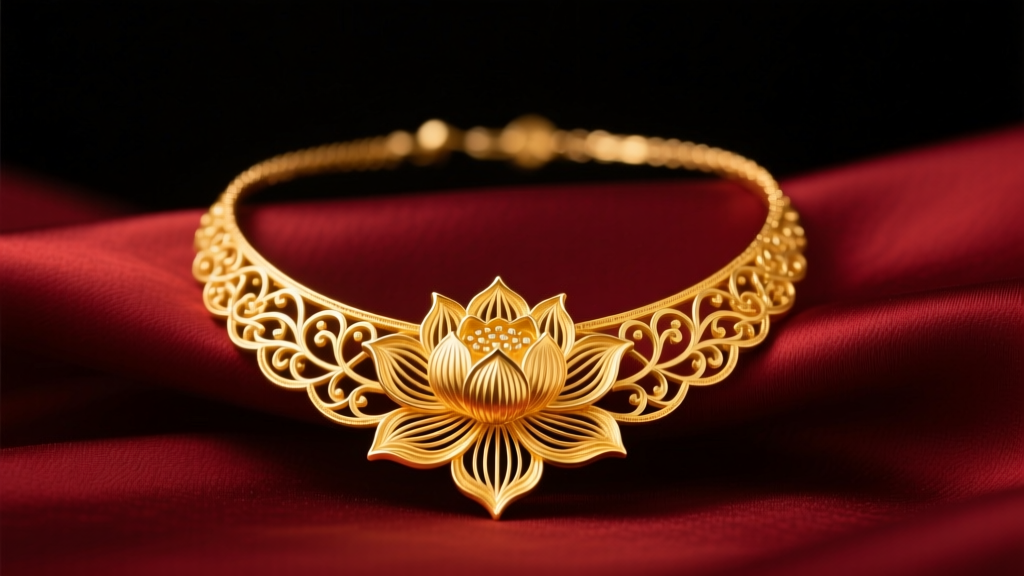
The term Vietnamese necklace encompasses a rich spectrum of jewelry, from ancient Dong Son bronze artifacts to the exquisite 24-karat gold filigree and imperial jadeite pieces worn at modern weddings. Whether you are sourcing an heirloom piece in Ho Chi Minh City, inheriting a family treasure, or looking to integrate traditional Vietnamese motifs into your everyday wardrobe, understanding the metallurgy, gemology, and cultural styling rules is essential.
This comprehensive, step-by-step guide will walk you through the exact specifications of Vietnamese gold and jade, how to verify authenticity using local hallmarks, and the precise styling mechanics required to pair these necklaces with both traditional and contemporary attire.
Step 1: Decoding Vietnamese Gold and Jade Standards
Before purchasing or styling a Vietnamese necklace, you must understand the unique material standards favored in Vietnamese jewelry making. Unlike Western markets that predominantly use 14K or 18K gold, traditional Vietnamese fine jewelry heavily favors high-purity gold and untreated jadeite.
The Vietnamese Gold Weight System
In Vietnam, gold is rarely discussed in grams or ounces for jewelry; it is measured in Lượng (taels) and Chỉ. This is critical knowledge when evaluating the weight and value of a heavy traditional Vietnamese wedding necklace.
- 1 Lượng (Tael) = 10 Chỉ = 37.5 grams of pure gold.
- 1 Chỉ = 3.75 grams.
- Vàng 9999 (24K Gold): Translating to 99.99% pure gold, this is the standard for investment and traditional bridal necklaces. It has a distinct, rich yellow hue but is highly malleable (Mohs hardness of 2.5 to 3), making it prone to scratching and bending.
- Vàng 750 (18K Gold): Used primarily for everyday wear, intricate filigree, and diamond or gemstone settings where structural integrity is required.
Jadeite (Ngọc Cẩm Thạch) Grading
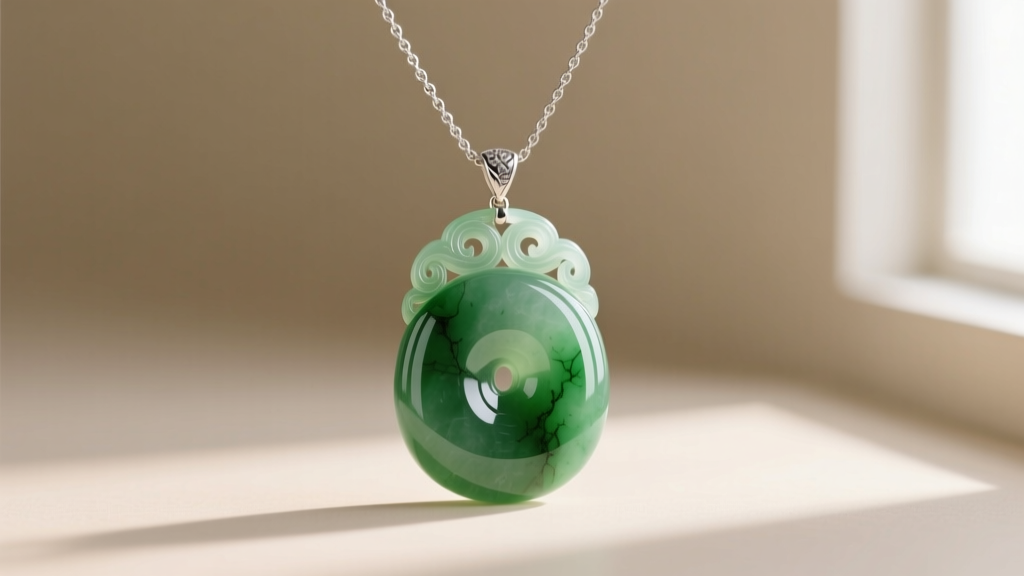
According to the Gemological Institute of America (GIA), jadeite is evaluated on color, transparency, and texture. High-end Vietnamese necklaces almost exclusively use Type A (untreated) Burmese jadeite. Type B (acid-bleached and polymer-impregnated) and Type C (dyed) jade are common in tourist markets and hold virtually no long-term value.
Step 2: How to Authenticate Your Vietnamese Necklace
Counterfeiting is a significant issue in high-karat gold and imperial jade markets. Authenticating a Vietnamese necklace requires looking for specific domestic hallmarks and understanding the testing protocols used by local jewelers.
Recognizing Domestic Hallmarks
Reputable Vietnamese jewelers stamp their gold pieces with specific purity marks and brand logos. When inspecting the clasp or the inner curve of a rigid torc-style necklace, look for these major brand stamps:
| Brand Abbreviation | Full Name | Common Purity Stamps | Specialty |
|---|---|---|---|
| SJC | Saigon Jewelry Company | 999.9, 18K, 750 | Gold bullion and heavy traditional bridal sets |
| PNJ | Phu Nhuan Jewelry | PNJ 18K, PNJ 24K | Modern designer collections and gemstone settings |
| DOJI | DOJI Group | DOJI 9999, 14K | Diamond integration and contemporary gold chains |
| BTMC | Bao Tin Minh Chau | BTMC 999.9 | Heritage pieces and Northern Vietnamese styles |
For a complete verification of a brand's current hallmarking standards, you can cross-reference with official domestic registries like PNJ's official portal or SJC. If a piece lacks a hallmark, insist on an X-ray fluorescence (XRF) spectrometer test, which is standard practice in any reputable jewelry district like Ben Thanh Market's surrounding gold lanes.
Step 3: Matching Necklines to the Áo Dài
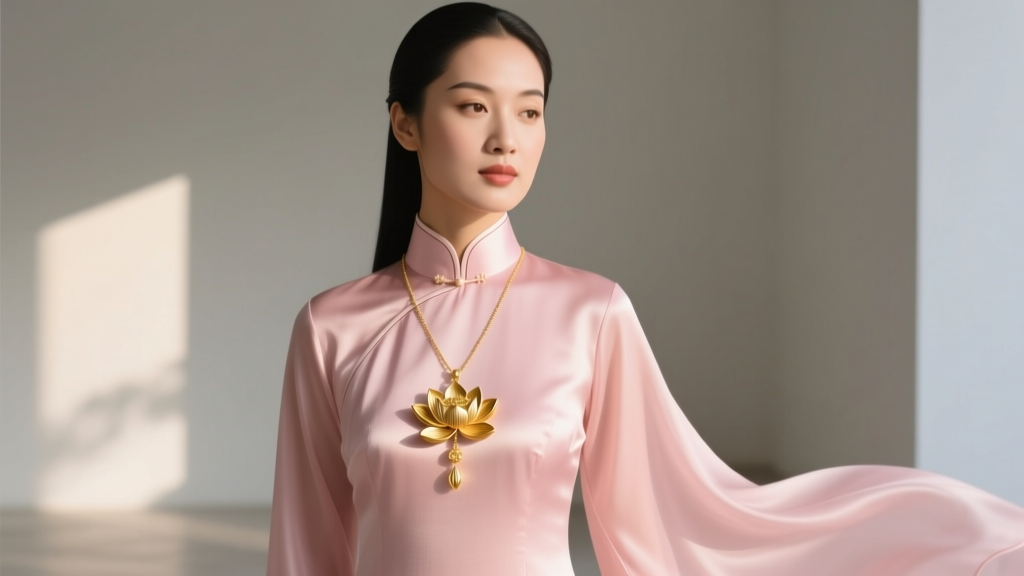
The Áo Dài is Vietnam's national garment, and its specific tailoring dictates strict rules for necklace lengths and pendant drops. A poorly proportioned Vietnamese necklace will either choke the wearer or get lost in the silk folds.
The Traditional Mandarin Collar (Cổ Đứng)
The classic Áo Dài features a high, stiff mandarin collar that closes tightly at the throat.
- Optimal Length: 16 inches (Choker) or 18 inches (Princess).
- Pendant Style: Avoid long, dangling drops. Opt for a flat, smooth cabochon jade pendant or a flush-set 18K gold lotus (Hoa Sen) motif that rests exactly at the hollow of the clavicle.
- Chain Gauge: A delicate 1.0mm to 1.2mm box chain ensures the jewelry complements the silk without competing with the intricate fabric embroidery.
The Modern Boat Neck (Cổ Thuyền)
Contemporary Áo Dài designs often feature open boat necks or sweetheart necklines, exposing more of the chest.
- Optimal Length: 20 to 24 inches (Matinee length).
- Pendant Style: This is the ideal canvas for a heavier, multi-strand jade bead necklace or a substantial 24K gold filigree pendant weighing 5 to 10 Chỉ (18.75g to 37.5g).
Step 4: Modern Layering Techniques for Everyday Wear
You do not need to wear traditional dress to showcase a Vietnamese necklace. Integrating heritage pieces into a modern, Western wardrobe requires a strategic approach to layering and metal mixing.
The Jade and Gold Mix
A single strand of 8mm jadeite beads can feel dated if worn alone. To modernize the look, use the Rule of Three:
- Base Layer: A 14-inch, 1.5mm 18K yellow gold rope chain worn tight against the collarbone.
- Mid Layer: An 18-inch 18K gold snake chain holding a small (10mm) carved jadeite lotus or bamboo pendant.
- Statement Layer: A 24-inch strand of 6mm graduated jadeite beads.
Stylist Note: When layering jade with gold, always match the undertones. Imperial green jadeite pairs best with rich 22K or 24K yellow gold, while lavender or icy white jadeite looks exceptionally striking against 18K white gold or platinum chains.
Step 5: Maintenance and Storage Protocols
Proper care ensures your Vietnamese necklace retains both its financial and sentimental value across generations. The physical properties of high-karat gold and jadeite require specific handling.
Caring for Vàng 9999 (24K Gold)
Because 24K gold is nearly pure, it lacks the alloyed metals (like copper or zinc) that provide hardness. A heavy 3-Lượng bridal necklace will easily warp if hung on a standard jewelry hook.
- Storage: Always store heavy 24K gold necklaces flat in a velvet-lined, rigid box. Never hang them, as gravity will stretch the softer links over time.
- Cleaning: Use only a microfiber cloth and warm water with a drop of pH-neutral dish soap. Avoid commercial jewelry dips, which can dull the high-polish finish specific to Vietnamese goldsmithing.
Caring for Type A Jadeite
Jadeite possesses exceptional toughness due to its interlocking crystalline structure, making it resistant to shattering. However, it is vulnerable to thermal shock and harsh chemicals.
- Ultrasonic Warning: Never place a jadeite pendant in an ultrasonic cleaner. Even Type A jade can have microscopic, surface-reaching fissures that will expand and fracture under high-frequency vibrations.
- Hydration: Jadeite can dry out and lose its translucency if kept in arid environments (like a safety deposit box) for years. Lightly wipe the beads with a damp cloth and a microscopic amount of mineral oil once a year to maintain their luster.
Final Thoughts on Sourcing
Acquiring an authentic Vietnamese necklace is an investment in both metallurgy and cultural artistry. By understanding the Lượng weight system, demanding verifiable hallmarks from established houses like PNJ and SJC, and respecting the structural nuances of high-karat gold and Type A jadeite, you can confidently source, style, and preserve these magnificent pieces for decades to come.


