Master How to Wear Layered Necklaces: The Ultimate Proportion Guide
Learn exactly how to wear layered necklaces without tangling. Discover ideal chain lengths, metal pairings, and clasp types for a flawless stack.


Mastering the art of the necklace stack is less about randomly draping chains and more about understanding structural geometry, weight distribution, and metallurgy. When you learn how to wear layered necklaces with intentional proportion, you eliminate the most common frustration: friction tangling. A curated stack should move as a cohesive unit, highlighting the neckline without twisting into a metallic knot. This buying guide breaks down the exact measurements, chain weaves, and hardware specifications you need to build a flawless, tangle-free layered necklace collection in 2026.
The Mathematics of Layering: Length and Drop
The foundation of any successful stack is the differential in drop length. The most common mistake buyers make is purchasing chains with only a half-inch or one-inch variance. When chains are too close in length, their links constantly rub against one another, creating friction that inevitably leads to tangling. According to styling standards endorsed by Jewelers of America, a minimum two-inch gap between layers is required to allow each chain to drape independently and follow the natural contour of the chest.
| Stack Type | Layer 1 (Base) | Layer 2 (Mid) | Layer 3 (Drop) | Visual Effect |
|---|---|---|---|---|
| The Everyday Trio | 15 inches | 17 inches | 20 inches | Elongating, rests on the sternum |
| The High-Neck Stack | 14 inches | 16 inches | 18 inches | Tight, sits above the collarbone |
| The Deep-V Statement | 16 inches | 18 inches | 24 inches | Dramatic, draws the eye downward |
When shopping, always verify the exact millimeter width and gram weight of the chain. A 16-inch chain meant for layering should ideally weigh between 2.5 and 4.0 grams. Anything heavier will drag the lighter layers upward, ruining the visual cascade.
Chain Profiles and Weight Distribution
Understanding chain weaves is critical when figuring out how to wear layered necklaces without them catching on each other. Chains tangle when their links are of similar size and geometry, allowing them to interlock like gears. To prevent this, you must mix chain profiles.
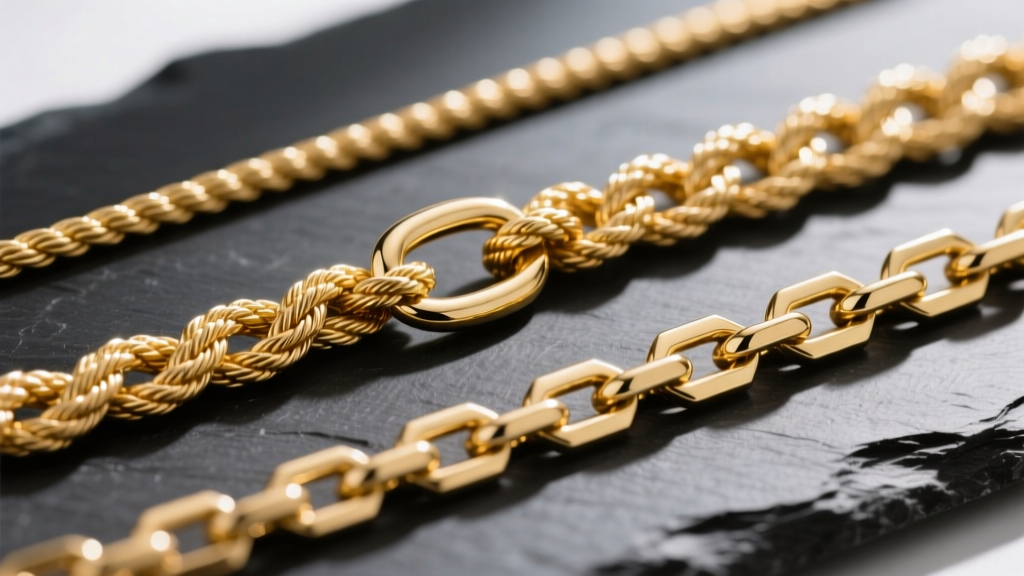
The Anti-Tangle Weave Formula
- Layer 1 (14"-15"): Delicate Cable or Wheat. These feature small, uniform links that sit flat against the skin. Keep the width under 1.5mm and the weight under 3 grams.
- Layer 2 (16"-18"): Textured Rope or Figaro. The twisted geometry of a rope chain or the alternating link sizes of a Figaro create a physical barrier that prevents adjacent chains from slipping into the links of the base layer. Aim for a 2.0mm to 3.0mm width (4-7 grams).
- Layer 3 (20"+): Box or Mariner. Geometric chains like the box chain have rigid, squared links that do not easily fold or interlock with rounder weaves. This layer should carry the visual weight, ranging from 3.5mm to 5.0mm (8-15 grams), often anchoring a pendant.
Preventing Tangles: Hardware and Clasp Solutions
The clasp is the most overlooked component in a layered stack. Standard spring-ring clasps are notoriously unreliable for layering; their internal tension springs weaken when subjected to the multi-directional pull of a stack, leading to accidental unfastening and severe knotting at the nape of the neck.
"Always upgrade your base layers to lobster clasps or magnetic neodymium closures. The structural integrity of the clasp dictates the lifespan of the chain's alignment." — Master Jeweler Bench Notes, 2025
For those wearing three or more chains, investing in a multi-strand spacer clasp is a game-changer. These tube or bar clasps feature multiple loops that lock the chains in place at the back of the neck, ensuring they maintain their two-inch spacing and never cross over one another at the clasp point. Alternatively, threading a small silicone O-ring (often sold as necklace spacers) onto the chains before clasping them together will force the chains to hang parallel.
Metal Mixology: Pairing Karats and Finishes
Mixing metals is a hallmark of modern styling, but it requires an understanding of metallurgical hardness and color temperature. According to the Gemological Institute of America (GIA), the alloy composition of gold drastically affects its color and durability. 18k yellow gold (75% pure gold) has a rich, buttery hue but is softer and more prone to scratching. 14k gold (58.5% pure gold) is harder and has a slightly paler yellow tone.
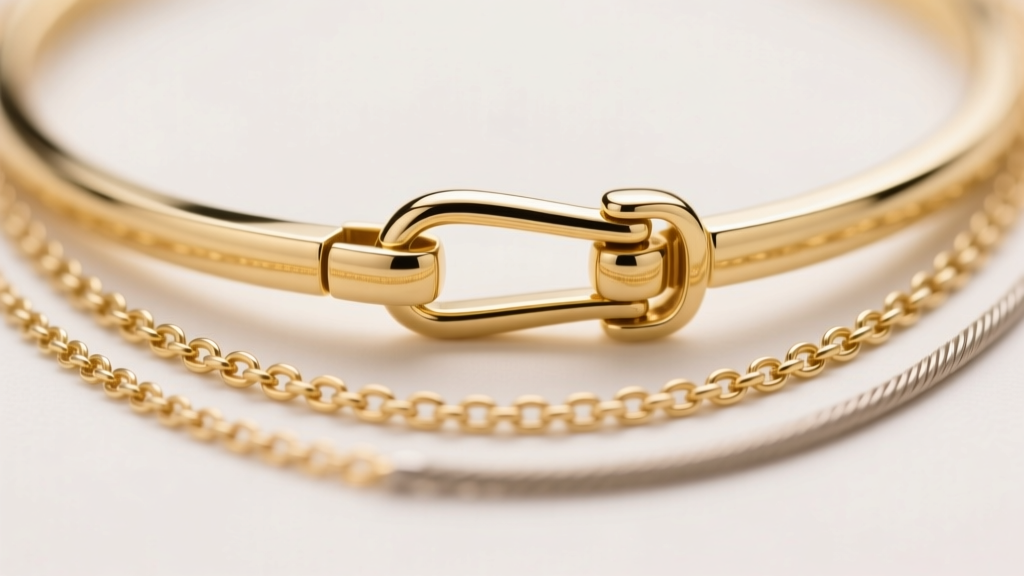
The 70/30 Rule for Mixed Metals
When combining silver and gold in a single stack, avoid a 50/50 split, which can look accidental. Instead, apply the 70/30 rule. Let one metal dominate 70% of the visual weight (e.g., two yellow gold chains) and use the secondary metal (e.g., one white gold or sterling silver chain) as a 30% accent. This creates deliberate contrast rather than visual confusion. If mixing finishes, pair a high-polish base chain with a matte or brushed mid-chain to catch the light at different intervals.
Neckline Pairings for Layered Stacks
The architecture of your clothing dictates the optimal stack configuration. Here is how to adapt your layers to specific necklines:
- The Crew Neck: Requires a high, tight stack (14", 16", 18") that sits entirely above the fabric line. Use a statement pendant on the 18" layer to bridge the gap between skin and fabric.
- The V-Neck: Mimic the geometry of the shirt. Use a cascading trio (16", 18", 22") where the final layer features a vertical drop pendant (like a bar or teardrop) that parallels the V of the neckline.
- The Button-Down (Unbuttoned): Opt for medium-length chains (17", 19", 21") that rest directly on the collarbone and upper chest. Avoid overly delicate chains, as they will get lost in the folds of the cotton fabric; stick to 3mm+ widths.
Final Thoughts on Building Your Stack
Learning how to wear layered necklaces is an exercise in precision. By respecting the two-inch drop rule, intentionally mixing chain weaves to eliminate friction, and upgrading your hardware to lobster or magnetic spacers, you transform a chaotic jumble of metal into a sophisticated, engineered accessory. When shopping for your next piece, look beyond the pendant and scrutinize the link geometry and gram weight—it is the structural foundation that will make or break your stack.


