I Love You Necklace 100 Languages: Material Guide 2026
Discover how projection stones and metal alloys impact the I love you necklace 100 languages. Compare glass, resin, silver, and titanium.

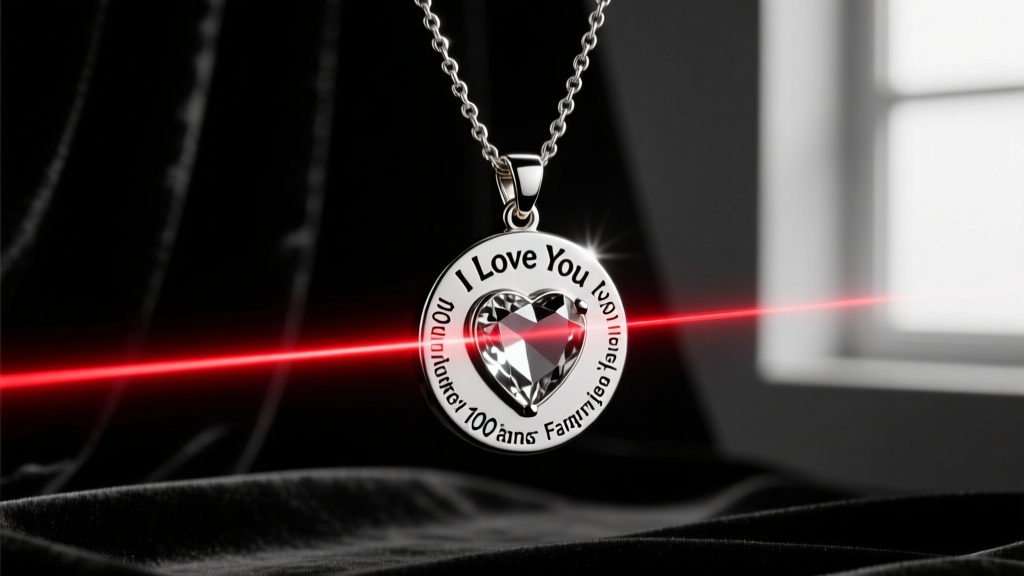
The viral I love you necklace 100 languages has evolved from a novelty gift into a sophisticated piece of sentimental jewelry. At its core, this pendant relies on a precise intersection of micro-laser engraving and optical physics. However, as the market has saturated in 2026, the disparity in material quality has become glaringly obvious. A projection necklace crafted from synthetic resin and base metals will degrade within months, while one utilizing optical glass and Grade 23 titanium will last a lifetime. Understanding the material properties of both the projection bead and the metal housing is critical for ensuring optical clarity, skin safety, and long-term durability.
The Physics of Micro-Laser Engraving
Before comparing materials, it is essential to understand how the projection works. The '100 languages' text is not printed; it is micro-laser etched onto the flat posterior surface of a domed cabochon bead. The etched grooves are typically between 100 and 200 microns wide. When a point light source (such as a smartphone flashlight) is directed through the flat back, the domed front acts as a convex lens. The light refracts through the material, magnifying and projecting the etched shadows onto a flat surface. The Gemological Institute of America (GIA) notes that a material's refractive index (RI) directly dictates the sharpness and brightness of this projection. If the material has a low RI or internal inclusions, the projected text will appear blurry or distorted.
The Projection Bead: Optical Glass vs. Synthetic Resin vs. Sapphire
The central stone is the engine of the necklace. Manufacturers primarily use three materials for the projection bead, each with vastly different physical properties.
1. Synthetic Resin (The Budget Option)
Mass-market versions often use cast synthetic resin. While resin can be molded into perfect domes cheaply, it ranks a mere 2 to 3 on the Mohs hardness scale. This means everyday dust (which contains quartz, Mohs 7) will micro-scratch the surface, diffusing the light and ruining the projection within weeks. Furthermore, resin is highly susceptible to UV degradation, causing it to yellow and become opaque over time.
2. Optical Glass (The Industry Standard)
High-quality borosilicate or optical glass is the standard for reputable jewelers. Ranking between 5 and 6 on the Mohs scale, it resists everyday scratching. More importantly, optical glass offers a consistent refractive index of approximately 1.52, ensuring that the 'I love you' message projects sharply up to 10 feet away in a dark room.
3. Lab-Grown Sapphire (The Premium Choice)
In 2026, luxury iterations of the I love you necklace 100 languages feature lab-grown sapphire beads. Sapphire ranks a 9 on the Mohs scale, making it virtually scratch-proof. With a refractive index of 1.76 to 1.77, sapphire bends light more aggressively than glass, resulting in a significantly brighter, higher-contrast projection.
| Material | Mohs Hardness | Refractive Index (RI) | UV Resistance | Typical Price Range |
|---|---|---|---|---|
| Synthetic Resin | 2.0 - 3.0 | 1.49 - 1.50 | Poor (Yellows) | $10 - $25 |
| Optical Glass | 5.0 - 6.0 | 1.52 | Excellent | $35 - $80 |
| Lab-Grown Sapphire | 9.0 | 1.76 - 1.77 | Excellent | $120 - $300+ |
Metal Housing: Setting the Stage for the Light
The bezel or prong setting that holds the projection bead must secure the stone without obstructing the light path. The metal choice also dictates the necklace's hypoallergenic properties and tarnish resistance.
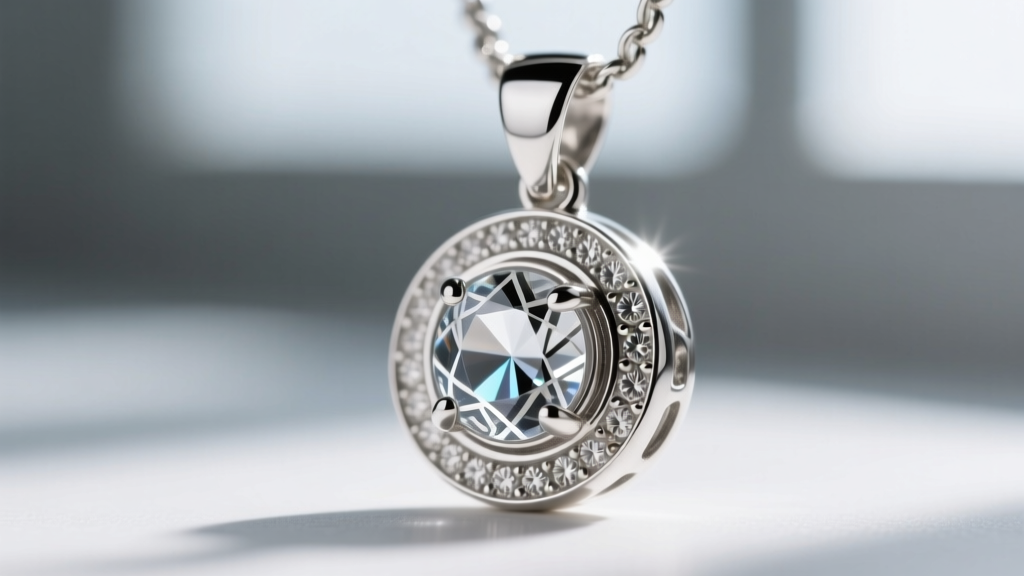
925 Sterling Silver and Rhodium Plating
Sterling silver (92.5% silver, 7.5% copper) is the most common housing material. However, the copper content makes it prone to oxidation and tarnishing, which can dull the pendant's exterior. To combat this, premium 2026 models are plated with a 0.5 to 1.0-micron layer of rhodium. Rhodium not only provides a brilliant, platinum-like finish but also acts as a barrier against sulfur compounds in the air that cause silver to blacken.
316L Surgical Stainless Steel
Stainless steel is highly durable, scratch-resistant, and will not tarnish. However, 316L steel contains 8% to 10.5% nickel. According to the American Academy of Dermatology (AAD), nickel is the leading cause of allergic contact dermatitis. While many people can wear 316L steel without issue, those with known nickel sensitivities should avoid it, as sweat can accelerate nickel ion leaching from the alloy.
Grade 23 Titanium (Ti6Al4V)
For the ultimate combination of lightweight comfort and biocompatibility, aerospace-grade titanium is unmatched. It is 100% hypoallergenic, highly resistant to corrosion, and possesses a high strength-to-weight ratio. Titanium housings are often finished with a brushed or matte texture, which provides a modern, masculine aesthetic that contrasts beautifully with the bright optical bead.
Chain Gauge and Clasp Mechanics
The pendant housing and glass bead typically weigh between 4 and 8 grams. A flimsy chain will snap under this weight or cause the pendant to hang at an awkward angle, disrupting the projection alignment.
- Optimal Gauge: Look for chain thicknesses between 1.0mm and 1.5mm. Anything under 0.8mm is too fragile for daily wear with a heavy glass pendant.
- Chain Style: Box chains and rope chains offer superior structural integrity compared to standard cable chains. Their interlocking geometric links distribute weight evenly and resist kinking.
- Clasp Hardware: Avoid spring-ring clasps, which are difficult to operate and prone to internal spring failure. A solid lobster clasp with a soldered jump ring is the industry standard for secure retention.
Verifying the Projection and Authenticity
When you receive your necklace, you must verify the optical clarity of the micro-engraving. The most effective method is the smartphone camera test. Turn on your phone's flashlight, place the flat back of the bead directly against the lens, and point the beam at a white wall in a dark room.
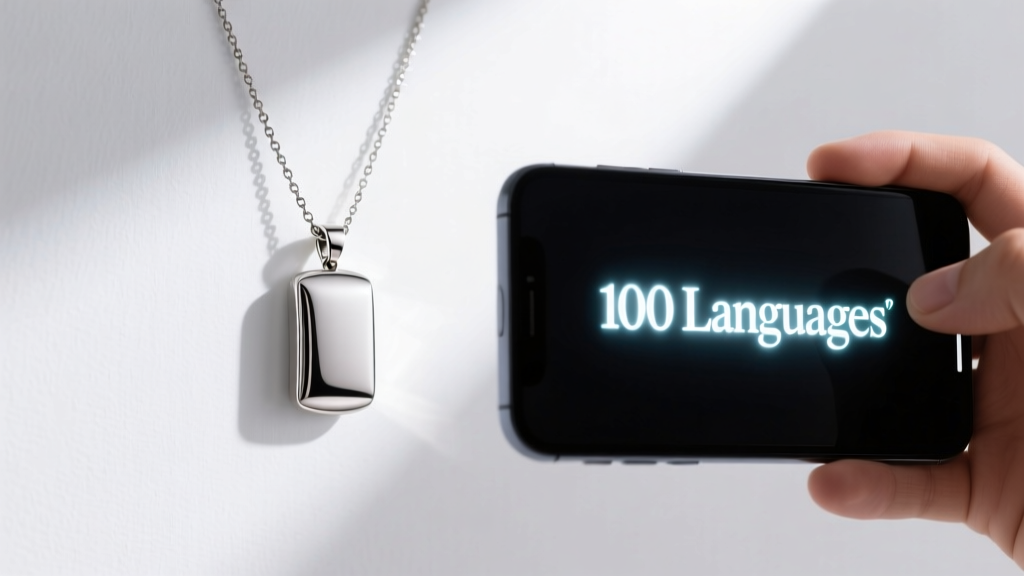
You should see a crisp, legible projection of the text. If the text appears as a smeared ring of light, the bead is likely cheap resin with a poorly calibrated dome curvature, or the laser etching lacked sufficient depth. High-quality optical glass will project sharp, distinct letters even at a distance of 15 feet.
Care and Maintenance for Optical Clarity
Maintaining an I love you necklace 100 languages requires specific cleaning protocols to protect both the metal and the optical bead.
Expert Warning: Never use ultrasonic jewelry cleaners on resin projection beads. The high-frequency vibrations will shatter the internal micro-etching or cause the resin to fracture. Ultrasonic cleaners are safe for optical glass and sapphire beads set in solid silver or titanium.
For routine cleaning, use a few drops of mild, phosphate-free dish soap in warm water. Gently scrub the metal housing with a soft-bristled baby toothbrush. To clean the projection bead, use a dedicated microfiber optical cloth—never paper towels or tissues, as the wood pulp fibers will induce micro-scratches on glass and severe scratches on resin. Store the necklace in an anti-tarnish flannel pouch to prevent the silver housing from oxidizing and to protect the bead from impact damage.
By prioritizing optical glass or sapphire beads, selecting hypoallergenic metals like rhodium-plated silver or titanium, and adhering to strict optical cleaning protocols, your projection necklace will remain a brilliant, legible testament to your affection for decades to come.


