Indian Necklaces Buying Guide: Value & Budget Tips 2026
Discover how to evaluate Indian necklaces in 2026. Learn to assess gold purity, decode making charges, and spot fake Polki to maximize your jewelry budget.

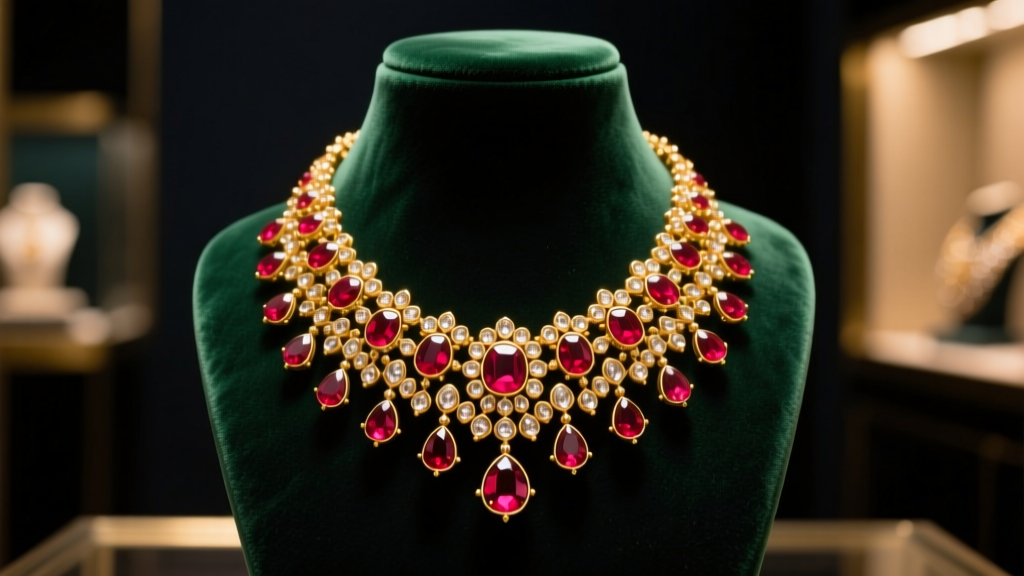
Investing in traditional Indian necklaces is a complex financial and aesthetic endeavor. As we navigate the 2026 market, surging precious metal prices and an influx of mass-produced imitations have made it increasingly difficult to distinguish genuine heirloom value from overpriced costume jewelry. Whether you are evaluating a heavy 22k gold Temple necklace or a delicate Polki choker, understanding the underlying economics of Indian jewelry is non-negotiable. This guide breaks down material grades, labor metrics, and structural red flags to ensure your budget translates into lasting value.
Understanding the Core Styles & Their Baseline Costs
The term "Indian necklaces" encompasses a vast array of regional techniques, each with a distinct cost structure. Misidentifying these styles is the most common budget leak for inexperienced buyers.
Temple Jewelry
Originating in South India, Temple jewelry is traditionally crafted in 22k gold using the repoussé technique, where gold sheets are hammered over wax molds. Because the value is heavily tied to the raw gold weight, these pieces retain immense resale value. Expect to pay a premium for the gold content, with making charges (labor) typically ranging from 12% to 18%.
Kundan vs. Polki
This is where the most significant budget deception occurs. Kundan refers to the technique of setting stones using highly refined gold foil, but the stones themselves are often glass or quartz. Polki, on the other hand, uses uncut, naturally mined diamonds. According to the Gemological Institute of America (GIA), Polki diamonds are valued for their raw, unpolished organic shapes, but they lack the brilliance of faceted diamonds. A genuine Polki necklace will cost exponentially more than a Kundan piece of identical visual weight. If a vendor offers a "Polki" necklace at a price point similar to heavy gold, you are likely looking at foil-backed glass.
Meenakari
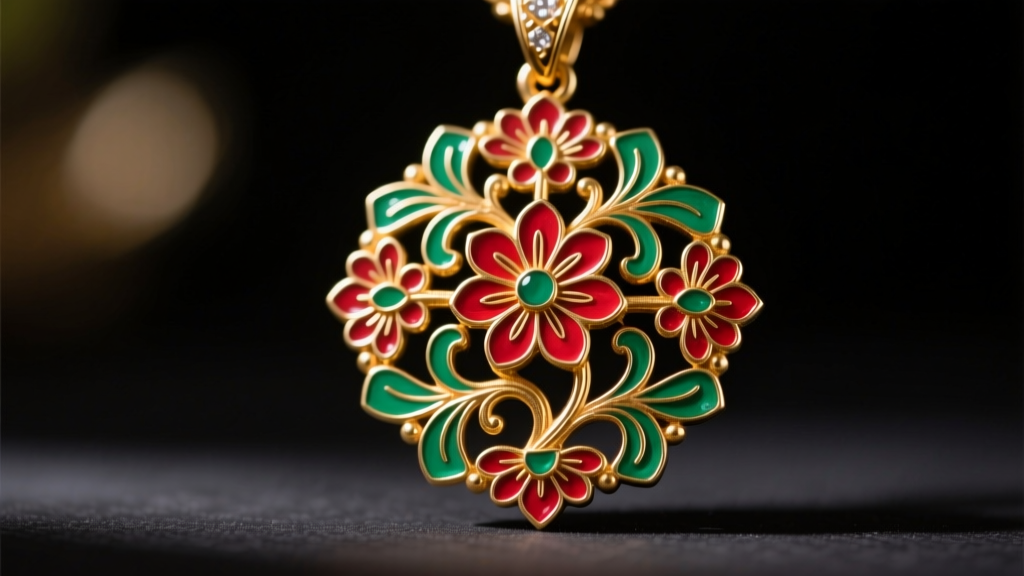
Meenakari is the art of enameling the reverse side of a necklace with vibrant colors. While beautiful, enamel adds negligible intrinsic financial value. When buying Meenakari on a strict budget, opt for silver or 18k gold bases rather than 22k gold, as the structural requirements for enamel do not necessitate the softer, purer 22k metal.
The Material Matrix: Gold Purity and Stone Valuation
Indian jewelry is globally renowned for its use of 22k gold (91.6% purity). However, the World Gold Council notes that 22k gold is inherently soft. When evaluating Indian necklaces, you must align the gold purity with the structural demands of the design.
- 22k Gold (916): Best for solid gold chains, Temple jewelry, and Mangalsutras. It holds the highest resale value and acts as a liquid asset.
- 18k Gold (750): Essential for Jadau, Polki, and intricate gemstone settings. The alloyed metals (copper, silver, zinc) provide the tensile strength needed to grip uncut diamonds and prevent prong failure.
Budget Tip: Never pay 22k gold prices for a necklace that is structurally forced to be 18k. Many heritage brands price their Jadau collections by the gram of 22k gold, even when using 18k gold for the settings. Always demand a breakdown of the alloy weight versus the pure gold weight.
Price vs. Value Breakdown Matrix
Use this matrix to benchmark your purchases against current market expectations for authentic Indian necklaces.
| Necklace Style | Primary Material | Avg. Price Range (USD) | Resale Value Retention | Budget Strategy |
|---|---|---|---|---|
| Temple (Solid) | 22k Gold | $4,500 - $15,000+ | High (85-95% of melt) | Splurge (Investment) |
| Polki Jadau | 18k/22k Gold, Uncut Diamonds | $3,000 - $25,000+ | Medium (Gold + 40% stone) | Splurge (Heirloom) |
| Kundan | 22k Gold Foil, Glass/Quartz | $800 - $4,000 | Low (Gold weight only) | Save (Rent or Buy Light) |
| Meenakari | Silver or 18k Gold, Enamel | $300 - $2,500 | Very Low | Save (Fashion focus) |
| Mangalsutra | 18k/22k Gold, Black Beads | $600 - $3,500 | High (Gold weight) | Splurge (Daily wear) |
Decoding Making Charges and Weight Metrics
The sticker price of an Indian necklace is rarely just the cost of the gold. The true test of a buyer's financial literacy lies in decoding the invoice. A standard Indian jewelry invoice breaks down into four components:
- Gold Value: (Net Gold Weight) × (Current Daily 22k or 18k Rate).
- Stone Charges: The cost of diamonds, emeralds, or rubies, calculated by carat weight and quality grade.
- Making Charges (Labor): This is the vendor's profit margin and artisan fee. For simple machine-made chains, this should be 6% to 10%. For handcrafted Jadau or intricate Temple pieces, expect 18% to 35%.
- Wastage Charges: An archaic but still prevalent fee (usually 2% to 5%) meant to cover gold dust lost during crafting. In 2026, ethical jewelers absorb this into the making charges; avoid vendors who list it as a separate, high-percentage line item.
Calculation Framework: If a 50-gram 22k Temple necklace is quoted at $6,000 when the raw gold value is $4,500, the making charge is $1,500 (33%). This is excessively high for repoussé work. Negotiate the making charges down to the 15-20% range for traditional designs.
Red Flags: How to Spot Overpriced or Fake Pieces
The market for Indian necklaces is rife with synthetic substitutions. Protect your budget by actively looking for these failure points and authenticity markers.
The BIS Hallmark Imperative
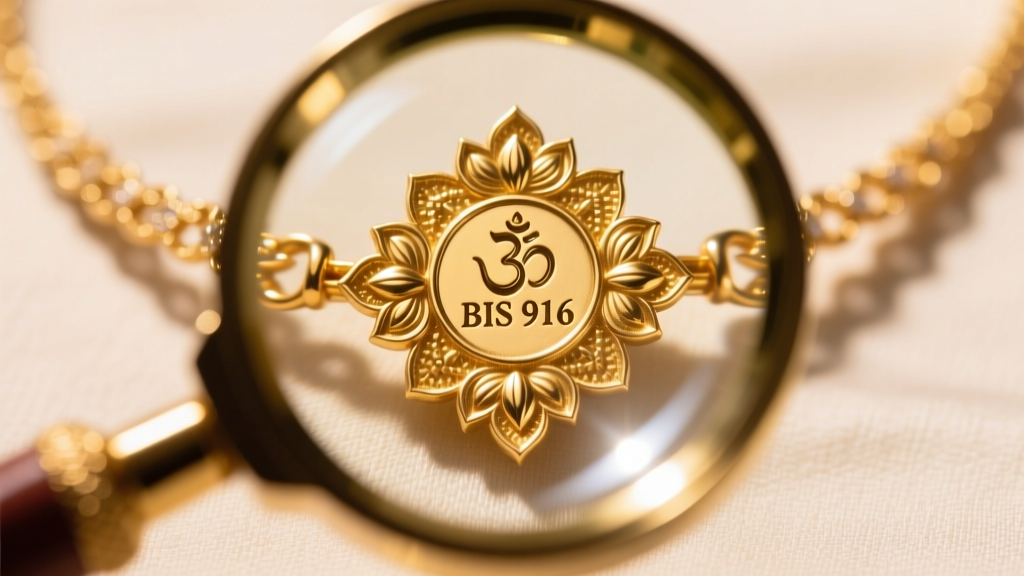
In India, the Bureau of Indian Standards (BIS) mandates hallmarking for gold jewelry. A genuine 22k piece will bear the BIS 916 mark, the assay center's logo, and the jeweler's unique ID. If a vendor claims a piece is "too delicate to stamp" or offers a "self-certified" purity card instead of a laser-engraved BIS hallmark, walk away. You are likely being sold 18k or 14k gold at a 22k premium.
The Foil-Back Glass Deception
Unscrupulous vendors often sell Kundan glass as Polki diamonds. To test this, examine the back of the stone setting. Genuine Polki will show the raw, slightly irregular culet (bottom) of the diamond, often backed with silver foil to enhance reflection. Glass imitations will appear perfectly uniform, and the "foil" will often show signs of peeling, oxidation, or bubbling when viewed under a 10x jeweler's loupe.
Hollow Gold and Resin Filling
To make heavy-looking Temple necklaces affordable, some manufacturers use electroforming to create hollow gold shells filled with resin or lac. While visually impressive, these pieces have terrible resale value and are prone to denting. Always ask for the net gold weight excluding stones and filler materials, and compare it to the physical heft of the piece.
Strategic Buying: Where to Splurge and Where to Save
Maximizing your budget requires a bifurcated approach to your jewelry wardrobe.
Where to Splurge
Invest heavily in solid 22k gold chains, classic Temple pendants, and traditional Mangalsutras. These pieces serve as wearable bank accounts. The liquidity of 22k gold ensures that even if the design falls out of fashion, the melt value remains intact. Additionally, splurge on genuine Polki if you are acquiring a bridal set meant to be passed down through generations, as the scarcity of high-quality uncut diamonds continues to drive long-term appreciation.
Where to Save
Save your budget on trend-driven, heavily enameled Meenakari chokers and massive Kundan bib necklaces. Because these pieces rely on glass stones and high labor costs that are entirely lost upon resale, they are depreciating assets. For these styles, consider renting from specialized jewelry libraries for weddings, or purchasing from heritage brands that utilize silver bases with gold plating (often called "silver Kundan"), which offers the exact same visual impact for 20% of the cost.
Final Verdict
Evaluating Indian necklaces in 2026 requires moving past the aesthetic allure and scrutinizing the metallurgical and gemological data. By demanding BIS hallmarking, understanding the structural necessity of 18k versus 22k gold, and ruthlessly negotiating making charges, you can build a collection that honors traditional craftsmanship without compromising your financial prudence. Always buy the metal and the stones, not just the brand name.


