Initial Necklace Double Buying Guide: Metals & Layouts
Discover what to look for in an initial necklace double. Compare interlocking vs. side-by-side layouts, chain gauges, and tarnish-resistant metals.

The Structural Reality of Dual Pendants
The double initial necklace has evolved from a simple sentimental token into a sophisticated layering staple. Whether you are representing a couple, a mother and child, or two personal milestones, combining two letters introduces unique structural challenges that single-pendant necklaces simply do not face. When shopping for an initial necklace double, the primary concern shifts from mere aesthetics to weight distribution, metal friction, and chain tensile strength. In 2026, jewelers are seeing a surge in custom dual-letter requests, yet many consumers remain unaware of the mechanical wear that occurs when two metal charms share a single drop point. This comprehensive buying guide breaks down the exact specifications, material grades, and layout configurations you need to evaluate before making a purchase.
Layout Configurations: Interlocking vs. Side-by-Side
The visual arrangement of your two initials dictates not only the style but the long-term durability of the piece. There are three primary layout configurations available on the market today:
1. The Interlocking Puzzle Fit
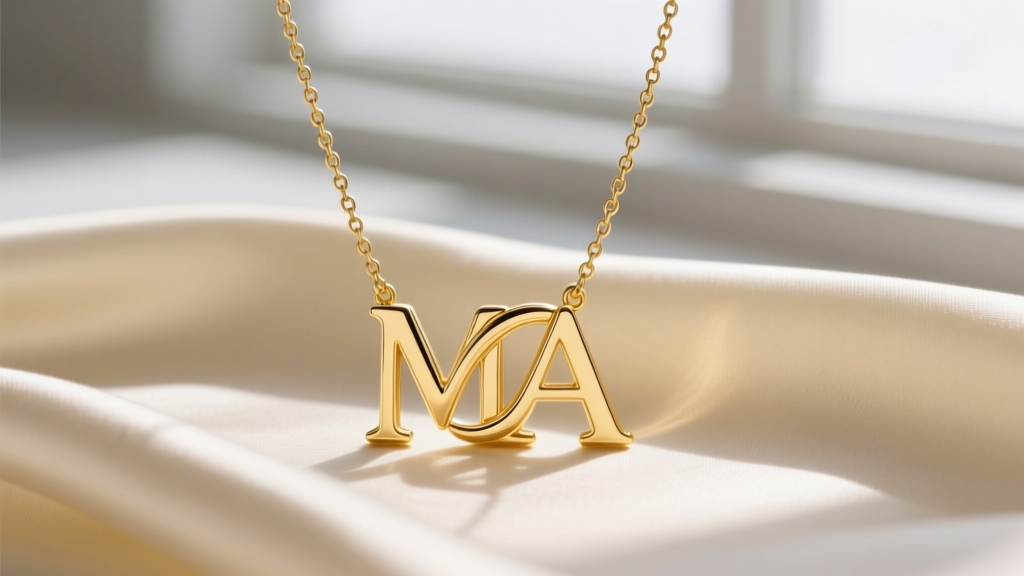
Interlocking initials are laser-cut or hand-sawn so that the outer edge of one letter perfectly nests into the inner curve of the other. While visually striking, this design creates a permanent friction point. If the letters are not perfectly flush, they will grind against one another with every movement the wearer makes.
2. The Fixed Horizontal Bar
In this layout, both initials are soldered onto a single horizontal metal bar or backing plate. This is the most structurally sound option for daily wear, as it completely eliminates charm-on-charm friction and prevents the letters from tangling or flipping backward.
3. Free-Floating Dual Charms
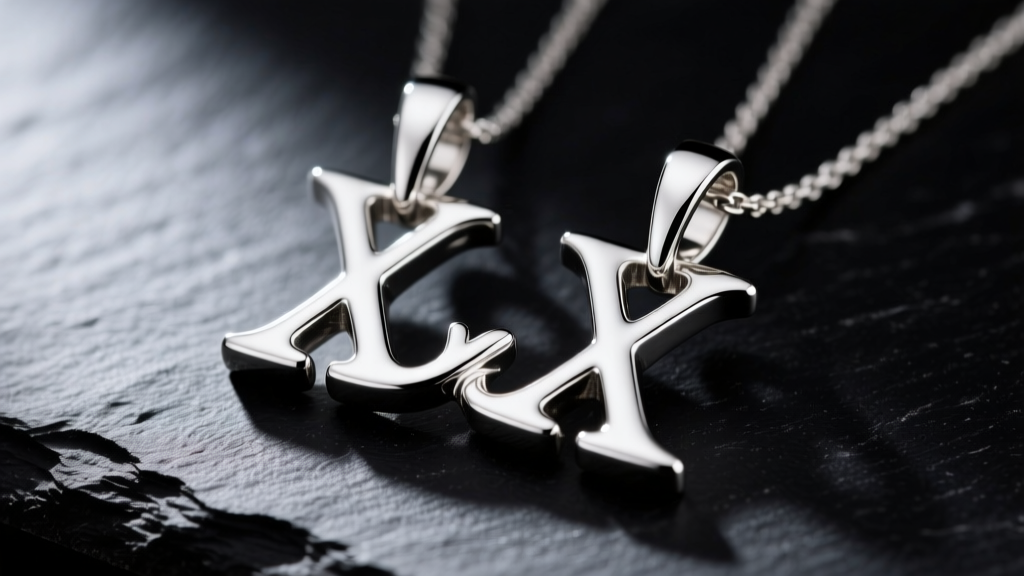
Two separate initial pendants hang from the same chain, usually spaced an inch apart or stacked on a single jump ring. This offers the most movement but carries the highest risk of the letters scratching each other or catching on knitwear.
Chain Gauge and Weight Distribution
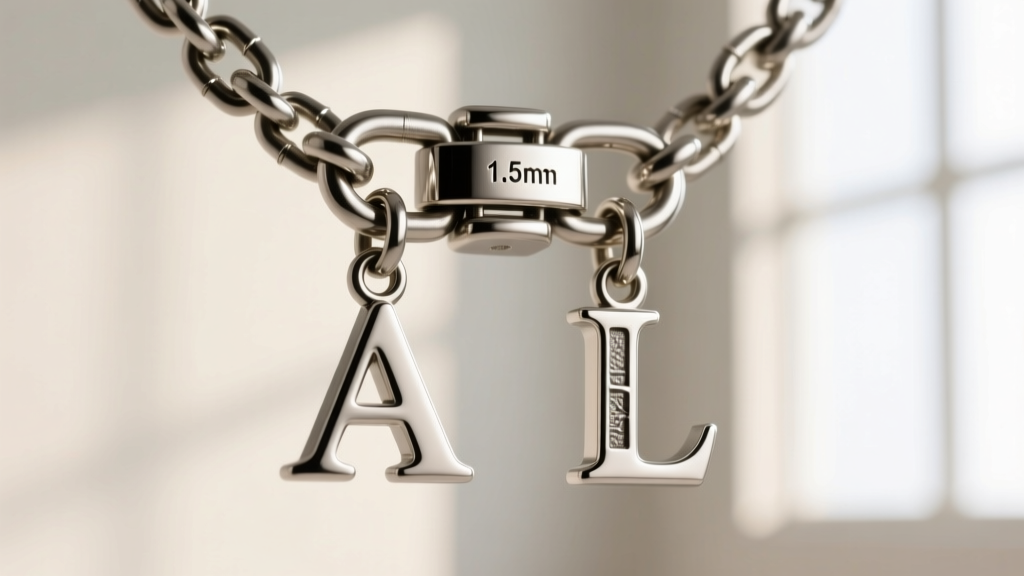
A standard single initial pendant weighs between 1.5 and 3 grams. A double initial setup easily pushes the total pendant weight to 4.5 to 8 grams. This compounded weight requires a significant upgrade in chain gauge to prevent stretching, kinking, or catastrophic failure at the clasp.
"When sizing a double initial necklace, always measure the drop while the wearer is looking straight ahead. Two pendants will pull the chain down an extra quarter-inch compared to a single charm due to the compounded gravitational drag on the center links."
— Master Bench Jeweler, Jewel Style Radar Editorial Board
Never use a snake chain or a sub-1.0mm cable chain for a dual-pendant setup. The lateral stress of two swinging charms will kink a snake chain within weeks. Instead, refer to the structural matrix below to select the appropriate chain style.
| Chain Style | Recommended Gauge | Max Pendant Weight | Durability Rating |
|---|---|---|---|
| Rolo | 1.2mm - 1.5mm | 8 - 12 grams | Excellent |
| Box | 1.1mm - 1.4mm | 6 - 10 grams | Very Good |
| Cable | 1.3mm+ | 5 - 8 grams | Moderate |
| Snake | 1.5mm+ | 4 - 6 grams | Poor (Prone to Kinking) |
Metal Alloys and Friction Wear
Material selection is the single most critical decision when buying an interlocking initial necklace double. According to the Gemological Institute of America (GIA), the hardness and alloy composition of precious metals dictate how they withstand mechanical abrasion. If you are choosing an interlocking layout, you must consider the Vickers Hardness (HV) scale.
- 14k Gold (approx. 135 HV): The absolute best choice for interlocking letters. The copper and zinc alloys mixed into 14k gold provide enough rigidity to resist wearing thin at the friction joints over years of daily use.
- 18k Gold (approx. 120 HV): Slightly softer and richer in color, but the friction points will require occasional polishing and inspection by a jeweler every few years.
- Sterling Silver (approx. 75 HV): As noted in The Knot's Jewelry Metals Guide, silver is highly malleable. In an interlocking double initial design, sterling silver friction loops can wear completely through and snap within 18 to 24 months of continuous wear. Only choose silver for fixed-bar layouts.
- PVD-Coated Stainless Steel: A highly durable, budget-friendly option that will not wear down from friction. However, if a jump ring breaks, stainless steel cannot be easily soldered by a traditional bench jeweler.
Typography, Kerning, and Snag Risks
The font you choose for your initials drastically affects the necklace's wearability. Serif fonts (featuring small projecting lines at the ends of strokes) look elegant but act as microscopic hooks. When two serif initials hang freely, the extending "feet" of the letters will catch on silk blouses, lace, and even each other, causing the chain to yank.
For free-floating dual charms, always opt for a clean sans-serif or a continuous-line script font. If you are dead-set on a serif font, you must choose the fixed horizontal bar layout to eliminate the risk of the letters rotating and snagging. Furthermore, pay attention to kerning (the spacing between the letters). Letters with wide horizontal profiles (like W, M, or E) will dominate the visual weight and may require the jeweler to slightly scale down the secondary letter to maintain optical balance.
2026 Pricing Tiers for Custom Double Initials
Understanding the market pricing ensures you are paying for quality craftsmanship rather than inflated brand markups. Here is what you should expect to pay for a high-quality double initial necklace in the current market:
- Budget Tier ($45 - $90): PVD gold-plated stainless steel or brass. Typically laser-cut from a single sheet of metal. Free-floating layouts on basic 1.0mm cable chains. Excellent for occasional wear, but plating may eventually fade at high-friction edges.
- Mid-Tier ($120 - $280): Solid 14k gold vermeil over sterling silver, or solid 10k/14k gold with lightweight (stamped) construction. Usually features a fixed bar layout or soldered interlocking joints. Comes with a proper 1.2mm rolo chain.
- Fine Jewelry Tier ($400 - $850+): Solid 14k or 18k gold, hand-sawn or precision 3D-cast with heavy gram weights. Includes soldered jump rings, custom kerning, and premium 1.5mm box or rolo chains. Built to last generations.
Final Verdict: What to Demand from Your Jeweler
When commissioning or purchasing an initial necklace double, never compromise on the jump ring. The jump ring connecting the dual pendants to the chain must be soldered shut or constructed from at least 18-gauge wire thickness. An unsoldered, thin jump ring will easily pull apart under the dynamic weight of two swinging charms. By prioritizing a 1.2mm+ chain, selecting the correct metal hardness for your chosen layout, and avoiding serif fonts on free-floating designs, you will secure a piece that is both deeply meaningful and structurally indestructible.