Isadora Necklace Value Guide 2026: Is It Worth the Price?
Evaluating the Isadora necklace in 2026: We break down material grades, pricing tiers, and durability to determine its true value for money.

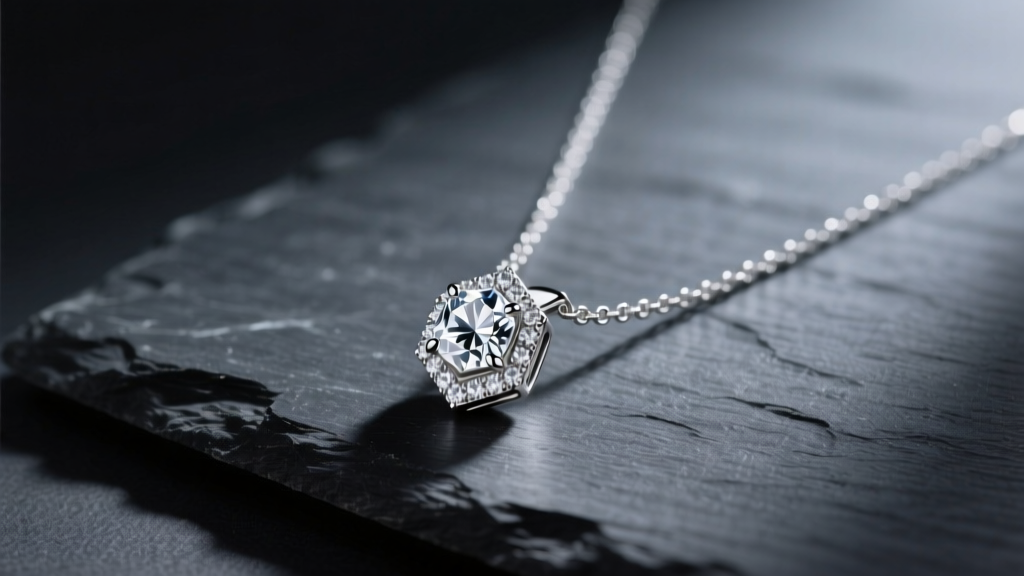
The Bridge Jewelry Dilemma: Assessing the Isadora Necklace
When navigating the saturated "bridge jewelry" market—pieces that sit between disposable fast fashion and fine jewelry investments—the Isadora necklace frequently emerges as a top contender. Known for its accessible luxury aesthetic, the brand has carved out a loyal following by offering designs that mimic high-end fine jewelry at a fraction of the cost. But as we move through 2026, with raw material costs for silver and gold fluctuating and consumer demand for transparency at an all-time high, the critical question remains: does an Isadora necklace offer genuine value, or are you simply paying for the brand name? In this comprehensive budget and value assessment, we dismantle the metallurgy, gemology, and long-term durability of Isadora's core necklace collections to help you determine if your hard-earned money is being well spent.
Metallurgical Reality: What Lies Beneath the Rhodium?
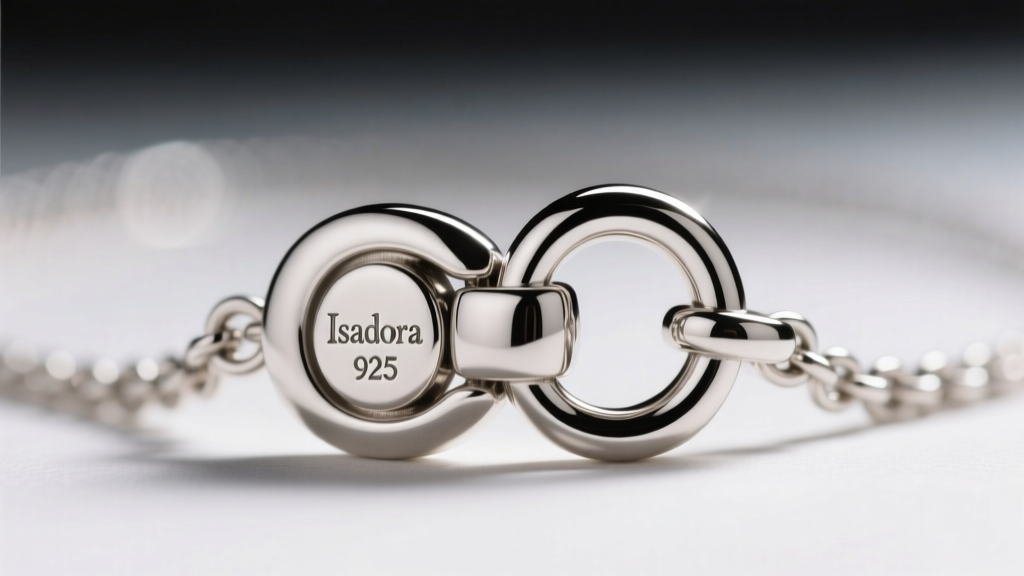
To accurately assess the value of any Isadora necklace, we must first examine the base metals and finishing techniques. The vast majority of Isadora’s silver-toned pieces are crafted from 925 Sterling Silver. According to the Gemological Institute of America (GIA), 925 silver consists of 92.5% pure silver and 7.5% alloy metals, usually copper, which provides the necessary tensile strength for delicate chain links and pendant bails.
However, raw sterling silver is prone to oxidation and tarnishing when exposed to sulfur and moisture in the air. To combat this, Isadora utilizes rhodium plating. Rhodium is a precious metal in the platinum family that provides a brilliant, reflective white finish and acts as a barrier against tarnish. The value proposition here hinges on the thickness of the plating. While fast-fashion brands use "flash plating" (a mere 0.05 to 0.1 microns), Isadora typically employs a heavier plating process, often ranging between 0.5 and 1.0 microns. This means an Isadora necklace will resist everyday wear and tear significantly longer than cheaper alternatives, though it will eventually require re-plating after a few years of daily friction.
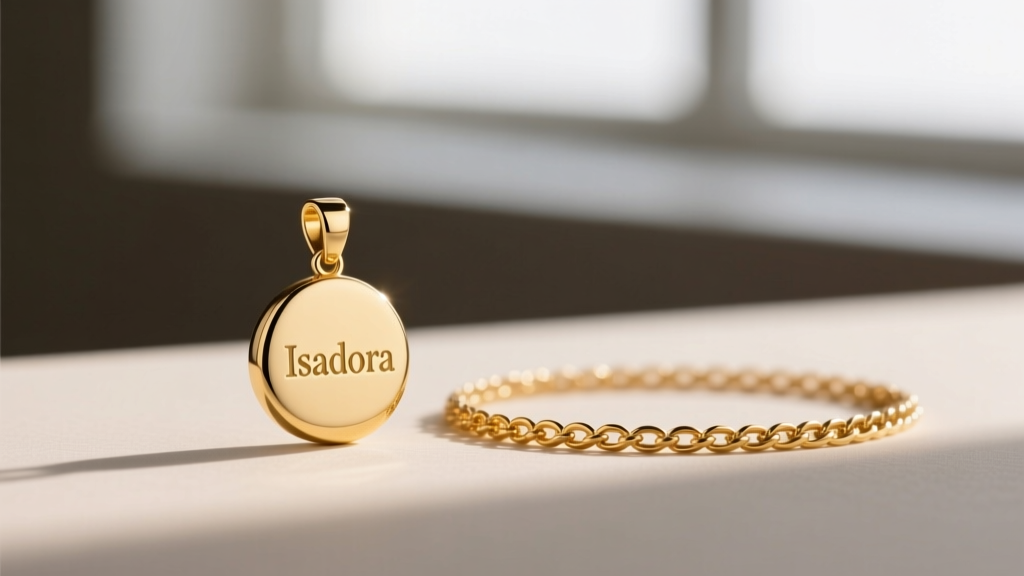
For their gold-toned options, the brand relies on gold vermeil rather than solid gold or cheap brass plating. True vermeil requires a sterling silver base coated with a minimum of 2.5 microns of 10k or higher gold. Isadora’s adherence to this standard ensures that even when the gold layer eventually wears down, the underlying metal remains a valuable, skin-safe precious metal rather than a reactive base metal like brass or nickel, which can cause contact dermatitis.
Gemstone Integrity: Cubic Zirconia vs. Semi-Precious Stones
A significant portion of the Isadora necklace lineup features pavé and prong-set stones. The brand heavily utilizes high-grade Cubic Zirconia (CZ). As noted by the GIA's comprehensive guide on CZ, this synthetic gemstone boasts a Mohs hardness of 8.5, making it highly resistant to scratching from everyday dust and debris (which typically contains quartz, hardness 7). Furthermore, Isadora uses machine-cut CZs with precise facets, yielding a refractive index of roughly 2.15. While this lacks the fiery dispersion of a natural diamond (2.42), it offers a convincing, brilliant sparkle that vastly outperforms the cloudy glass or acrylic stones found in similarly priced mall-brand jewelry.
In their premium tiers, Isadora incorporates genuine semi-precious stones like amethyst, blue topaz, and citrine. The value assessment here is highly favorable. Because Isadora operates on a massive scale, they can source calibrated, heat-treated semi-precious stones at lower costs, passing the savings to the consumer. A natural blue topaz Isadora pendant often retails for under $90, whereas a comparable stone set in a boutique fine-jeweler's 925 silver mounting would easily exceed $250.
2026 Pricing Tiers & Value Matrix
To contextualize the cost, we have mapped Isadora's current necklace offerings against the broader market averages for bridge jewelry. This matrix reveals where the brand punches above its weight class and where consumers should manage their expectations.
| Tier | Price Range | Materials | Market Average | Value Rating |
|---|---|---|---|---|
| Entry | $35 - $55 | 925 Silver, Flash CZ | $60 - $80 | Excellent |
| Mid-Core | $60 - $110 | 925 Silver, Rhodium, Premium CZ | $100 - $150 | High |
| Premium | $120 - $180 | Gold Vermeil, Natural Semi-Precious | $200 - $350 | Exceptional |
Durability & Real-World Failure Modes
A necklace is only as valuable as its weakest structural point. When stress-testing the Isadora necklace collections, three primary failure modes emerge over a 3-to-5-year lifespan:
- Clasp Fatigue: Isadora predominantly uses standard lobster clasps on their cable and box chains. While secure, the internal steel spring mechanism in a 925 silver lobster clasp can degrade if exposed to chlorinated pool water or harsh cosmetics. Pro-Tip: Always remove your necklace before swimming to preserve the clasp's tension.
- Prong Snagging: The delicate pavé settings on their signature halo pendants feature micro-prongs. While beautiful, these can catch on knit sweaters or silk blouses, eventually lifting the metal and risking stone loss. Bezel-set Isadora necklaces offer a vastly superior cost-per-wear ratio for active lifestyles.
- Chain Kinking: The brand’s popular "box chains" are visually striking but inherently prone to kinking if folded or slept in. Once a box chain kinks, the structural integrity of the link is compromised, leading to eventual snapping. For maximum durability, opt for Isadora’s cable or wheat chain variants.
The Competitor Comparison: Isadora vs. Market Giants
How does an Isadora necklace stack up against the heavyweights of the accessible luxury space?
- Isadora vs. Swarovski: Swarovski relies heavily on brass or rhodium-plated base metals paired with proprietary lead-glass crystals. While Swarovski crystals offer unmatched optical precision, the base metal lacks intrinsic value. Isadora wins on material longevity and intrinsic metal value (925 silver).
- Isadora vs. Mejuri: Mejuri focuses heavily on solid 14k gold and minimalist designs, pushing their entry-level necklaces into the $150–$300 range. Isadora fills the gap for consumers who want maximalist, gemstone-heavy, or vintage-inspired designs without crossing the $100 threshold.
- Isadora vs. Pandora: Pandora’s silver necklaces often utilize heavier, bulkier chains designed to hold massive charm loads, resulting in a higher raw silver weight but a clunkier aesthetic. Isadora offers more refined, delicate silhouettes suited for modern layering techniques.
The Final Verdict: Calculating Your Cost-Per-Wear
So, is the Isadora necklace worth your budget in 2026? The answer depends entirely on your buying motives. If you are seeking an heirloom piece to pass down through generations, you must pivot to solid 18k gold and natural diamonds. However, if you are evaluating the "cost-per-wear" metric for everyday elegance, office-appropriate styling, and trend-conscious layering, Isadora represents an exceptional value proposition. By utilizing genuine 925 sterling silver, adhering to strict vermeil thickness standards, and employing precision-cut synthetic and natural gemstones, Isadora bridges the gap between disposable fashion and untouchable fine jewelry. For a budget ranging from $50 to $120, an Isadora necklace delivers a level of metallurgical integrity and visual brilliance that remains largely unmatched in its tier.


