The Vintage Jackie Taylor Necklace: Goldwork & Authentication
Explore the metallurgical details, chain weaves, and authentication markers of the vintage Jackie Taylor necklace for estate jewelry collectors.

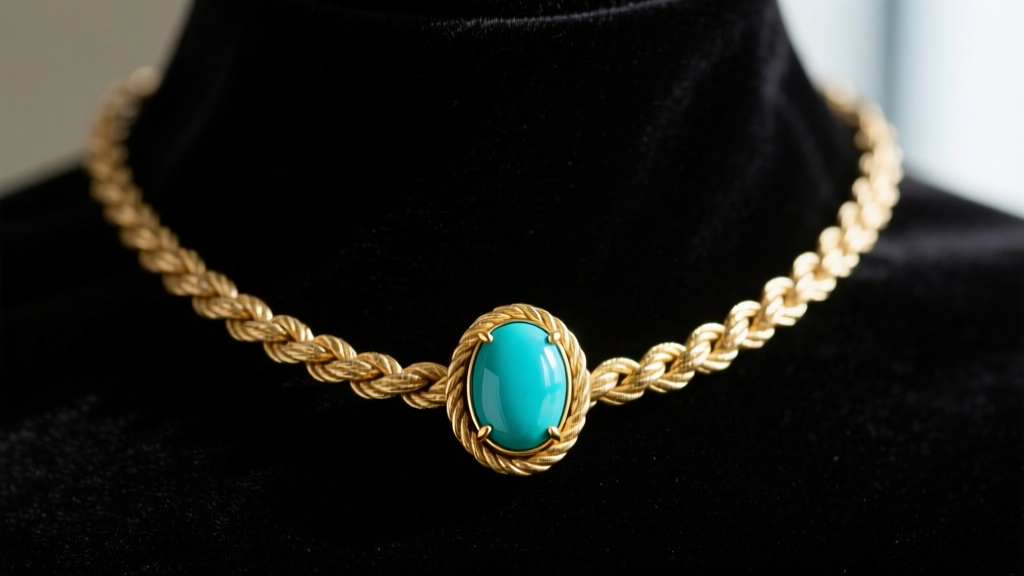
The vintage Jackie Taylor necklace represents a masterclass in mid-to-late 20th-century American studio jewelry design. Unlike mass-produced commercial pieces of the same era, Taylor’s work is defined by rigorous metallurgical standards, hand-fabricated chain weaves, and exacting gemstone setting tolerances. For estate jewelry collectors and bench jewelers, understanding the technical anatomy of these pieces is critical for authentication, restoration, and accurate valuation. This deep dive explores the specific material grades, structural mechanics, and forensic markers that define an authentic Jackie Taylor necklace.
The Metallurgical Profile: 14K Gold Alloys and Annealing
While many contemporary designers default to 18K gold for its richer color, the vintage Jackie Taylor necklace was predominantly fabricated in 14K yellow gold. This was not a cost-cutting measure, but a structural necessity. Taylor’s signature textured rope and modified Byzantine chains required wire that could withstand severe work-hardening during the twisting and soldering processes.
The specific alloy composition used in Taylor’s 14K pieces typically follows a 58.5% gold, 25% silver, and 16.5% copper ratio. According to the Gemological Institute of America (GIA), this specific copper-to-silver ratio yields a Vickers hardness (HV) of approximately 120 HV in its annealed state. However, the mechanical twisting of the rope chain pushes the localized hardness to over 160 HV, granting the necklace exceptional tensile strength without the need for bulky wire gauges.
Thermal Signatures and Soldering
Authentic Taylor chains exhibit specific thermal signatures under magnification. Because the chains were hand-woven and soldered link-by-link, you will find microscopic traces of hard 14K yellow gold solder (which flows at roughly 1,450°F) at the structural jump rings, while the internal woven links remain unsoldered to maintain drape flexibility. Modern laser-welded replicas often lack the subtle oxidation halos characteristic of traditional torch soldering.
Signature Chain Weaves and Clasp Mechanics
The drape and weight distribution of a Jackie Taylor necklace are heavily dependent on the wire gauge and clasp mechanics. The primary structural wire is typically drawn to 18 AWG (American Wire Gauge), while the decorative outer wraps utilize a much finer 24 AWG wire.
Failure Modes in Vintage Box Clasps
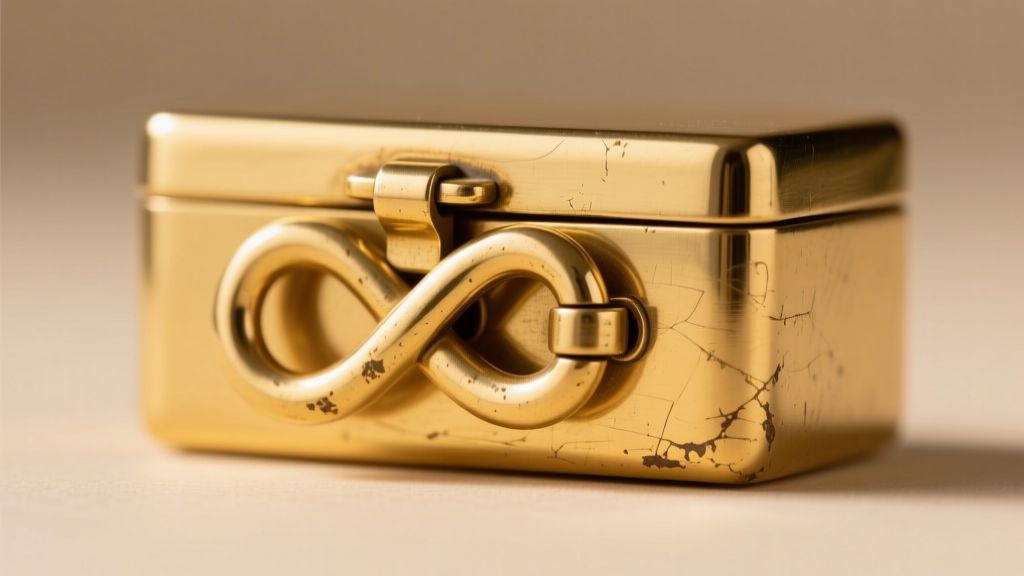
Taylor predominantly utilized tongue-and-groove box clasps equipped with a figure-eight safety catch. When inspecting an estate piece, bench jewelers must look for specific failure modes:
- Tongue Fatigue: The internal tongue (usually stamped from 0.8mm sheet gold) loses its spring tension after decades of compression. If the tongue sits completely flat inside the groove, the clasp requires re-tensioning or replacement.
- Safety Wire Cracking: The figure-eight safety wire is typically 20-gauge. Exposure to skin acids (chlorides) and repetitive tensile stress often causes micro-fractures at the solder joint where the wire meets the clasp body.
- Groove Wear: Look for interior polishing marks. An authentic vintage piece will show slight, smooth wear inside the groove, whereas a recast replica will have a pitted or sandy interior texture due to imperfect vulcanized mold reproduction.
For a comprehensive guide on identifying and repairing vintage jewelry mechanisms, the Lang Antiques University provides excellent visual benchmarks for mid-century box clasps.
Gemstone Setting Techniques: Bezel Tolerances
The pendants accompanying the Jackie Taylor necklace frequently feature semi-precious cabochons, most notably Sleeping Beauty turquoise, lapis lazuli, and black onyx. Taylor’s bezel settings are renowned for their precise tolerances, which require advanced bench skills to execute without damaging the stone.
| Stone Type | Mohs Hardness | Bezel Wall Thickness | Typical Dome Ratio |
|---|---|---|---|
| Sleeping Beauty Turquoise | 5.0 - 6.0 | 0.6mm | 1:3 (Height to Width) |
| Afghan Lapis Lazuli | 5.5 | 0.8mm | 1:4 |
| Black Onyx | 6.5 - 7.0 | 0.5mm | 1:5 (Low Dome) |
The 0.6mm bezel wall used for turquoise is a critical identifier. Turquoise is highly porous and sensitive to pressure. If a bezel wall is too thick (>1mm), the jeweler cannot burnish it over the stone's edge without kinking the gold or cracking the cabochon. Taylor’s consistent use of 0.6mm sheet stock for the bezel wire demonstrates a high level of lapidary and metalsmithing synergy.
Authentication: Hallmarks, Stamps, and Provenance
As the market for vintage studio jewelry has surged, so has the proliferation of recast replicas. Authenticating a Jackie Taylor necklace requires forensic examination of the hallmarks and dimensional analysis.
Dimensional Shrinkage in Recasts
The most definitive test for a replica is dimensional analysis. When unauthorized manufacturers create recasts using vulcanized rubber molds, the wax injection and subsequent metal casting process results in a volumetric shrinkage of approximately 2% to 3%.
Expert Tip: Measure the exact millimeter length and width of the pendant bail and the primary cabochon. Compare these metrics to a verified authentic piece. A recast will almost always exhibit a 0.5mm to 1.2mm reduction in overall dimensions, a dead giveaway of mold shrinkage.
Struck vs. Cast Hallmarks
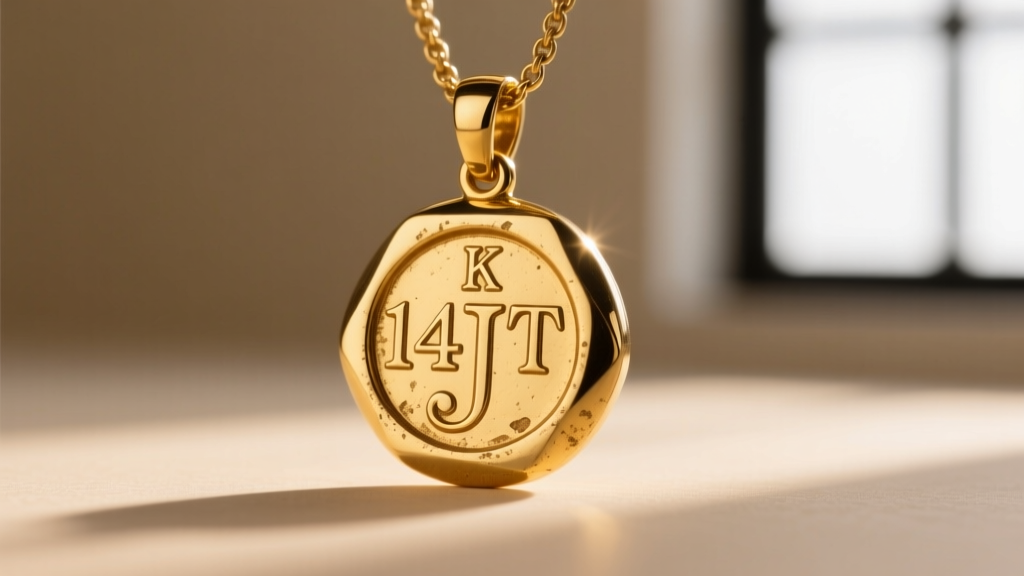
Authentic Taylor pieces feature struck hallmarks ("JT" and "14K"). Struck stamps are applied after the piece is cast and polished, using a steel punch and a mallet or hydraulic press. Under a 10x loupe, a struck mark will show sharp, crisp edges with displaced metal pushed slightly upward around the perimeter of the letters. Conversely, cast hallmarks (where the stamp is carved into the original wax model) will have rounded, soft edges and may contain tiny casting porosity pits inside the letters. For more on metal stamping standards, refer to the Bonhams Jewelry Department archives on estate authentication.
2026 Estate Market Valuation and Outlook
As of 2026, the secondary market for the vintage Jackie Taylor necklace has stabilized into distinct pricing tiers based on weight, condition, and gemstone provenance. Collectors are increasingly prioritizing pieces with original, unpolished patinas over those that have been aggressively refurbished.
- Base Chain (No Pendant, 18-inch): $1,200 – $1,800 USD, heavily dependent on the current spot price of gold and the structural integrity of the box clasp.
- Standard Cabochon Pendant Set: $2,500 – $3,800 USD. Pieces featuring verified Sleeping Beauty turquoise (which has become incredibly scarce following the mine's closure) command a 30% premium over lapis or onyx variants.
- Masterwork / Exhibition Pieces: $5,000+ USD. These include multi-strand woven collars or pieces featuring custom-faceted stones, which are rare deviations from Taylor's standard cabochon work.
When acquiring a Jackie Taylor necklace, always request high-resolution macro photography of the clasp interior, the bezel wall profile, and the hallmark stamps. In the realm of vintage studio jewelry, the truth is always found in the microscopic details of the bench work.


