Jade Circle Necklace Guide: Meanings, Grades & Styling
Discover everything about the jade circle necklace. Learn jade grades (A, B, C), the Ping'an Kou meaning, pricing, and how to style this timeless piece.

What is a Jade Circle Necklace? Decoding the Ping'an Kou
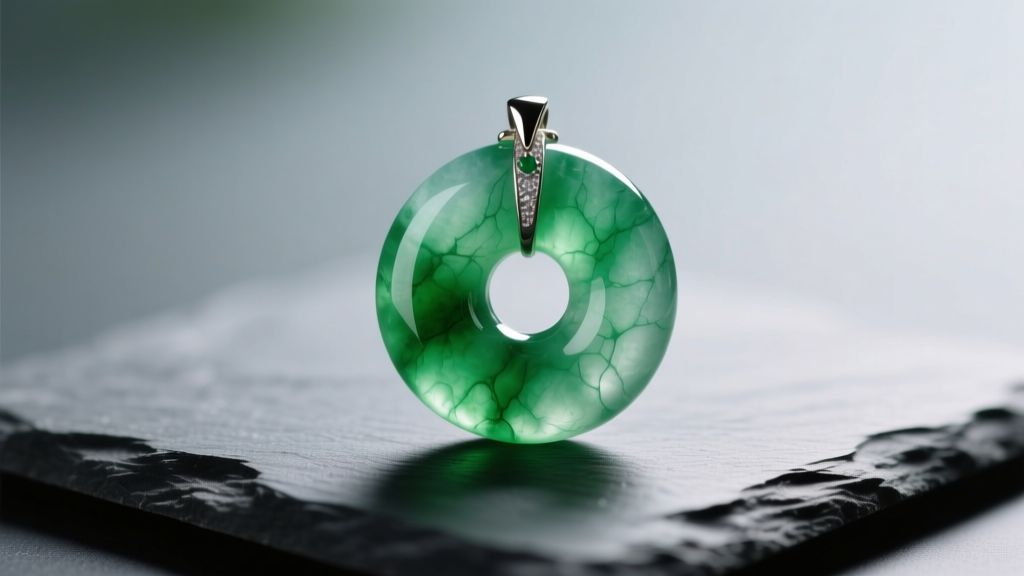
The jade circle necklace, widely recognized in its modern form as the Ping'an Kou (Peace Buckle) or jade donut, is one of the most enduring symbols in Eastern jewelry. Unlike faceted gemstones that rely on light refraction, jade is prized for its depth, translucency, and cultural weight. For beginners, navigating the market can be daunting due to the prevalence of treated stones and confusing terminology. This guide breaks down the exact material grades, historical context, and structural mechanics you need to know before purchasing your first authentic jade circle necklace.
Ancient Bi Discs vs. Modern Donuts
To understand the jade circle pendant, we must distinguish between its ancient predecessor and its modern iteration. The Bi disc dates back to the Liangzhu culture (c. 3300–2200 BCE). These were large, flat jade discs with a small, precisely drilled central hole, used exclusively in burial and celestial rituals to symbolize heaven.
The modern Ping'an Kou is a stylized, wearable evolution. It features a much larger central hole relative to its overall diameter, resembling a donut. The outer circle represents the vastness of the universe, while the inner circle symbolizes inner peace and tranquility. When you buy a jade circle necklace today, you are almost certainly buying a Ping'an Kou, designed to rest flat against the sternum and promote spiritual grounding.
Nephrite vs. Jadeite: The Material Matters
The term 'jade' is an umbrella term for two distinct metamorphic minerals. According to the International Gem Society, understanding the difference is critical for valuation and durability.
| Feature | Nephrite | Jadeite |
|---|---|---|
| Chemical Composition | Calcium magnesium silicate | Sodium aluminum silicate |
| Mohs Hardness | 6.0 - 6.5 | 6.5 - 7.0 |
| Visual Appearance | Oily, waxy luster; mottled greens, blacks, whites | Vitreous (glassy) luster; vivid greens, lavenders, icy whites |
| Primary Sources | China (Hetian), New Zealand, Canada | Myanmar (Burma), Guatemala, Japan |
| Use in Circle Pendants | Carved into thicker, heavier, opaque discs | Sliced into thinner, highly translucent, premium donuts |
For the classic, vibrant green or icy translucent jade circle necklace, Jadeite is the industry standard. Nephrite is generally less expensive and leans toward deeper, earthier tones.
The ABCs of Jade Grading: Protecting Your Investment
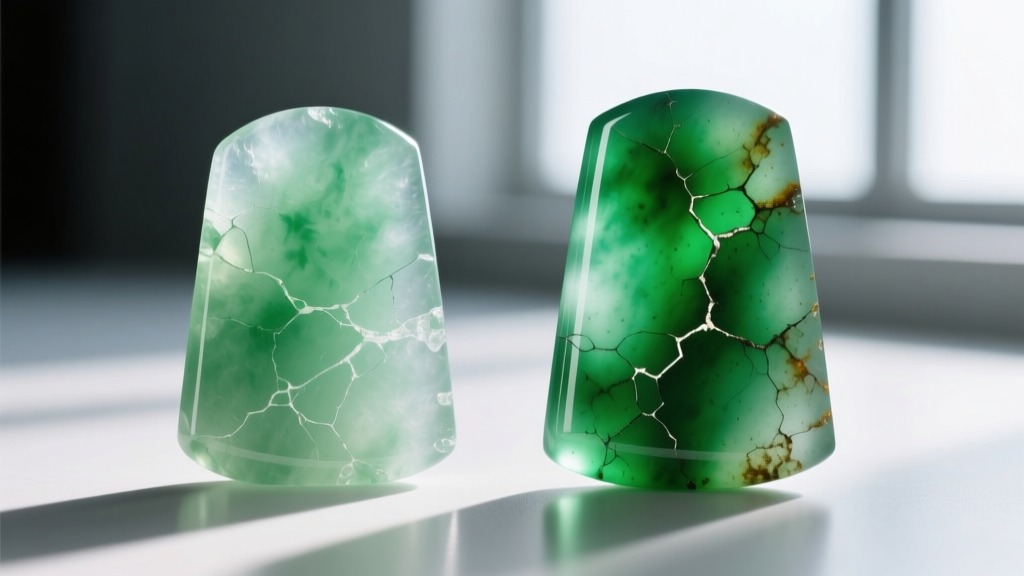
The most common mistake beginners make is buying a visually stunning, bright green jade donut for $50, only to discover it is chemically altered. The Gemological Institute of America (GIA) categorizes jadeite into three distinct grades based on treatment:
- Grade A (Natural): Completely untreated jadeite. It may be polished with a traditional, mild plum wax to enhance surface luster, but its internal crystalline structure is 100% intact. This is the only grade that holds investment value and will not degrade over time.
- Grade B (Bleached & Polymer-Impregnated): Lower-quality jade is soaked in harsh hydrochloric acid to dissolve brown and yellow inclusions. This process destroys the stone's structural integrity, leaving it porous. It is then vacuum-impregnated with polymer resin to hold it together. Grade B jade will yellow, cloud, and become brittle within a few years of wear.
- Grade C (Dyed): Jade that has been artificially colored using chemical dyes. The dye often pools in microscopic surface fractures, visible under 10x magnification. Grade C jade will fade when exposed to prolonged sunlight and sweat.
Always request a lab report from a reputable gemological laboratory (such as GIA, NGTC, or AGL) when purchasing a Grade A jade circle necklace priced over $300. Certificates should explicitly state 'No indications of treatment'.
Real-World Pricing: What Should You Pay?
Pricing a jade circle necklace is dictated by the 'Three Ts': Translucency, Tone, and Texture. Here is a realistic 2026 pricing framework for a standard 25mm-30mm Jadeite Ping'an Kou:
- Opaque & Mottled ($30 - $150): Dry texture, visible inclusions, lacking light penetration. Excellent for everyday, worry-free wear.
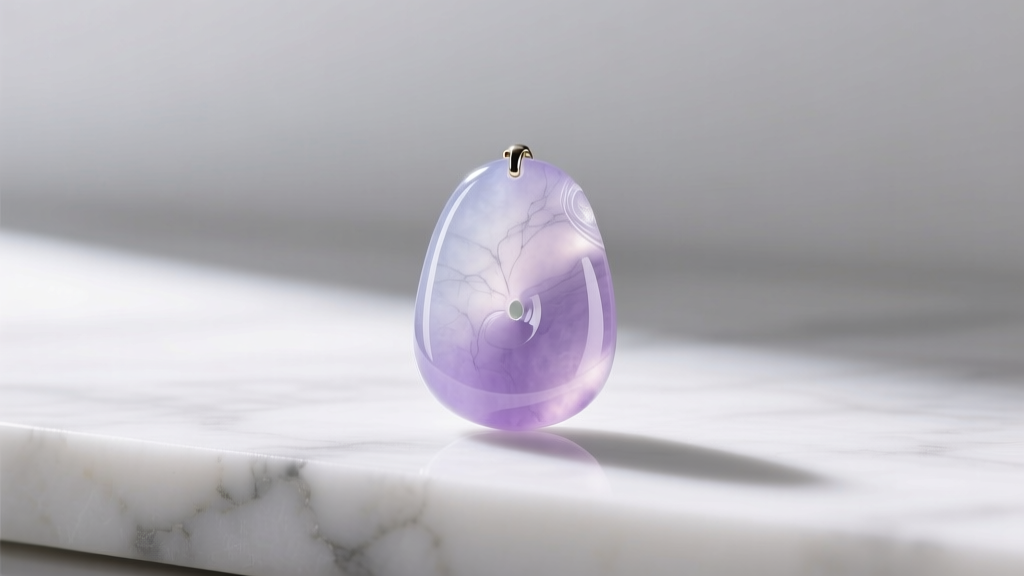
- Fine Texture & Glutinous ($200 - $800): Semi-translucent, resembling the look of animal fat or sticky rice. Even color distribution, usually pale green or lavender.
- Icy & Glassy ($1,000 - $5,000): High translucency, allowing light to pass through easily. Often colorless ('icy') or featuring floating green hues.
- Imperial Green ($10,000+): Vivid, emerald-like green with glass-like transparency. Extremely rare and strictly an investment-grade asset.
Stringing Mechanics: Cords, Gauges, and Knots
Because jade is dense and heavy, a 30mm Grade A jadeite donut can easily weigh between 15 and 25 grams. Suspending this weight on a flimsy 0.8mm silver chain is a structural failure waiting to happen; the chain will stretch, and the bail will wear down the jade's drill hole over time.
For optimal security and aesthetics, string your jade circle necklace using 1.2mm to 1.5mm braided nylon or Chinese silk cord. Nylon (such as C-Lon) is highly resistant to sweat and water degradation. To finish the necklace, utilize a sliding macrame knot (also known as a shambala knot). This allows you to adjust the pendant's drop length from collarbone (16 inches) to sternum (22 inches) without needing a metal clasp, preserving the uninterrupted, organic flow of the piece.
Care, Maintenance, and the 'Ping' Test
Jadeite possesses exceptional toughness—often exceeding that of diamonds—due to its interlocking, felted crystalline structure. However, it is not invincible.
Never clean treated (Grade B or C) jade in an ultrasonic cleaner; the high-frequency vibrations will shatter the polymer resin holding the stone together. Even for Grade A jade, avoid harsh chemical cleaners. Simply wipe your jade circle necklace with a damp, lint-free microfiber cloth after wear to remove skin oils and environmental dust.
Finally, you can perform the traditional 'Ping' test. If you gently tap a suspended Grade A jadeite donut with a piece of agate or another piece of jade, it will emit a clear, resonant, high-pitched chime. Grade B jade, due to its resin filling, will produce a dull, muted thud. While not a substitute for a lab report, this auditory check is a valuable first line of defense when examining a jade circle necklace in person.


