Jade Cuban Link Necklace: Material Properties & Guide
Explore the material science behind the jade cuban link necklace. Compare jadeite vs nephrite, metal gauges, and structural failure modes.

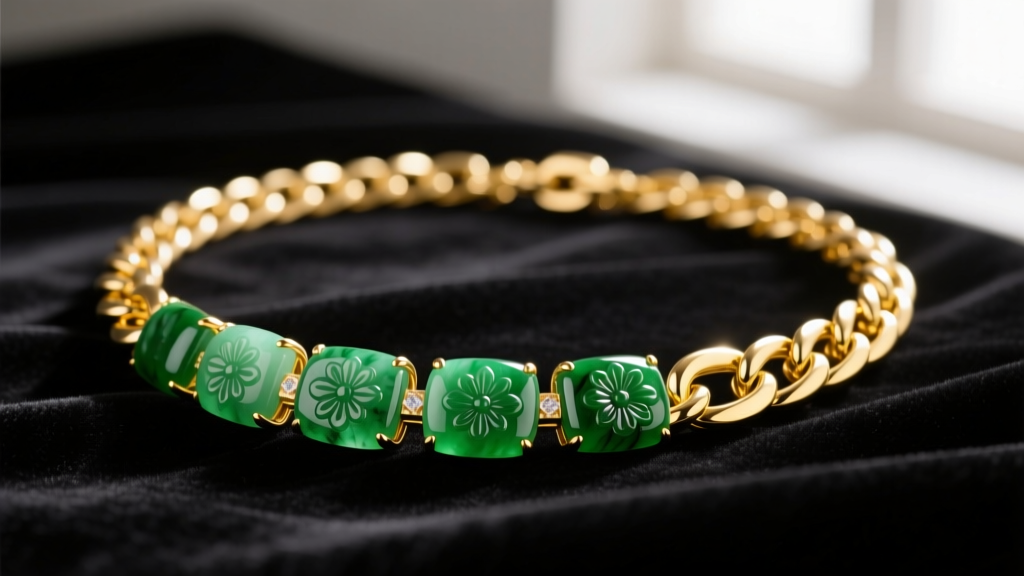
The Intersection of Urban Staples and Ancient Gemology
The traditional Cuban link chain is a masterclass in metallurgical uniformity, relying on interlocking oval or circular metal links to create a heavy, fluid drape. However, the modern jade cuban link necklace introduces a complex variable into this equation: the integration of carved gemstone links or heavy jade pendants into a high-stress metal chain. This hybrid design requires a deep understanding of both gemological toughness and metal tensile strength. When you combine the specific gravity of dense silicate minerals with the mechanical friction of interlocking links, the margin for structural error vanishes. This guide deconstructs the material properties, engineering requirements, and failure modes inherent in jade-integrated Cuban link chains.
Anatomy of a Hybrid Chain: Inlays vs. Carved Links
Before evaluating the materials, it is critical to understand how jade is incorporated into the Cuban link architecture. There are two primary engineering methods, each with distinct material stress profiles:
- Inlay/Bezel Integration: Standard metal Cuban links feature hollowed-out centers or bezel-set faces where thin slices of jade are secured. The metal bears 100% of the tensile and shear load. The jade is purely decorative and protected from impact.
- Carved Stone Links: The links themselves are carved from solid jade, featuring a central channel or interlocking notches, connected by smaller metal jump rings or gold-capped pins. In this design, the jade bears significant shear stress and friction, demanding a stone with exceptional structural integrity.
Material Showdown: Jadeite vs. Nephrite in Chain Design
The term "jade" encompasses two distinct metamorphic minerals: Jadeite and Nephrite. While both are used in jewelry, their internal crystal structures dictate how they perform when subjected to the mechanical stresses of a Cuban link chain. According to the Gemological Institute of America (GIA), understanding the difference between these two minerals is the first step in evaluating the longevity of any jade jewelry piece.
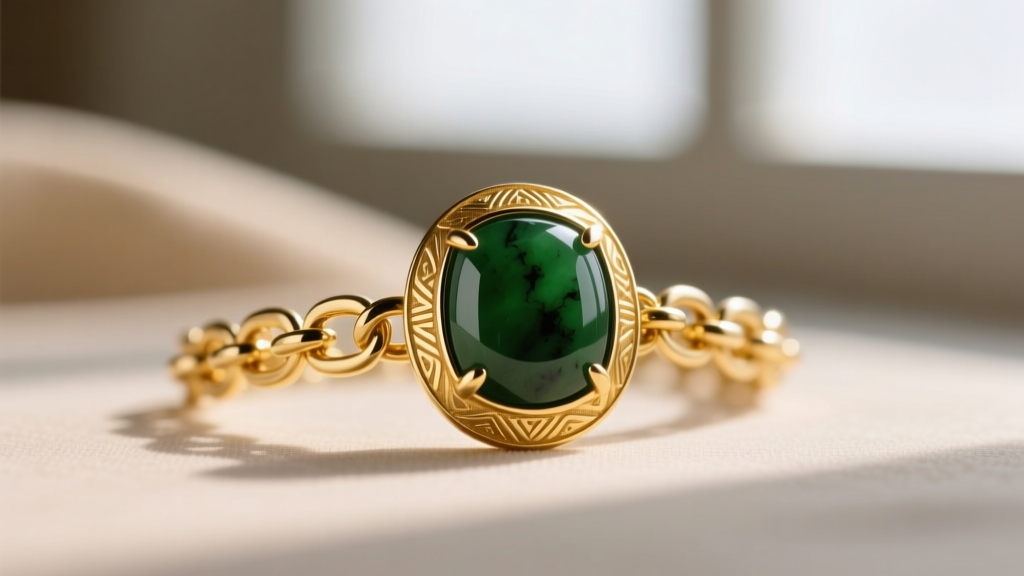
Crystal Structure and Toughness
Jadeite is composed of interlocking granular crystals, giving it a glassy luster and a Mohs hardness of 6.5 to 7. Nephrite, however, is composed of dense, interlocking fibrous crystals (amphibole). While Nephrite is slightly softer on the Mohs scale (6 to 6.5), its fibrous structure grants it immense toughness (resistance to breaking and tearing)—making it superior for carved, load-bearing links.
| Property | Jadeite (Type A) | Nephrite | Impact on Cuban Link Design |
|---|---|---|---|
| Mohs Hardness | 6.5 - 7.0 | 6.0 - 6.5 | Jadeite resists surface scratching from metal friction slightly better. |
| Toughness (Tensile) | Moderate | Exceptional | Nephrite is vastly superior for carved links that bear the chain's weight. |
| Specific Gravity | 3.30 - 3.38 | 2.90 - 3.03 | Jadeite is heavier; requires thicker gauge metal links to prevent sagging. |
| Cleavage | None | None | Both lack cleavage planes, reducing the risk of splitting along a single axis. |
Metallurgy Matters: Choosing the Right Base Metal
The metal links in a jade cuban link necklace must be engineered to support the high specific gravity of the stone without warping. A standard 50cm, 8mm solid gold Cuban link can weigh between 45 and 60 grams. When you replace 20% of those metal links with solid Jadeite (SG ~3.34), the overall weight distribution shifts dramatically, placing immense localized stress on the metal jump rings connecting the stone to the chain.
14k Gold vs. 18k Gold for Heavy Stone Loads
While 18k gold (75% pure gold) is prized for its rich color and prestige, it is a relatively soft metal. Under the constant gravitational pull and kinetic movement of heavy jade links, 18k gold oval links are prone to "stretching" or elongating over time. 14k gold (58.5% pure gold, alloyed with copper, silver, and zinc) offers significantly higher tensile strength and yield resistance. For any Cuban link chain featuring solid carved jade links or massive jade tube beads, 14k gold is the metallurgically sound choice to prevent permanent chain deformation.
Critical Failure Modes and How to Avoid Them
Designing or purchasing a jade-integrated chain requires anticipating how materials degrade over years of wear. Here are the most common failure modes specific to this hybrid design:
- Link Bite (Friction Wear): When a gold link rubs directly against a jade link, the gold (Mohs 2.5-3) will eventually wear away, thinning the structural integrity of the chain. Solution: High-end jewelers use micro-pave diamond spacers or gold bezel-capping on the edges of the jade links to create a hard, friction-resistant barrier.
- Polymer Resin Degradation: The market is flooded with "Type B" jade, which has been bleached and impregnated with polymer resin to improve color and clarity. As noted in GIA's detailed breakdown of jadeite treatments, this resin is unstable. The friction and body heat generated by a heavy Cuban link chain resting on the chest will cause Type B resin to yellow, crack, and eventually shatter under pressure. Solution: Only purchase certified Type A (untreated) jade for structural chain components.
- Clasp Shearing: A standard lobster clasp is entirely inadequate for the weight of a jade-metal hybrid chain. The torque applied when the heavy jade links swing can snap the clasp's spring mechanism.
"When engineering a heavy stone-to-metal chain, the clasp must distribute the load, not just hold the ends together. We exclusively use double-safety box clasps with reinforced side-latches for any Cuban link exceeding 80 grams." — Master Bench Jeweler & Chain Specialist
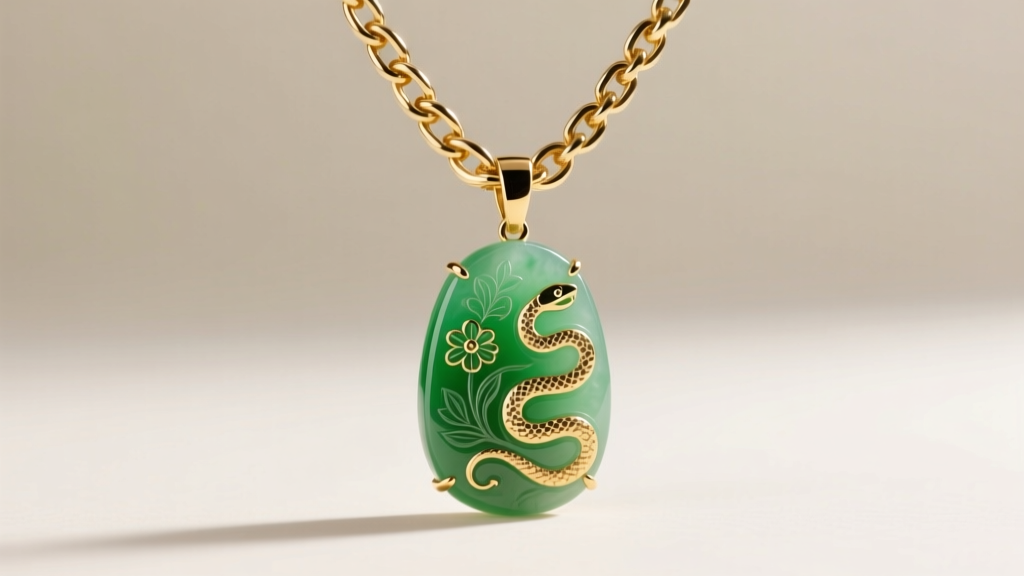
Clasp Engineering for Heavy Hybrids
If your jade cuban link necklace features a massive carved jade pendant or alternating heavy stone links, the termination hardware is your most critical point of failure. Avoid spring-ring and standard lobster clasps entirely. Instead, look for:
- Box Clasps with Figure-8 Safeties: The tongue-and-groove mechanism bears the tensile load, while the wire safeties catch the chain if the primary latch fails.
- Magnetic Locking Clasps: Modern neodymium magnetic clasps encased in 14k steel or gold offer high shear strength and prevent the "fiddling" that often leads to dropping heavy chains.
Pricing Tiers and Authentication
The cost of a genuine jade cuban link necklace varies wildly based on the integration method and the gemological quality of the stone. Here is a realistic market breakdown for 2026:
- Entry-Level ($800 - $2,500): Sterling silver or 10k gold Cuban links featuring Nephrite inlays or small, commercially graded jadeite beads. Excellent for daily wear, though the silver may tarnish against the stone's microscopic pores.
- Mid-Tier Artisan ($3,000 - $12,000): 14k gold chains with custom-carved Nephrite links or high-quality Type A Jadeite bezel-set into the center of 8mm-10mm links. These pieces require bespoke bench work to ensure the metal tolerances protect the stone.
- Investment Grade ($20,000 - $100,000+): Imperial Green Type A Jadeite links integrated into heavy 18k gold chains, often accompanied by diamond micro-pave spacers to prevent friction wear. These are collector pieces, usually requiring custom sizing and specialized insurance appraisals.
Final Verdict: Balancing Aesthetics and Physics
A jade cuban link necklace is not merely a fashion statement; it is an exercise in material science. The successful integration of ancient gemstones into modern, heavy-gauge chain designs requires respecting the physical limitations of both the stone and the metal. By prioritizing Type A untreated jade, opting for the tensile strength of 14k gold for load-bearing links, and demanding robust box-clasp engineering, you ensure that your hybrid chain remains a structural and aesthetic masterpiece for decades to come.


