The Perfect Jade Necklace Circle Gift Guide for Every Occasion
Discover how to choose the perfect jade necklace circle for any occasion. Learn about jadeite grades, nephrite types, and occasion-matching in this guide.

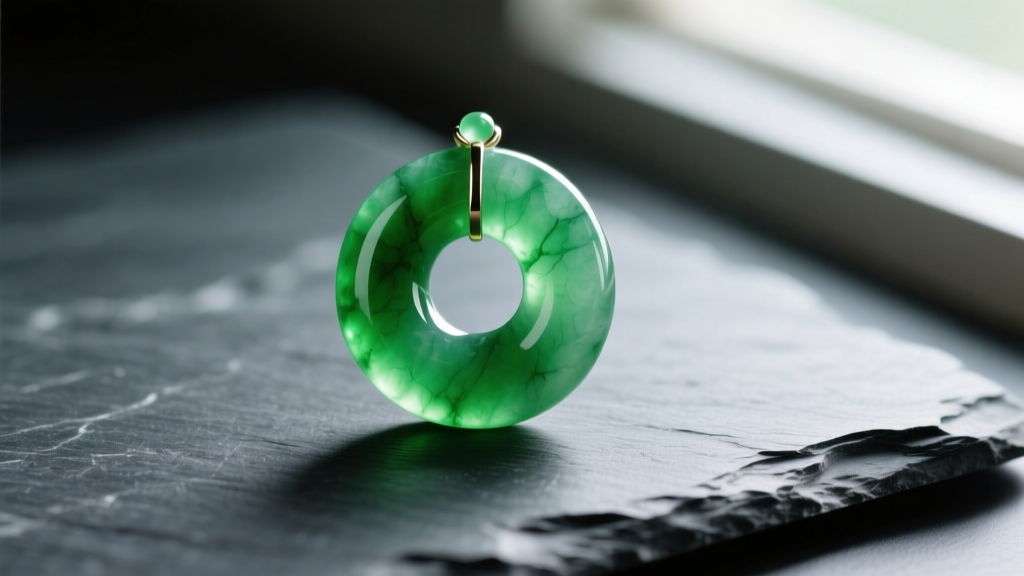
Gifting jewelry is a deeply personal endeavor, but few pieces carry the profound historical weight and enduring elegance of the jade necklace circle. Often referred to in gemological and cultural circles as a Pi disc, Bi disc, or Kou Ping (safety buckle), the circular jade pendant is a masterclass in minimalist design. It represents unity, eternity, and protection. As we navigate the 2026 jewelry market, where provenance and untreated gemstones are more critical than ever, selecting the right jade circle requires a blend of cultural appreciation and gemological knowledge.
Whether you are celebrating a milestone anniversary, a graduation, or a cultural rite of passage, this comprehensive guide will help you match the perfect jade circle necklace to your specific occasion, ensuring your gift is both meaningful and structurally sound.
Decoding the Jade Circle: Nephrite vs. Jadeite for Gifting
Before selecting a piece, it is vital to understand that "jade" is an umbrella term for two distinct metamorphic minerals: Nephrite and Jadeite. According to the Gemological Institute of America (GIA), while both are incredibly tough, their chemical compositions, visual properties, and price points differ vastly.
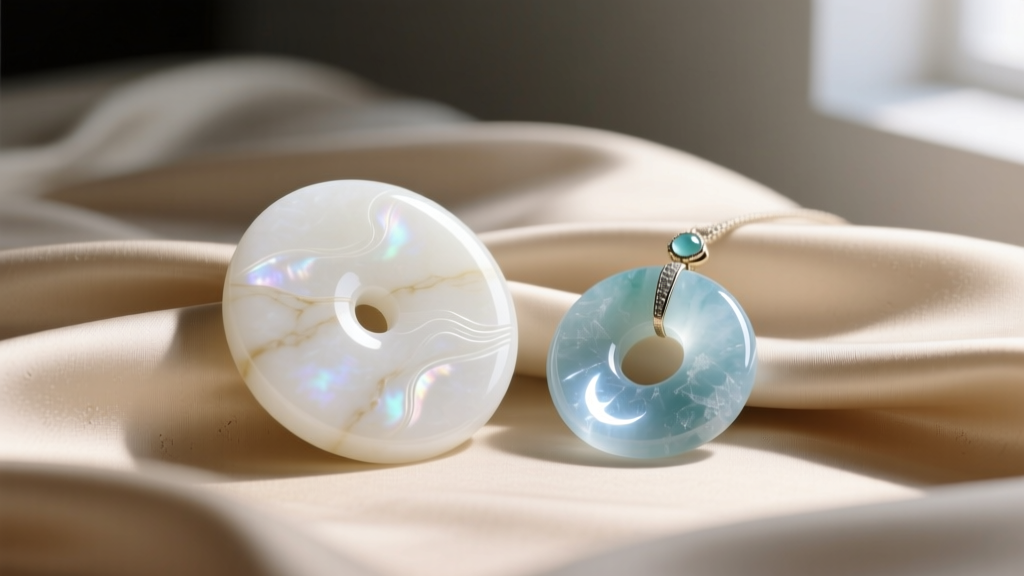
Nephrite: The Traditional Choice
Nephrite (calcium magnesium silicate) is the jade of ancient Chinese history, revered for thousands of years. It typically presents in opaque to semi-translucent shades of creamy white ("mutton fat" jade), spinach green, and deep black. Because of its interlocking fibrous crystal structure, nephrite is exceptionally tough, making it highly resistant to chipping. A nephrite jade necklace circle is an excellent, budget-friendly gift that honors deep historical traditions.
Jadeite: The Modern Luxury Standard
Jadeite (sodium aluminum silicate) is the rarer, more valuable cousin, primarily sourced from Myanmar. It offers a glassy luster and higher translucency. Jadeite circles come in a spectacular array of colors, including imperial green, lavender, icy white, and yellow. For high-end gifting, a Type A jadeite circle pendant is the undisputed pinnacle of luxury.
The Grading System: What to Look for in Type A Jade
When investing in a jade necklace circle, you must understand the universal ABC grading system. The market is flooded with treated stones, and gifting a chemically altered stone can be a major faux pas. Always insist on Type A jade for meaningful gifts.
| Grade | Treatment Process | Structural Integrity | Market Value & Gifting Suitability |
|---|---|---|---|
| Type A | 100% Natural; only cut, polished, and sometimes waxed. | Excellent; retains natural crystal structure. | High ($300 - $50,000+). The only grade suitable for heirloom gifting. |
| Type B | Bleached with acid to remove impurities, then polymer-impregnated. | Poor; becomes brittle and yellows over time. | Low ($50 - $300). Avoid for gifts; lacks longevity. |
| Type C | Chemically dyed to enhance or fake vibrant colors. | Very Poor; color fades under UV light and heat. | Negligible ($20 - $150). Never gift Type C jade. |
"The true beauty of a jade circle lies not just in its color, but in its 'water' (translucency) and 'seed' (crystal density). A highly translucent Type A jadeite circle will glow from within, catching the light in a way that treated stones simply cannot replicate."
Occasion Matching: Which Jade Circle Suits Your Milestone?
The color, translucency, and carving style of the jade circle should directly reflect the occasion you are celebrating. Here is a curated framework for matching the stone to the milestone.
1. Graduations & New Beginnings: Icy White or Lavender Jadeite
For a recent graduate stepping into a new chapter, an "icy" white or pale lavender jadeite circle is profoundly symbolic. The high translucency and pale hues represent clarity of mind, a blank slate, and spiritual purity.
Specifications: Look for a 25mm to 30mm diameter disc with a thickness of 4mm to 6mm.
Pricing: $800 to $2,500 for high-quality, glassy Type A icy jadeite.
2. Anniversaries & Deep Commitments: Imperial or Apple Green Jadeite
Green jade is universally associated with enduring love, vitality, and prosperity. For a 10th or 20th anniversary, a vibrant apple green or deep imperial green jadeite circle is a breathtaking gesture. The unbroken circle symbolizes a love with no beginning and no end.
Specifications: Seek a rich, saturated color with at least 60% translucency. Avoid stones with heavy black mineral inclusions (chromite spots).
Pricing: $5,000 to $25,000+ depending on color saturation and "water" (translucency).
3. Cultural Milestones & Protection: Spinach Green Nephrite or Carved Kou Ping
If you are gifting a piece for protection—such as a newborn's first jade, a bon voyage gift, or a traditional cultural milestone—opt for deep spinach green nephrite or a jadeite Kou Ping (safe buckle). The Kou Ping is slightly thicker and features a smaller center hole, historically believed to ward off negative energy and protect the wearer's life force.
Specifications: 30mm to 40mm diameter, often paired with a traditional red or black silk cord.
Pricing: $200 to $1,200.
Sizing, Cords, and Settings: Completing the Gift
A jade necklace circle is only as good as its suspension. How you string the pendant drastically alters its aesthetic and wearability.
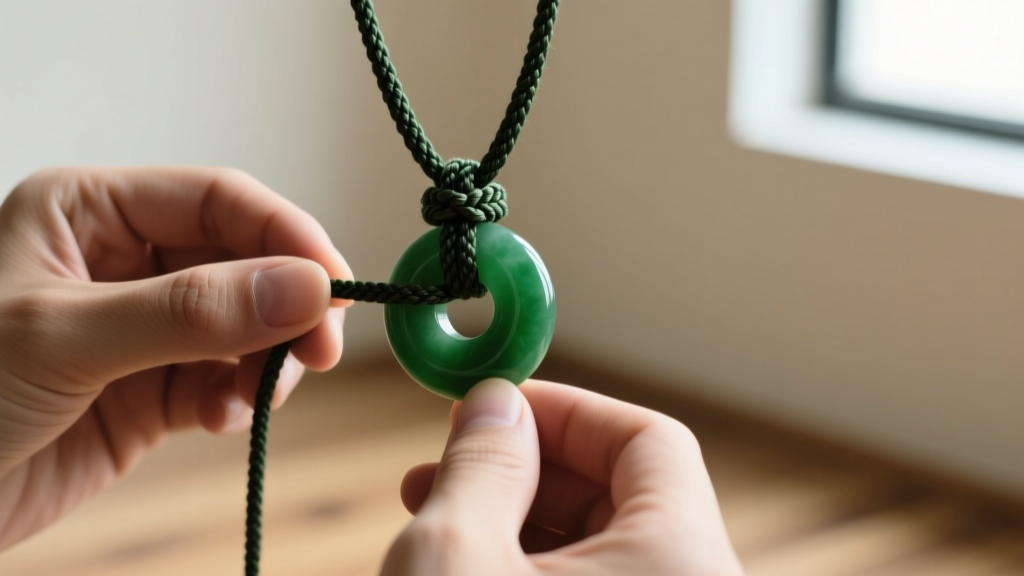
- The Traditional Macrame Cord: For cultural and protective gifts, hand-knotted nylon or silk macrame cords are preferred. They allow the wearer to adjust the length from a 20-inch collarbone rest to a 32-inch sweater length. Ensure the cord features a sliding knot closure rather than a metal clasp, maintaining the unbroken, continuous theme of the circle.
- The Modern Metal Chain: For high-end jadeite anniversary gifts, a minimalist 18k yellow gold or platinum box chain (1.0mm to 1.2mm gauge) elevates the stone. Use a secure, hidden bail (the metal loop connecting the stone to the chain) that is glued and mechanically fastened to the jade to prevent loss.
- The Bezel Setting: While some modern designs encase the outer rim of the jade circle in a diamond-set gold bezel, purists argue this hides the stone's edge and disrupts the natural flow of energy. A simple top-drill hole with a gold bail is the most timeless choice.
Authentication and Sourcing: Protecting Your Investment
The secondary market and online retailers are saturated with misrepresented jade. According to historical archives from The Metropolitan Museum of Art, jade has been counterfeited using serpentine, aventurine, and dyed quartz for centuries. Today, the stakes are even higher with advanced polymer treatments.
The Golden Rule of Jade Gifting: Never purchase a jade necklace circle over $500 without an independent gemological certificate.
Look for reports from the GIA (Gemological Institute of America) or the NGTC (National Gemological Training Centre of China). The certificate must explicitly state that the stone is "Natural Jadeite" or "Natural Nephrite" with no indications of bleaching, polymer impregnation, or dyeing. If the report mentions "polymer" or "dyed," you are looking at Type B or C jade.
Quick In-Person Inspection Checklist
If you are shopping in a physical jade market or boutique, use this quick framework to assess the piece:
- The Temperature Test: Real jade is exceptionally dense and will feel noticeably cold to the touch, taking longer to warm up in your hand than glass or plastic imitations.
- The Light Test: Shine a jeweler's penlight through the edge of the circle. Type A jadeite will show a fibrous, interlocking internal structure (often described as "cotton" or "fluff"). If it looks perfectly clear like glass, or shows spiderweb-like acid-etching patterns, walk away.
- The Acoustic Test: Gently tap the jade circle with a piece of agate or another piece of jade. Natural, untreated jade emits a clear, high-pitched, resonant chime. Polymer-treated (Type B) jade will produce a dull, muffled thud.
Final Thoughts on Gifting the Circle
A jade necklace circle is more than just an accessory; it is a wearable talisman. By understanding the mineral differences between nephrite and jadeite, strictly adhering to Type A grading, and thoughtfully matching the stone's color to the recipient's life milestone, you elevate your gift from a simple purchase to a profound gesture. Whether it rests over a graduation gown or a wedding dress, the unbroken jade circle remains a timeless emblem of protection, unity, and enduring beauty.


