Necklace with Beads: A Deep Dive Into Material Properties
Discover how to choose the perfect necklace with beads by comparing gemstone, glass, and organic materials for durability, porosity, and stringing needs.

The Structural Anatomy of Beaded Jewelry
When evaluating a necklace with beads, most buyers focus exclusively on the aesthetic appeal of the stones or glass. However, from a materials science perspective, the longevity of beaded jewelry depends on the complex interaction between the bead's internal drill hole, its specific gravity, and the tensile strength of the stringing medium. In 2026, advanced jewelry manufacturing has introduced highly durable nylon-coated micro-wires and lead-free metal alloys, yet the fundamental mineral properties of the beads themselves dictate the piece's structural limits.
Every bead has a unique Mohs hardness rating, porosity level, and specific gravity. A 10mm lapis lazuli bead, for instance, weighs significantly more than a 10mm amber bead of the exact same dimensions. This variance in mass directly impacts the drape of the necklace and the mechanical stress placed on the clasp and stringing wire. Furthermore, the interior of a bead's drill hole can harbor micro-burrs—especially in diamond-cut or faceted gemstones—that act like microscopic saws against stringing materials over time.
Mineral & Gemstone Beads: Hardness and Porosity
Gemstone beads are categorized by their position on the Mohs scale of mineral hardness, which measures a material's resistance to scratching. According to the GIA Gem Encyclopedia, understanding these ratings is critical for determining how a necklace will withstand daily wear, environmental exposure, and contact with cosmetics.
High-Durability Stones (Mohs 7 and Above)
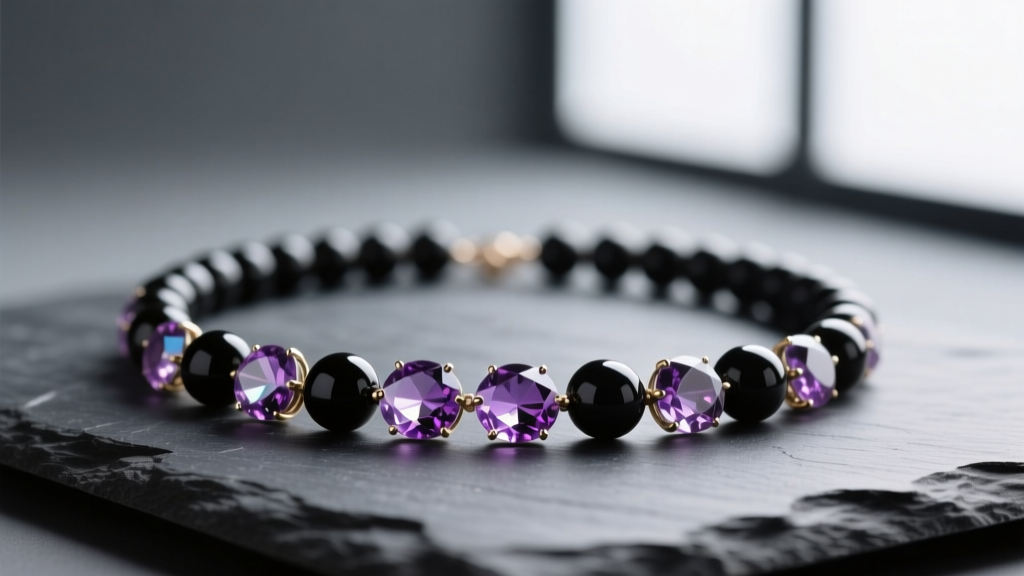
Quartz-based beads, including amethyst, citrine, and onyx, sit at a 7 on the Mohs scale. These materials are highly resistant to scratching and possess low porosity. A necklace with beads made of quartz can withstand frequent exposure to water and mild soaps without degrading. Because these stones are relatively hard, they are often faceted. The sharp edges of faceted drill holes require a high-quality, 49-strand nylon-coated stainless steel wire to prevent internal fraying.
Porous & Delicate Stones (Mohs Under 6)
Turquoise (Mohs 5-6), opal (Mohs 5.5-6.5), and malachite (Mohs 3.5-4) present entirely different challenges. Turquoise is highly porous; untreated stones will absorb skin oils, lotions, and perspiration, leading to permanent color shifts and structural weakening over time. To combat this, modern jewelers frequently use stabilized turquoise, where the stone is infused with a clear epoxy resin to lock out moisture. Opals, containing up to 20% water, are susceptible to crazing (internal cracking) if exposed to extreme heat or rapid humidity changes.
Organic Beads: Pearls, Wood, and Shell
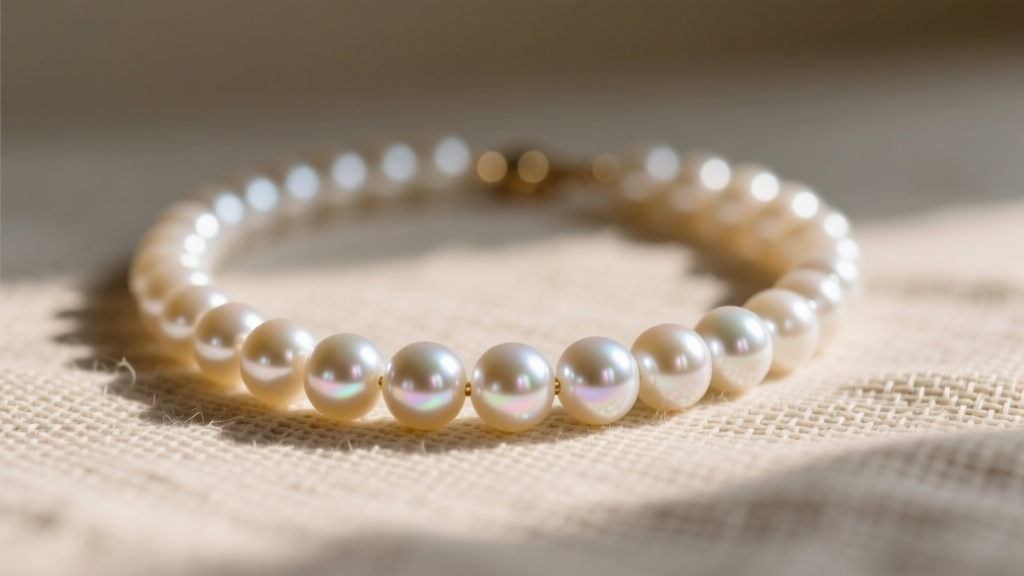
Organic materials bypass the Mohs scale's mineral classifications, relying instead on biological structures that are inherently sensitive to their environment. Freshwater and saltwater pearls are composed of nacre (calcium carbonate and conchiolin). With a Mohs rating of just 2.5 to 4.5, pearls are easily scratched by harder gemstones. Therefore, a pearl necklace with beads should never be layered directly against a quartz or metal chain.
Pearls also feature a unique structural vulnerability: the drill hole. Because nacre is soft, the edges of a pearl's drill hole can be sharp enough to cut through standard nylon thread. Traditional silk knotting remains the gold standard for pearl necklaces, as the knots protect the pearls from rubbing together and provide multiple failure points so the entire strand does not scatter if the silk breaks.
Wood beads introduce the variable of hygroscopic expansion. Woods like ebony, sandalwood, and rosewood absorb and release moisture based on ambient humidity. If a wood bead necklace is strung too tightly without adequate slack, the beads can expand during humid summer months, placing immense pressure on the stringing wire and potentially causing the wood to split or the wire to snap.
Glass and Metal Beads: Manufactured Consistency
Glass beads, whether mass-produced molded glass or artisanal lampwork, rely on the annealing process for their durability. Properly annealed glass is slowly cooled in a kiln to relieve internal stresses. If a lampwork bead is improperly annealed, it retains internal tension and can shatter spontaneously months after being strung. Modern lead-free crystal beads (the standard since the phase-out of leaded crystal) offer exceptional refractive indices but remain brittle, requiring protective spacer beads when mixed with heavier metal components.
Metal beads add substantial weight and require careful alloy selection. In 2026, strict global regulations mandate that all wearable metal beads be virtually lead-free and nickel-free. Brass and copper beads offer a warm, vintage aesthetic but will oxidize and develop a patina when exposed to the sulfur compounds in human sweat. To maintain a bright finish, manufacturers apply micro-thin layers of clear lacquer or rhodium plating, though these coatings will eventually wear away at the friction points of the drill holes.
Material Comparison Matrix
| Bead Material | Mohs Hardness | Porosity | Recommended Stringing | Maintenance Level |
|---|---|---|---|---|
| Quartz (Amethyst, Onyx) | 7.0 | Very Low | 49-Strand Coated Steel Wire | Low |
| Turquoise (Stabilized) | 5.0 - 6.0 | Low (Treated) | Heavy-Duty Coated Wire | Medium |
| Freshwater Pearl | 2.5 - 4.5 | Low | Knotted Silk or Power Pro | High |
| Lampwork Glass | 5.5 - 6.5 | None | Standard Coated Wire | Low |
| Sandalwood | N/A (Organic) | High | Elastic or Knotted Cord | High |
Stringing Mechanics: Matching Wire to Bead Weight
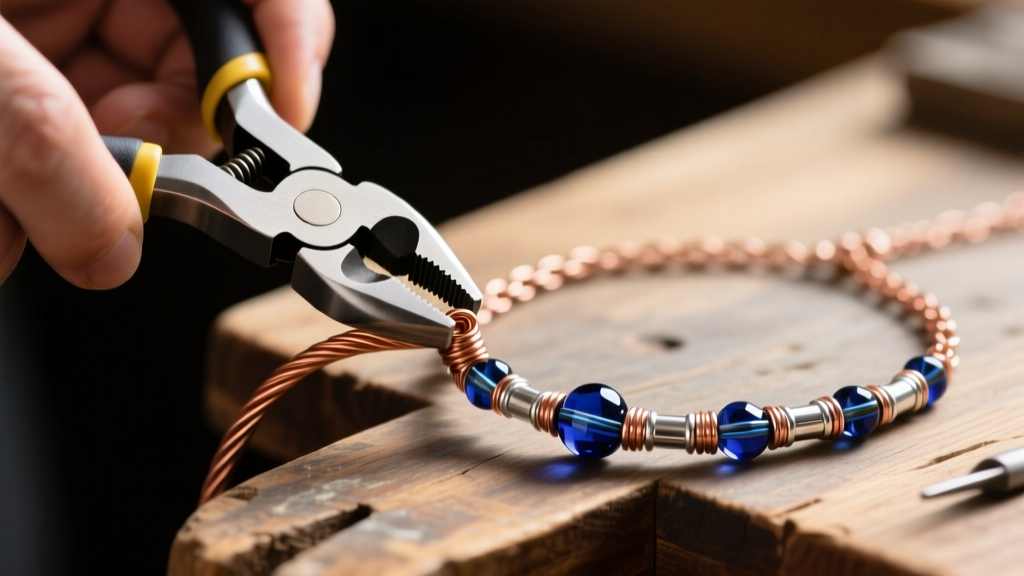
The structural integrity of a necklace with beads relies heavily on selecting the correct stringing diameter. According to technical guidelines from jewelry supply experts at Rio Grande, nylon-coated stainless steel wire is available in three primary diameters for beading:
- 0.014-inch (Fine): Ideal for lightweight, small-hole beads like freshwater pearls, seed beads, and delicate glass. Offers high flexibility but lower tensile strength.
- 0.019-inch (Medium): The industry workhorse. Perfect for standard gemstone beads (6mm to 10mm), crystal, and metal beads. It provides an optimal balance of drape and break resistance.
- 0.024-inch (Heavy): Reserved for heavy, large-format beads, chunky metal components, and beads with sharp, abrasive internal edges like certain raw diamond cuts.
Equally important is the crimp bead. A 2x2mm sterling silver or gold-filled crimp tube is mathematically engineered to securely fold over two passes of 0.019-inch wire. Using a crimp tube that is too large will result in a loose connection that allows the wire to slip, while a tube that is too small will fail to close properly, creating a sharp metal edge that will eventually sever the wire.
Care and Maintenance Protocols
Expert Insight: The lifespan of a beaded necklace is not infinite. Even the most advanced 49-strand micro-wires experience metal fatigue from the constant bending and unbending that occurs when the necklace is worn, removed, and stored. We recommend professionally restringing heavy gemstone necklaces every 3 to 5 years, and pearl necklaces every 2 to 3 years if worn frequently.
To maintain the material integrity of your jewelry, always store a necklace with beads flat or draped over a wide, padded jewelry bust. Hanging beaded necklaces on thin hooks for long periods allows gravity to stretch the stringing material, particularly silk and elastic, leading to permanent deformation and eventual failure. By understanding the specific material properties of your beads, you can ensure your jewelry remains both beautiful and structurally sound for decades.


