Anatomy of a Vintage Turquoise Squash Necklace: An Expert Guide
Explore the technical anatomy, silver grading, and turquoise origins of the authentic turquoise squash necklace in this expert silversmithing guide.

The Misnomer: Squash vs. Squash Blossom & Historical Origins
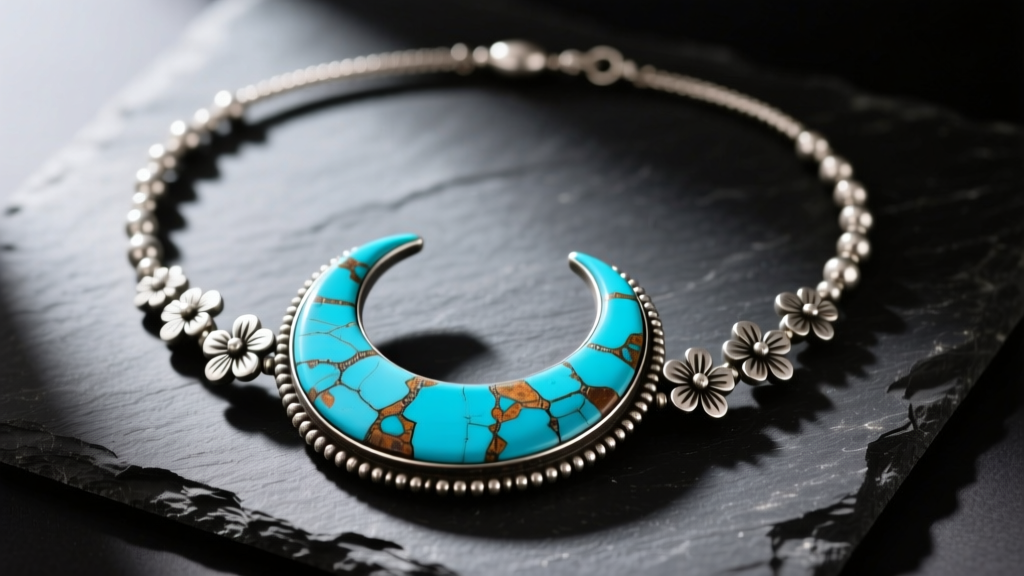
When collectors and enthusiasts search for a 'turquoise squash necklace,' they are typically referring to the iconic Navajo squash blossom necklace. However, from a historical and botanical perspective, the term is a misnomer. The fluted silver beads that give the piece its name are not modeled after squash blossoms at all; rather, they are stylized representations of the pomegranate. This motif was introduced to the American Southwest by Spanish and Moorish explorers in the 16th century, adorning their saddles, bridles, and clothing. Navajo silversmiths, who began working with silver in the mid-to-late 1800s, adopted and adapted this pomegranate design, eventually pairing it with indigenous turquoise to create what is now globally recognized as the squash blossom necklace.
Understanding this historical lineage is critical for authentication. Early transitional pieces (circa 1880-1910) often feature crude, hand-hammered blossoms with distinct asymmetrical flutes, whereas the tourist-trade boom of the 1970s produced highly uniform, machine-stamped blossoms. Recognizing these morphological differences is the first step in evaluating the provenance and market value of any vintage piece.
Metallurgy & Silver Purity: Coin Silver vs. Sterling
The structural integrity and historical value of a turquoise squash necklace are heavily dictated by its silver composition. While modern pieces are almost exclusively crafted from sterling silver (92.5% silver, 7.5% copper), vintage and antique pieces were frequently forged from 'coin silver.' Coin silver is an alloy created by melting down pre-1965 US silver coins, resulting in a purity of roughly 90% silver and 10% copper.
This 2.5% difference in copper content drastically alters the metal's working properties and aging characteristics. Coin silver is slightly harder and more brittle than sterling, requiring the silversmith to anneal the metal more frequently during the forging process. Furthermore, the higher copper content accelerates oxidation, giving vintage coin silver pieces a distinct, warm, dark patina that is highly prized by serious collectors.
Identifying Structural Failure Modes in Vintage Silver
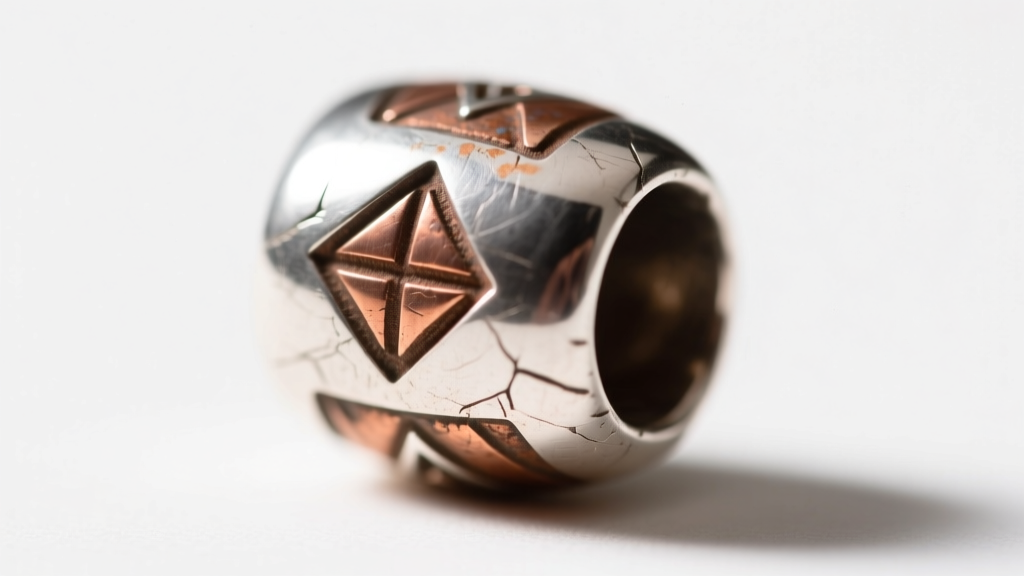
When inspecting the double-strand bench beads that form the necklace's collar, pay close attention to the drill holes and stringing tension. A common failure mode in mid-century pieces is 'bezel lifting' on the blossom beads. Because the silver sheet used for the bezels is typically 22 to 24 gauge, decades of thermal expansion and contraction can cause the silver to pull away from the stone. Additionally, inspect the Naja pendant's bail. The bail must support the immense weight of the crescent (often 50 to 150 grams); if the solder joint at the bail's base shows micro-fractures or a grayish, crystalline texture, the piece is at high risk of catastrophic structural failure when worn.
Turquoise Mineralogy: Natural vs. Stabilized Cabochons
The cabochons set into a turquoise squash necklace are chemically defined as a hydrous phosphate of copper and aluminum (CuAl6(PO4)4(OH)8·4H2O). According to the Gemological Institute of America (GIA), natural turquoise ranges from 5 to 6 on the Mohs hardness scale. However, the porous nature of lower-grade turquoise necessitates stabilization to prevent the stone from absorbing oils, cosmetics, and moisture, which can cause it to turn a muddy green over time.
It is vital to distinguish between 'stabilized' turquoise and 'dyed' or 'reconstituted' turquoise. Stabilization involves injecting a clear epoxy or polymer resin into the stone under a vacuum, hardening it while preserving its natural color and matrix. Dyeing, conversely, artificially alters the color and significantly diminishes the piece's value. Mineralogical databases like Mindat.org document the vast geological variations in turquoise, which directly impact its market desirability.
| Turquoise Mine | Color Profile | Matrix Characteristics | Mohs Hardness | Market Value Tier |
|---|---|---|---|---|
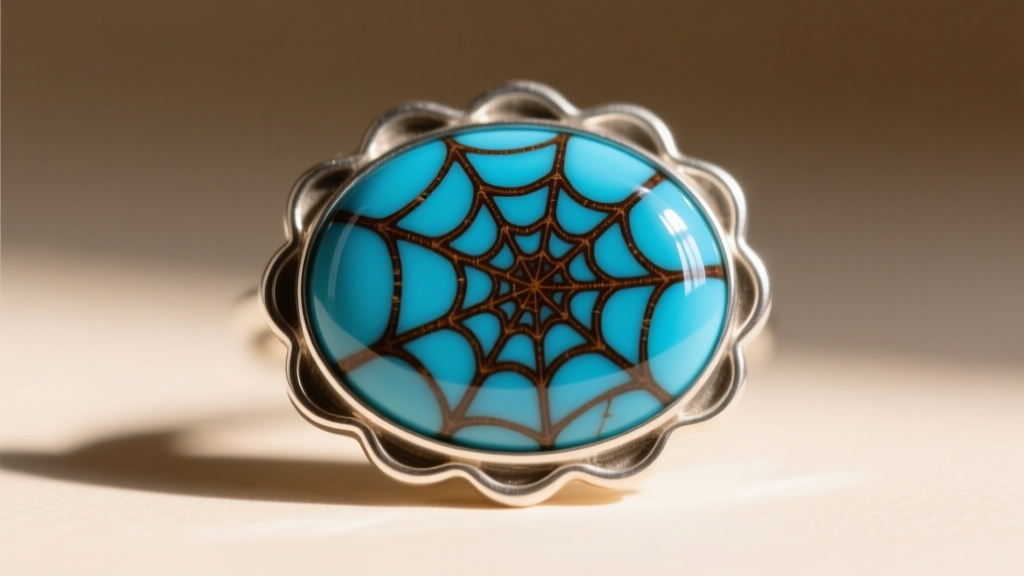
| Bisbee (AZ) | Deep, vibrant blue | Chocolate brown to black spiderweb | 5.5 - 6.0 | Premium / Collector |
| Lander Blue (NV) | High-grade sky blue | Intricate black webbing | 5.5 - 6.0 | Ultra-Premium / Rare |
| Sleeping Beauty (AZ) | Uniform robin's egg blue | Minimal to no matrix | 5.0 - 5.5 | High / Commercial Standard |
| Kingman (AZ) | Medium to dark blue | Pyrite and brown matrix | 5.0 - 6.0 | Mid to High |
The Naja Pendant: Crescent Geometry & Sandcasting
The centerpiece of any authentic turquoise squash necklace is the Naja (or Najahe) pendant. Originally a Moorish symbol used to ward off the evil eye, the inverted crescent shape was adopted by the Navajo and later the Hopi and Zuni. The technical execution of the Naja is a primary indicator of the necklace's age and authenticity.
Traditional Najas were created using 'sandcasting' or 'tufa casting.' In this process, the silversmith carves the design into a porous tufa stone, binds two halves together, and pours molten silver into the sprue hole. This technique leaves a distinct, slightly pitted and porous texture on the reverse side of the pendant. Modern reproductions often utilize rubber mold centrifugal casting, which results in a perfectly smooth back. If the reverse of the Naja is completely smooth and lacks the microscopic pitting characteristic of tufa, it is likely a modern commercial reproduction.
Furthermore, the turquoise inlay or cabochon set into the center of the Naja must be examined for 'sweat soldering' marks. Early silversmiths used a crude soldering technique that often left excess silver solder visible around the base of the bezel. While modern collectors prefer clean lines, these messy solder joints are actually hallmarks of early, authentic Native American craftsmanship.
Authentication Framework & Market Pricing Tiers
Evaluating a turquoise squash necklace requires a systematic approach to avoid purchasing counterfeit or heavily altered pieces. Use the following framework when inspecting a potential acquisition:
- The Acetone Test: Apply a small amount of pure acetone to a cotton swab and rub it gently on an inconspicuous area of the turquoise. If the swab picks up blue or green dye, the stone is artificially colored, not natural or properly stabilized.
- The Loupe Inspection: Using a 10x jeweler's loupe, examine the edges where the turquoise meets the silver bezel. Natural, hand-cut cabochons will have microscopic gaps or slight unevenness. Perfectly uniform, machine-stamped bezels with zero gaps indicate modern, mass-produced tourist jewelry.
- Blacklight Fluorescence: Shine a UV blacklight over the stones. Some modern epoxy stabilizers and dyed howlite imitations will fluoresce brightly, whereas natural, untreated turquoise will remain inert.
Expert Pricing Insight: The market for these necklaces is strictly stratified. 'Tourist-grade' pieces from the 1970s boom, featuring heavily stabilized stones and thin sterling silver, typically trade between $400 and $900. 'Vintage transitional' pieces (1930s-1950s) with coin silver and natural, high-grade turquoise command $3,500 to $8,000. 'Museum-grade' antique pieces with documented provenance, featuring Lander Blue or Bisbee turquoise and heavy sandcast Najas, routinely exceed $15,000 at specialized auction houses.
Preventative Maintenance & Chemical Avoidance
Preserving the structural and aesthetic integrity of a vintage turquoise squash necklace requires strict adherence to specific maintenance protocols. Never use ultrasonic cleaners or commercial silver dips on these pieces. Ultrasonic vibrations can easily fracture natural turquoise along its microscopic matrix veins, while the harsh thiourea chemicals in silver dips will strip the stone of its natural waxes and oils, leaving it chalky and prone to spalling.
To clean the silver components, use a soft, untreated microfiber cloth to gently buff the high points, leaving the oxidation in the recessed stamping intact. This contrast is essential for highlighting the hand-stamped geometric patterns. For the turquoise cabochons, a simple wipe with a damp, lint-free cloth followed by immediate drying is sufficient. When storing the necklace, lay it completely flat in a climate-controlled environment. Hanging the necklace for prolonged periods can stretch the traditional sinew or nylon stringing material, leading to dangerous tension imbalances that can snap the strand and scatter irreplaceable vintage beads.


