Evaluating Stone Necklaces: Lapidary Grades & Stringing Mechanics
Master the technical anatomy of stone necklaces. Explore lapidary bead grades, Mohs hardness impacts, and advanced stringing mechanics for lasting durability.

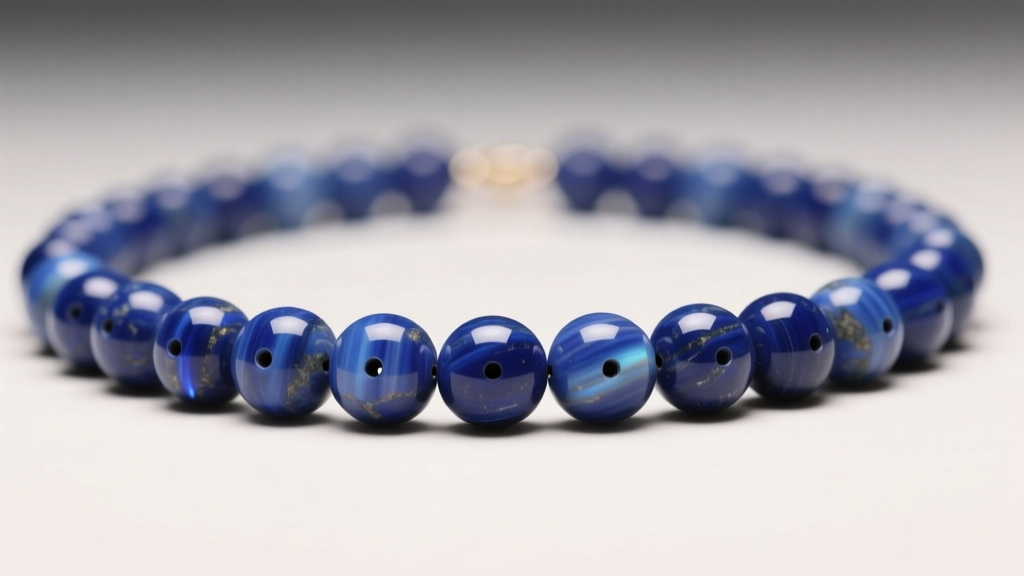
When analyzing the structural integrity of stone necklaces, the untrained eye focuses solely on the chromatic appeal of the gemstones. However, a true lapidary expert understands that a beaded strand is fundamentally a tension-based suspension system. The longevity, drape, and ultimate value of any genuine stone necklace are dictated by a complex interplay of lapidary cutting tolerances, Mohs hardness considerations, drill-hole mechanics, and stringing metallurgy. This deep dive bypasses superficial styling advice to explore the exact technical specifications that separate heirloom-quality stone necklaces from mass-produced tourist-shop strands.
The Lapidary Standard: Grading Stone Beads
The journey from rough cabochon material to a finished necklace strand involves rigorous grading. In the wholesale gemstone market, beads are categorized by dimensional tolerance, surface polish quality, and color consistency. Commercial-grade stone necklaces often utilize rotary tumblers, a bulk-processing method where rough stones are churned with abrasive grit and water. While cost-effective, rotary tumbling frequently results in rounded, uneven edges, pitting in softer matrix materials, and a waxy, inconsistent surface luster.
Dimensional Tolerance and Surface Polish
Premium stone necklaces demand strict dimensional tolerances. In a high-grade 8mm round bead strand, the variance from bead to bead should not exceed 0.15mm. This precision ensures uniform tension distribution across the stringing material. To achieve a mirror-like polish on hard stones like agate or quartz (Mohs 7), master lapidaries use vibratory tumbling with progressively graded abrasives—starting with 60-grit silicon carbide for shaping and finishing with cerium oxide or aluminum oxide powders for the final luster. Hand-polishing is reserved for high-value, fragile materials like opal or turquoise, where mechanical tumbling would destroy the delicate matrix or cause catastrophic fracturing.
Mohs Hardness and Drill Hole Mechanics
The Mohs scale of mineral hardness is the single most critical factor in determining how a stone bead is drilled and how it will interact with the stringing material over time. Drilling a gemstone is an act of controlled destruction, and improper technique leads to micro-fractures that compromise the bead's structural core.
Spalling, Exit Blowout, and Drill Bit Selection
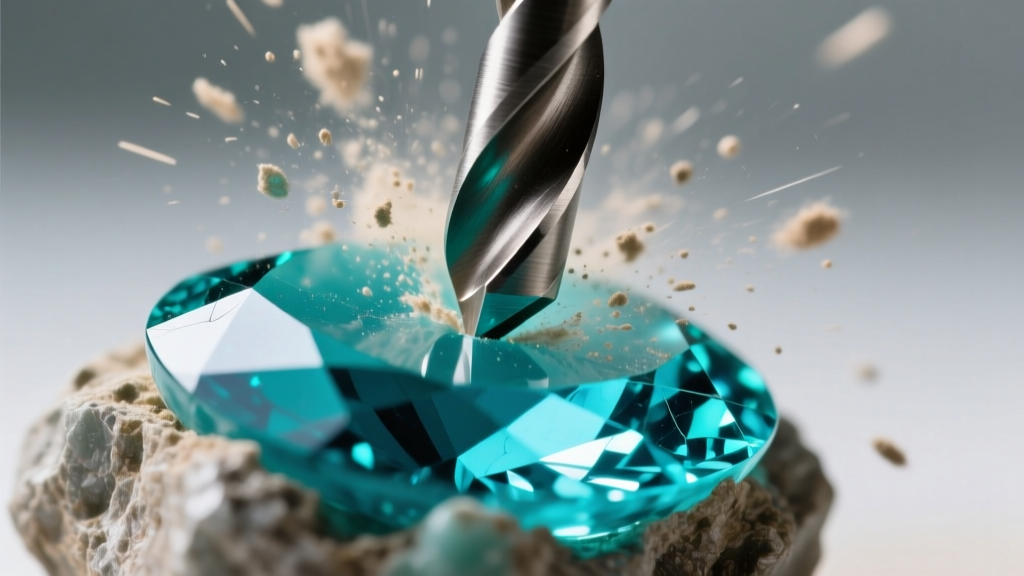
When a drill bit breaches the opposite side of a stone bead, it often causes 'exit blowout' or spalling—a jagged chipping of the material around the hole. This creates a razor-sharp inner edge that will slowly saw through nylon or silk stringing over months of wear. To prevent this, premium lapidaries drill halfway through the stone from the top, flip it, and complete the hole from the bottom, or they use a sacrificial backer board of dense wax or hardwood. Furthermore, the drill bit material must exceed the stone's Mohs hardness. While tungsten carbide bits are sufficient for porous materials like turquoise or coral (Mohs 3-6), drilling quartz, jade, or agate (Mohs 6.5-7) mandates the use of diamond-tipped core drills. Using dull or inappropriate bits generates excessive thermal friction, which can cause heat-induced fracturing in heat-sensitive stones like emerald or tanzanite.
Stringing Metallurgy: Wire vs. Cord vs. Silk
The stringing medium is the unseen skeleton of stone necklaces. Selecting the correct material requires an understanding of tensile strength, flexibility, and abrasion resistance. Traditional silk thread, while prized for its luxurious drape and knotting capabilities, is a catastrophic failure mode for hard, sharp-edged stones. Faceted quartz or beryl beads will effortlessly slice through silk over time due to the sharp inner edges of their drill holes.
The Anatomy of 49-Strand Micro-Wire
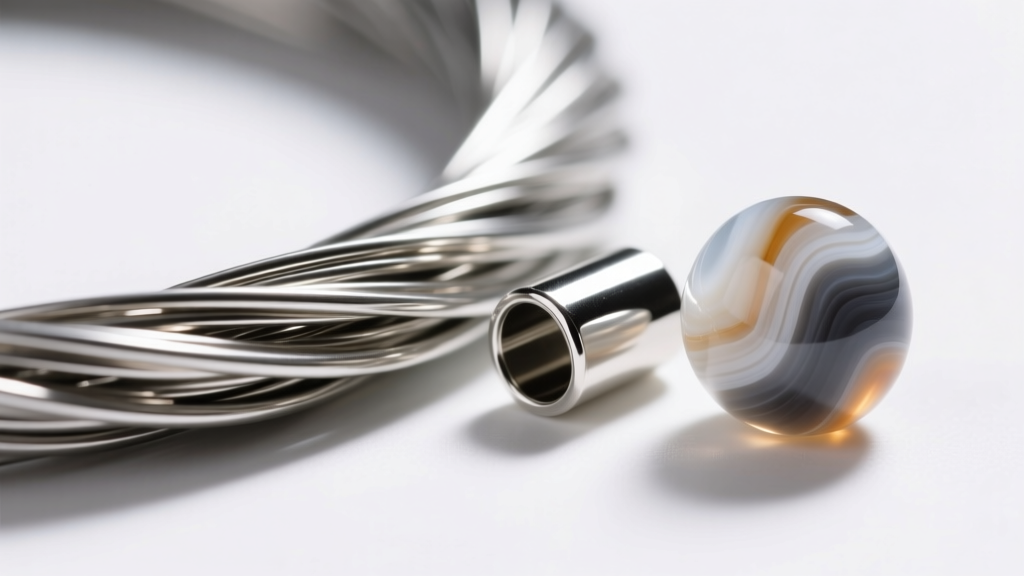
For heavy or abrasive stone necklaces, 49-strand stainless steel micro-wire is the industry gold standard. As detailed by SoftFlex Company, this wire consists of 49 individual micro-cables of marine-grade stainless steel, twisted into 7 bundles of 7, and extruded with a microscopic jacket of clear nylon. The 49-strand configuration provides a supple, fabric-like drape that mimics silk, while boasting a tensile strength of up to 40 pounds (for the 0.015-inch diameter variant). In contrast, 19-strand or 7-strand wires are significantly stiffer, prone to kinking, and lack the fluid movement required for high-end jewelry.
The Mechanics of Crimping and Work Hardening
A wire necklace is only as strong as its crimp. Crimp tubes secure the wire by being mechanically crushed into a folded, locked position. Sterling silver (925) or 14k gold-filled crimp tubes are mandatory. Base metal crimps (like brass or copper) are too soft and will deform under tension, while cheap plated crimps are brittle and will shatter when compressed. When crimping, the metal undergoes 'work hardening'—the crystalline structure of the silver compresses and becomes rigid. Using a specialized micro-crimping tool ensures the tube is folded into a neat, rounded bead shape, eliminating sharp metal edges that could abrade the nylon coating of the wire.
Gemstone Treatments and Structural Integrity
According to the Gemological Institute of America (GIA), understanding gemstone treatments is critical for evaluating long-term stability. Many commercial stone necklaces feature heavily treated beads that degrade under environmental stress.
"The stability of a gemstone bead is directly tied to its treatment history. Polymer-impregnated stones may yellow, melt, or degrade when exposed to prolonged UV radiation or the natural heat and oils of human skin."
For example, low-grade turquoise is routinely stabilized using epoxy or plastic resins to prevent it from crumbling. While standard stabilization is an accepted industry practice, the proprietary Zachery treatment is highly prized by experts because it reduces porosity and enhances the stone's electrical matrix without introducing heat-sensitive plastics. Conversely, dyed stones—such as howlite passed off as turquoise or lapis lazuli—will bleed color onto the stringing material and the wearer's skin when exposed to sweat or cosmetics, permanently ruining the necklace.
Technical Specification Matrix: Bead Assembly Standards
The following table outlines the precise engineering specifications required for assembling stone necklaces based on material hardness and weight.
| Stone Material | Mohs Hardness | Standard Drill Hole | Recommended Stringing | Inter-Knotting Required? |
|---|---|---|---|---|
| Turquoise (Stabilized) | 5.0 - 6.0 | 0.8mm - 1.0mm | 49-Strand Wire (0.015") or S-Lon Cord | Optional (for design) |
| Lapis Lazuli | 5.5 - 6.0 | 0.8mm - 1.0mm | 49-Strand Wire (0.015") | No |
| Agate / Quartz | 6.5 - 7.0 | 0.8mm - 1.2mm | 49-Strand Wire (0.018") | No (Sharp holes cut silk) |
| Jade (Jadeite) | 6.5 - 7.0 | 1.0mm - 1.5mm | Heavy Nylon Cord or Wire | Yes (Traditional & Protective) |
| Opal (Solid) | 5.5 - 6.5 | 0.6mm - 0.8mm | Silk or Fine S-Lon (with knots) | Yes (Prevents bead-on-bead abrasion) |
Final Verdict: Building for the Long Term
Evaluating stone necklaces requires looking past the surface color and examining the structural engineering of the piece. A truly exceptional necklace will feature beads with tight dimensional tolerances, clean diamond-drilled holes free of exit spalling, and a stringing medium specifically chosen to counteract the Mohs hardness and weight of the stones. By understanding the metallurgy of crimp tubes, the mechanics of 49-strand wire, and the implications of gemstone treatments, collectors and jewelers can ensure their stone necklaces remain intact, beautiful, and structurally sound for generations.