How to Layer and Style a Circle Gold Necklace Perfectly
Master the art of styling a circle gold necklace. Learn step-by-step layering techniques, chain pairing, neckline matching, and pendant care.
The Anatomy of the Perfect Circle Gold Necklace
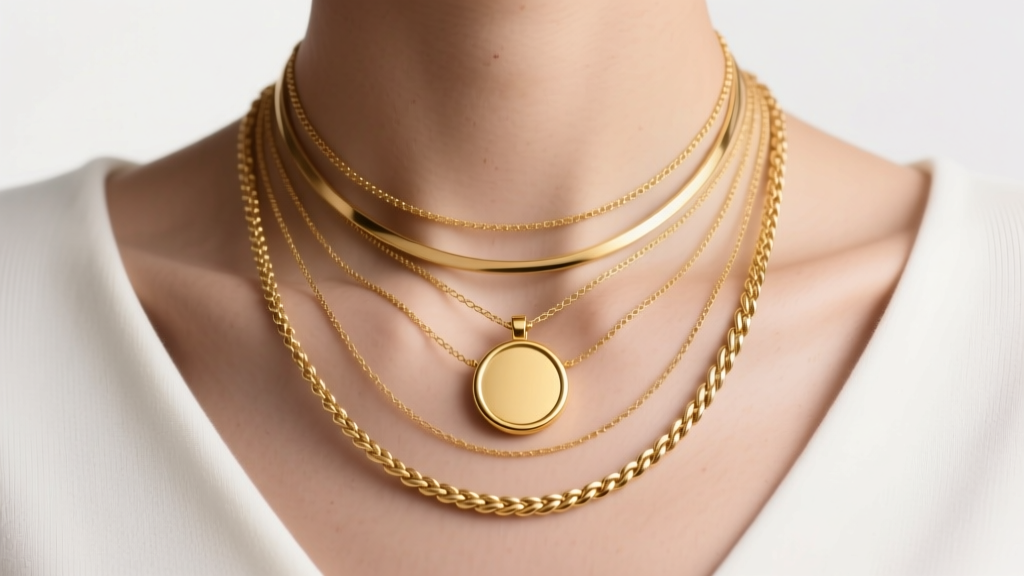
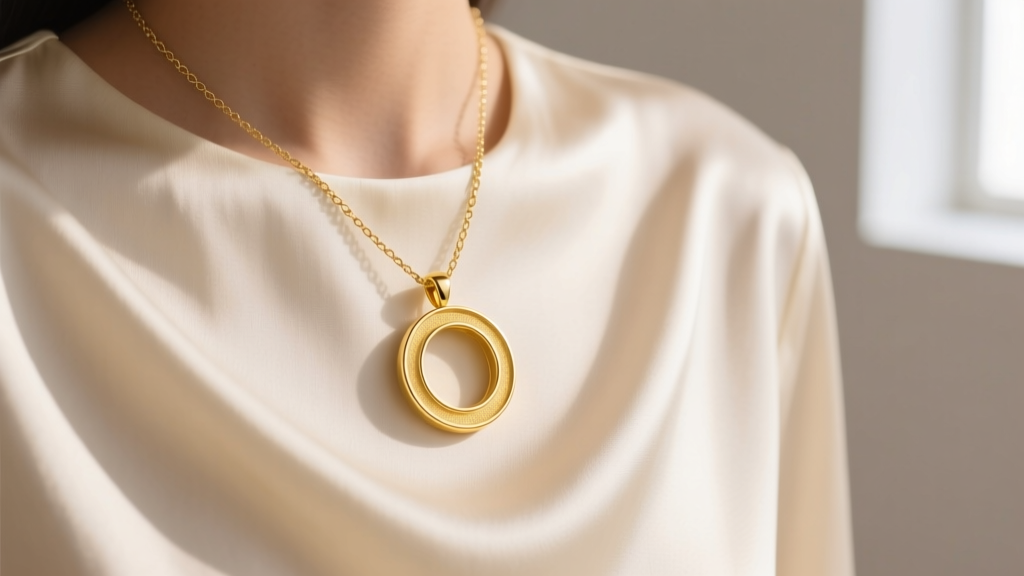
The geometric purity of a circle gold necklace makes it a cornerstone of modern jewelry styling. Unlike organic shapes or intricate filigree, the continuous loop of a circle pendant represents infinity and balance, allowing it to transition seamlessly from minimalist daily wear to complex, layered evening looks. However, achieving the perfect drape and preventing structural wear requires a deep understanding of metallurgy, chain mechanics, and spatial layering. This guide provides a step-by-step framework for selecting, styling, and maintaining your circular pendants with expert precision.
Karat Selection: 14k vs. 18k for Geometric Pendants
When selecting the metal for your pendant and chain, understanding the Gemological Institute of America (GIA) standards for gold alloys is critical. Pure 24k gold is too malleable for daily-wear pendants, as the bail (the loop connecting the pendant to the chain) will quickly warp under friction.
- 14k Gold (58.5% Pure Gold): Alloyed primarily with copper and silver, 14k gold offers a higher Vickers hardness (approximately 125-140 HV). This makes it the superior choice for the bail and chain links, as it resists the micro-abrasions caused by the pendant swinging against the neck. The color is slightly paler but highly durable.
- 18k Gold (75% Pure Gold): Prized for its rich, saturated yellow hue, 18k gold is softer. If you choose an 18k circle gold necklace, ensure the pendant is relatively lightweight (under 3.5 grams) and features a reinforced, soldered ring bail rather than a hidden or pinch bail to prevent structural failure over time.
Chain Pairing: Matching the Bail and Link
The relationship between the pendant's bail and the chain's width dictates how the circle lays against the sternum. A common failure mode is the 'pendant flip,' where the circle rotates backward. This occurs when the chain is too thin for the bail, allowing the pendant to slide through and invert. For a standard 15mm to 20mm circle pendant with a 3mm inner-diameter bail, pair it with a 1.2mm to 1.5mm box chain or wheat chain. These chains provide enough lateral friction to keep the pendant centered while maintaining a fluid drape.
Step-by-Step Guide to Layering Geometric Pendants
Layering a circle gold necklace requires strict adherence to spatial mathematics to prevent the chains from tangling and the pendants from obscuring one another. The golden rule of layering is the 2-Inch Drop Increment.
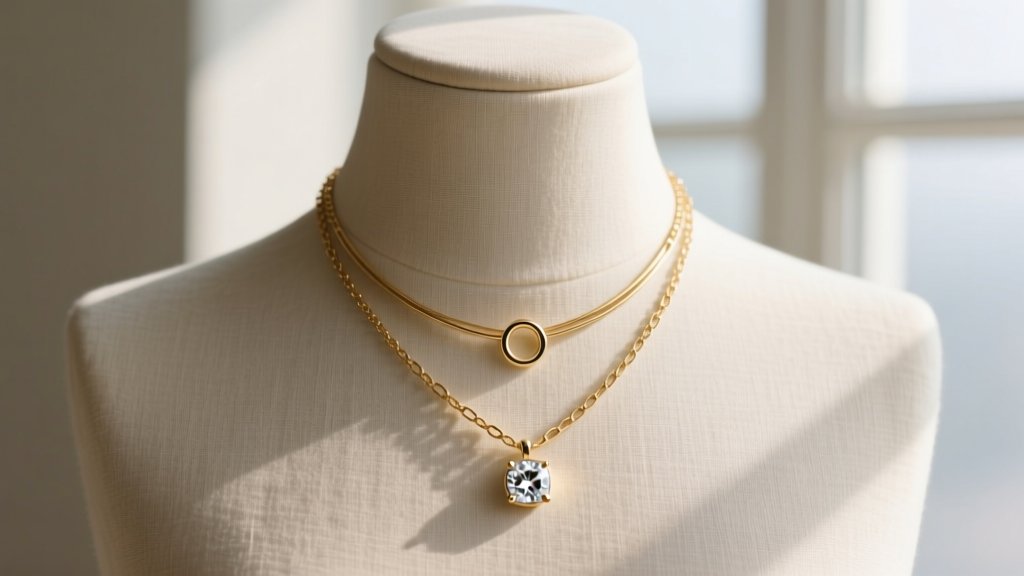
- Step 1: The Anchor (14 to 16 Inches)
Begin with a delicate 14-inch or 16-inch choker-length chain. A 1.0mm cable chain featuring a tiny 8mm bezel-set diamond or a simple gold bead works best. This sits high on the clavicle and frames the face without competing with the primary pendant. - Step 2: The Focal Circle (18 Inches)
Your primary circle gold necklace should sit at the standard 18-inch princess length. This places the geometric pendant directly in the visual center of the chest. Opt for a medium-weight pendant (20mm diameter) on a 1.2mm box chain. The 2-inch gap between the first and second chain prevents the clasps and pendants from interlocking. - Step 3: The Elongator (20 to 22 Inches)
To draw the eye downward and create a slimming vertical silhouette, add a 20-inch or 22-inch matinee-length chain. Instead of another pendant, use a textured chain like a 2.5mm paperclip chain or a rope chain. The lack of a third pendant prevents the 'heavy' look and allows the central circle to remain the undisputed focal point.
The Neckline Pairing Matrix
The visual weight of a circle pendant must be balanced against the geometry of your clothing's neckline. A pendant that is too small will vanish against a busy pattern, while one that is too large will clash with structured collars. Use the following matrix to calibrate your styling.
| Neckline Type | Optimal Chain Length | Ideal Circle Diameter | Styling Notes |
|---|---|---|---|
| Crew Neck | 18 - 20 Inches | 15mm - 25mm | The pendant must rest below the ribbed collar. Use a slightly thicker chain (1.5mm) to stand out against the heavy cotton. |
| V-Neck | 16 - 18 Inches | 10mm - 15mm | Mirror the V-shape by keeping the pendant small and elevated. The circle should sit in the upper third of the exposed skin. |
| Button-Down Shirt | 16 Inches (Choker) | 8mm - 12mm | Wear the necklace inside the collar, resting against the base of the throat. A delicate, high-polish circle adds a subtle, professional gleam. |
| Off-the-Shoulder | 20 - 24 Inches | 30mm+ (Statement) | With the collarbone fully exposed, use a long, heavy rope chain and a large, hammered circle pendant to anchor the bare expanse of skin. |
Customizing the Circle: Finishes and Textures
The surface finish of your circle gold necklace drastically alters its light-reflective properties and formality. High-polish finishes act like mirrors, catching ambient light and drawing immediate attention. However, they are also magnets for micro-scratches and fingerprint oils. For a more contemporary, understated aesthetic, consider alternative finishes:
- Brushed / Matte Finish: Created by running a fine wire brush across the gold surface, this technique scatters light rather than reflecting it. It is highly forgiving regarding daily wear and scratches, making it ideal for active lifestyles.
- Diamond-Cut Edges: Some circle pendants feature a flat, matte center with a beveled, diamond-cut outer rim. This provides the best of both worlds: a subtle core that highlights engraved coordinates or initials, surrounded by a brilliant, sparkling border.
- Hammered Texture: Hand-struck with a jeweler's hammer, this creates a faceted, organic surface on a geometric shape. The uneven planes catch light from multiple angles, giving the gold a liquid, molten appearance.
Troubleshooting Common Pendant Issues
Even the most carefully curated circle gold necklace can suffer from mechanical annoyances. The most frequently reported issue is the 'pendant flip,' where the circle slides behind the chain and rests upside down against the skin.
Expert Troubleshooting Tip: The pendant flip is a physics issue related to the center of gravity and the bail-to-chain ratio. If your chain's width is less than 40% of the bail's inner diameter, the pendant has too much rotational freedom. To fix this without changing the chain, thread a microscopic, clear silicone jewelry o-ring (available at craft stores) onto the chain and position it directly behind the bail. This acts as a friction stopper, physically blocking the pendant from sliding around to the back of your neck.
Another common issue is the clasp migrating to the front of the neck. This happens when the chain is perfectly symmetrical and lacks a counterweight. To solve this, ensure your lobster clasp is paired with a slightly heavier jump ring or a small gold 'counterweight' tag at the back of the neck. Gravity will naturally pull the heavier end down, keeping the clasp hidden behind your collar.
Maintenance: Protecting the Circular Polish
Gold is a noble metal and will not tarnish or rust, but the alloy metals mixed into 14k and 18k gold (like copper and zinc) can react with environmental chemicals. According to the Jewelers of America, proper maintenance is essential to preserve the structural integrity and luster of your jewelry.
- The Chlorine Threat: Never wear your circle gold necklace in swimming pools or hot tubs. Chlorine reacts aggressively with the copper and silver alloys in gold, causing 'stress corrosion cracking.' This can make the delicate bail brittle and prone to snapping without warning.
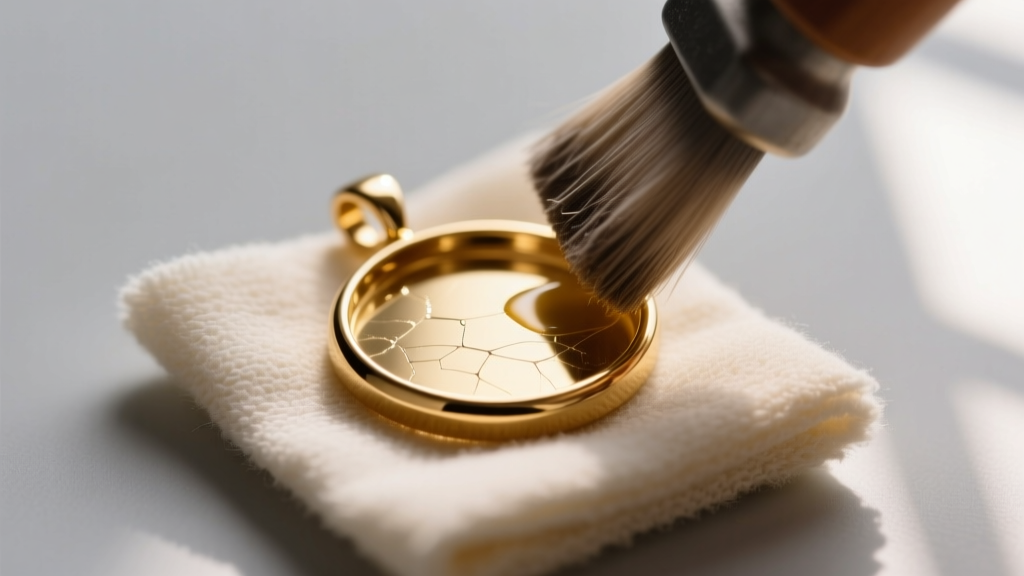
- Weekly Cleaning Routine: Mix a few drops of mild, phosphate-free dish soap into a bowl of lukewarm water. Soak the necklace for 15 minutes to break down sebum and cosmetic residues. Gently agitate the chain using a soft-bristled baby toothbrush, paying special attention to the interior of the bail where friction dust accumulates.
- Polishing: Use a treated, micro-abrasive jeweler's cloth to buff the face of the circle pendant. Avoid using liquid silver dips or harsh ultrasonic cleaners on textured or brushed finishes, as the vibrations and chemicals can smooth out the intentional artisan textures.
By understanding the precise mechanics of chain pairing, adhering to spatial layering rules, and maintaining the metallurgical integrity of your gold, your circle pendant will remain a versatile, flawless anchor in your jewelry wardrobe for decades to come.


