White Gem Necklace Trends: Your 2026 Style & Layering Guide
Discover 2026 white gem necklace trends. Expert styling, layering frameworks, and gemstone comparisons for moonstone, sapphire, and opal pendants.

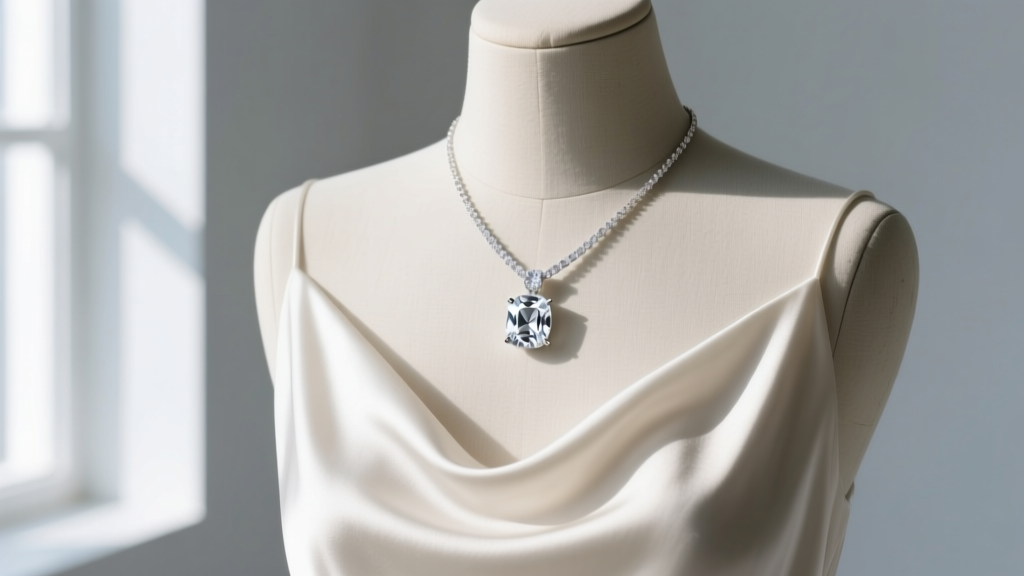
The 2026 Shift: Ethereal Minimalism and the White Gem Necklace
As we navigate the jewelry landscape of 2026, the industry has decisively pivoted from the heavy, maximalist gold trends of the early 2020s toward a refined aesthetic known as "ethereal minimalism." At the absolute center of this movement is the white gem necklace. Unlike the aggressive sparkle of traditional diamonds, white gemstones offer a nuanced, luminescent quality that interacts with light in deeply organic ways. Whether you are investing in a high-refractive white sapphire pendant or a moody, adularescent moonstone choker, understanding the material science and styling frameworks of these stones is essential for modern curation. This guide breaks down the exact specifications, pricing, and layering techniques you need to master this year's most sophisticated neckline trend.
Decoding the Stones: Optical Phenomena and Durability
Not all white gems are created equal. The visual impact of a white gem necklace depends entirely on its internal crystal structure and how it manipulates light. According to the Gemological Institute of America (GIA), the most coveted white gems rely on complex optical phenomena rather than simple surface reflection.
White Sapphire: The Brilliant Anchor
Composed of pure corundum, white sapphire boasts a Mohs hardness of 9.0, making it the second hardest natural gemstone. With a refractive index (RI) of 1.76-1.77, it delivers sharp, icy brilliance. However, because it lacks the dispersion (fire) of a diamond, a poorly cut white sapphire will look glassy and flat. When selecting a white sapphire pendant, prioritize precision step-cuts or deep brilliant cuts to maximize internal light return. As noted in the GIA Sapphire Guide, inclusions are common, so an "eye-clean" VS clarity grade is the benchmark for high-end pendants.
Rainbow Moonstone: The Adularescent Dream
Moonstone is an orthoclase feldspar that exhibits adularescence—a billowy, floating light effect caused by the scattering of light between microscopic layers of albite and orthoclase. With a Mohs hardness of just 6.0 to 6.5 and perfect cleavage in one direction, a moonstone necklace requires protective settings. A bezel setting is non-negotiable for daily wear to prevent edge chipping.
White Opal: The Hydrated Canvas
White opals (or milky opals) contain between 3% and 10% water within their silica structure. Their play-of-color is a result of light diffracting through a 3D grid of microscopic silica spheres. Because of their water content and low Mohs rating (5.5-6.5), they are highly susceptible to thermal shock and dehydration.
| Gemstone | Mohs Hardness | Refractive Index | Price Range (per carat) | Best Setting for Daily Wear |
|---|---|---|---|---|
| White Sapphire | 9.0 | 1.76 - 1.77 | $500 - $2,500 | Prong or Tension |
| Rainbow Moonstone | 6.0 - 6.5 | 1.52 - 1.53 | $15 - $120 | Bezel or Halo |
| White Opal | 5.5 - 6.5 | 1.37 - 1.47 | $50 - $300 | Enclosed Bezel |
| White Topaz | 8.0 | 1.61 - 1.62 | $10 - $60 | Prong or Channel |
Metal Pairings: Platinum, White Gold, and the Yellow Gold Contrast
The metal you choose for your white gem necklace fundamentally alters its visual temperature. In 2026, we are seeing a distinct bifurcation in metal preferences based on the stone's optical properties.
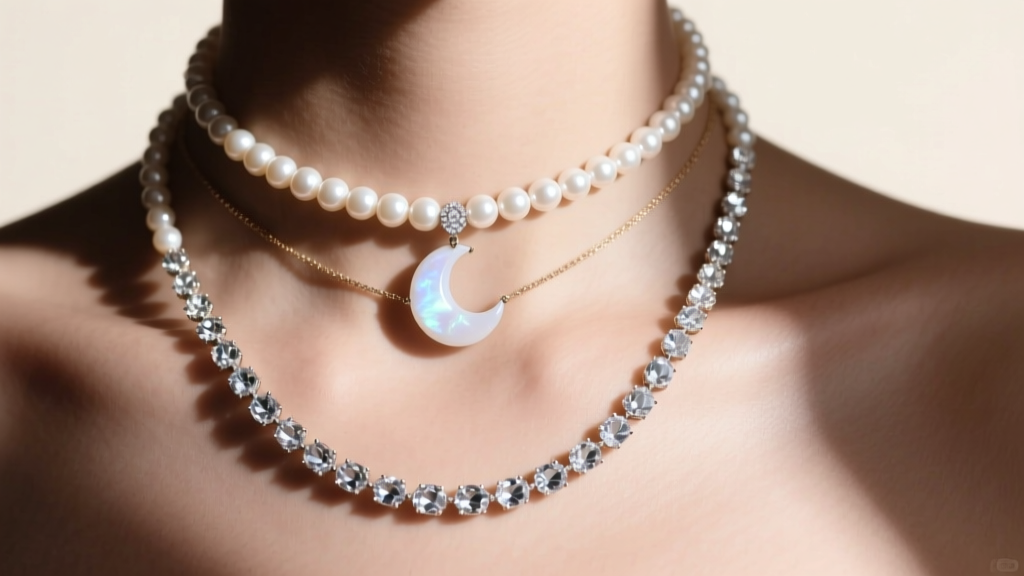
The Case for Platinum 950
For high-value white sapphires and diamonds, Platinum 950 (95% pure platinum) remains the undisputed standard. Unlike 18k white gold, which is alloyed with palladium or nickel and plated with rhodium to appear white, platinum is naturally white and hypoallergenic. Over time, white gold's rhodium plating will wear off, revealing a pale yellow undertone that can clash with the icy brilliance of a white gem. Platinum, conversely, develops a soft patina that complements the organic feel of moonstones and opals without risking discoloration.
The Warm Contrast Trend
While white-on-white (white gold and white gems) was the standard for the past decade, 2026's top stylists are utilizing 18k yellow gold to create a "warm contrast." Setting a cool, blue-flashing rainbow moonstone in a matte yellow gold bezel creates a striking visual tension that highlights the stone's internal schiller effect far better than a matching white metal would.
Layering Frameworks for White Gem Pendants
Layering a white gem necklace requires a strict adherence to proportional spacing and textural variance. Clumping identical chain styles will result in a tangled, visually muddy neckline. Follow this three-tier framework for a curated, intentional look:
- Tier 1: The Anchor (14-15 inches) Start with a 3mm freshwater pearl choker or a delicate 1.0mm white gold snake chain. This frames the collarbone and provides a solid visual baseline.
- Tier 2: The Focal Point (16-17 inches) This is where your primary white gem pendant lives. A 10mm cabochon moonstone or a 2-carat oval white sapphire suspended on a 1.2mm box chain ensures the stone rests precisely in the sternal notch.
- Tier 3: The Elongator (18-20 inches) Finish with a textured chain, such as a rope or paperclip link, featuring small white topaz station stones spaced every three inches. This draws the eye downward and elongates the neck.
Neckline Matching: From Plunging V-Necks to High Collars
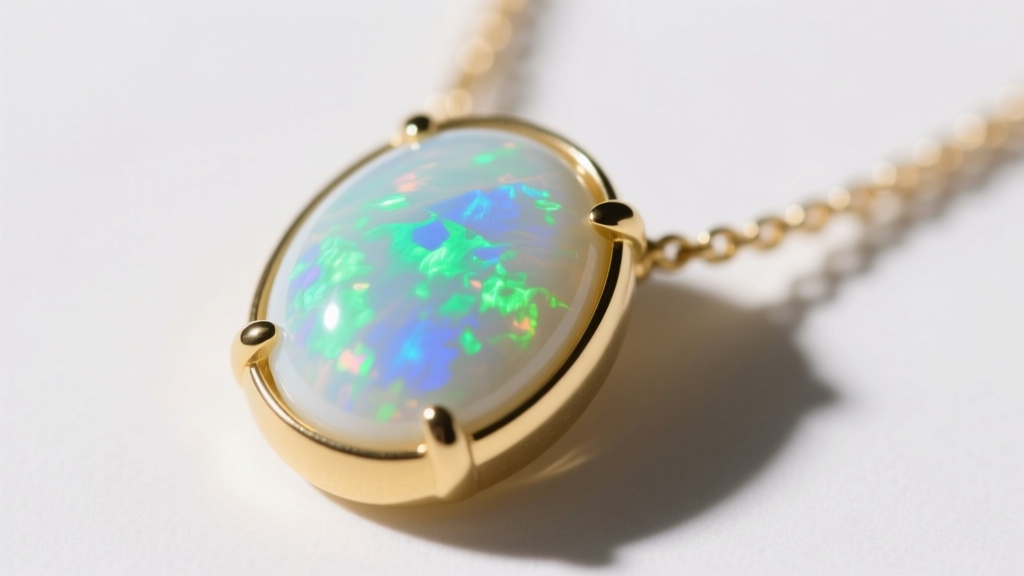
The architecture of your clothing dictates the geometry of your necklace. A white gem pendant is highly versatile, but only if the length and drop match the garment's neckline.
Plunging V-Necks and Wrap Dresses
A deep V-neck requires a Y-drop necklace or an 18-inch pendant that mirrors the angle of the fabric. A white sapphire solitaire on a delicate chain will get lost in a deep plunge; instead, opt for a graduated white opal lariat that fills the negative space without overwhelming the drape of the silk or rayon.
Boat Necks and High Collars
Horizontal necklines demand horizontal jewelry. A 14-inch moonstone collar or a multi-strand white seed pearl choker sits perfectly above a boat neck, emphasizing the width of the shoulders. Avoid long pendants with high collars, as the swinging gemstone will clash with the structured fabric and risk snagging.
Care and Maintenance of Porous White Gems
The most common failure mode for white gem necklaces is improper cleaning. While a white sapphire can withstand the rigors of a commercial ultrasonic cleaner, doing so with a moonstone or opal will be catastrophic. Ultrasonic cleaners use high-frequency cavitation bubbles that can shatter an opal or fracture a moonstone along its natural cleavage planes. Furthermore, the heat generated by ultrasonic machines can dehydrate an opal, causing it to "craze" (develop a network of internal cracks) and lose its play-of-color permanently.
The 2026 Care Protocol:
- For Sapphires and Topaz: Clean with warm water, a drop of mild dish soap, and a soft-bristled baby toothbrush. Rinse and pat dry with a microfiber cloth.
- For Moonstones and Opals: Wipe gently with a damp, lint-free cloth. Never submerge them in water, and never use chemical jewelry dips, which can strip the polish from the cabochon surface.
- Storage: Store white opals in a sealed plastic bag with a slightly damp cotton ball to maintain their hydration levels, especially during dry winter months.
"The white gem necklace is no longer just a bridal alternative; it is a study in light manipulation. Whether you are drawn to the icy geometry of a sapphire or the moody, shifting depths of an opal, treating these stones with material respect is the key to lifelong wearability."


