Vintage 50s Pearl Necklace: 2026 Value & Pricing Guide
Discover the true market value of a vintage 50s pearl necklace. Learn pricing tiers, authentication tips, and hidden restoration costs for 2026 buyers.

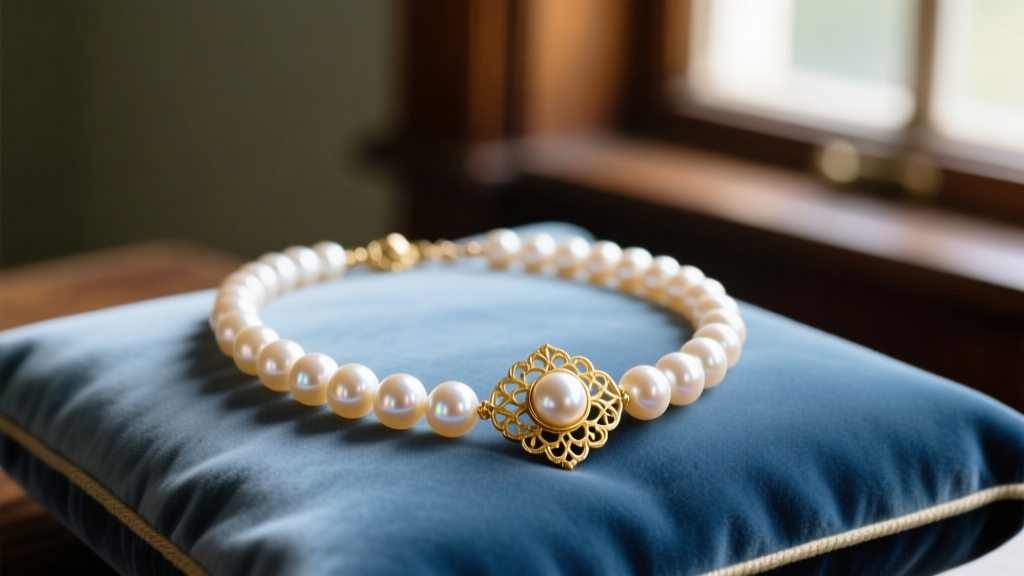
The Allure and Market Reality of 1950s Pearls
The 1950s marked a golden era for cultured pearls. Following World War II, American GIs stationed in Japan brought back strands of Akoya pearls, sparking a massive mid-century jewelry boom. Today, the vintage 50s pearl necklace remains a highly sought-after staple in estate jewelry markets. However, evaluating these pieces requires a nuanced understanding of mid-century pearl farming, aging organic materials, and vintage jewelry construction. Unlike modern mass-produced strands, a genuine 1950s Akoya strand offers superior nacre thickness, but it also comes with hidden restoration costs that can quickly derail a budget.
Decoding the Price: What Are You Actually Paying For?
When assessing the value of a mid-century pearl strand, you must look beyond the surface luster. The Gemological Institute of America (GIA) outlines several critical quality factors that dictate market value, but vintage pieces require an additional layer of historical scrutiny.
Nacre Thickness and Luster Grading
Modern Akoya pearls are often harvested after just eight to ten months, yielding a thin nacre layer of 0.1mm to 0.3mm. In contrast, 1950s Japanese Akoyas were typically cultivated for 1.5 to 2.5 years, resulting in a robust nacre thickness of 0.5mm or more. This thick nacre gives vintage strands their signature deep, mirror-like luster and warm cream overtones. The post-WWII Japanese pearl farming boom was heavily influenced by Kokichi Mikimoto's pioneering techniques. While Mikimoto popularized the cultured pearl, thousands of independent Japanese cooperatives also produced exceptional Akoyas during the 1950s. These unbranded strands often possess the exact same gemological characteristics as their signed counterparts but sell at a fraction of the price. Understanding this historical context allows savvy buyers to find incredible value in unsigned, high-luster strands that simply lack the famous hallmark.
However, pearls are organic gems. Over seven decades, environmental exposure and contact with skin acids can cause dehydration. When inspecting a 50s strand, look closely at the pearls nearest the clasp. If you see chalkiness, micro-cracking (crazing), or peeling, the nacre is degrading, which drops the value by 40% to 60%.
The Clasp: A Hidden Value Indicator
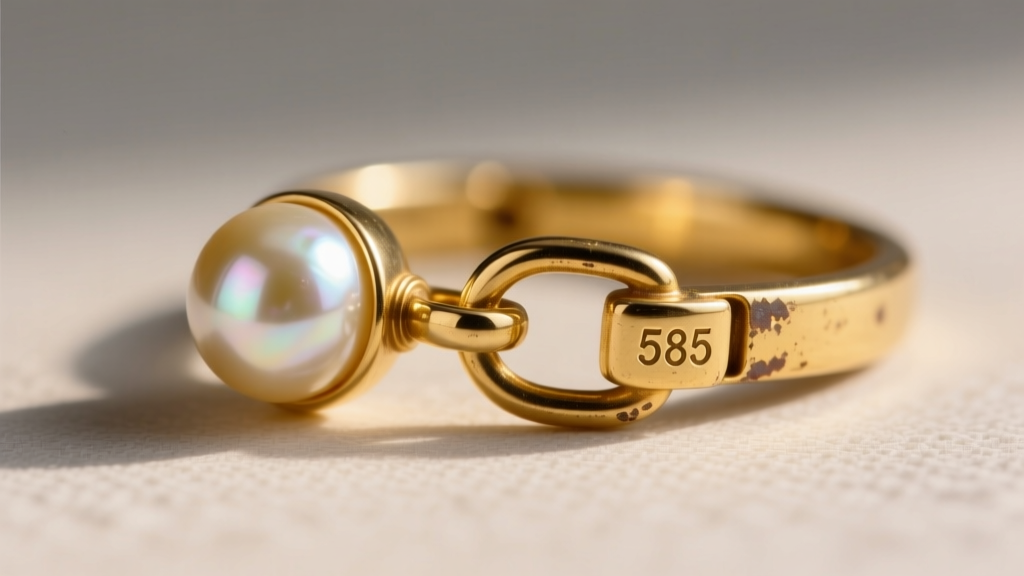
In vintage pearl jewelry, the clasp can account for up to 30% of the total appraised value. A genuine 1950s strand will feature a solid 14k or 18k gold clasp, often utilizing a push-pull mechanism or a tongue-and-groove box clasp equipped with a safety figure (a secondary wire hook). Look for hallmarks stamped into the gold: 14K, 585, or specific Japanese maker marks like a stork or mountain silhouette. If the clasp is gold-filled, gold-plated, or lacks a safety hook, you are likely looking at a commercial-grade strand or a later reproduction.
2026 Pricing Tiers for 50s Pearl Strands
To help you navigate the current estate market, we have categorized 1950s pearl necklaces into three distinct budget tiers. These estimates assume a standard 16-inch princess length.
| Grade Tier | Pearl Specs & Condition | Clasp Type | Est. Market Value |
|---|---|---|---|
| Commercial | 5mm-5.5mm, visible blemishes, slight chalkiness | Gold-filled or unmarked | $80 - $150 |
| Mid-Century Standard | 6mm-6.5mm, excellent luster, minor surface wear | 14k Gold (585/14K stamp) | $250 - $450 |
| Premium / Signed | 7mm+, thick nacre, near-flawless, Mikimoto signed | 18k Gold with safety hook | $800 - $2,500+ |
Hidden Costs: Restringing and Restoration
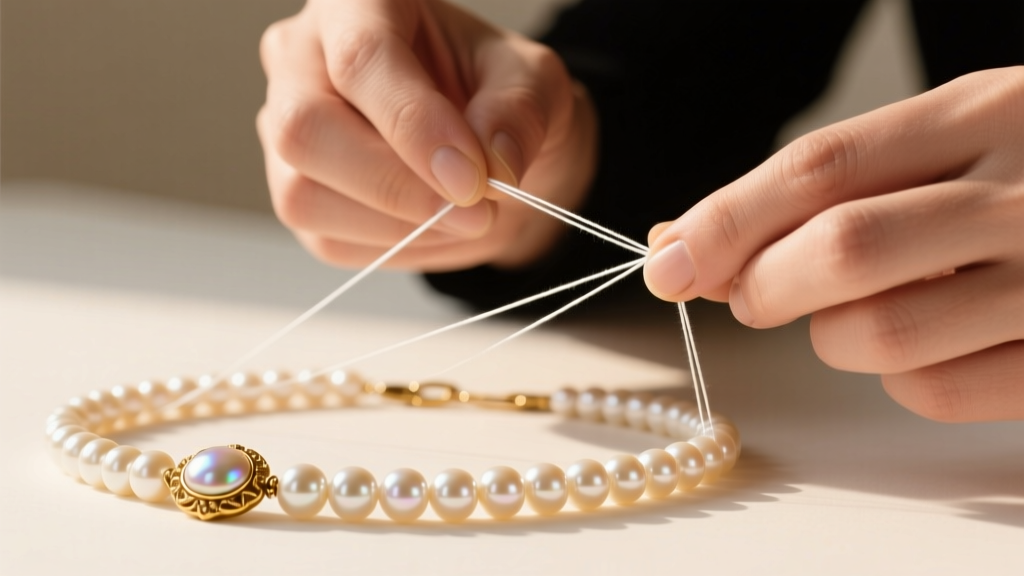
The most common mistake budget-conscious buyers make is ignoring the stringing material. 1950s necklaces were strung on natural silk, which degrades, stretches, and rots over decades. Wearing a vintage strand without professional restringing risks catastrophic breakage. According to appraisal standards from the American Society of Appraisers, restoration costs must be factored into your initial acquisition budget.
- Professional Knotting: Expect to pay $8 to $15 per inch for hand-knotting on size E or F silk thread. For a 16-inch strand, budget $128 to $240.
- French Wire (Gimp): A proper restoration includes French wire—a tiny coiled metal thread that protects the silk from fraying against the metal clasp loop. Ensure your jeweler includes this traditional 1950s finishing touch.
- Clasp Repair: Fixing a bent safety hook or replacing a worn push-pull spring can add $75 to $150 to your total restoration bill.
Never attempt to clean a vintage 50s pearl strand using ultrasonic cleaners or harsh chemical dips. The high-frequency vibrations can shatter dehydrated nacre, and ammonia-based solutions will strip the pearl's natural orient. Instead, wipe the strand gently with a damp, lint-free microfiber cloth after each wear to remove acidic skin oils, and store it flat in a soft pouch to prevent the silk from stretching under the weight of the pearls.
Authentication: Spotting 50s Vintage vs. Modern Fakes
The 1950s also saw the rise of high-quality pearl simulants, most notably Majorica pearls, which were created by coating glass beads with guanine (essence d'orient) derived from fish scales. To ensure you are buying genuine cultured pearls, employ these field tests:
The Tooth Test: Gently rub the pearl against the biting edge of your front tooth. A genuine cultured pearl will feel distinctly gritty or sandy due to the microscopic crystalline structure of the nacre. A glass or plastic simulant will feel perfectly smooth.
Weight and Temperature: Glass-beaded simulants are noticeably heavier than cultured pearls and take longer to warm up against the skin. Plastic simulants, conversely, feel unnaturally light and warm up instantly.
UV Light Reaction: Under long-wave ultraviolet light, 1950s Akoya pearls typically exhibit a weak to moderate milky blue or white fluorescence. Many vintage plastic simulants will either show no reaction or an unnatural yellowish-green glow.
Furthermore, examine the drill holes under a jeweler's loupe. Genuine cultured pearls will show a sharp, clean boundary between the nacre and the internal mother-of-pearl bead nucleus. Simulants often reveal a chipped or peeling coating around the drill hole, exposing the glass or plastic core beneath. This structural vulnerability is a dead giveaway for mid-century costume jewelry masquerading as fine estate pieces.
Final Verdict: Is the Investment Justified?
A genuine 50s pearl necklace is absolutely worth the investment, provided you approach the purchase with a restorer's mindset. The superior nacre thickness of mid-century Akoyas offers a depth of luster that is increasingly rare in today's fast-farmed pearl market. By carefully inspecting the clasp hallmarks, budgeting for professional silk restringing, and verifying the nacre's structural integrity, you can secure a breathtaking piece of mid-century history that will retain its elegance and value for generations to come.


