The Moulin Rouge Necklace: Technical Design & Replication
Explore the technical anatomy of the Moulin Rouge necklace, from Belle Époque choker gauges to the cinematic Satine diamond specifications.

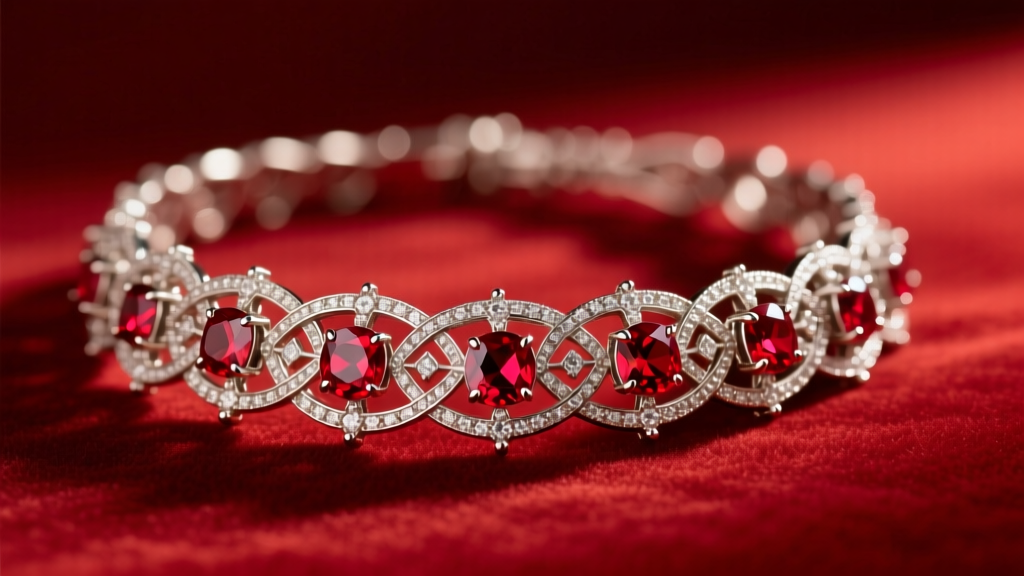
The Dual Legacy of the Moulin Rouge Necklace
When jewelers, collectors, and stylists reference a Moulin Rouge necklace, they are typically navigating two distinct but overlapping categories of high-impact jewelry. The first is the historical Belle Époque cabaret choker, characterized by velvet ribbons, cameos, and intricate filigree pendants that defined Parisian nightlife in the late 19th and early 20th centuries. The second is the cinematic benchmark: the iconic "Satine" diamond necklace created for Baz Luhrmann's 2001 film. Replicating either style requires a deep understanding of metallurgy, structural engineering, and gemological grading. This guide deconstructs the technical anatomy of these pieces, providing actionable specifications for sourcing, designing, or evaluating high-quality replicas and historical homages.
The Cinematic Benchmark: Satine Necklace Specifications
The original Satine necklace, designed by Stefano Canturi, is a masterclass in high-carat structural engineering. Featuring 1,308 hand-set diamonds totaling 138 carats, the piece was valued at over $1 million. The primary technical challenge in replicating a necklace of this magnitude is weight distribution. A central pendant exceeding 50 carats will generate significant downward kinetic force, which can easily snap a standard chain or distort the bail.
To counteract this, master jewelers fabricating high-carat replicas utilize a rigid internal armature. Rather than relying solely on the tensile strength of the chain links, the structural spine of the necklace is often forged from platinum or 18k white gold, utilizing a graduated, articulated link system. This allows the necklace to drape naturally across the clavicle while distributing the pendant's weight across a wider surface area of the neck.
- Chain Gauge: Replicas must use a minimum of 14-gauge (1.6mm) wire for the primary load-bearing links near the clasp.
- Clasp Mechanics: A standard lobster clasp is insufficient. High-end replicas employ a custom-machined box clasp with a dual-safety figure-eight catch and a micro-tension release lever.
- Setting Technique: The pavé diamonds are secured using bead setting, where a graver tool pushes the surrounding metal over the diamond's girdle. Cast prongs are strictly avoided in high-end replicas, as the casting process introduces microscopic porosity, making the prongs brittle and prone to snapping under tension.
Belle Époque Chokers: Gauges, Metals, and Tension
The historical cabaret choker relies on a completely different set of engineering principles. Authentic Belle Époque style chokers typically feature a 15mm to 25mm wide silk or velvet ribbon, anchored by a central ornate slide or pendant. The most common failure mode in modern, mass-produced replicas is the slide clasp slipping down the ribbon due to gravity and body movement.
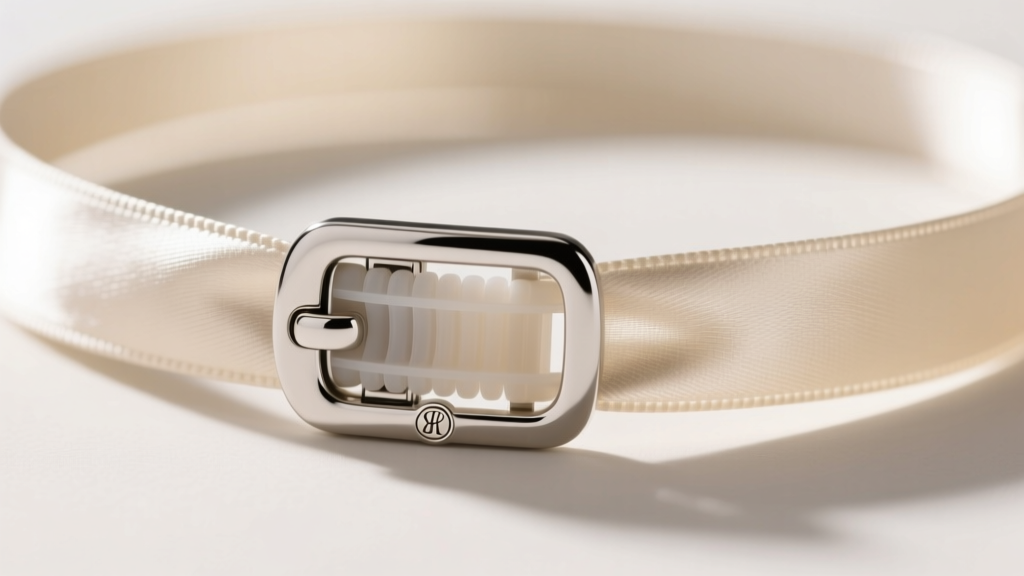
The Anatomy of a Secure Slide Clasp
Cheap costume jewelry utilizes smooth, hollow metal tubes for the slide, which rely entirely on the friction of the ribbon—a friction that degrades as the fabric compresses over time. A technically sound Moulin Rouge necklace replica will feature a slide clasp with an internal silicone O-ring or a micro-tension spring mechanism. This creates a high-friction grip that holds the pendant securely at the desired height without damaging the delicate silk or velvet fibers.
For those who prefer metal collars over ribbons, the chain profile is critical. While herringbone and snake chains offer a fluid, liquid-metal aesthetic that mimics historical collars, they are highly susceptible to permanent kinking if bent past a 45-degree angle. For daily wear, a 3mm to 5mm box chain or a reinforced wheat chain provides the necessary structural integrity to support heavy cabaret-style pendants (such as garnet drops or enameled cameos) without risking catastrophic link failure.
Material Grades for Modern Replicas
When evaluating the gemological and metallurgical quality of a Moulin Rouge necklace, buyers must look beyond the superficial sparkle. The choice of center stone and metal plating thickness dictates the piece's longevity and optical performance. According to the Gemological Institute of America (GIA), understanding the refractive index and Mohs hardness of diamond simulants is crucial for making informed purchasing decisions.
| Material | Mohs Hardness | Refractive Index | Primary Failure Mode | Price Range (per carat) |
|---|---|---|---|---|
| Lab-Grown Diamond (CVD/HPHT) | 10 | 2.42 | Chipping at girdle if prongs are improperly aligned | $300 - $800 |
| Moissanite | 9.25 | 2.65 - 2.69 | Double refraction causes blurry facets in large carat weights | $50 - $150 |
| Cubic Zirconia (CZ) | 8.0 - 8.5 | 2.15 - 2.18 | Surface clouding and scratching within 1-2 years of daily wear | $1 - $5 |
For the metalwork, vermeil is the standard for high-quality replicas. However, not all vermeil is created equal. The US Federal Trade Commission and international assay offices dictate that true gold vermeil must consist of a sterling silver (925) base plated with a minimum of 2.5 microns of 10k, 14k, or 18k gold. Many fast-fashion replicas use "gold plated" brass or copper with a mere 0.5-micron flash coating, which will oxidize and turn the wearer's skin green within weeks of contact with sweat and cosmetics.
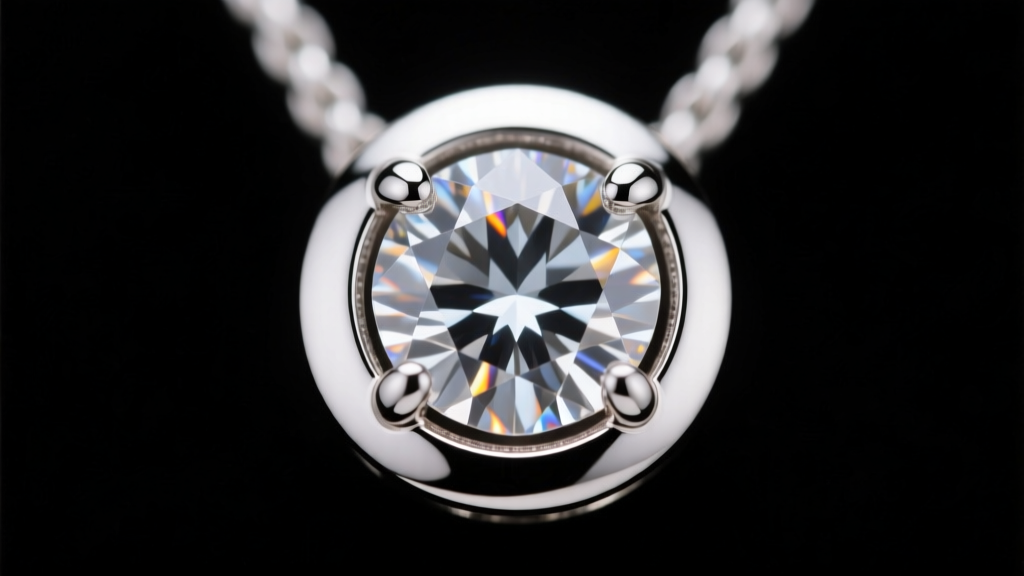
Gemstone Setting Techniques in Cabaret Jewelry
The visual drama of a Moulin Rouge necklace often relies on large, dark center stones—such as Burmese rubies, Mozambique garnets, or black onyx—surrounded by a halo of brilliant-cut diamonds. The setting technique used to secure these stones drastically affects both the security and the light performance of the piece.
Prong vs. Bezel Settings
While shared-prong halos maximize light entry, they leave the delicate girdles of the accent stones exposed to impact damage. For a piece intended for frequent wear, such as cabaret performances or evening events, a bezel setting or a half-bezel setting is technically superior. A bezel setting involves using a bezel roller and a pusher tool to burnish a continuous lip of metal completely over the stone's girdle. This not only protects the gem from lateral impacts but also creates a smooth profile that will not snag on silk garments or lace costumes.
Expert Troubleshooting Tip: If you are inspecting a vintage or replica cabaret choker, run your fingernail lightly over the prongs or bezel edges. If you feel any sharp burrs or catch points, the setting was not properly polished or burnished. These micro-abrasions will eventually wear through the setting metal, leading to stone loss.
Sourcing and Authentication: Avoiding Costume Pitfalls
When sourcing an authentic-feeling Moulin Rouge necklace, always demand proof of metallurgical origin. Reputable manufacturers will provide an assay hallmark. For example, the London Assay Office provides comprehensive guidelines on how to read hallmarks, which include the sponsor's mark, the standard of fineness (e.g., 925 for sterling, 750 for 18k gold), and the assay office symbol.
Avoid pieces described merely as "Tibetan Silver" or "Alpaca." These are trade terms for nickel-heavy or copper-heavy base metal alloys that contain no actual silver and are notorious for causing severe contact dermatitis. A true investment-grade replica will always specify its exact alloy composition, such as "Solid 925 Sterling Silver with 18k Yellow Gold Vermeil (3.0 microns)."
Conclusion
Whether you are chasing the cinematic grandeur of the Satine diamond collar or the historical romance of a Belle Époque velvet choker, the devil is in the technical details. A successful Moulin Rouge necklace is not just about the visual impact of the gemstones; it is a triumph of structural engineering. By prioritizing internal armatures for heavy pendants, demanding silicone-lined slide clasps for ribbons, and insisting on proper vermeil thickness and bezel settings, you can secure a piece that offers both breathtaking cabaret aesthetics and heirloom-grade durability.


