Beginner's Guide to Buying and Styling a Jet and Amber Necklace
Discover how to identify, style, and care for a genuine jet and amber necklace. Learn the difference between real and fake stones in our beginner guide.

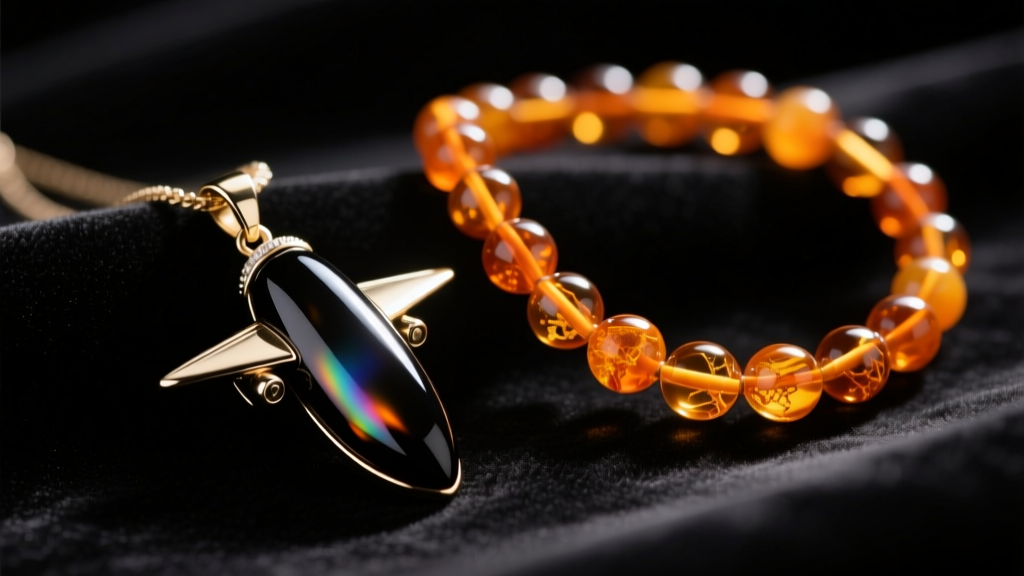
Understanding Organic Gemstones: Beyond Mined Minerals
When shopping for a jet and amber necklace, you are not just buying jewelry; you are investing in wearable history. Unlike diamonds or sapphires that are forged in the earth's mantle, jet and amber are organic gemstones. This means they were once living organisms, imbued with millions of years of natural history. For beginners, navigating the market for these unique materials can be daunting due to the prevalence of imitations. This guide will break down the science, authentication, and styling of these captivating stones so you can build your collection with confidence.
What Exactly is Jet?
Jet is not a traditional stone; it is a type of lignite coal formed from the fossilized wood of the ancient Araucaria tree. The most prized variety in the jewelry world is Whitby jet, sourced from the Yorkshire coast in England, which dates back approximately 180 million years to the Early Jurassic period. According to the Mindat mineral database, jet is technically a mineraloid. It possesses a deep, light-absorbing black color and can be polished to a brilliant, mirror-like shine. Historically, jet saw a massive surge in popularity during the Victorian era as the premier material for mourning jewelry following the death of Prince Albert in 1861.
What Exactly is Amber?
Amber is often mistakenly called fossilized tree sap, but it is actually fossilized tree resin—the sticky substance trees secrete to protect themselves from insects and disease. The most renowned variety is Baltic amber (succinite), which contains succinic acid and dates back 44 million years. The Gemological Institute of America (GIA) notes that amber is highly valued for its warm, translucent hues ranging from pale yellow to deep cognac, and occasionally for the prehistoric insect or plant inclusions trapped inside. When paired together in a single necklace, the opaque, grounding darkness of jet perfectly offsets the fiery, translucent warmth of amber.
The Authentication Checklist: Real vs. Fake
Because both jet and amber are lightweight and relatively soft, they have been imitated for over a century. Early plastics like Bakelite and Celluloid were frequently used to mimic amber, while black glass, vulcanite, and modern resins are used to fake jet. Here is how you can perform non-destructive and minimally invasive tests at home to verify your jewelry.
The Saltwater Test (For Amber)
Genuine Baltic amber has a specific gravity of roughly 1.05 to 1.10, meaning it is incredibly light. If you mix 1 cup of room-temperature water with 7 tablespoons of table salt, the water's density increases. Genuine amber will float in this saturated saltwater solution, while most plastic imitations and glass will sink to the bottom. Note: This test only works if the amber is not strung on heavy metal wire or paired with heavy metal clasps.
The Streak Test (For Jet)
To distinguish genuine jet from black glass or obsidian, use an unglazed porcelain tile (the back of a ceramic coaster works well). Gently rub the jet bead against the tile. Genuine Whitby jet will leave a distinct light brown or chocolate-colored streak. Black glass will leave no streak, and vulcanite (a hardened rubber used in Victorian mourning jewelry) will leave a brownish-black streak but feels noticeably softer and more rubbery to the touch.
| Property / Test | Genuine Amber | Genuine Jet | Common Imitations |
|---|---|---|---|
| Temperature to Touch | Warm, room-temp | Warm, room-temp | Glass feels cold; Plastic feels neutral |
| Saltwater Float Test | Floats | Sinks (Specific Gravity ~1.30) | Plastic/Glass usually sinks |
| Ultraviolet (UV) Light | Fluoresces pale blue/green | No reaction | Plastics rarely fluoresce correctly |
| Hot Pin Test (Destructive) | Smells like pine resin | Smells like burning coal | Smells acrid/chemical (plastic) |
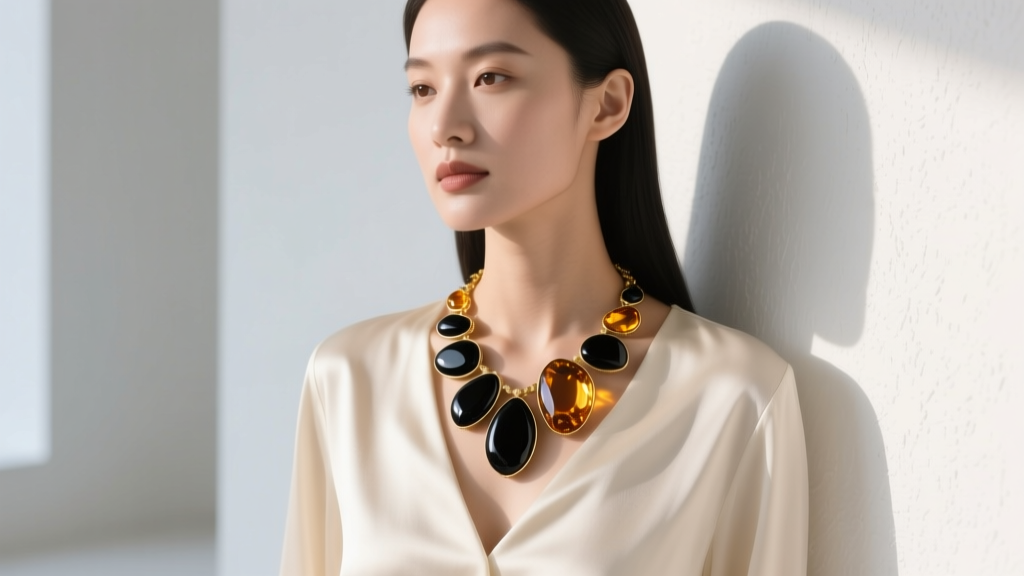
How to Style a Jet and Amber Necklace
Styling a jet and amber necklace is an exercise in color theory and contrast. The deep, matte, or glossy black of the jet acts as a neutral anchor, while the amber provides a vibrant pop of warm color. Here is a practical framework for incorporating this striking combination into your wardrobe.
- The V-Neck Principle: A graduated jet and amber necklace (where beads increase in size toward the center) naturally mimics and enhances a V-neckline. The dark jet beads at the back of the neck blend subtly, while the larger amber focal beads draw the eye downward, elongating the neck.
- Monochrome Pairings: Because amber ranges from yellow to deep orange, it pairs exceptionally well with earth tones. Wear your necklace over a cream, camel, or olive-green silk blouse to let the organic gemstones stand out without clashing with busy patterns.
- Mixed Metal Accents: If your necklace features metal spacers or clasps, match your other jewelry accordingly. Amber looks incredibly rich when set in yellow or rose gold, while jet provides a sharp, modern contrast when accented with oxidized silver or gunmetal.
- Layering Techniques: For a bohemian or eclectic look, layer a 16-inch choker-style jet necklace with a 20-inch pendant necklace featuring a single, large raw amber drop. Ensure there is at least a 4-inch difference in length to prevent tangling and visual clutter.
Pricing Guide: What Should You Expect to Pay?
The market for jet and amber jewelry is vast, ranging from inexpensive modern costume pieces to highly valuable museum-quality antiques. Understanding these tiers will help you budget appropriately and avoid overpaying for misrepresented items.
Vintage and Antique Pieces
Authentic Victorian-era Whitby jet mourning necklaces are highly collectible. A simple, single-strand jet necklace from the 1880s typically ranges from $150 to $400, depending on the intricacy of the hand-carved facets. If the piece incorporates genuine Baltic amber beads or pendants, expect the price to jump to the $500–$1,200 range. Pieces from the Art Deco period (1920s-1930s) that combine amber with Bakelite (a valuable early plastic) can fetch upwards of $2,000 at specialized estate auctions.
Modern and Contemporary Designs
For newly strung necklaces using genuine materials, pricing is largely dictated by the weight and clarity of the amber. A modern 18-inch necklace featuring 8mm genuine Baltic amber beads interspersed with carved jet beads will generally retail between $120 and $350 from reputable lapidary artisans. Be highly skeptical of any 'genuine' jet and amber necklace priced under $40, as this almost guarantees the use of dyed howlite, black glass, and dyed copal (immature, unstable amber).
Care and Maintenance for Soft Organic Gems
The most critical thing a beginner must understand about organic gemstones is their vulnerability. On the Mohs scale of mineral hardness, amber ranks at a mere 2 to 2.5, and jet ranges from 2.5 to 4. For context, a copper penny is a 3.5, and window glass is a 5.5. This means both materials can be easily scratched by everyday objects, including other jewelry in your box.
The 'No-Chemicals' Rule
Never use ultrasonic cleaners, steamers, or commercial jewelry dips on jet or amber. The high-frequency vibrations can shatter amber, especially if it contains internal stress fractures or inclusions. Furthermore, amber is highly susceptible to chemical degradation. Hairspray, perfume, and lotions can cause the surface of amber to become permanently cloudy or develop a white, chalky oxidation layer over time. Always put your necklace on after applying cosmetics and fragrances.
Expert Tip: If you purchase a vintage jet and amber necklace, inspect the stringing material. Antique pieces were often strung on cotton or silk thread that degrades over decades. If the thread looks frayed or the beads slide loosely with large gaps, take the piece to a professional jeweler to be restrung on modern, high-tensile nylon cord with individual knots between each bead to prevent loss in case of a break.
Where to Buy Authentic Pieces Safely
When sourcing a genuine jet and amber necklace, provenance is everything. Avoid purchasing from unverified tourist shops, especially in regions where amber is heavily faked. Instead, seek out members of the Amber Guild or dealers affiliated with the International Amber Association. For antique jet, consult specialized mourning jewelry dealers or reputable estate auction houses that provide detailed condition reports and guarantee the origin of their Whitby jet. The Victoria and Albert Museum offers excellent historical archives that can help you train your eye to recognize authentic Victorian jet carving techniques versus molded plastic reproductions.
Final Thoughts on Building Your Collection
A jet and amber necklace is more than just an accessory; it is a conversation piece that bridges geology, history, and art. By understanding the specific gravity of amber, the streak test for jet, and the vital importance of gentle care, you can confidently navigate the market. Start with a simple, verified piece from a trusted dealer, and let the timeless contrast of fossilized wood and ancient resin elevate your personal style for decades to come.


