Jewelry History Guide: The Setting of the Story The Necklace Explained
Explore 19th-century jewelry history and recreate Maupassant's iconic piece. We analyze the setting of the story The Necklace to build a period rivière.
Introduction: The Intersection of Literature and Jewelry History
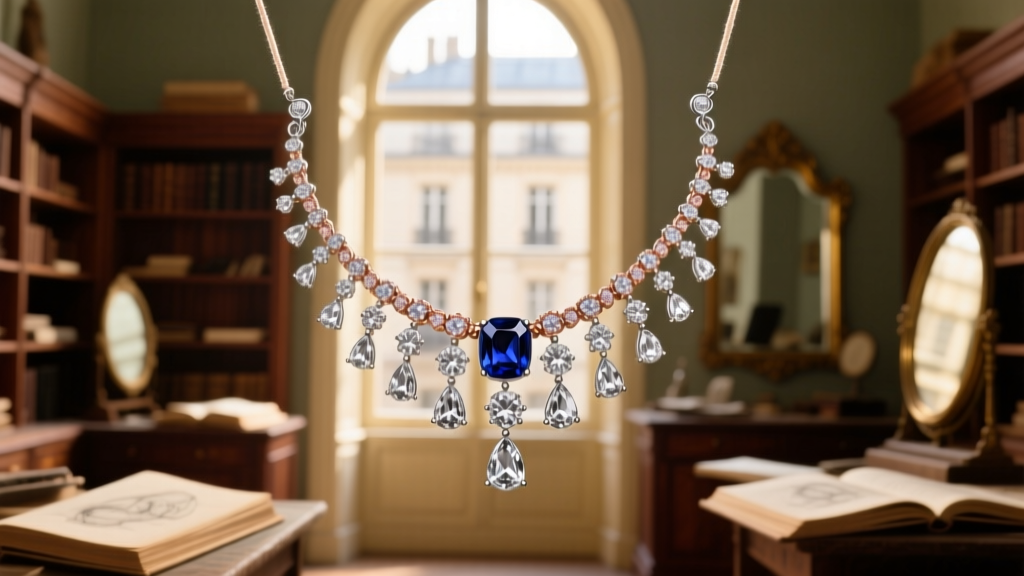
Guy de Maupassant’s 1884 masterpiece, La Parure (The Necklace), remains one of the most famous cautionary tales in literary history. The tragedy of Mathilde Loisel, who spends a decade in grueling poverty to replace a borrowed diamond necklace only to discover the original was made of inexpensive paste, hinges entirely on the jewelry of the era. For modern jewelry historians, collectors, and stylists, understanding this piece requires a dual analysis. We must examine the physical metalwork and the narrative environment—what scholars call the setting of the story the necklace relies upon to drive its tragic irony. In 1880s Paris, the line between high jewelry and masterful simulation was intentionally blurred, creating a minefield for the untrained eye.
This step-by-step guide will teach you how to deconstruct the historical context of 19th-century French jewelry, differentiate between period-accurate foiled paste and old mine cut diamonds, and physically recreate a historically accurate rivière (a continuous river of stones) using traditional silversmithing and stringing techniques.
Step 1: Deconstructing the 1880s Parisian Setting
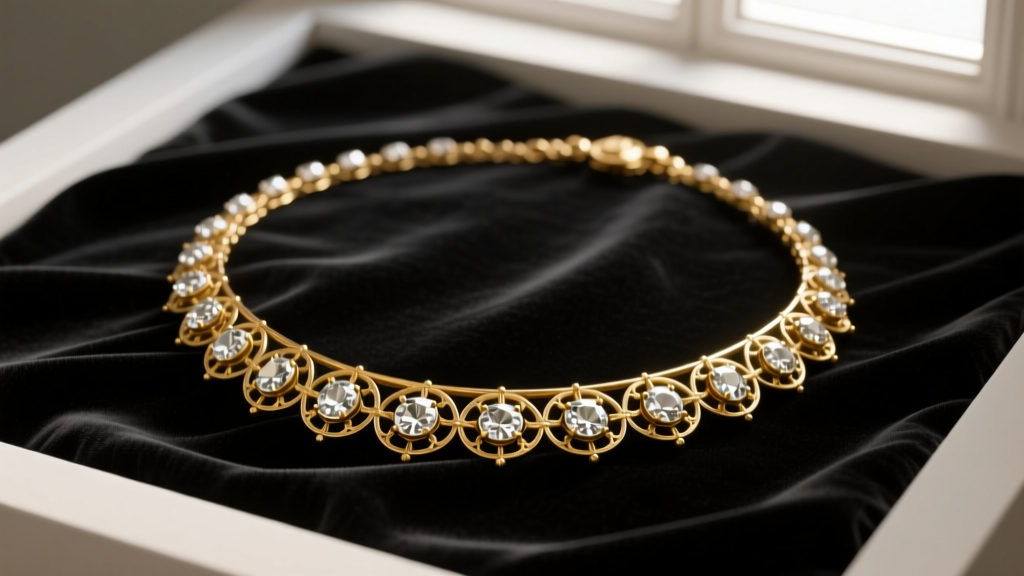
To recreate a literary necklace, you must first understand the socio-economic backdrop of the 1880s French Third Republic. High society demanded ostentatious displays of wealth, particularly at the Palais Garnier and elite ministerial balls. The rivière necklace, consisting of a single continuous strand of identically cut gemstones graduating slightly in size toward the center, was the ultimate status symbol.
However, the demand far outstripped the supply of rough diamonds from South Africa and Brazil. This gave rise to the golden age of bijouterie de fantaisie (costume jewelry). Master jewelers created paste (lead glass) replicas so flawless that even wealthy aristocrats wore them to grand events to avoid the risk of theft, keeping their real diamonds locked in vaults. This historical reality is the crux of Maupassant's plot: in the gas-lit ballrooms of 1880s Paris, visual brilliance trumped material authenticity.
Step 2: Material Analysis — Old Mine Cuts vs. Foiled Paste
The core deception in Maupassant's story relies on the visual similarities between early brilliant-cut diamonds and high-quality Strass paste. To appraise or recreate these pieces today, you must understand the gemological and structural differences.
The Chemistry of Strass Paste
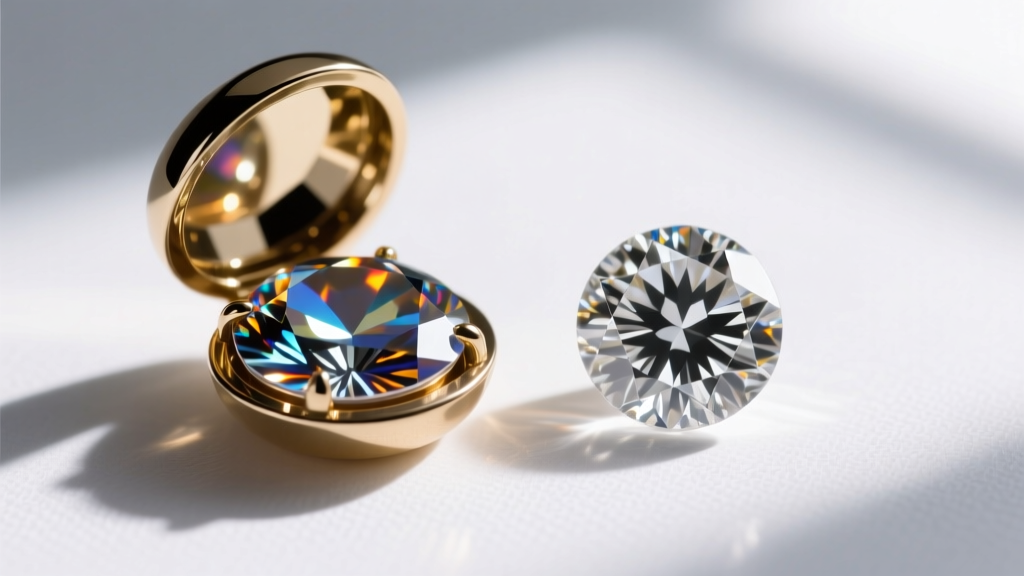
Developed by Georges Frédéric Strass in the 18th century and perfected through the 19th century, paste is a specialized lead glass. By adding up to 50% lead oxide to a silica and potash base, jewelers achieved a refractive index (RI) of roughly 1.70 to 1.85. While this falls short of a diamond's RI of 2.42, the addition of metallic foils behind the glass created a mirror-like brilliance that easily fooled the eye in dim, candlelit, or early gas-lit environments.
The Crucial Difference in Settings
According to archival records from the Victoria and Albert Museum, the physical setting of the stone is the most reliable indicator of its authenticity. Because the metallic foil backing on paste stones would tarnish and turn black if exposed to moisture, skin oils, or air, paste was almost exclusively set in closed-back collets. Conversely, as diamond cutting improved, jewelers began utilizing à jour (open-back) settings to allow light to enter the pavilion of the diamond, maximizing its fire and scintillation.
| Feature | 1880s Foiled Paste | Old Mine Cut Diamond |
|---|---|---|
| Refractive Index | 1.70 - 1.85 (Lead Glass) | 2.42 (Carbon Crystal) |
| Mohs Hardness | 5.0 - 6.0 (Scratches easily) | 10.0 (Scratch resistant) |
| Setting Style | Closed-back silver collets | Open-back (à jour) silver/gold |
| Girdle Condition | Often molded or polished | Bruted, frequently uneven |
| 2026 Market Value (Rivière) | $800 - $4,500 | $25,000 - $150,000+ |
Step 3: Sourcing Period-Accurate Components
If you are tasked with recreating a historically accurate replica for a theatrical production, a museum exhibit, or a personal collection, you cannot use modern round brilliant cuts. Modern diamonds possess 57 or 58 facets, creating a sharp, aggressive scintillation that looks entirely anachronistic in an 1880s setting.
Sourcing the Stones
You must source either genuine antique Old Mine Cuts (OMC) or high-quality modern replicas cut to historical specifications. Old Mine Cuts feature a high crown, a small table, a deep pavilion, and a large, flat culet that is visible to the naked eye through the table. For a budget-friendly recreation, source vintage foiled glass stones from specialized lapidaries or estate jewelers. Ensure the glass exhibits the slight internal bubbles and mold marks characteristic of 19th-century casting.
Sourcing the Metalwork
Authentic 19th-century French necklaces were typically crafted in silver-topped gold. Pure silver was used on the front to provide a white, reflective backdrop that enhanced the colorless stones, while an 18k yellow gold backing provided structural integrity and prevented the silver from tarnishing the wearer's skin. When sourcing or casting your collets, specify a base of 18-gauge sterling silver with 24-gauge prongs, which was standard for delicate Victorian and Belle Époque collet work.
Step 4: Assembly and Stringing Techniques
The final step in recreating the necklace is assembly. While modern jewelers might be tempted to use stainless steel beading wire, this will ruin the historical drape of the piece. A true rivière must articulate fluidly, draping perfectly against the clavicle.
The Silk Knotting Method
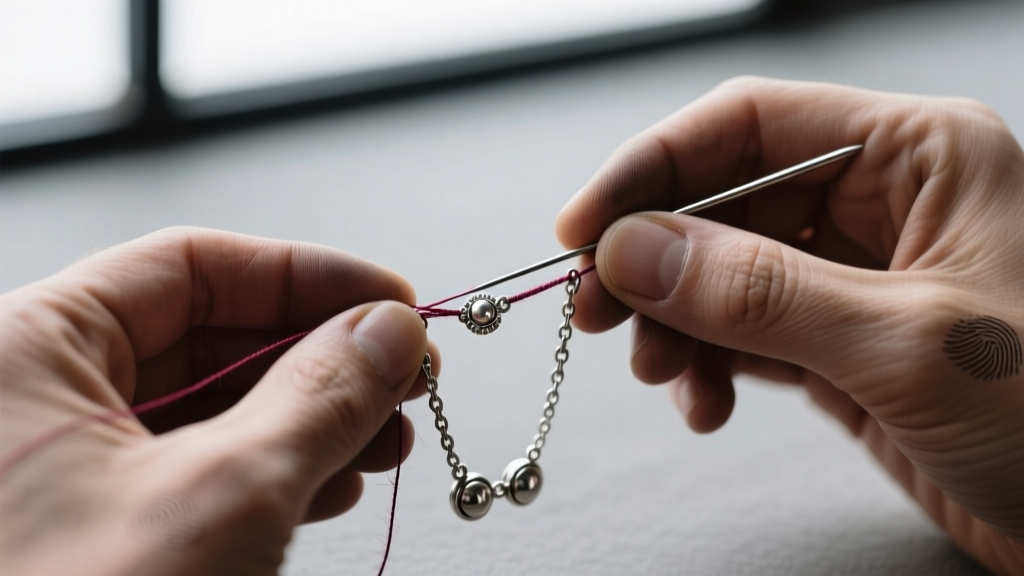
For a traditional assembly, use Size F or G (0.6mm - 0.8mm) pure silk cord. Pass the silk through the top loops of each silver collet. Between every single stone, you must tie a traditional overhand jeweler's knot using a beading awl. This serves two purposes: it prevents the heavy collets from grinding against one another and damaging the silver, and it ensures that if the necklace breaks (much like the fictional peril Mathilde feared), only one stone is lost rather than the entire strand.
Clasp Integration
Do not use a modern lobster or spring-ring clasp. An 1880s necklace would feature a push-pull box clasp, often disguised as one of the smaller stones at the nape of the neck, secured with a figure-eight safety catch. You can commission a custom bench jeweler to fabricate a silver-topped gold box clasp with a tension-fit tongue to complete the illusion.
Conclusion: Wearing the Narrative
Recreating the iconic jewelry from Maupassant's work is more than a technical exercise in silversmithing and gemology; it is an exploration of human vanity and historical craftsmanship. By understanding the exact chemical composition of Strass paste, the structural necessity of closed-back settings, and the socio-economic pressures of 1880s Paris, we gain a profound appreciation for the art of deception in jewelry. As the Gemological Institute of America frequently notes, the history of diamond simulants is inextricably linked to the history of diamond cutting itself. Whether you are building a replica for a literary adaptation or simply learning to appraise antique estate pieces, remember that the true value of a necklace often lies not just in its carat weight, but in the brilliant, tragic stories it carries.


