KA 1772 Italy 925 Gold Necklace: The Ultimate Buying Guide
Discover what the KA 1772 Italy 925 gold necklace hallmark means. Learn to verify vermeil thickness, avoid flash plating, and price Italian chains.

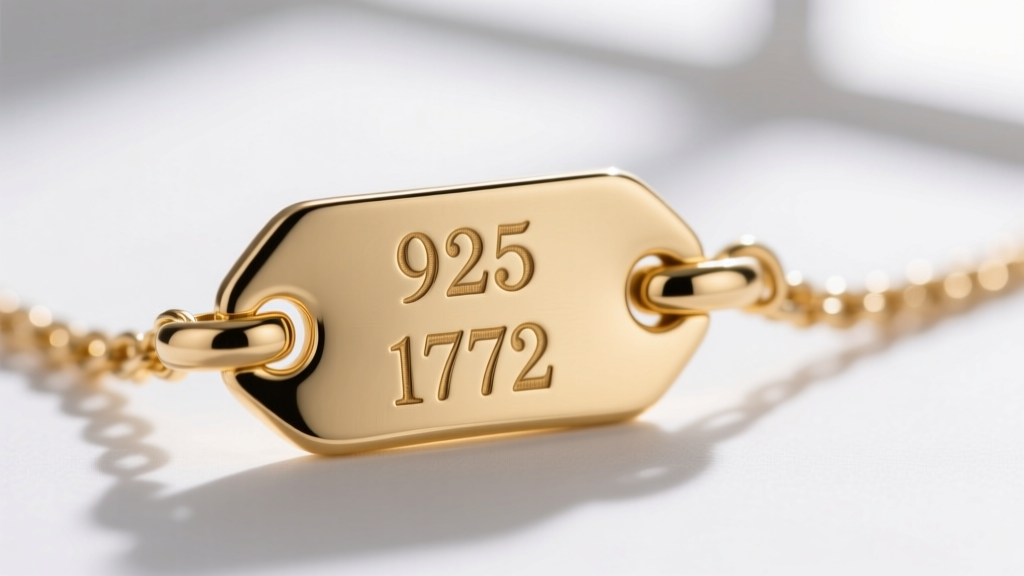
The Allure and Mystery of Italian 925 Gold Jewelry
Italian jewelry has long been considered the gold standard of craftsmanship, renowned for its intricate chain weaves and superior metallurgical finishing. However, navigating the secondary market or estate jewelry sales can be confusing, especially when you encounter a specific stamp like a KA 1772 Italy 925 gold necklace. What does this alphanumeric soup actually mean? Is it solid gold? Is it a specific brand? As of 2026, the market is flooded with misleading listings that conflate gold-plated sterling silver with solid karat gold. This comprehensive buying guide will decode the Italian assay system, explain the metallurgy behind '925 gold,' and provide you with a rigorous framework for evaluating, authenticating, and pricing these specific necklaces.
Decoding the 'KA 1772 Italy 925' Hallmark
To understand the value of your necklace, you must first understand the strict hallmarking laws of Italy. Unlike the United States, where hallmarking is largely unregulated and often left to the discretion of the manufacturer, Italy has maintained a rigorous, government-mandated assay system since 1934.
The Manufacturer Code: 1772
The number '1772' is not a model number or a karat weight; it is a unique manufacturer identification code assigned by the Italian state. In the Italian hallmarking system, silver and gold manufacturers are registered with a specific number followed by a two-letter provincial code (for example, 'AR' for Arezzo or 'VI' for Vicenza). Arezzo, in particular, is globally famous for its high-volume, premium chain manufacturing. If your piece reads '1772', it traces back to a specific, registered Italian foundry or jewelry house. The 'KA' prefix or accompanying stamp typically represents the brand's trademark, trade name, or a specific designer line operating under that manufacturing license.
The Metal Purity: 925
The '925' stamp is the universal standard for sterling silver. It guarantees that the core metal of the necklace is 92.5% pure silver, with the remaining 7.5% usually composed of copper or other alloys to provide tensile strength. This is a critical distinction: the core of your necklace is silver, not gold.
The '925 Gold' Paradox: Vermeil vs. Flash Plating
If the core is 925 sterling silver, why is it listed or sold as a 'gold necklace'? This is where buyers are most frequently misled. A '925 gold' necklace is, by definition, a gold-plated silver piece. However, not all plating is created equal. According to the Federal Trade Commission (FTC) Jewelry Guides, there are strict legal definitions for how gold over silver can be marketed.
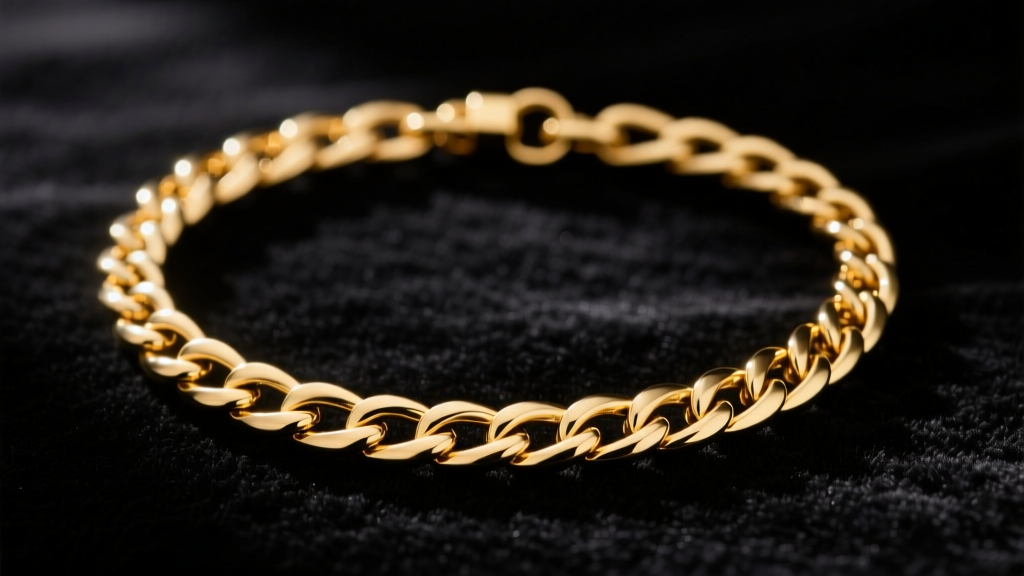
Understanding Gold Vermeil
For a piece to be legally classified as gold vermeil (pronounced ver-may), it must meet two strict criteria:
- Base Metal: Must be sterling silver (925).
- Plating Thickness: The gold layer must be at least 2.5 microns thick.
- Gold Purity: The plating must be at least 10-karat gold, though 14k and 18k are industry standards for high-end Italian vermeil.
The Danger of Flash Plating
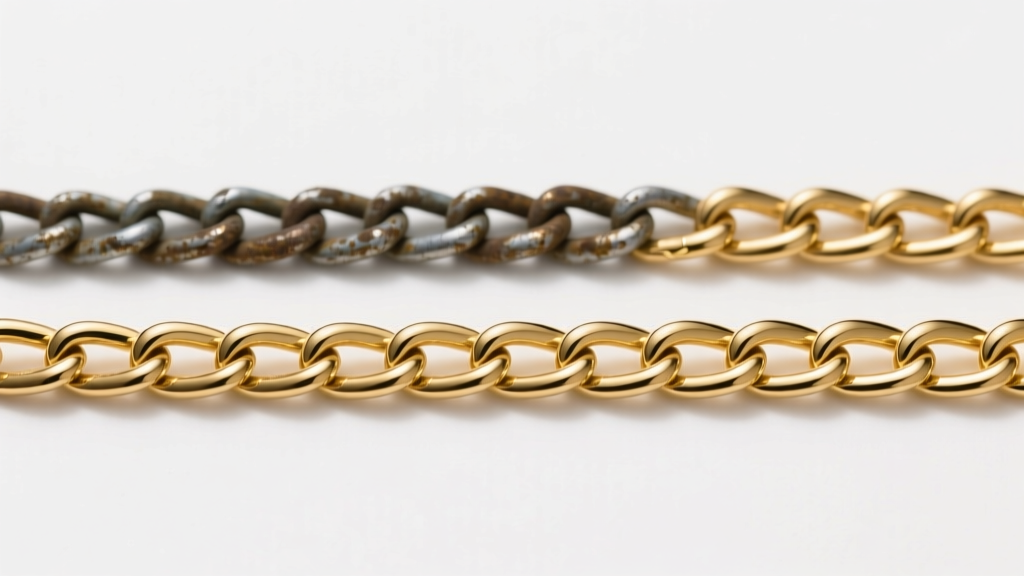
Many mass-produced necklaces stamped '925 Italy' feature 'flash plating.' This is a microscopic layer of gold—often less than 0.5 microns thick—applied via electroplating to give the piece a brilliant initial shine. Flash plating wears off rapidly, often within weeks of daily wear, exposing the copper-rich sterling silver underneath, which quickly oxidizes and turns the wearer's skin green. When evaluating a KA 1772 piece, your primary goal is to determine if it is true vermeil or mere flash plating.
| Plating Type | Thickness | Durability (Daily Wear) | Expected Price Range (2026) |
|---|---|---|---|
| Flash Plated | < 0.5 microns | 1 - 3 Months | $35 - $85 |
| Standard Gold Plated | 0.5 - 1.5 microns | 6 - 12 Months | $90 - $150 |
| True Gold Vermeil | 2.5+ microns | 2 - 5+ Years | $180 - $450+ |
| Solid 14k Gold (750/585) | N/A (Solid) | Lifetime | $800 - $3,000+ |
Italian Chain Architecture: What to Look For
Italy is the undisputed master of chain weaving. When inspecting a KA 1772 necklace, the physical construction of the links is just as important as the hallmark. The Gemological Institute of America (GIA) notes that the structural integrity of a chain relies heavily on the precision of its linkages and soldering.
Soldered vs. Unsoldered Links
High-end Italian chains, particularly styles like the Figaro, Mariner, and Rope, feature individually soldered links. This means every single ring is closed with a microscopic weld of silver or gold alloy. If you pull the chain taut and hold it up to a jeweler's loupe, you should not see any open seams. Unsoldered chains (often flash-plated to save costs) will pull apart under minimal tension and are a major failure point in vintage 925 jewelry.
Clasp Mechanisms and Failure Modes
The clasp is the most common point of failure on any necklace. Italian manufacturers typically use one of two styles:
- Spring Ring: Common on lighter, delicate chains (under 3mm). These are prone to internal spring failure and are difficult to operate with one hand.
- Lobster Claw: Standard on heavier chains (4mm and above). Look for a solid, cast lobster clasp rather than a hollow, stamped sheet-metal version. A quality Italian lobster clasp will have a smooth, tension-calibrated lever and will bear the '925' stamp on its side or base.
Authentication and Pricing Framework
When buying a KA 1772 Italy 925 gold necklace, you are paying for Italian craftsmanship, sterling silver weight, and the quality of the gold overlay. Use this checklist to verify the piece before purchasing:
- Magnet Test: Sterling silver is non-magnetic. If the chain snaps to a neodymium magnet, the core is likely brass or steel, meaning the '925' stamp is counterfeit.
- Visual Wear Inspection: Examine the clasp and the back of the neck zone. If you see a brassy or reddish hue bleeding through the gold, the piece is heavily worn flash-plate, not vermeil.
- Weight Verification: Italian silver chains have a distinct, dense drape. A 20-inch, 4mm Figaro chain should weigh roughly 25-30 grams. If it feels suspiciously light, it may be hollow-tubing or a base-metal fake.
- Hallmark Alignment: Authentic Italian stamps are usually laser-engraved or deeply struck with clean, sans-serif fonts. Sloppy, shallow, or misaligned stamps are red flags for counterfeit goods.
"Consumers should be highly skeptical of 'solid gold' listings that feature a 925 stamp. 925 exclusively denotes sterling silver. Any gold coloration on a 925 piece is an overlay, and its value is tied to the thickness of that overlay and the weight of the silver beneath." — Independent Precious Metals Assay Guidelines
Care and Maintenance for 925 Vermeil
Because the core of your KA 1772 necklace is sterling silver, it is susceptible to tarnish, even if the gold plating is intact. The 7.5% copper alloy in sterling silver reacts with sulfur and moisture in the air. To preserve the gold vermeil layer and prevent underlying tarnish from bubbling up:
- Avoid Chemical Exposure: Never wear the necklace in chlorinated pools or hot tubs. Chlorine aggressively eats away at gold plating and causes irreversible pitting in the silver core.
- The Soap Film Trap: Daily showering with body washes creates a microscopic film of soap scum that dulls the gold's refractive index. Clean the piece monthly with a few drops of mild, phosphate-free dish soap and a soft baby toothbrush.
- Storage Protocol: Store the necklace in an anti-tarnish cloth pouch. Do not store it in a humid bathroom, and never toss it loosely into a jewelry box where friction will wear down the 2.5-micron vermeil layer.
Final Verdict
A genuine KA 1772 Italy 925 gold necklace is a beautiful marriage of Italian chain-making heritage and the accessible luxury of gold vermeil. By understanding the assay marks, demanding proper plating thickness, and inspecting the structural integrity of the links, you can confidently navigate the market and secure a piece that will maintain its brilliant warmth and structural elegance for years to come.


