Kate Spade Necklace Flower: Cleaning & Care Guide
Learn expert cleaning and maintenance tips for your Kate Spade necklace flower. Protect the enamel, gold plating, and crystals with our detailed care guide.

Understanding the Anatomy of Your Kate Spade Necklace Flower
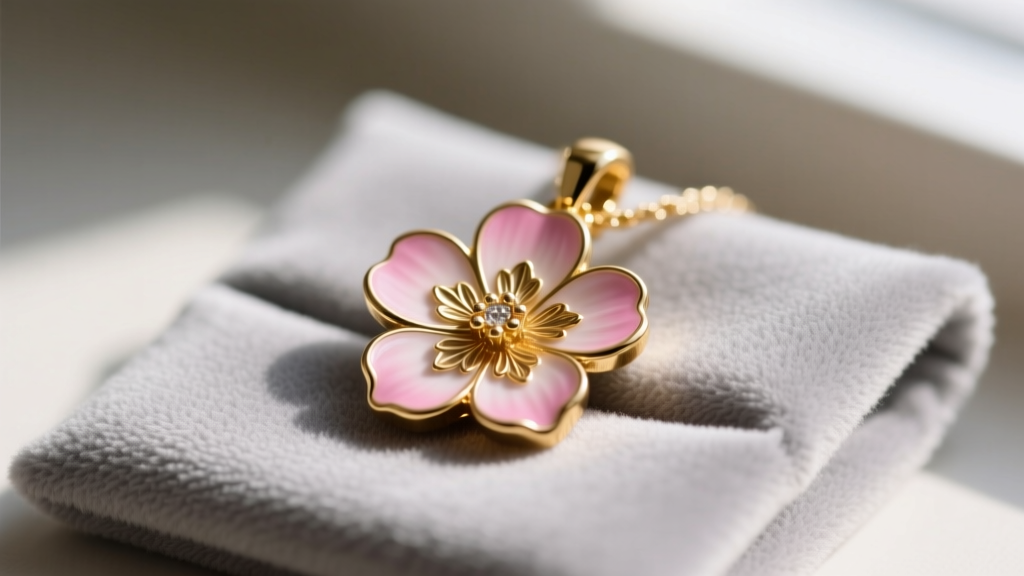
To properly care for your jewelry, you must first understand the materials used in its construction. The iconic Kate Spade necklace flower designs are celebrated for their vibrant colors and playful elegance, but they are primarily crafted from fashion jewelry materials rather than solid fine metals. Most of these pendants feature a solid brass base metal that is electroplated with a micro-layer of 12k or 14k gold-tone alloy. The signature vibrant petals are typically filled with cold enamel (a specialized jewelry-grade epoxy resin) or occasionally vitreous enamel, while the center accents often feature glass crystals or cubic zirconia set with jeweler's adhesive.
This specific material combination dictates a strict care regimen. Unlike solid 14k gold or platinum, gold-plated brass is highly susceptible to friction wear and chemical corrosion. Furthermore, the epoxy resin used for the floral enamel can degrade, cloud, or separate from the brass bezel if exposed to harsh solvents, extreme heat, or ultrasonic vibrations. According to the Gemological Institute of America (GIA), understanding the porosity and chemical sensitivity of your jewelry's base materials is the first step in preventing irreversible damage.
The "Last On, First Off" Rule for Daily Wear
The most effective maintenance strategy for a Kate Spade necklace flower pendant is preventative care. Fashion jewelry should always be the last thing you put on when getting dressed and the first thing you take off when you return home. This simple habit protects the delicate gold plating and epoxy enamel from a host of daily chemical hazards.
- Cosmetics and Perfumes: The alcohol and essential oils found in perfumes, hairsprays, and lotions can slowly break down the chemical bonds of the cold enamel, leading to a cloudy or dull finish over time.
- Sweat and Body Oils: Human sweat has a pH level ranging from 4.5 to 7.0. When this mild acid sits on the surface of gold-plated brass, it accelerates the oxidation process. If the plating has micro-abrasions, the sweat will reach the brass base, causing rapid tarnishing and potentially leaving a green residue on your skin.
- Chlorine and Saltwater: Never wear your pendant in the pool or ocean. Chlorine is highly reactive with brass and will permanently pit and discolor the base metal if it breaches the gold plating.
Step-by-Step Cleaning Guide for Enamel and Gold-Plated Brass
When your pendant accumulates oils, dust, or lotion residue, it requires a gentle, non-abrasive cleaning method. Never use commercial silver dips, ultrasonic cleaners, or steam cleaners, as these will strip the gold plating and shatter the epoxy enamel.
Gathering Your Supplies
Before you begin, ensure you have the correct tools to safely clean your pendant without scratching the delicate gold-tone finish:
- Mild, phosphate-free dish soap (such as original Dawn)
- Lukewarm distilled water (tap water contains minerals that can leave hard water spots on the enamel)
- A brand-new, ultra-soft baby toothbrush
- A lint-free microfiber polishing cloth
- A clean, dry cotton swab
The Washing Technique
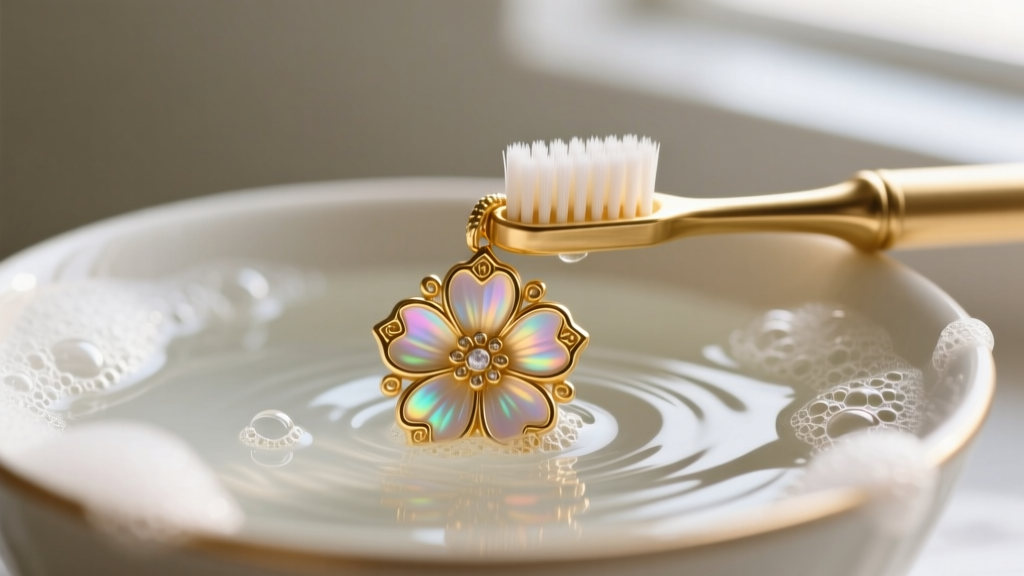
- Prepare the Solution: Mix two drops of mild dish soap into a small bowl of lukewarm distilled water. Avoid hot water, as sudden temperature changes can cause the enamel to crack or the crystal adhesives to loosen.
- Targeted Agitation: Dip the baby toothbrush into the soapy solution and gently tap it against the edge of the bowl to remove excess water. You want the brush damp, not dripping. Gently brush the gold-plated brass crevices and the back of the pendant where skin oils accumulate.
- Wipe the Enamel: Do not scrub the enamel petals with the brush. Instead, dip your fingertip or a cotton swab into the soapy water and gently wipe the surface of the flower petals to lift away oils and cosmetics.
- Rinse Quickly: Briefly hold the pendant under a slow stream of lukewarm distilled water for no more than three seconds to rinse away the soap suds.
Drying and Polishing
Immediately pat the pendant dry with a lint-free microfiber cloth. Ensure no moisture is trapped in the crevices where the enamel meets the brass bezel, as lingering water can cause the brass to oxidize and push up the edges of the enamel. Allow the necklace to air dry completely on a towel for 15 minutes before storing it.
Chemical Compatibility Chart: What to Avoid
Using the wrong cleaning agent is the fastest way to ruin a designer fashion pendant. Refer to this compatibility chart to ensure you are using safe maintenance products on your Kate Spade necklace flower.
| Cleaning Agent | Safety Status | Effect on Gold-Plated Brass & Enamel |
|---|---|---|
| Mild Dish Soap & Water | Safe | Gently lifts oils without damaging plating or epoxy resin. |
| Baking Soda Paste | Unsafe | Highly abrasive; will scratch the gold plating and dull the enamel finish. |
| Ultrasonic Cleaners | Unsafe | High-frequency vibrations will shatter cold enamel and dislodge glued crystals. |
| Jewelry Polishing Cloths | Use Caution | Only use untreated microfiber. Chemically treated rouge cloths will strip the thin gold micron layer. |
| Rubbing Alcohol | Unsafe | Degrades the epoxy resin over time, causing the enamel to cloud, crack, or peel. |
Proper Storage to Prevent Tarnish and Scratches
How you store your jewelry is just as critical as how you clean it. Brass is a highly reactive metal, and even the ambient humidity in your bedroom or bathroom can cause the base metal to tarnish beneath the gold plating. Furthermore, the enamel on your flower pendant is softer than many gemstones and metals, making it prone to scratching if tossed into a communal jewelry box.
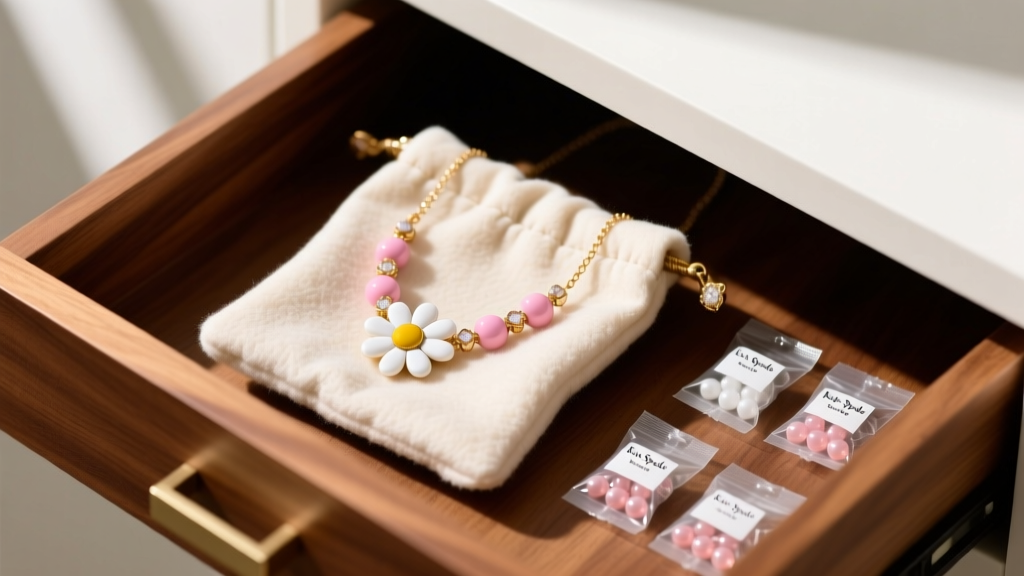
To maximize the lifespan of your pendant, store it in an individual, airtight polyethylene zip-lock bag or a soft flannel pouch. Squeeze out as much air as possible before sealing. For optimal protection, include a small 3M anti-tarnish strip and a silica gel desiccant packet inside the bag. The anti-tarnish strip will absorb airborne sulfur compounds that cause brass to darken, while the silica gel will control ambient moisture. Always store your necklace flat to prevent the chain from tangling and scratching the face of the enamel flower.
Troubleshooting Common Wear-and-Tear Issues
Even with meticulous care, fashion jewelry can experience wear over time. Here is how to address common issues specific to enamel and gold-plated floral pendants.
Green Skin and Exposed Brass
If you notice a green tint on your skin or see the gold plating wearing thin on the back of the pendant, the brass base has been exposed to oxygen and moisture. While you cannot re-plate the jewelry at home, you can seal it. Clean the pendant thoroughly, let it dry completely, and apply a thin coat of a specialized jewelry sealant like ProtectaClear. Avoid using clear nail polish, as the acetone and harsh solvents in nail polish can melt the adjacent cold enamel and ruin the floral design.
Loose or Missing Crystals
The glass crystals or cubic zirconia in the center of your flower pendant are typically secured with jeweler's epoxy. If a stone becomes loose, do not use super glue (cyanoacrylate), as it dries brittle, fogs the glass, and leaves a white residue. Instead, use a toothpick to apply a microscopic drop of E6000 Jewelry & Bead Adhesive to the setting. Carefully place the stone using tweezers, wipe away any excess glue immediately with a dry cotton swab, and let it cure on a flat surface for 24 hours.
Dull or Cloudy Enamel
If the vibrant enamel petals have lost their glossy shine, they may have suffered microscopic surface etching from acidic lotions or perfumes. While you cannot buff epoxy resin the way you would polish solid metal, you can restore a temporary shine by applying a minuscule amount of carnauba-based jewelry wax to the enamel surface. Buff it gently with a clean microfiber cloth to fill in micro-scratches and restore the glass-like luster of the flower petals.
Expert Insight: The Federal Trade Commission (FTC) Jewelry Guides note that gold-plated fashion jewelry is designed for aesthetic versatility rather than multi-generational durability. By treating your Kate Spade necklace flower as a delicate textile rather than a solid metal heirloom, you can easily extend its vibrant lifespan by five to ten years.