Restore Your Kate Spade Strawberry Necklace: Enamel & Chain Fixes
Learn how to troubleshoot and restore your Kate Spade strawberry necklace. Expert fixes for chipped enamel, faded gold plating, and tangled chains.

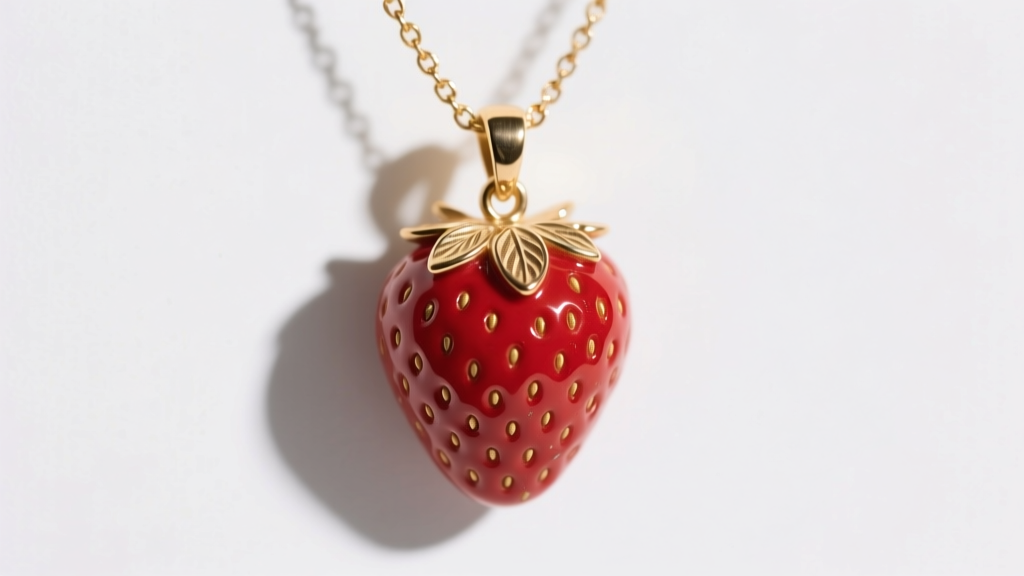
The Kate Spade strawberry necklace is a beloved staple in many jewelry collections, celebrated for its playful charm, glossy red dome, and delicate gold-tone detailing. However, like most fashion jewelry, it is not immune to the ravages of daily wear. Whether you own a vintage piece from an early 2010s collection or a newer iteration featuring pavé crystal stems, you may eventually encounter issues like chipped enamel, fading gold plating, or a stubbornly tangled cable chain. Because these pieces are typically crafted from brass base metals with cold enamel and flash plating, they require specific troubleshooting techniques that differ vastly from fine jewelry repair.
In this comprehensive guide, we will break down the exact material composition of your necklace and provide actionable, step-by-step solutions to restore your Kate Spade strawberry necklace to its original glory. From sourcing the right jewelry-grade resins to understanding the limits of DIY gold plating, this guide replaces vague advice with precise, expert-level repair protocols.
Diagnosing Common Kate Spade Strawberry Pendant Failures
Before attempting any repairs, it is crucial to understand the materials you are working with. Authentic Kate Spade fashion necklaces generally utilize a brass or zinc alloy base metal. The gold finish is typically a 12k gold "flash" plating, meaning it is less than 0.5 microns thick. The iconic red strawberry dome is not kiln-fired vitreous enamel, but rather a "cold enamel"—an epoxy-based resin that is painted and air-cured. According to the Federal Trade Commission Jewelry Guides, understanding these material distinctions is vital, as harsh chemicals used for fine jewelry can instantly dissolve cold enamel and strip flash plating.
| Component | Common Failure Mode | Root Cause | DIY Fixability |
|---|---|---|---|
| Red Enamel Dome | Chipping, cratering, or dulling | Impact, UV exposure, cosmetic chemicals | High (Resin tinting) |
| Gold Plating (Leaves) | Brass showing through, darkening | Sweat acidity, friction, perfume | Medium (Gold leaf pen) |
| Cable Chain | Severe knotting or snapping | Thin gauge (approx. 1.0mm), storage | High (Needle untangling) |
| Lobster Clasp | Stiff, stuck, or failing to close | Debris, lotion buildup in the spring | High (Alcohol flush) |
Fixing Chipped Cold Enamel on the Strawberry
If your necklace has suffered a drop, you might notice a small crater or chip in the glossy red dome. Because cold enamel is essentially a hardened epoxy, you cannot melt it down to fill the gap. Instead, you must build up the missing layer using a compatible jewelry-grade resin.
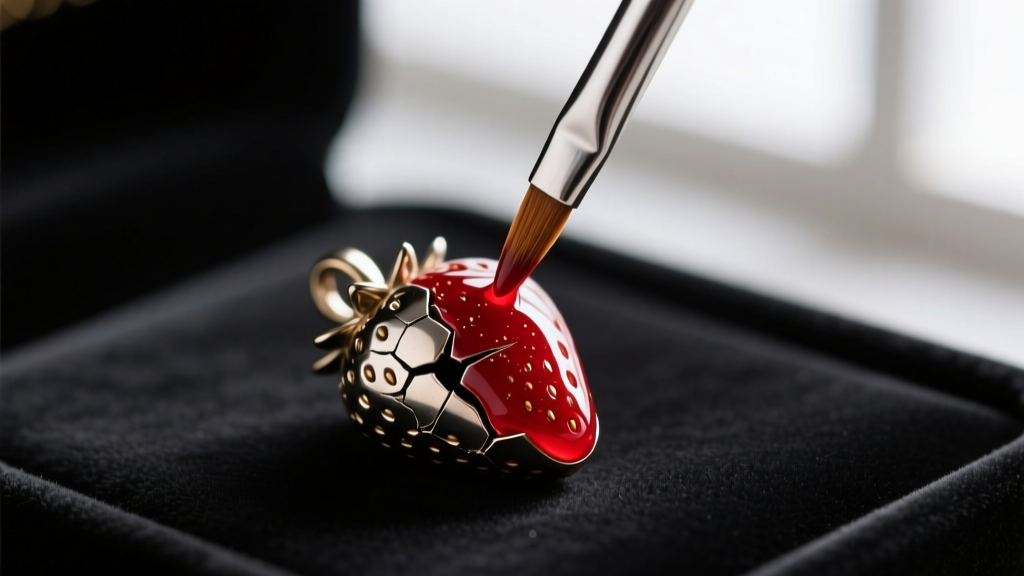
The Epoxy Resin Repair Protocol
- Surface Preparation: Clean the chipped area with 91% isopropyl alcohol and a cotton swab. Do not use acetone or nail polish remover, as these will melt the surrounding intact cold enamel and ruin the pendant's finish.
- Color Matching: Standard red jewelry paint often looks flat. To replicate the translucent, glossy depth of the Kate Spade strawberry, use a glass paint like Pebeo Vitrail in "Cherry Red" or mix a two-part clear jewelry epoxy with a microscopic drop of transparent red alcohol ink.
- Application: Using a 0.5mm detail brush, apply the resin directly into the chip. Surface tension will help it dome slightly. If the chip is deep, apply in two thin layers, allowing 12 hours of curing time between coats to prevent bubbling.
- Sealing: Once fully cured (48 hours), lightly buff the entire strawberry dome with a microfiber cloth and a tiny amount of Renaissance Wax to unify the shine between the original enamel and your repair.
Restoring Faded Gold Plating on the Leaves and Chain
The gold-plated brass leaves framing the strawberry are highly susceptible to friction and the natural acidity of human skin. When the plating wears away, the underlying brass oxidizes, turning a dull brown or greenish-black. Attempting to polish exposed brass with a standard jewelry cloth will only remove the remaining microscopic layers of gold plating surrounding the bare spot.
DIY Touch-Ups vs. Professional Electroplating
For minor wear on the leaves, a 23k gold leaf pen (often used for gilding and kintsugi) can provide a temporary, color-matched cosmetic fix. Clean the brass with alcohol, apply the gold leaf pen in thin, even strokes, and seal it with a microscopic layer of clear jewelry sealant to prevent immediate tarnishing.
However, if the chain itself has turned brassy, DIY pens will result in a patchy, uneven appearance. The only permanent solution is professional electroplating. A jeweler can strip the remaining flash plating, polish the raw brass, and apply a heavy 2.5-micron layer of 14k or 18k gold via the electroplating process. Expect to pay between $45 and $85 for this service, which effectively transforms your fashion necklace into a demi-fine piece that will resist tarnish for years.
Untangling and Replacing the Delicate Cable Chain
The standard chain on a Kate Spade strawberry necklace is a delicate cable chain, usually measuring between 1.0mm and 1.2mm in width, crafted from 20-gauge or 22-gauge wire. Because the links are so fine, they easily catch on clothing and weave into tight, frustrating knots.
The Needle and Lubricant Method
Never pull the ends of a tangled chain; this tightens the microscopic knots. Instead, lay the necklace flat on a brightly lit, non-porous surface like a glass tray. Apply a single drop of mineral oil or baby oil directly to the center of the knot to reduce friction. Using two fine sewing needles or beading awls, gently work the needles into the center link of the knot and wiggle them outward to loosen the tension. Once untangled, wash the chain with mild dish soap and warm water to remove the oil, then pat dry.
Sourcing Replacement Chains and Jump Rings
If the chain has snapped near the lobster clasp or extender, you will need to replace the hardware. According to The Spruce Crafts jewelry repair guidelines, matching the exact gauge of the jump rings is critical for structural integrity. For a 1.2mm cable chain, use 3mm or 4mm jump rings made from 20-gauge brass or gold-filled wire. Use two pairs of flat-nose pliers to twist the jump ring open laterally (never pull it apart like a letter 'C', which weakens the metal), thread the chain and clasp, and twist it securely closed.
Preventative Care for Fashion Enamel Jewelry
Troubleshooting is only half the battle; preserving the structural integrity of your Kate Spade strawberry necklace requires proactive care. Cold enamel is highly sensitive to sudden temperature changes and prolonged UV exposure, both of which can cause the resin to yellow or craze (develop tiny surface cracks).
Expert Storage Tip: Never store your enamel and gold-plated necklaces in the bathroom. The constant fluctuations in heat and humidity from showers will rapidly degrade the epoxy resin and accelerate the oxidation of any exposed brass base metals.
To maintain the necklace, wipe it down with a dry, lint-free microfiber cloth after every wear to remove skin oils and microscopic cosmetic residue. Store the piece flat in its original felt pouch or a sealed polyethylene bag with an anti-tarnish strip. By treating the cold enamel with the same delicacy as a pearl or opal, and respecting the limitations of flash gold plating, your strawberry pendant will remain a vibrant, statement-making piece in your wardrobe for years to come.


