The Kate Spade White Flower Necklace: 2026 Style Guide
Discover how to style the iconic Kate Spade white flower necklace in 2026. Expert tips on layering, enamel care, and matching necklines for a modern look.

The Enduring Botanical: Why the White Enamel Daisy Remains Relevant
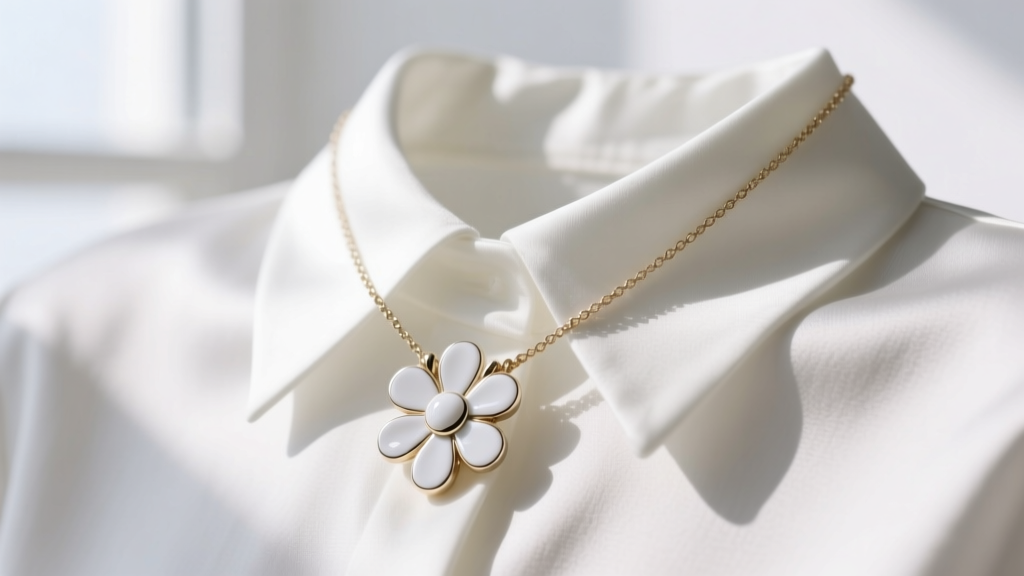
When analyzing the trajectory of early-2000s fashion jewelry that has successfully transitioned into modern archival status, few pieces command the immediate recognition of the kate spade white flower necklace. Originally popularized during the brand's explosive growth era, the white enamel daisy and floral motifs have transcended their origins as playful accessories. In 2026, the fashion landscape has shifted away from sterile minimalism toward curated nostalgia and expressive femininity. This shift has positioned the white floral pendant not as a relic, but as a versatile anchor piece capable of grounding contemporary silhouettes.
According to the historical archives of Kate Spade New York, the brand's foundational ethos relied on merging utilitarian shapes with unexpected, joyful details. The white flower necklace perfectly encapsulates this philosophy. Today, style analysts and fashion editors are revisiting these pieces, styling them in ways that subvert their original 'preppy' connotations, favoring instead a high-low mix of structured tailoring and delicate botanical jewelry.
Material Anatomy: Enamel, Brass, and Plating Grades
To properly style and maintain the kate spade white flower necklace, one must first understand its material composition. Unlike fine jewelry that utilizes vitreous enamel (fired glass fused to metal at high temperatures), these iconic pendants are crafted using cold epoxy enamel. This resin-based compound is poured into stamped brass molds and cured at room temperature. While it lacks the Mohs hardness of fired glass, high-quality epoxy resin offers superior impact resistance, meaning it is less likely to shatter if dropped on a hard surface.
The base metal is typically solid brass, chosen for its excellent weight and malleability, which allows for the crisp, defined edges of the flower petals. This brass foundation is then plated with a 12k gold wash. The contrast between the warm, reflective gold borders and the opaque, matte-finish white enamel is what gives the pendant its signature depth and visual weight. Understanding this anatomy is crucial for the 2026 consumer, as it dictates how the piece interacts with other metals in a layered stack.
2026 Trend Report: How the Fashion Set is Wearing It Now
The styling paradigm for the kate spade white flower necklace has evolved significantly. In the 2010s, it was often worn as a solitary statement piece over a simple crewneck tee. In 2026, the prevailing trend is 'textural juxtaposition.' Fashion insiders are pairing the glossy, pristine white enamel with raw, organic materials and heavy, industrial metals to create visual friction.
The Asymmetrical Layering Framework
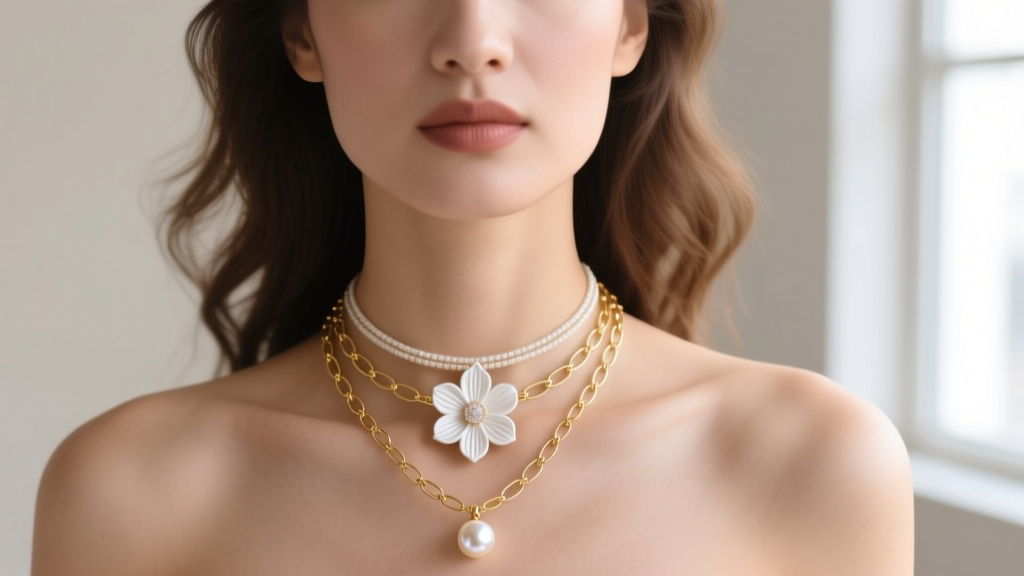
Layering is no longer about simple symmetry; it is about calculated imbalance. To integrate the white flower pendant into a modern stack, follow this specific gauge and length framework:
- The Anchor (14-inch): A 1.2mm 14k gold-filled rolo chain sitting tight against the collarbone. This provides a delicate baseline.
- The Focal Point (16-inch): The kate spade white flower necklace on its original 16-inch cable chain. The 1.5mm gauge of the spade link or cable chain provides enough structural integrity to hold the heavy brass pendant without tangling.
- The Counterweight (18 to 20-inch): A 3mm oxidized silver paperclip chain or a dark leather cord. This introduces a masculine, industrial element that prevents the floral motif from looking overly saccharine.
By mixing the warm 12k gold plating of the Kate Spade piece with cooler, darker metals in the lower layers, you achieve a sophisticated, multi-dimensional look that aligns perfectly with 2026's eclectic layering trends.
Neckline Matrix: Pairing the Pendant with 2026 Silhouettes
The visual weight of the white enamel flower requires careful consideration of the garment's neckline. The pendant typically measures between 0.75 and 1 inch in diameter, making it substantial enough to get lost in busy patterns but too bold for extremely delicate, sheer fabrics. Below is a strategic matrix for pairing the necklace with contemporary silhouettes.
| Neckline Silhouette | Chain Length Strategy | Styling Impact & Vibe |
|---|---|---|
| Structured Blazer Lapel | 16 inches (resting on the lapel) | Subverts menswear tailoring; adds a soft, feminine focal point to sharp shoulders. |
| Asymmetric One-Shoulder | 14 to 16 inches (choker style) | Draws the eye upward, balancing the bare shoulder with a concentrated metallic flash. |
| Deep V-Neck Silk Slip | 18 inches with 2-inch extender | Allows the daisy to float in the negative space, creating an elegant, elongated torso. |
| High-Neck Ribbed Knit | 16 inches (over the fabric) | Provides a stark, graphic contrast against dark, textured winter wools or cashmeres. |
Preservation Protocol: Caring for Enamel and Gold Plate
The longevity of the kate spade white flower necklace relies entirely on proper preservation. Epoxy enamel is susceptible to chemical degradation and UV yellowing if neglected. As noted by the gemological experts at the Gemological Institute of America (GIA), organic and resin-based jewelry materials require vastly different care protocols than crystalline gemstones.
What to Avoid: The Chemistry of Enamel Degradation
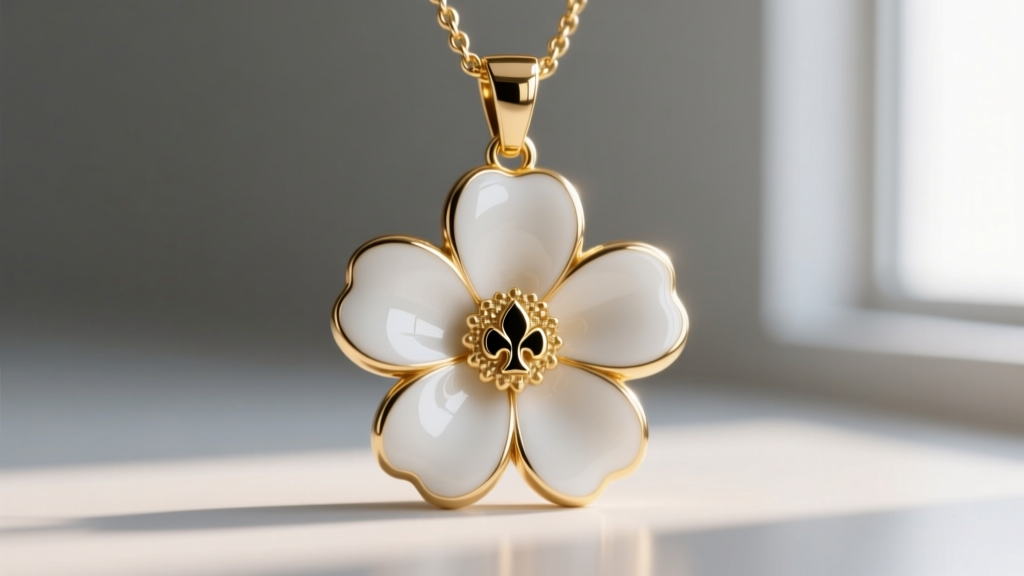
The most common failure mode for vintage Kate Spade enamel pieces is the clouding or lifting of the resin. To prevent this, adhere to the following strict prohibitions:
- No Ultrasonic Cleaners: The high-frequency vibrations can cause micro-fractures in the epoxy resin, leading to water infiltration beneath the enamel, which ultimately causes it to pop out of the brass bezel.
- Avoid Alcohol-Based Solvents: Perfumes, hand sanitizers, and harsh makeup removers contain alcohols that will slowly break down the chemical bonds of the cold enamel, resulting in a dull, yellowed appearance.
- Never Use Silver Polish: Abrasive polishing pastes designed for silver will strip the 12k gold plating right off the brass base, leaving you with a raw, easily tarnished metal border.
Instead, clean your necklace using a barely damp microfiber cloth and a drop of pH-neutral dish soap. Dry it immediately and store it in an anti-tarnish flannel pouch away from direct sunlight to prevent UV-induced yellowing of the white resin.
Sourcing and Valuation: Retail vs. Archival Markets
For collectors and stylists looking to acquire the kate spade white flower necklace in 2026, the market is split between contemporary retail releases and the archival secondary market. Current retail iterations, often featuring updated hardware or slightly altered petal geometries, typically range from $78 to $98 USD.
The true magic of early 2000s Kate Spade jewelry lies in its heavy, unapologetic hardware and the specific, creamy shade of white enamel that the brand has struggled to perfectly replicate in modern mass-production runs.
On the secondary market—platforms like Poshmark, eBay, and specialized vintage curators—you can find original early-2000s iterations. When sourcing vintage, always inspect the hallmark. Authentic pieces from the golden era will feature 'Kate Spade New York' stamped cleanly into the back of the brass pendant, alongside a distinct, weighted spade logo charm attached to the chain near the clasp. Expect to pay between $45 and $85 USD for vintage pieces in excellent condition, with a premium commanded for those that include the original branded drawstring pouch and box. By understanding both the material science and the styling evolution of this iconic piece, you can seamlessly integrate it into a forward-thinking, sophisticated 2026 wardrobe.


