How to Keep Necklaces From Tangling When Wearing Layered Gifts
Learn how to keep necklaces from tangling when wearing layered gifts. Expert tips on chain weights, lengths, and spacer clasps for flawless styling.

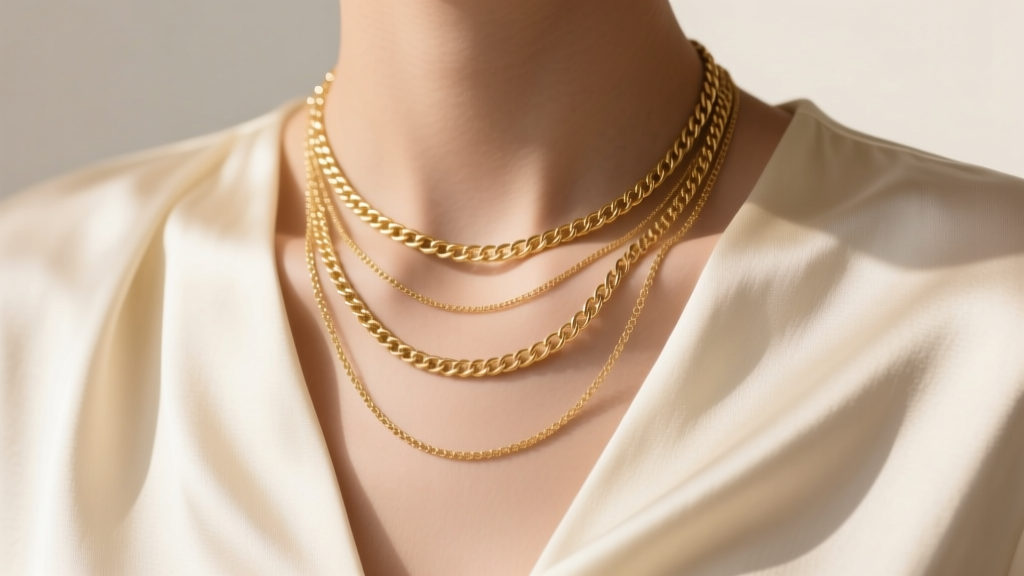
Gifting jewelry is an art form, and in 2026, the curated layered necklace stack remains one of the most highly requested presents for birthdays, anniversaries, and holidays. However, the joy of unboxing a beautiful set of chains quickly evaporates if the recipient has to spend ten minutes untangling a knotted mess before every wear. Understanding how to keep necklaces from tangling when wearing them requires a blend of physics, metallurgy, and strategic styling. Whether you are gifting a pre-layered set or individual pieces meant to be stacked, this comprehensive guide will ensure your jewelry gift remains elegant, functional, and entirely tangle-free.
The Physics of Necklace Tangling: Why Chains Knot
To solve the tangling problem, we must first understand the mechanical forces at play. Tangling is not random; it is a predictable result of friction, static electricity, and geometric interference. When two chains share a similar link pitch—the distance between individual links—they act like interlocking gears. As the wearer moves, the links slide against one another, eventually catching and twisting.
Furthermore, the flexibility of the chain dictates its knotting propensity. Highly flexible chains, such as snake or herringbone, have a tendency to fold back on themselves, creating tight micro-knots that are notoriously difficult to undo without damaging the metal. According to Blue Nile's Necklace Education Guide, the structural integrity and link shape of a chain heavily influence its durability and how it interacts with other metals. By deliberately mixing chain geometries, you eliminate the mechanical conditions required for knots to form.
The Golden Rule of Layering Gifts: Length and Weight Ratios
If you are gifting multiple necklaces intended to be worn together, the most critical factor in preventing tangles is the length differential. The industry standard for a tangle-free stack is a minimum two-inch gap between each chain. A classic, foolproof gifting trio includes a 14-inch choker, a 16-inch princess length, and an 18-inch matinee length. This spacing ensures that the chains rest on different planes of the décolletage, minimizing physical overlap and the friction that leads to knotting.
The Pendulum Effect: Weight as an Anchor
Length alone is not enough; weight distribution is equally vital. A lightweight, 22-gauge cable chain will flutter and twist with the wearer's body heat and movement. To counteract this, utilize the pendulum effect. By attaching a pendant that is at least three times the weight of the chain itself, you create a gravitational anchor. For example, if a 16-inch 18k gold rolo chain weighs 2.5 grams, pairing it with a 7.5-gram gemstone or solid gold pendant will force the chain to hang straight and resist twisting. When curating a gift, always check the gram weight of the components to ensure this stabilizing ratio is met.
Hardware Solutions: Spacer Bars and Multi-Strand Clasps
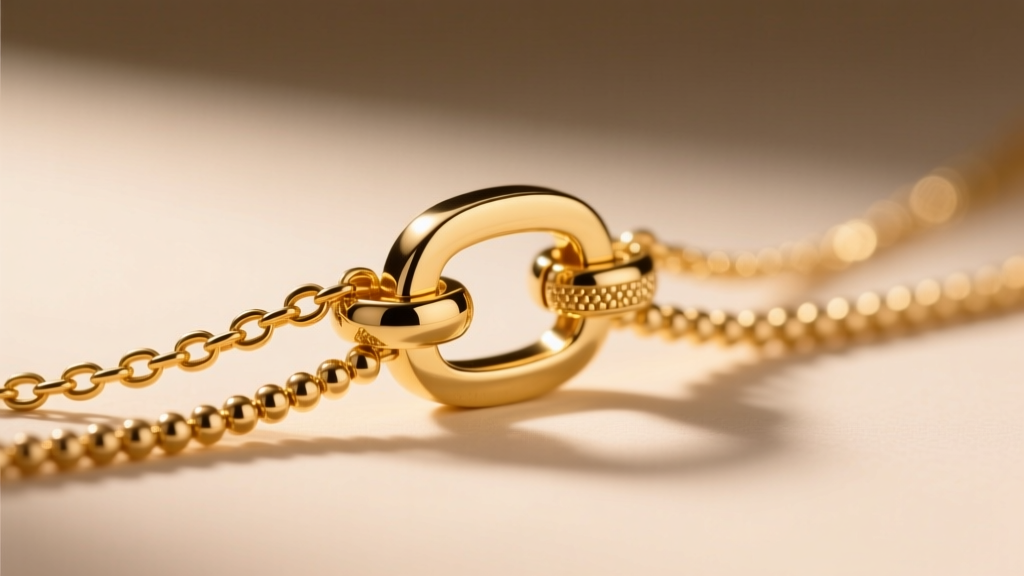
For the ultimate foolproof gift, consider hardware that physically prevents the chains from crossing over one another. Multi-strand spacer clasps and layering bars are elegant engineering solutions that maintain the illusion of separate necklaces while locking them into a unified, tangle-free structure.
Magnetic vs. Lobster Clasps for Layering
Traditional lobster clasps can be cumbersome when managing three or more chains, often catching on adjacent links during the fastening process. Upgrading your gift to feature N52-grade neodymium magnetic clasps is a game-changer for layering. These powerful rare-earth magnets snap together effortlessly, allowing the wearer to secure all layers at the nape of the neck in a single motion without the twisting and fumbling that leads to immediate tangling. The Gemological Institute of America (GIA) notes that while gold and silver are prized for their luster, integrating modern magnetic hardware significantly enhances the functional wearability of fine jewelry.
Chain Profile Matrix: Best Styles for Tangle-Free Layering
Not all chains are created equal when it comes to stacking. When selecting pieces for a layered gift, use this matrix to choose chains with low friction coefficients and high structural independence.
| Chain Style | Link Profile | Friction Index (1-5) | Tangle Risk | Best Layering Position |
|---|---|---|---|---|
| Cable | Uniform Oval | 3 | Moderate | Top (Closest to neck) |
| Rolo | Thick Round | 2 | Low | Middle |
| Figaro | Alternating Long/Short | 1 | Very Low | Bottom (Anchor layer) |
| Box | Square Geometric | 2 | Low | Middle or Bottom |
| Snake | Smooth Tubular | 4 | High | Wear Alone |
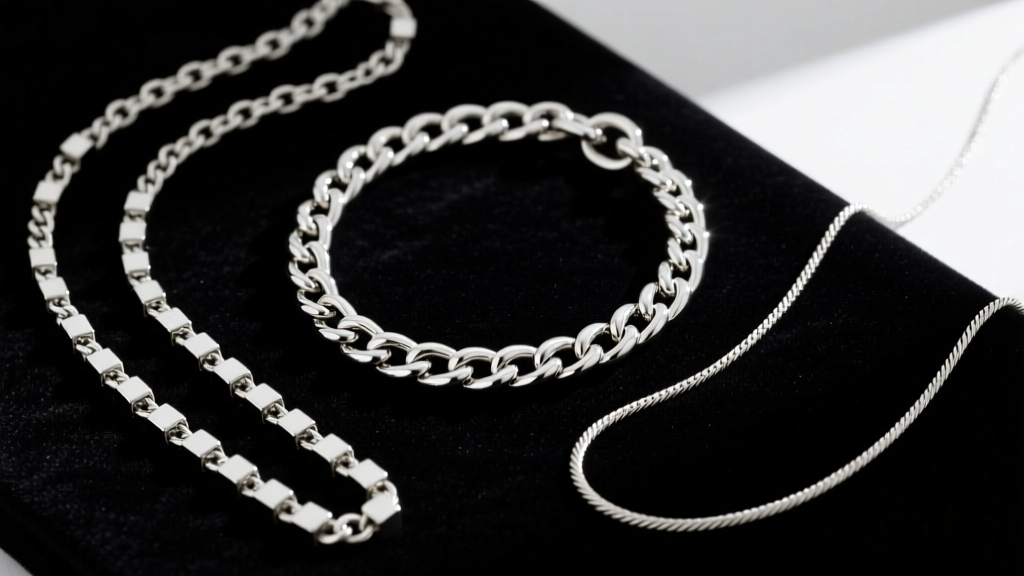
As illustrated above, avoiding smooth, tubular chains like snake or herringbone is paramount in a layered stack. Their high surface-area contact makes them magnetic to other chains. Instead, gift combinations of Rolo and Figaro chains, whose distinct geometric profiles physically repel interlocking.
Occasion Matching: Tangle-Free Layering for Gifting
The context in which the jewelry will be worn should dictate the materials and structural choices you make when assembling a layered gift. Different occasions demand different approaches to weight, length, and hardware.
Weddings and Formal Events
For formal occasions, the goal is refined elegance without the distraction of constant readjustment. A highly recommended gift combination is a 15-inch strand of 4mm freshwater pearls paired with an 18-inch 14k gold box chain featuring a 5-gram diamond or sapphire drop pendant. The pearls provide a rigid, non-flexible barrier that prevents the delicate gold chain from migrating upward and knotting around the neckline. This combination offers a striking visual contrast while remaining mechanically stable throughout hours of dancing and socializing.
Everyday Office and Casual Wear
For the professional or the minimalist, the layered stack must withstand the rigors of daily movement, typing, and commuting. Gift a set of three solid 14k gold chains: a 16-inch 1.5mm cable chain, an 18-inch 2.5mm rolo chain, and a 20-inch 3mm Figaro chain. To ensure these remain tangle-free during a busy workday, include a silicone O-ring (approximately 10mm in diameter) as a thoughtful, practical accessory. The wearer can thread all three chains through the O-ring before clasping them, creating a unified anchor point at the back of the neck that completely eliminates the possibility of the chains twisting around each other during active wear.
Conclusion
Mastering how to keep necklaces from tangling when wearing them transforms a beautiful jewelry gift from a frustrating puzzle into a seamless, everyday luxury. By respecting the physics of link geometry, enforcing strict length and weight differentials, and utilizing modern hardware like magnetic clasps and spacer bars, you can curate a layered necklace stack that is as functional as it is gorgeous. When you gift with these structural principles in mind, you are not just giving jewelry; you are giving the gift of effortless style.


