Anatomy of a Kenny Ma Necklace: Custom Chain Craftsmanship
Explore the technical anatomy of a Kenny Ma necklace, from 14k gold metallurgy and micro-pave settings to clasp engineering.

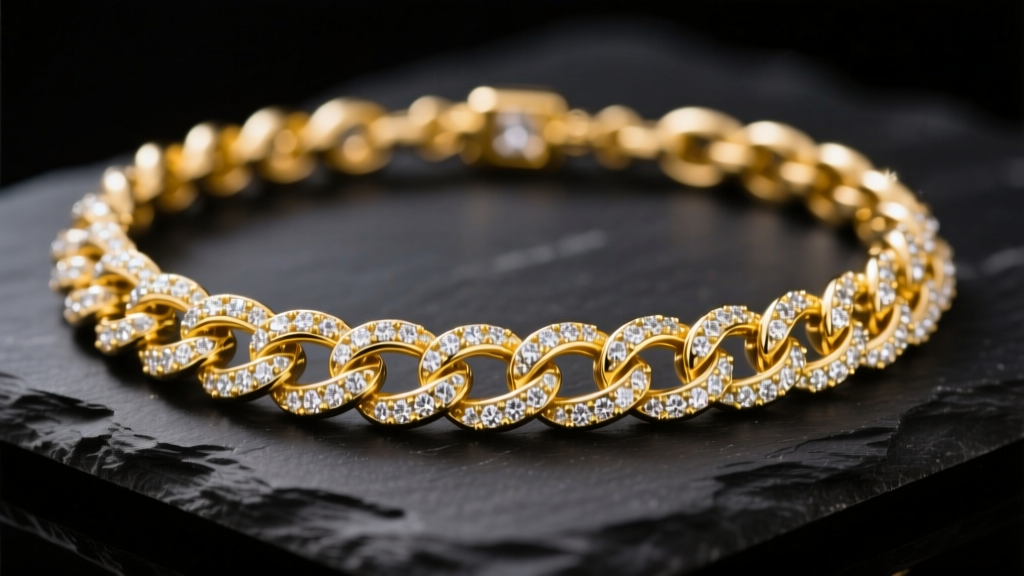
When discussing the upper echelon of bespoke hip-hop and luxury jewelry, the term 'kenny ma necklace' has become synonymous with uncompromising craftsmanship, heavy precious metal weight, and flawless diamond setting. Unlike mass-produced mall jewelry, a true bespoke piece of this caliber requires a deep understanding of metallurgy, structural engineering, and gemological precision. This expert deep dive deconstructs the technical anatomy of high-end custom chains, revealing exactly what separates a masterwork from a fragile imitation.
The Metallurgy of High-End Custom Chains
The foundation of any luxury chain is its alloy composition. While consumers often assume that higher karat gold is inherently better, master jewelers know that structural integrity dictates the ideal metal for heavy, diamond-encrusted necklaces. A standard 18k yellow gold alloy contains 75% pure gold, resulting in a Vickers hardness (HV) of roughly 110. While it offers a rich, buttery color, it is too soft for the interlocking shear stress of a heavy Cuban link chain or the delicate prongs required for micro-pave settings.
Instead, the industry standard for a high-performance kenny ma necklace is a meticulously formulated 14k yellow gold alloy (58.5% pure gold). By alloying the remaining 41.5% with a precise ratio of silver, copper, and trace amounts of zinc, metallurgists achieve a Vickers hardness of 125 to 140 HV. This increased tensile strength prevents the links from stretching or warping under the dynamic weight of the chain itself, which can easily exceed 150 grams. Furthermore, the Jewelers of America notes that properly alloyed 14k gold offers superior resistance to the micro-abrasions caused by daily skin contact and clothing friction, ensuring the polished facets remain mirror-like for decades.
Link Architecture and Tensile Strength
The geometry of the chain link determines not only its visual light play but also its mechanical failure points. Hand-carved and individually cast links are superior to machine-stamped links, as they allow for thicker interior walls and seamless soldering. Below is a technical comparison of the three primary chain architectures used in bespoke diamond necklaces.
| Chain Architecture | Avg. Weight (20-inch) | Tensile Yield Profile | Primary Diamond Setting | Structural Vulnerability |
|---|---|---|---|---|
| Cuban Link (Interlocking) | 80g - 180g | Extremely High (Distributed) | Bead / Micro-Pave | Link friction wear at the joints |
| Tennis Chain (Hinged) | 25g - 55g | Moderate (Hinge-dependent) | Shared Prong / Bezel | Hinge pin shearing under tension |
| Rope Chain (Twisted) | 40g - 90g | Very High (Helical tension) | Flush / Bead | Unraveling if a single link snaps |
For a classic, heavy-hitting aesthetic, the Cuban link remains the undisputed king. The interlocking nature of the links means that pulling force is distributed across multiple planes, making it nearly impossible to snap under normal wear conditions. However, this architecture requires the links to be diamond-cut with extreme precision to ensure they lay perfectly flat against the clavicle without kinking.
Micro-Pave and Prong Setting Mechanics
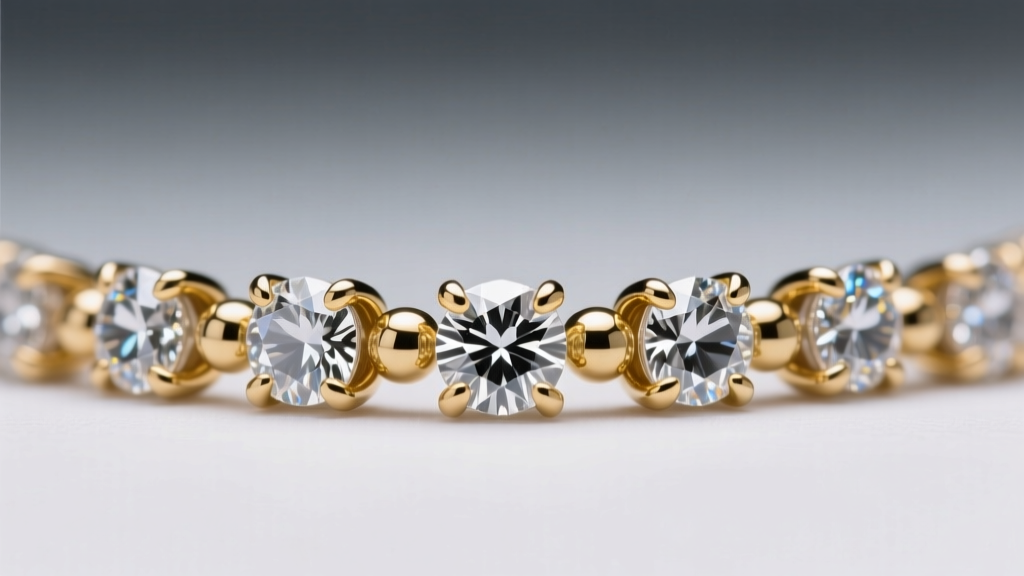
The true hallmark of a premium kenny ma necklace lies in its stonework. High-end custom chains utilize 'melee' diamonds—stones ranging from 0.005 to 0.15 carats. According to the Gemological Institute of America (GIA), the cut quality of melee is paramount. Master setters exclusively use 'full-cut' melee diamonds, which feature the standard 57 or 58 facets of a larger brilliant-cut stone. Cheaper alternatives use 'single-cut' melee (only 17 or 18 facets), which appear flat, glassy, and lifeless when set in dense micro-pave patterns.
The Science of Bead Setting
In a micro-pave setting, stones are placed so closely together that the metal between them is minimized to tiny beads. These beads are burnished over the girdle of the diamond using a pneumatic air-graver. The technical tolerance here is measured in hundredths of a millimeter. If the seat (the bearing cut into the metal) is too deep, the diamond will sink below the metal line, killing its light return. If it is too shallow, the beads will not have enough metal to grip the stone, leading to catastrophic diamond loss. Furthermore, the color and clarity of the melee must be strictly controlled; using G-H color and VS clarity ensures that no dark carbon inclusions or yellow tints are visible when hundreds of stones are clustered together.
Clasp Engineering: The Hidden Failure Point
A chain is only as strong as its weakest link, and in 90% of jewelry failures, that weak point is the clasp. Mass-market necklaces rely on spring-ring or lobster clasps, which utilize a tiny internal coil spring. These mechanisms routinely fail at 10 to 15 pounds of tension. When a heavy, 120-gram diamond Cuban link swings dynamically as the wearer walks, the kinetic load on the clasp can easily exceed 25 pounds, causing a spring ring to snap open or deform.

To counteract this, a bespoke kenny ma necklace is equipped with a precision-machined box clasp featuring a double-latch system. The primary mechanism involves a V-shaped spring lever that clicks securely into a square steel-reinforced housing. But the true engineering marvel is the secondary safety: a forged figure-8 wire that snaps over a secondary stud on the opposite side of the clasp. This redundant system ensures that even if the primary internal spring fatigues and releases, the chain remains securely anchored to the neck by the tensile strength of the gold safety wire.
Sourcing and Commissioning a Bespoke Piece in 2026
Commissioning a piece of this magnitude requires navigating the current precious metals market and understanding the labor-intensive nature of bespoke fabrication. As of 2026, with gold prices fluctuating at historic highs, the pricing structure of a custom chain is strictly broken down into three components:
- Melt Value: The exact gram weight of the 14k or 18k gold used, multiplied by the current spot market rate plus a standard fabrication premium.
- Carat Total Weight (CTW): The cumulative weight of the diamonds. A fully iced-out 20-inch Cuban link can easily hold 15 to 30 carats of melee. Pricing scales exponentially based on whether the stones are natural earth-mined or lab-grown, though the physical setting labor remains identical.
- Master Labor: The CAD design, 3D resin printing, casting, link assembly, polishing, and hundreds of hours of bench time required for stone setting. Labor often accounts for 40% to 60% of the final invoice on heavily encrusted pieces.
Clients should expect a lead time of 8 to 14 weeks for a true bespoke commission. The process begins with CAD (Computer-Aided Design) renderings, allowing the client to approve the exact millimeter dimensions, link thickness, and clasp placement before a single drop of gold is cast. This rigorous, technically demanding process is exactly what elevates a custom chain from a mere accessory to a wearable piece of mechanical art.


