Expert Care and Cleaning Tips for a Kid Name Necklace
Learn how to safely clean, maintain, and protect your kid name necklace from tarnish, sweat, and daily wear with our expert jewelry care guide.

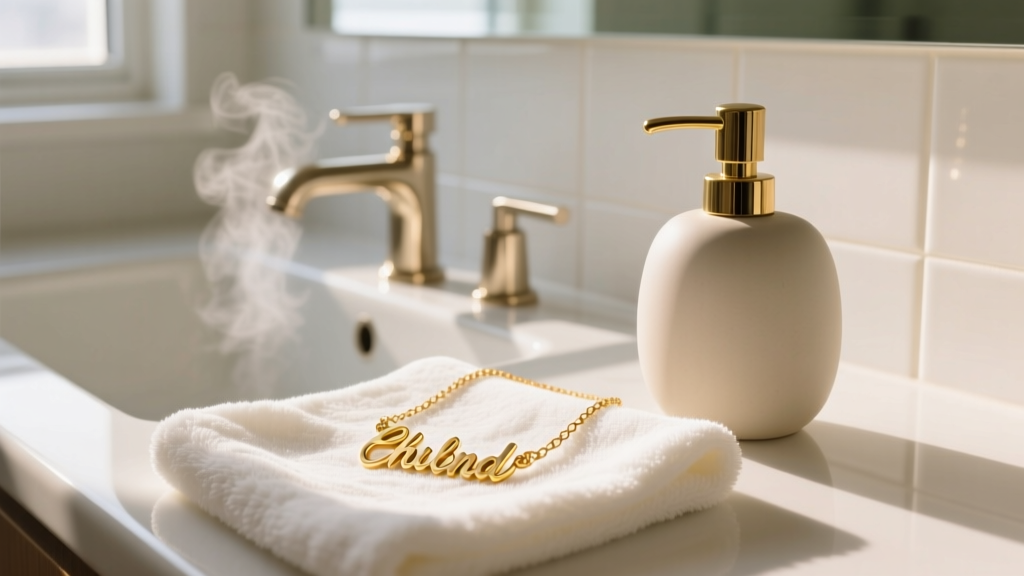
A personalized kid name necklace is more than just an accessory; it is a sentimental keepsake that celebrates a child's identity. However, children are naturally active, messy, and hard on their belongings. Between playground dirt, SPF 50 sunscreen, chlorinated pool water, and constant tugging, a child's necklace faces a unique gauntlet of environmental hazards that can quickly degrade its finish and structural integrity.
Unlike adult jewelry that sits safely in a velvet box, a kid name necklace is worn through the chaotic realities of childhood. To ensure this personalized piece survives from toddlerhood into the teenage years, parents must adopt a proactive, material-specific maintenance routine. In this comprehensive guide, we break down the exact cleaning protocols, chemical hazards, and storage solutions required to keep your child's nameplate pristine.
Material Breakdown: What Is Your Kid Name Necklace Made Of?
Before applying any cleaning solution, you must identify the exact metallurgy of the necklace. The cleaning agents safe for solid gold will completely strip the finish off gold-plated silver or acrylic. Most children's name necklaces fall into three distinct categories:
- 925 Sterling Silver: Composed of 92.5% pure silver and 7.5% copper alloy. The copper provides durability but makes the metal highly susceptible to oxidation and sulfur-induced tarnish (silver sulfide).
- Gold Vermeil vs. Flash Plated: True vermeil requires a minimum of 2.5 microns of gold over a sterling silver base. Cheaper 'flash-plated' alternatives use less than 0.5 microns over brass or copper. Flash plating will wear away rapidly against a child's friction-heavy lifestyle.
- Acrylic and Enamel Accents: Often used to add bright colors to the nameplate letters. These are essentially hardened plastics or glass powders that are highly porous and sensitive to alcohol-based solvents.
Step-by-Step Cleaning Protocols by Material
According to the Jewelers of America, the most common mistake consumers make is using harsh, abrasive household cleaners on delicate jewelry alloys. Here is how to safely clean your kid name necklace based on its composition.
1. Washing Sterling Silver Nameplates
Sterling silver requires regular, gentle washing to remove the acidic oils and sweat that accelerate copper oxidation. Mix three drops of pH-neutral dish soap (like original Dawn) into a bowl of lukewarm water. Submerge the necklace for exactly three minutes. Use a baby-soft toothbrush to gently sweep the crevices of the cursive nameplate letters. Rinse under distilled water—tap water contains trace minerals and chlorine that can leave water spots—and pat dry with a lint-free microfiber cloth.
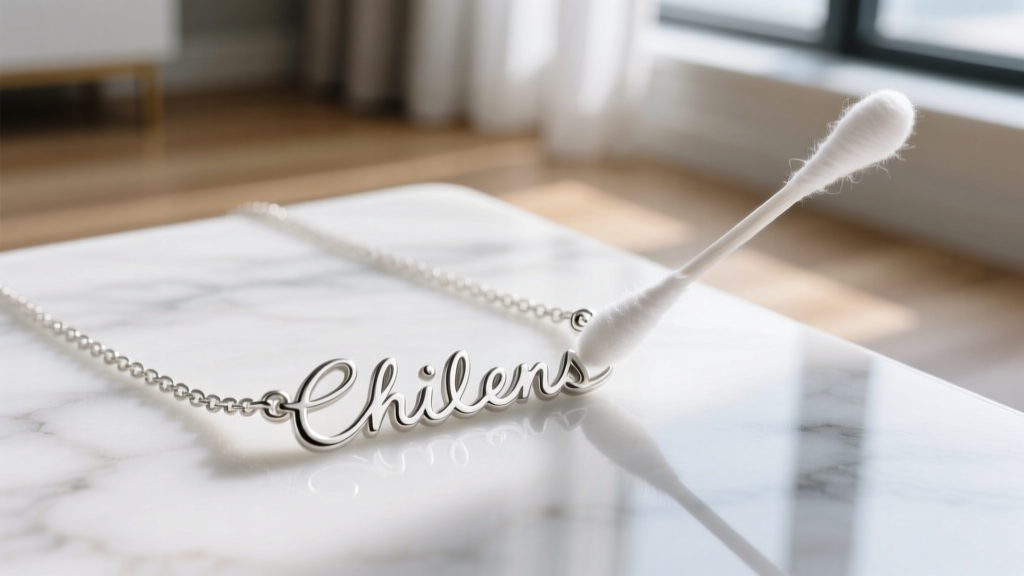
Expert Warning: Never use toothpaste to clean a sterling silver kid name necklace. Modern toothpastes contain hydrated silica, a harsh abrasive that creates micro-scratches on the silver alloy. These scratches increase the metal's surface area, actually accelerating future tarnish by trapping moisture and sulfur.
2. Maintaining Gold-Plated and Vermeil Chains
Gold plating is incredibly delicate. Ultrasonic cleaners, which use high-frequency cavitation to shake dirt loose, will literally delaminate thin gold plating from the base metal. Instead, dampen a microfiber cloth with warm water and a drop of mild surfactant. Gently wipe the chain and nameplate in one direction. Never scrub in circles, as this creates swirl marks in the gold layer. Dry immediately to prevent water from seeping under the plating.
3. Wiping Down Acrylic and Enamel Accents
If your kid name necklace features colored enamel or acrylic letters, avoid all chemical dips and silver polishing cloths. The mild abrasives in polishing cloths will scratch the acrylic, turning it cloudy. Simply wipe the surface with a damp cloth and dry immediately. Keep hand sanitizers away from the pendant, as the high ethanol content will dissolve the acrylic's protective topcoat.
The 'Kids Factor': Preventing Damage from Daily Wear
Prevention is vastly superior to restoration. The Gemological Institute of America (GIA) notes that everyday cosmetics and environmental chemicals are the leading cause of jewelry degradation. Below is a decision framework for navigating common childhood hazards.
| Environmental Hazard | Chemical Culprit | Effect on Necklace | Prevention Strategy |
|---|---|---|---|
| Sunscreen & Lotions | Avobenzone / Zinc Oxide | Degrades gold plating, leaves cloudy residue in letter crevices | Apply SPF 15 minutes before putting the necklace on |
| Swimming Pools | Chlorine / Bromine | React with copper alloys, causing structural weakening and green skin | Remove the necklace before any water play |
| Hand Sanitizer | Ethanol / Isopropyl | Strips protective coatings from enamel and acrylic accents | Sanitize hands, let dry completely, then handle jewelry |
| Playground Dirt | Silica / Moisture | Acts as an abrasive paste, scratching polished metal surfaces | Wipe down with a dry cloth immediately after outdoor play |
Safe Storage Solutions for Active Children
How a child stores their jewelry at night dictates its lifespan. Tossing a kid name necklace into a crowded plastic toy bin guarantees tangled chains and scratched nameplates. Furthermore, leaving the necklace exposed to the ambient humidity of a bathroom will trigger rapid silver sulfide formation.
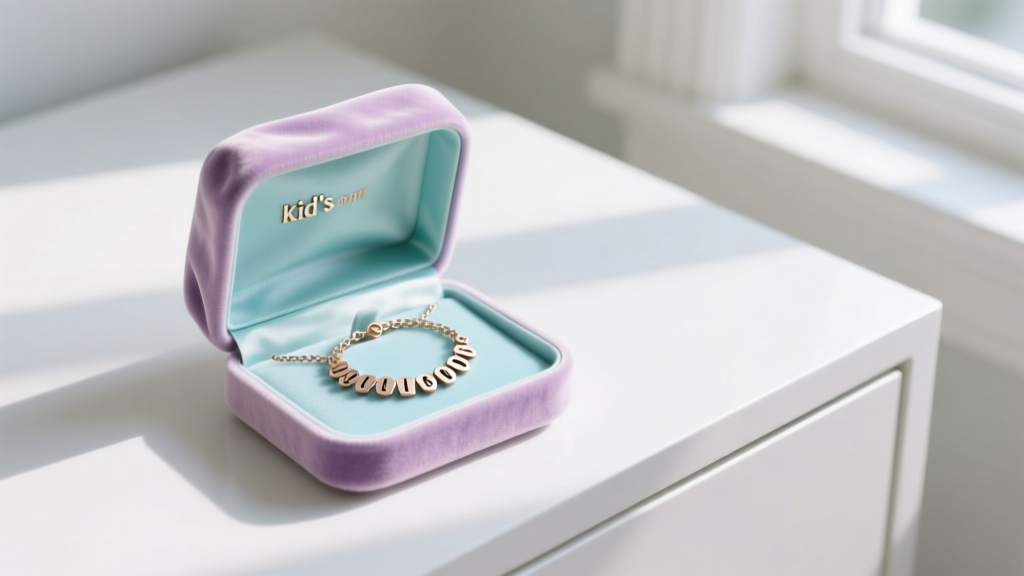
Invest in an anti-tarnish velvet pouch or a small ziplock bag equipped with a 3M anti-tarnish strip. These strips absorb ambient sulfur and hydrogen sulfide gases before they can react with the silver alloy. Always clasp the chain before storing it; this prevents the delicate links from knotting together. If a chain does become severely tangled, lay it flat on a glass surface, apply a single drop of baby oil to the knot, and use two sewing needles to gently tease the links apart without stressing the solder points.
When to Seek Professional Jewelry Repair
Children are prone to yanking on their necklaces, which puts immense lateral stress on the chain links and the jump rings connecting the nameplate. While home maintenance covers cleaning, structural damage requires professional intervention.
Inspect the jump rings (the small circles connecting the chain to the nameplate) once a month. If you notice the gap in the ring pulling open, the necklace is at imminent risk of being lost. A local jeweler can solder the jump ring shut or replace it with a heavier-duty split ring for less than $15. If the chain itself snaps, avoid using superglue. Cyanoacrylate adhesives will ruin the metal finish and fail under tension. Instead, seek a jeweler who specializes in laser welding, which can fuse microscopic chain links back together without melting the surrounding gold plating or scorching the silver.
Final Thoughts on Longevity
A kid name necklace is a beautiful milestone gift, but it requires mindful parenting to survive the elementary school years. By understanding the specific metallurgy of the piece, avoiding harsh household chemicals, and implementing a strict 'jewelry-off' rule for swimming and bathing, you can ensure the necklace remains a pristine, legible keepsake for decades to come.


