Laid Hawaiian Necklace Value Guide: Cost vs Quality
Discover the true value of a laid Hawaiian necklace. We break down material costs, artisan vs tourist pricing, and how to spot authentic inlay work.

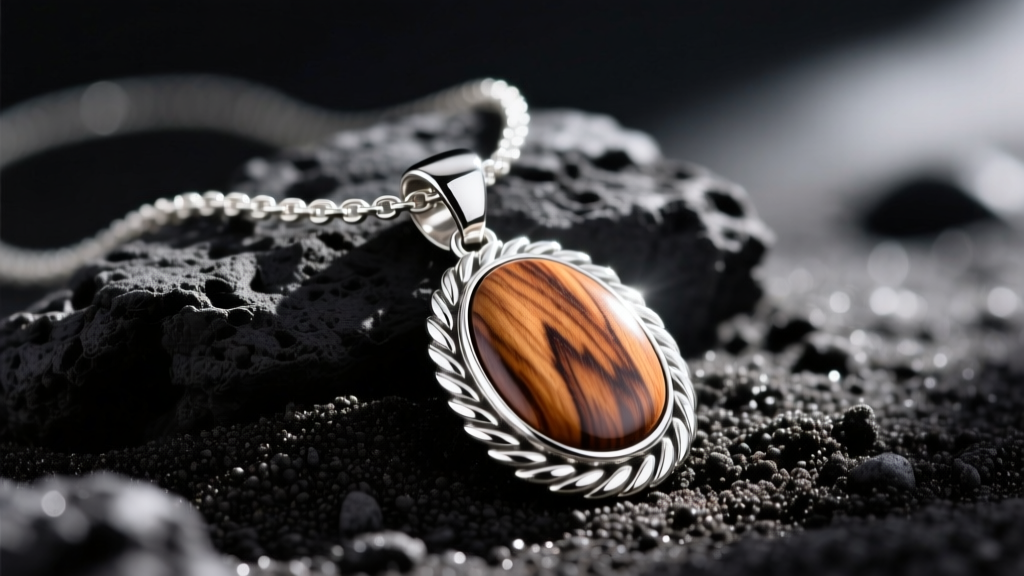
The Anatomy of a Laid Hawaiian Necklace
When evaluating island jewelry, the term 'laid Hawaiian necklace' refers specifically to the channel-inlay technique where native materials are precisely laid into carved metal or wood matrices. Unlike standard cabochon settings that rely on prongs or bezels, the laid (or inlaid) technique requires the artisan to cut microscopic channels into a base—usually 925 sterling silver or dense hardwood—and lay flush pieces of koa wood, shell, or coral into the grooves. The result is a seamless, smooth surface that highlights the natural chatoyancy and grain of Hawaiian materials.
However, the 2026 market is heavily saturated with mass-produced imitations. Tourist hubs are flooded with necklaces that mimic the laid aesthetic using poured resins and dyed composites. As a buyer, understanding the structural and material differences between an authentic artisan laid Hawaiian necklace and a factory-stamped replica is the only way to ensure your investment holds its value. This guide dissects the exact material grades, pricing matrices, and hardware failure modes you need to know before making a purchase.
Decoding the 'Laid' Technique: Artisan vs. Mass Production
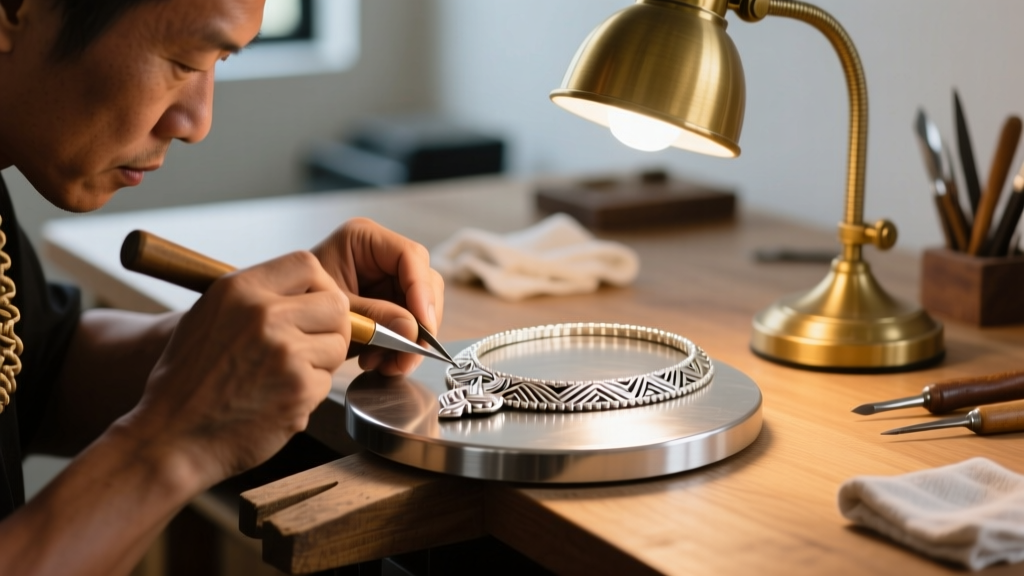
True laid inlay work is a subtractive and additive process. An artisan uses a jeweler's saw and gravers to remove silver, creating a channel exactly 0.5mm to 1.0mm deep. The native material is then shaped, laid into the channel, and secured using a high-viscosity cyanoacrylate (CA) glue or penetrating epoxy. The piece is then sanded flush and polished. This process ensures the material is structurally integrated into the metal.
Mass-produced alternatives skip the channel cutting entirely. Instead, they use a cast metal 'tray' and pour a mixture of crushed shell dust and UV-cured polyester resin directly on top. This 'faux-laid' technique is prone to severe failure modes, most notably UV degradation. Within 12 to 18 months of sun exposure, the polyester resin will yellow, shrink, and pull away from the metal edges, creating a visible gap that traps dirt and moisture.
Material Grading and True Market Value
The core value of any laid Hawaiian necklace is dictated by the authenticity and grade of the inlaid materials. Below is a breakdown of the most common materials used in 2026, their authenticity markers, and their fair market pricing for a standard 1.5-inch pendant.
| Material | Authenticity Markers | Artisan Price Range | Tourist Trap Price |
|---|---|---|---|
| Acacia Koa Wood | Deep chatoyancy, 3D curl grain, stabilized with thin CA glue. | $120 - $280 | $15 - $35 (Veneer over MDF) |
| Mother of Pearl (MOP) | Natural dark undertones (Pinctada margaritifera), sharp luster. | $90 - $180 | $20 - $40 (Bleached/Dyed) |
| Black Coral | Concentric growth rings under magnification, CITES certification. | $400 - $850+ | $30 - $60 (Dyed Horn/Resin) |
| Crushed Coral Inlay | Distinct granular texture, suspended in clear, non-yellowing epoxy. | $80 - $150 | $12 - $25 (Opaque Resin) |
The Black Coral Conundrum
Black coral (Antipatharia) is the most frequently counterfeited material in the Hawaiian jewelry market. According to the Gemological Institute of America (GIA), authentic black coral exhibits a unique organic structure with concentric growth rings visible under 10x magnification. Because harvesting black coral is heavily restricted and requires strict CITES documentation for international transport, genuine laid black coral necklaces are exceptionally rare and command premium prices. If you are offered a 'black coral' laid necklace for under $150, it is almost certainly dyed cattle horn or blackened resin. Always demand provenance and CITES paperwork for any coral purchase.
Mother of Pearl Verification
Authentic Hawaiian and Tahitian Mother of Pearl (Pinctada margaritifera) possesses a natural, deep iridescence with dark, peacock-like undertones. Mass manufacturers often use cheap, bleached freshwater mussel shell and apply a synthetic dark backing to mimic the Tahitian variety. You can test this by examining the edge of the inlay; if the dark color is only on the bottom layer and the cross-section appears chalky white, it is a dyed composite. The GIA Pearl Description Guide notes that natural nacreous layers will show subtle, overlapping aragonite platelets, whereas dyed shells often show concentrated dye pooling in surface cracks.
The Tourist Trap vs. Artisan Pricing Matrix
When shopping in high-traffic areas like Waikiki or Lahaina, pricing is your first indicator of quality. Here is how the market segments in 2026:
- The $15 - $40 Tier (Souvenir Grade): These necklaces feature cast base metals (often zinc alloys disguised as 'Tibetan Silver'), faux-laid resin inlays, and extruded nylon cords. They are meant for a single vacation and will tarnish or break within months.
- The $80 - $150 Tier (Mid-Market Commercial): Usually featuring genuine 925 sterling silver bales and real, albeit lower-grade, koa wood or freshwater shell. The inlay work is often done via CNC routing rather than hand-graving, resulting in slightly rounded, less precise channels.
- The $250 - $800+ Tier (Master Artisan): Hand-cut channels, premium stabilized Koa with high chatoyancy, genuine black-lip MOP, and traditional hand-braided cords. These pieces are signed by the artist and hold long-term heirloom value.
Hardware, Cords, and Longevity: The Hidden Costs
A common mistake buyers make is focusing entirely on the pendant while ignoring the suspension system. The hardware and cord of a laid Hawaiian necklace dictate its daily wearability and lifespan.
The Bail and Chain vs. Cord Debate
Traditional Hawaiian necklaces are worn on cords rather than metal chains. Authentic artisans use hand-braided, waxed polyester cord or traditional olonā fiber. These materials are highly resistant to saltwater, sweat, and UV degradation. Conversely, mass-produced necklaces use cheap, extruded nylon cords. Nylon is highly susceptible to friction wear; the constant rubbing against the metal bail loop will cause the nylon to fray and snap, usually within 6 to 9 months of regular wear, resulting in the loss of the pendant.
Bail Metallurgy and Contact Dermatitis
The bail (the loop connecting the pendant to the cord) must be solid 925 sterling silver or 14k gold. Many budget necklaces use 'Tibetan Silver' or 'Alpaca Silver,' which are nickel-heavy zinc/copper alloys. When exposed to the humidity and sweat of a beach environment, these alloys rapidly oxidize, turning the skin green and frequently triggering severe contact dermatitis. Always inspect the bail for a deep, clear '925' stamp. If the stamp is painted on or missing, walk away.
2026 Investment Verdict: Is the Premium Worth It?
When assessing the budget and value of a laid Hawaiian necklace, the initial price tag is only half the equation. A $25 tourist necklace that degrades, yellows, and breaks in eight months has a terrible cost-per-wear ratio and zero resale value. Conversely, a $280 artisan-crafted piece featuring stabilized, highly-figured Koa wood laid into hand-cut sterling silver channels will last a lifetime, develop a rich patina, and can be passed down as a cultural heirloom.
Final Buying Checklist:
- Inspect the inlay edge: Is it flush and seamless, or is there a visible lip indicating poured resin?
- Check the wood grain: Does it have 3D depth (chatoyancy), or does it look flat and printed?
- Verify the bail: Is it stamped 925, and is the cord waxed and braided rather than smooth extruded nylon?
- Ask for provenance: Can the seller provide the artist's name and material origin?
By applying these strict value-assessment criteria, you can confidently navigate the market and acquire a laid Hawaiian necklace that truly honors the craftsmanship and natural beauty of the islands.


