Lapis and Pearl Necklace: Gemology and Stringing Guide
Explore the technical grading, Mohs hardness conflicts, and professional stringing methods required to craft a durable lapis and pearl necklace.

The Gemological Clash: Mohs Hardness and Porosity
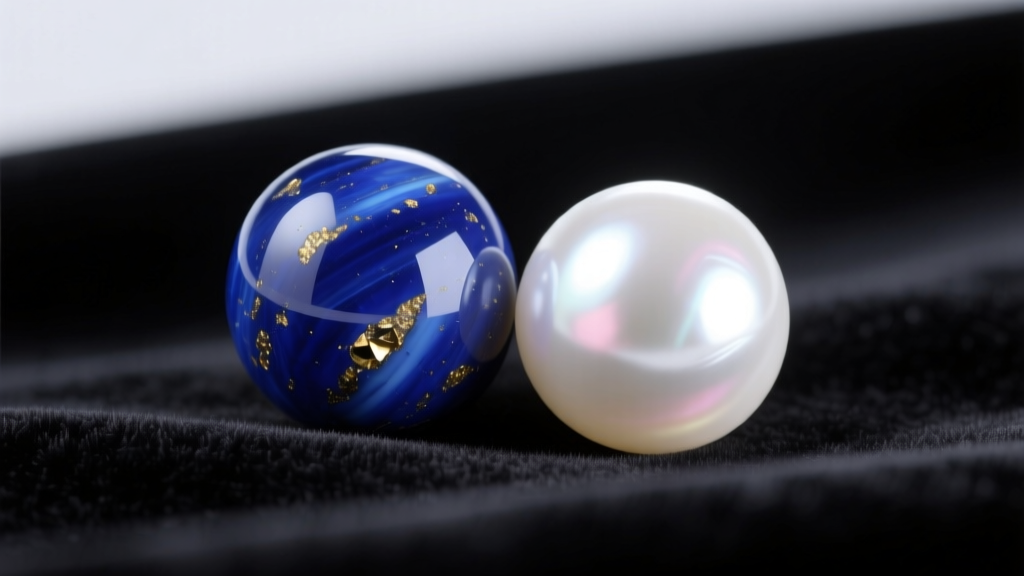
Designing a high-quality lapis and pearl necklace is an exercise in managing geological contradictions. On the surface, the deep royal blue of lapis lazuli paired with the luminous white of pearls creates a striking, high-contrast aesthetic. Beneath the surface, however, you are forcing two vastly different materials into close physical proximity. Lapis lazuli is a metamorphic rock with a Mohs hardness of 5.5 to 6, largely dictated by its lazurite and pyrite content. Pearls, conversely, are organic gems composed of calcium carbonate (aragonite) and conchiolin, registering a mere 2.5 to 4.5 on the Mohs scale.
This hardness disparity creates a severe abrasion risk. If a lapis bead rubs directly against a pearl during wear, the lapis acts as a lapidary file, gradually grinding away the pearl’s delicate nacre. Furthermore, their chemical vulnerabilities are equally problematic. Lapis is highly sensitive to acids and prolonged water exposure, which can dissolve its calcite matrix and dull its polish. Pearls are notoriously susceptible to the same acids, as well as cosmetics, perfumes, and human sweat. Therefore, crafting a heirloom-grade lapis and pearl necklace requires strict adherence to specialized stringing mechanics, precise component grading, and structural isolation.
Grading the Components: What Separates Fine from Costume
The market is flooded with dyed howlite, synthetic lapis, and chalk pearls coated in synthetic lacquer. A true expert deep dive begins with sourcing untreated, gem-grade materials. According to the Gemological Institute of America (GIA), natural lapis lazuli must contain at least 25% lazurite to be classified as such, but fine jewelry demands a much higher threshold.
Lapis Lazuli Grading Matrix
When sourcing lapis for a premium necklace, origin and inclusion distribution are paramount. Afghan lapis from the Badakhshan province remains the global benchmark, though recent export restrictions have driven top-tier prices upward. Below is the technical grading framework used by high-end lapidaries:
| Grade | Lazurite Content | Calcite (White) | Pyrite (Gold) | Market Application |
|---|---|---|---|---|
| Extra / Premium | >90% | None visible | Evenly dispersed, fine dust | Heirloom necklaces, high jewelry |
| First Grade | 75% - 90% | Minimal traces | Moderate, distinct flecks | Fine commercial jewelry |
| Second Grade | 50% - 75% | Visible white veining | Heavy clustering, large chunks | Cabochons, beaded bracelets |
| Commercial / Dyed | <50% (often dyed) | Heavy, pervasive | Minimal or artificial brass | Costume jewelry, mass market |
Expert Tip: Always test lapis with a Q-tip dipped in acetone. If the cotton turns blue, the stone has been dyed to mask heavy calcite inclusions. True Afghan lapis will not bleed color.
Pearl Nacre Thickness and Luster
For a lapis and pearl necklace, the pearls must possess a thick nacre layer to withstand the tension of professional stringing and the weight of the stone beads. While freshwater pearls offer durability due to their solid nacre composition, high-luster Japanese Akoya pearls (specifically Hanadama certified, boasting a minimum nacre thickness of 0.8mm) provide the sharpest, most elegant mirror-like contrast against the matte-to-semi-gloss finish of polished lapis. The GIA Pearl Grading System emphasizes luster as the primary value factor; a sharp, high-contrast reflection on the pearl's surface is non-negotiable for this specific colorway.
Professional Stringing Mechanics and Tension
The most common failure mode in multi-gem necklaces is strand degradation due to friction and tension. Because lapis lazuli is significantly heavier than pearl, the cumulative weight of a 18-inch princess-length necklace can exceed 45 grams. Standard nylon threads will stretch and eventually snap under this dynamic load.
Drilling Technicalities
Before stringing, the drilling quality of the beads must be inspected. Lapis lazuli contains pyrite (fool's gold), which has a Mohs hardness of 6 to 6.5. This means pyrite inclusions rapidly dull standard steel drill bits, often resulting in jagged, off-center, or blown-out drill holes. Premium lapis beads are drilled using diamond-tipped core bits with continuous water cooling. Pearl drill holes must be inspected for 'nacre blowout' at the exit point; if the hole is jagged, it will slice through silk thread over time. A specialized pearl reamer must be used to smooth the interior channel without damaging the outer nacre.
Thread Selection and Knotting Protocol
To isolate the gems and prevent the lapis from abrading the pearls, a strict knotting protocol is required:
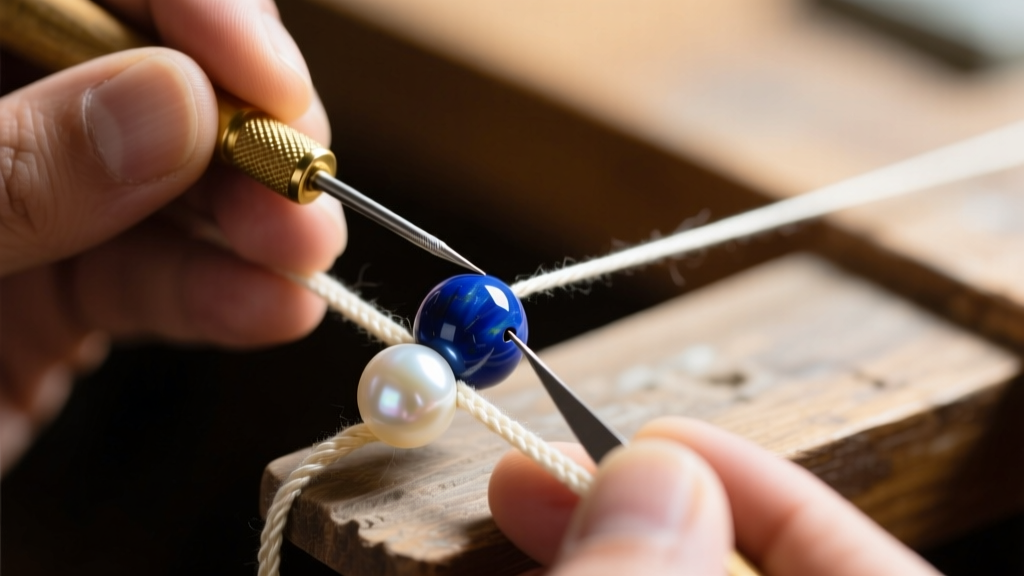
- Thread Material: Abandon traditional 100% silk for heavy lapis strands. Silk degrades with sweat and stretches under heavy loads. Instead, use a braided gel-spun polyethylene thread (such as PowerPro) in a 0.008-inch or 0.010-inch diameter, which offers zero stretch and immense tensile strength.
- The Buffer Knot: A hand-tied overhand knot must be placed between every single bead. This prevents the lapis from physically touching the pearl.
- French Wire (Gimp): The final three inches of thread approaching the clasp must be encased in French wire (a microscopic coiled metal spring). This prevents the sharp interior edges of the metal clasp loop from sawing through the thread.
Clasp Engineering for Heavy Multi-Gem Strands
A standard 925 sterling silver lobster clasp is entirely insufficient for a heavy lapis and pearl necklace. The lever mechanism will warp under the 45+ gram dynamic load, and the silver jump rings will oval out over time. According to Mindat.org mineralogical data, the density of lapis lazuli (2.7 - 2.9 g/cm³) makes it substantially heavier than most quartz-based gemstones, demanding robust hardware.
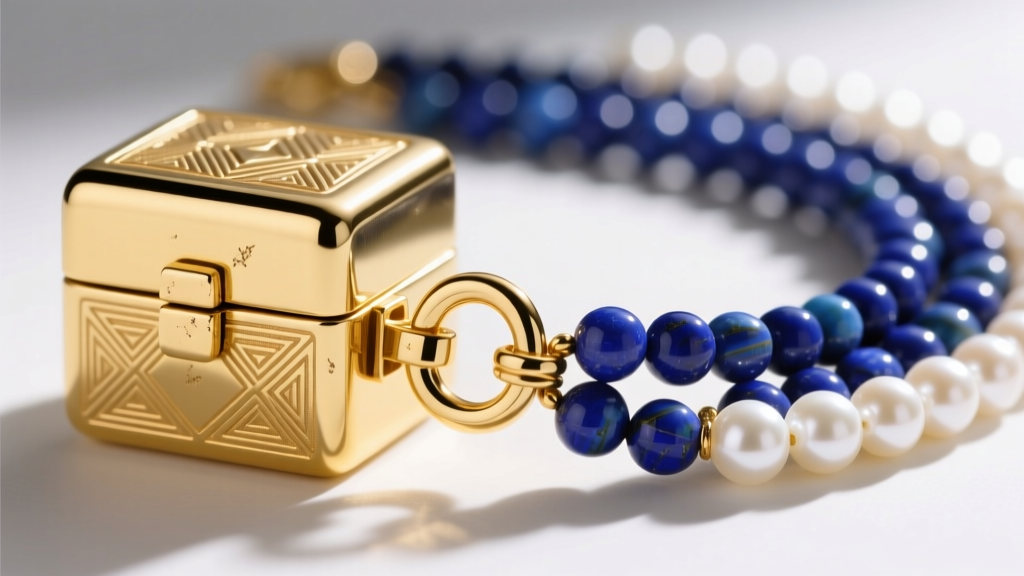
The Hardware Standard: For any lapis and pearl necklace exceeding 40 grams, a custom-machined 14k or 18k gold box clasp with a figure-8 safety catch is mandatory. The box clasp distributes the lateral tension evenly across a wide metal tongue, while the figure-8 wire acts as a secondary fail-safe in the event the primary tongue dislodges.
Alternatively, modern neodymium magnetic clasps encased in 316L surgical stainless steel or 18k gold housings offer excellent security, provided the magnetic core is rated for at least 15 lbs of pull force and the thread is securely crimped inside a reinforced steel tube.
Maintenance and Chemical Vulnerabilities
Caring for a lapis and pearl necklace requires navigating a minefield of chemical sensitivities. Both materials are fundamentally incompatible with standard jewelry cleaning methods.
- Ultrasonic Cleaners: Never use them. The high-frequency cavitation will shatter the internal structure of the lapis (especially if it has hidden calcite veins) and will strip the orient and luster from the pearl nacre.
- Steam Cleaners: The sudden thermal shock can cause the pyrite inclusions in the lapis to expand at a different rate than the lazurite matrix, leading to micro-fractures and surface pitting.
- Chemical Dips: Commercial silver or gold dips contain thiourea and harsh acids that will instantly etch the surface of the pearls and dissolve the calcite in the lapis, leaving a dull, chalky, and permanently ruined finish.
The Only Safe Cleaning Method: After every wear, wipe the pearls with a clean, slightly damp microfiber cloth to remove acidic skin oils. Use a separate, dry, soft-bristled makeup brush to gently dust the crevices around the pyrite inclusions in the lapis beads. Store the necklace flat in a breathable cotton pouch; hanging it will cause the heavy lapis beads to stretch the thread over time, leading to premature structural failure.