How to Safely Clean and Maintain a Lapis Bead Necklace
Discover expert tips to safely clean, maintain, and restring your lapis bead necklace. Protect the pyrite and calcite from damage with our care guide.
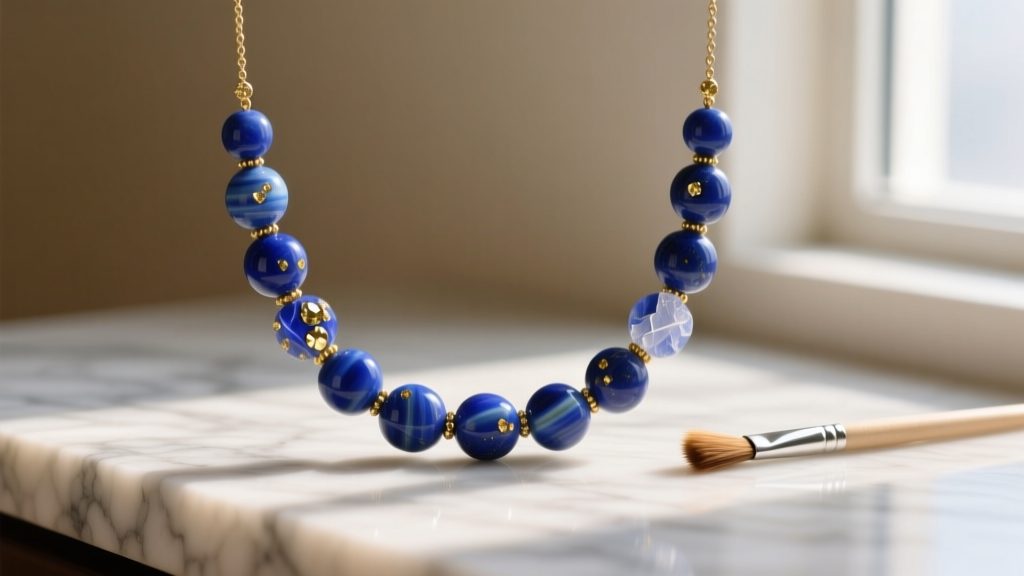
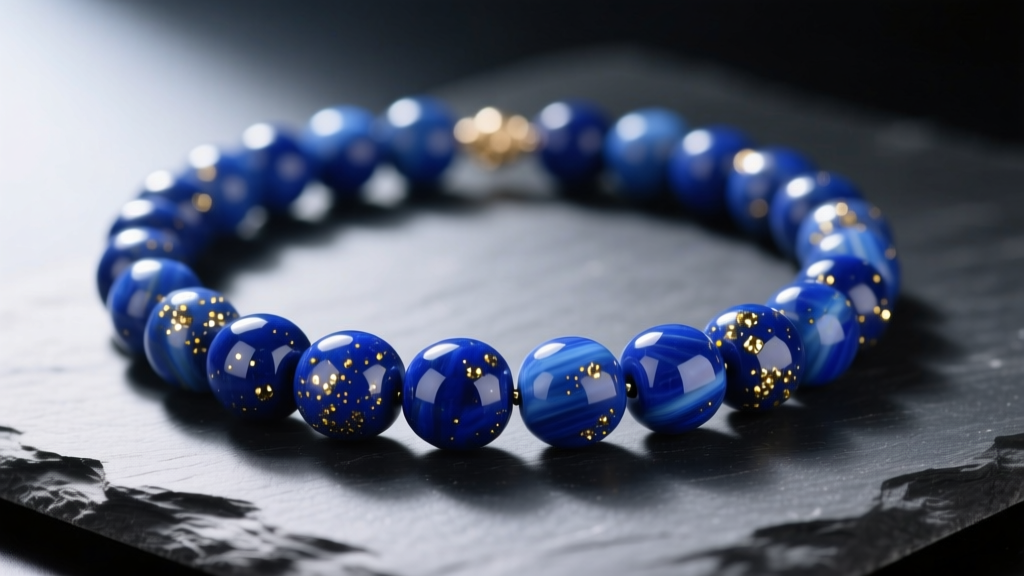
Owning a lapis bead necklace is an investment in one of the most historically revered gem materials on earth. Prized since antiquity for its deep, celestial blue hue, lapis lazuli is a staple in both vintage collections and modern jewelry design. However, unlike harder, single-crystal gemstones such as diamonds or sapphires, lapis lazuli is a complex, porous rock. This unique geological makeup means that a lapis bead necklace requires a highly specific, conservative approach to cleaning and maintenance. Using the wrong commercial jewelry cleaner or improper storage technique can permanently strip the polish, dissolve vital mineral inclusions, or cause the structural integrity of the strand to fail.
In this comprehensive guide, we break down the exact mineralogical vulnerabilities of lapis lazuli and provide a professional-grade maintenance protocol to ensure your necklace remains vibrant and intact for decades.
The Mineralogy of Lapis Lazuli: Why It Needs Special Care
To understand how to care for a lapis bead necklace, you must first understand what it actually is. Lapis lazuli is not a single mineral; it is a metamorphic rock composed primarily of three distinct minerals, each with its own chemical vulnerabilities:
- Lazurite (Mohs 5-6): The primary source of the iconic royal blue color. It is relatively soft and susceptible to scratching from everyday environmental dust.
- Calcite (Mohs 3): The white or grayish streaks often visible in the beads. Calcite is calcium carbonate, which means it is highly reactive to acids and will dissolve or etch if exposed to harsh chemicals, vinegar, or even prolonged contact with acidic human sweat.
- Pyrite (Mohs 6-6.5): The metallic gold flecks that give high-quality lapis its signature sparkle. Pyrite is iron sulfide. When exposed to prolonged moisture and oxygen, pyrite can oxidize, leading to a destructive conservation issue known in gemology as "pyrite decay."
Because of this composite structure, a lapis bead necklace is inherently sensitive to water, chemicals, and thermal shock. According to the Gemological Institute of America (GIA), the porosity of lapis lazuli makes it a magnet for absorbing oils and chemical residues, which can permanently dull the bead's surface luster.
Daily Wear Rules: Preventing Damage Before It Happens
The most effective maintenance strategy for a lapis bead necklace is preventative care. Adopting a strict "last on, first off" rule will protect the beads from the most common household hazards.
The Impact of Cosmetics and pH Levels
Human sweat has a naturally acidic pH, typically ranging from 4.5 to 7.0. When you wear your lapis bead necklace directly against the skin during physical exertion or in hot, humid climates, the acidic sweat slowly etches the calcite inclusions and degrades the polished surface of the lazurite. Furthermore, everyday cosmetics—such as perfume, hairspray, lotions, and sunscreen—contain alcohols and chemical solvents that can seep into the microscopic pores of the beads, causing a cloudy, irreversible film.
Always apply your perfumes, hairsprays, and lotions at least 15 minutes before putting on your lapis bead necklace. When you return home, make it a habit to gently wipe the beads down before placing them in storage.
Step-by-Step Cleaning Protocol for Lapis Beads
When your lapis bead necklace accumulates body oils or environmental dust, it must be cleaned using a dry or barely damp method. Never submerge lapis lazuli in water. Follow this professional protocol:
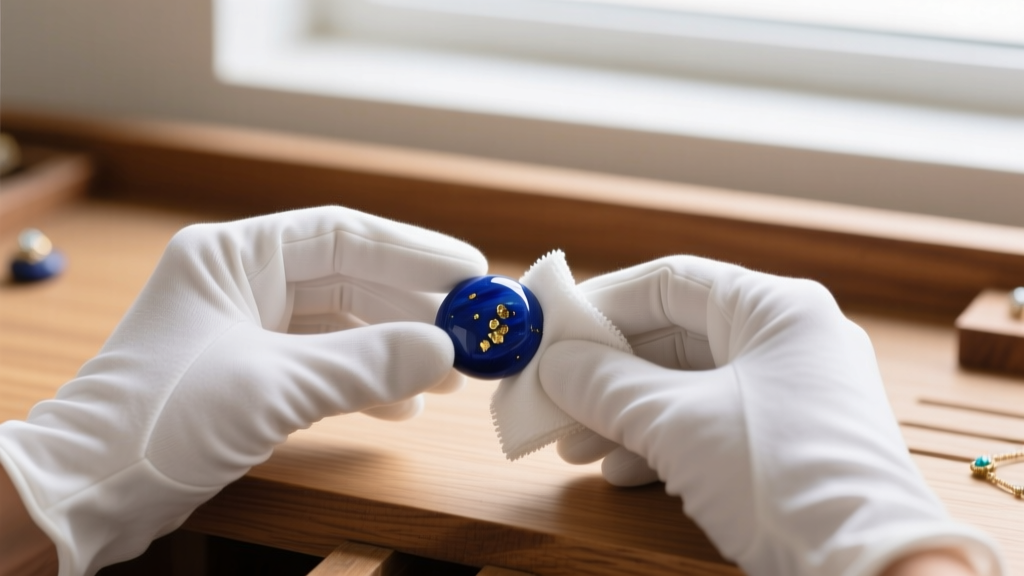
- Dry Dusting (Crucial First Step): Household dust contains microscopic particles of quartz (Mohs 7). Because quartz is harder than lazurite (Mohs 5-6), wiping a dusty bead with a wet cloth will grind the quartz into the surface, causing micro-scratches. First, use a clean, dry, ultra-soft microfiber cloth or a very soft makeup brush to gently remove loose surface dust.
- Damp Wiping (For Stubborn Oils): If the beads have accumulated skin oils that a dry cloth cannot remove, slightly dampen a corner of a microfiber cloth with distilled water. Do not use tap water, as the chlorine and dissolved minerals can leave spots or react with the pyrite. Gently wipe each bead individually.
- Immediate Drying: Never let the water air-dry on the beads. Immediately follow up with the dry side of the microfiber cloth to buff the beads and remove all residual moisture.
- Final Buffing: Use a clean, dry chamois leather or jewelry polishing cloth to restore the natural luster of the lazurite.
What NEVER to Do: The Lapis Lazuli Danger Zone
Many commercial jewelry cleaning methods that are perfectly safe for diamonds or gold will absolutely destroy a lapis bead necklace. The Mindat.org mineral database highlights the chemical reactivity of lapis components, underscoring why modern mechanical and chemical cleaning systems must be avoided.
| Cleaning Method / Agent | Chemical / Physical Action | Result on Lapis Bead Necklace |
|---|---|---|
| Ultrasonic Cleaners | High-frequency sound waves create microscopic cavitation bubbles that implode. | Can shatter beads, dislodge pyrite inclusions, and fracture internal fault lines. |
| Steam Cleaners | Pressurized, high-temperature water vapor. | Causes thermal shock, leading to surface crazing, cracking, and permanent color alteration. |
| Ammonia / Bleach | Highly alkaline and oxidative chemical solvents. | Strips the factory polish, causes the blue lazurite to fade, and corrodes pyrite. |
| Commercial Silver Dip | Acidic thiourea-based solutions designed to remove silver sulfide. | Instantly dissolves calcite inclusions and pits the surface of the lazurite. |
| Submersion in Soapy Water | Prolonged water exposure with surfactants. | Water enters the porous rock, causing pyrite to oxidize (rust) and expand, cracking the bead. |
Restringing and Storage: Long-Term Preservation
The physical stringing material and storage environment are just as critical to the lifespan of your lapis bead necklace as the cleaning process.
The Hidden Danger of Drill Holes
Lapis beads are frequently cut and drilled in regions where diamond-tipped core drills are used. This process often leaves microscopic, sharp burrs inside the bead's drill hole. If your necklace is strung on traditional silk thread, these sharp internal edges act like tiny saws, gradually fraying and cutting the silk from the inside out.
Expert Recommendation: Have your lapis bead necklace restrung using a modern bonded nylon thread (such as C-Lon or Power Pro) rather than silk. Nylon is highly resistant to abrasion and will not degrade when exposed to the natural acidity of the skin. Additionally, ensure the jeweler uses French wire (bullion) or wire guardians at the clasp connection points to prevent the metal clasp from sawing through the thread over time.
Combating Pyrite Decay in Storage
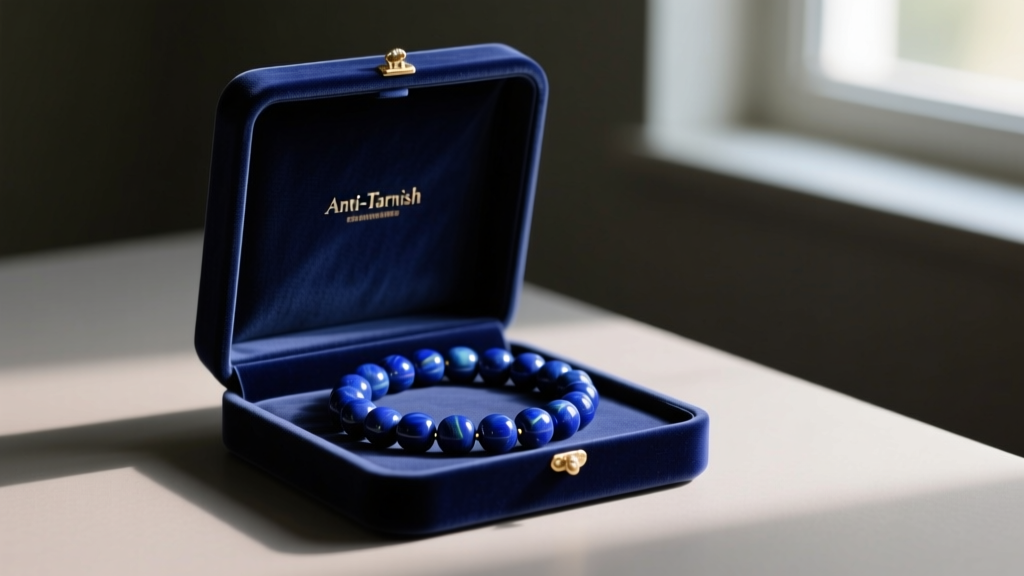
Storing your lapis bead necklace in a humid environment is a recipe for disaster. When the pyrite (iron sulfide) inclusions are exposed to high humidity (above 50% Relative Humidity) and oxygen, they undergo a chemical reaction that produces iron sulfate and sulfuric acid. This sulfuric acid then eats away at the surrounding calcite and lazurite, resulting in a powdery, white, corrosive crust on the surface of your beads—a phenomenon known as pyrite decay.
To prevent this, store your lapis bead necklace in a cool, dry place. Use an airtight jewelry box or a ziplock bag with a few silica gel desiccant packets to maintain a low-humidity micro-environment. Keep the necklace away from direct sunlight, as prolonged UV exposure and heat can dehydrate the stone and cause the vibrant blue color to fade to a dull gray over several years.
Summary Checklist for Lapis Care
- Never use ultrasonic, steam, or chemical cleaners.
- Always apply cosmetics and perfumes before putting on the necklace.
- Clean only with a dry microfiber cloth or one barely dampened with distilled water.
- Restring using bonded nylon thread to resist internal bead-hole abrasion.
- Store in a low-humidity environment with silica gel packets to protect the pyrite inclusions.
By respecting the complex mineralogy of lapis lazuli and adhering to these strict maintenance protocols, your lapis bead necklace will retain its deep blue brilliance and structural integrity, remaining a stunning centerpiece in your jewelry collection for a lifetime.


