The Lapis Necklace Buying Guide: Grading & Authenticity Tips
Discover how to buy a genuine lapis necklace. Learn about Afghan vs. Chilean grades, spotting dyed fakes, and the best metal settings for longevity.

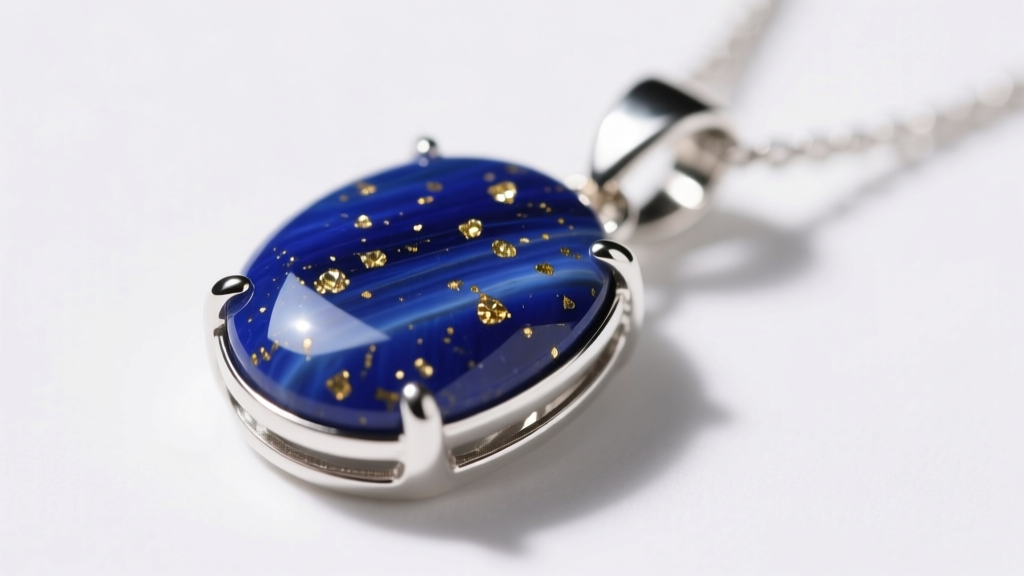
Lapis lazuli has been coveted for over 6,000 years, prized by ancient Egyptian royalty and Renaissance painters alike. Today, a high-quality lapis necklace remains a cornerstone of fine gemstone jewelry. However, the modern market is flooded with dyed imitations, reconstituted powders, and misgraded stones. Whether you are investing in a statement pendant or a delicate beaded strand, understanding the geological and gemological nuances of lapis lazuli is essential. This comprehensive buying guide will equip you with the expert knowledge needed to evaluate color, inclusions, origins, and settings, ensuring you purchase a genuine, heirloom-quality piece.
The Mineralogy of Lapis: A Rock, Not a Single Mineral
Unlike diamonds or sapphires, lapis lazuli is not a single mineral; it is a metamorphic rock composed of a complex mixture of minerals. According to the Mindat.org mineral database, the primary component responsible for its iconic blue hue is lazurite (25% to 40% of the rock's composition). A premium lapis necklace will also feature two secondary minerals that dictate its visual character and value:
- Pyrite: Metallic golden flecks. When distributed evenly and sparingly, pyrite increases the stone's value and provides a striking contrast against the blue matrix.
- Calcite: White or grayish veining. While small, delicate streaks can add character, heavy calcite presence dilutes the blue color and significantly lowers the commercial grade of the stone.
When evaluating a lapis pendant, look for a dense, saturated blue matrix where the golden pyrite acts as an accent rather than a dominant feature, and where white calcite is virtually absent or limited to microscopic flecks.
The Global Grading Scale: Afghan, Chilean, and Russian Origins
The geographic origin of lapis lazuli heavily influences its color profile and market price. The Gemological Institute of America (GIA) notes that the most prized material historically and currently comes from the Sar-e-Sang mines in the Kokcha Valley of Afghanistan. Below is a breakdown of what to expect from the three primary commercial sources.
| Origin | Color Profile | Calcite Presence | Pyrite Quality | Market Value |
|---|---|---|---|---|
| Afghan (Panzjir) | Intense, deep royal blue to violet-blue | Minimal to none | Fine, evenly distributed golden flecks | Premium / Highest |
| Russian (Lake Baikal) | Medium to dark blue | Low to moderate | Prominent, sometimes clustered | Mid to High |
| Chilean | Lighter, greenish-blue or pale blue | Heavy white veining | Sparse or absent | Commercial / Low |
When shopping for a lapis necklace, be highly skeptical of 'uniform' deep blue stones that lack any natural inclusions. Perfectly uniform, inclusion-free blue is almost always a hallmark of synthetic or heavily treated material.
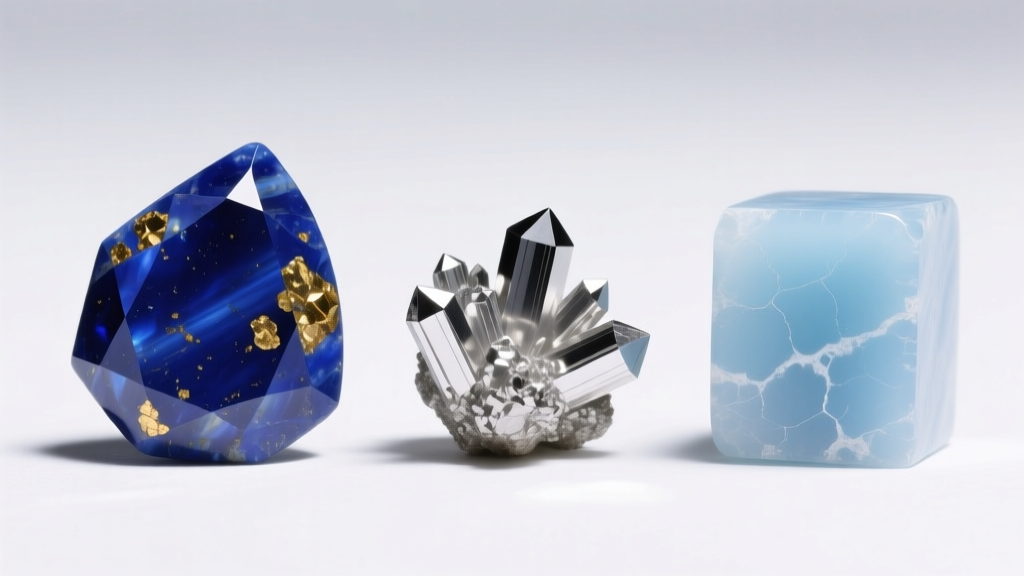
How to Spot Fakes: Dyed Howlite, Sodalite, and Gilson Synthetics
Because top-tier Afghan lapis commands high prices, the market is saturated with lookalikes. Here is how to identify the most common imposters when inspecting a lapis necklace in person or evaluating high-resolution vendor photos.
1. Dyed Howlite and Jasper
Howlite is a porous white mineral that easily absorbs blue dye. Under 10x magnification, dyed howlite reveals dye concentration along the natural gray veining of the stone. Furthermore, howlite completely lacks pyrite. If a vendor claims a stone is lapis but it has no golden flecks and the blue color looks slightly muted or grayish, request an acetone test. Rubbing a cotton swab dipped in nail polish remover (acetone) on a dyed stone will pull the blue dye onto the swab; genuine lazurite will not bleed color.
2. Sodalite
Sodalite is a legitimate gemstone but is significantly cheaper than lapis. It shares a similar blue color but lacks pyrite entirely. Sodalite also tends to have a slightly greasy luster compared to the waxy-to-resinous luster of polished lapis lazuli, and its white veining (which is actual sodalite matrix, not calcite) tends to be more web-like.
3. Gilson Lapis and Reconstituted Powder
Created in a lab, Gilson lapis has a very uniform color and a distinct 'pebbly' texture under magnification. Reconstituted lapis is made by grinding up low-grade lapis dust, mixing it with resin, and pressing it into blocks. The hot needle test is effective here: if a heated pin touches an inconspicuous area of the bead and emits a smell of burning plastic, the stone is bound with synthetic resin.
Choosing the Right Metal and Setting for Lapis Pendants
Lapis lazuli ranks between 5 and 6 on the Mohs hardness scale. This makes it relatively soft and highly susceptible to chipping, scratching, and abrasion. The setting of your lapis necklace must be chosen with durability in mind.
- Bezel Settings: This is the gold standard for lapis. A full metal rim completely encircles the gemstone's girdle, protecting the vulnerable edges from impacts. Avoid prong settings, which leave the stone's perimeter exposed to daily wear and tear.
- Sterling Silver vs. Yellow Gold: Historically, lapis was set in high-karat yellow gold, which complements the golden pyrite inclusions beautifully. However, sterling silver provides a crisp, modern contrast that makes the royal blue matrix appear even more vibrant. Both are excellent choices, provided the bezel wall is thick enough (at least 0.5mm).
- Chain Selection: For heavier lapis pendants, opt for a sturdy box chain or a woven wheat chain (minimum 1.5mm thickness). Delicate cable chains will snap under the weight of a solid stone pendant over time.
Chain Lengths and Neckline Pairings
The visual weight of lapis lazuli requires careful consideration of chain length and clothing necklines to ensure the stone remains the focal point.
- 16-Inch Choker: Ideal for smaller, polished lapis beads or a single, delicate teardrop pendant. Pairs best with V-necks and scoop necks, drawing the eye directly to the collarbone.
- 18-Inch Princess: The most versatile length for a standard lapis pendant. It rests perfectly on the chest and works seamlessly over crew necks, turtlenecks, and button-down shirts.
- 24 to 30-Inch Opera/Rope: Best reserved for long, graduated lapis bead necklaces. These statement pieces should be worn over solid-colored garments (like a black turtleneck or crisp white linen shirt) to allow the complex blue and gold matrix to stand out without competing with busy patterns.
Porosity and Care: What to Avoid
Lapis lazuli is a porous rock. Its chemical composition makes it highly reactive to acids and sensitive to extreme heat. To preserve the polish and color of your lapis necklace, strict adherence to the following care protocols is mandatory:
- Never Use Ultrasonic Cleaners: The high-frequency vibrations can fracture the stone along natural calcite veins, while the heat and chemical baths can strip the polish and alter the color.
- Avoid Steam Cleaning: Sudden temperature changes can cause thermal shock, leading to internal cracking.
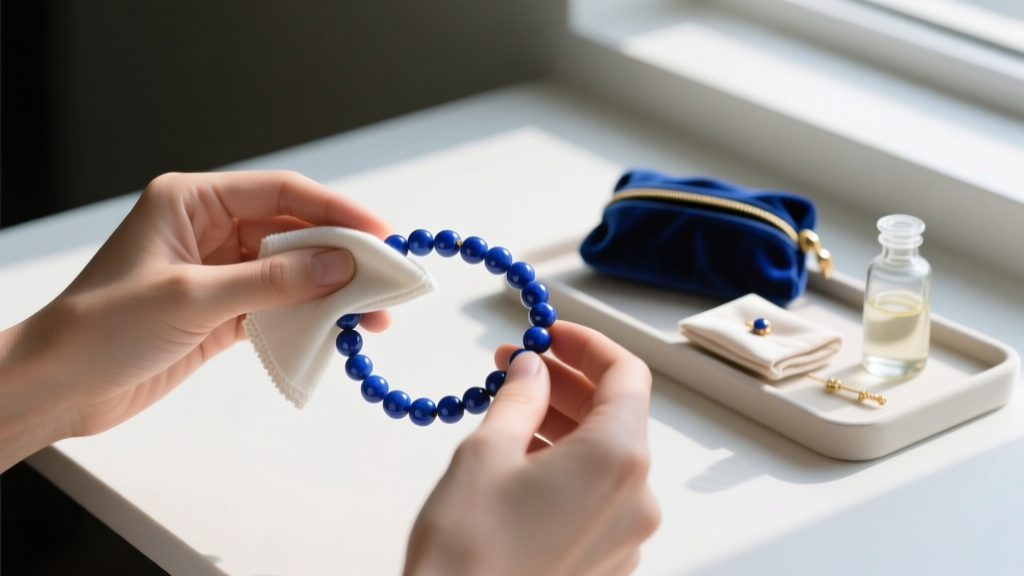
- The Damp Cloth Method: The only safe way to clean lapis is to gently wipe it with a soft, slightly damp microfiber cloth. Dry it immediately. Do not use commercial jewelry dips, ammonia, or bleach.
- Apply Cosmetics First: Hairspray, perfume, and lotions can leave a greasy film on the porous surface of the stone, dulling its luster over time. Always put your lapis necklace on as the final step of your getting-ready routine.
By understanding the geological origins, recognizing the hallmarks of genuine lazurite, and selecting protective settings, you can confidently invest in a lapis necklace that will retain its historical mystique and structural integrity for generations.


