Engineering the Perfect Large Diamond Necklace: A Technical Guide
Discover the gemological and structural engineering behind a large diamond necklace. Learn about carat weights, secure settings, and chain tensile strength.

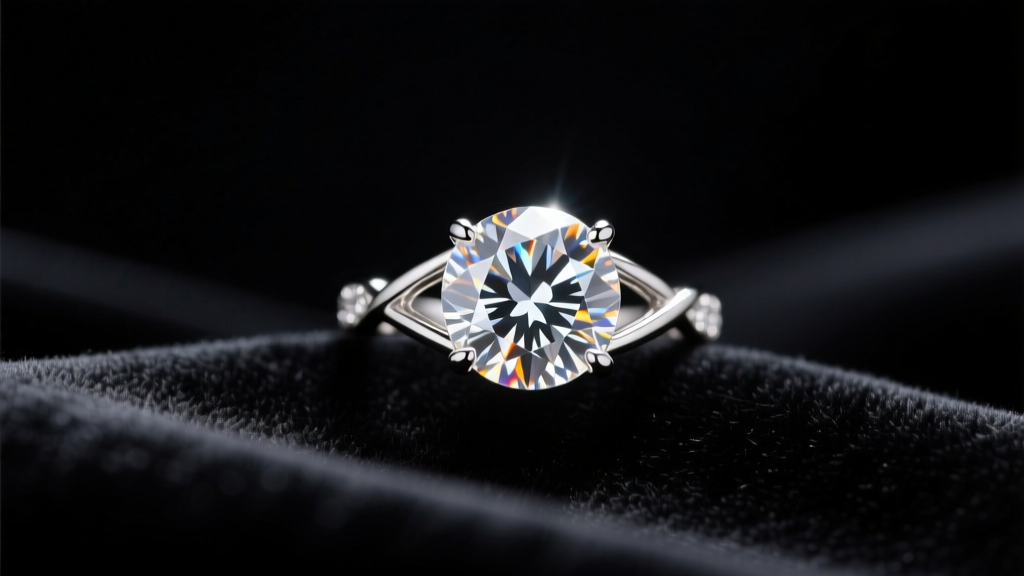
The Physics and Gemology of High-Carat Pendants
When discussing high jewelry, the term 'large diamond necklace' generally refers to a centerpiece stone weighing 3.00 carats or more. However, acquiring a stone of this magnitude is only the first step. The true challenge lies in the structural engineering required to suspend a dense, high-value crystal securely against the human body while maximizing its optical performance. As we navigate the luxury market in 2026, the convergence of advanced metallurgy and precise gemological grading has redefined how these monumental pieces are constructed.
According to data published by the Gemological Institute of America (GIA), the exponential price-per-carat jump at the 3.00ct, 5.00ct, and 10.00ct thresholds means that structural failure is not just an inconvenience; it is a catastrophic financial event. Therefore, evaluating a large diamond necklace requires looking past the 4Cs and deeply into the tensile strength of the chain, the alloy composition of the setting, and the dynamic load distribution of the clasp.
Gemological Baseline: Grading for Maximum Light Return
For diamonds exceeding 3.00 carats, the standard grading parameters must be tightened. In smaller stones, an SI1 clarity grade might hide inclusions from the naked eye. In a 5-carat round brilliant, the table facet is expansive enough that a dark carbon inclusion in the center will be immediately visible, severely compromising light return.
- Clarity Threshold: VS2 is the absolute minimum recommended for large, step-cut diamonds (like Emerald or Asscher cuts), while brilliant cuts can occasionally accommodate a very well-positioned SI1.
- Color Scaling: The human eye detects color more easily in larger volumes of diamond crystal. A 'J' color diamond that faces up white at 1.00ct will show distinct yellowish warmth at 5.00ct. For a colorless appearance in a large diamond necklace, stick to the D-G range.
- Fluorescence Risks: Strong blue fluorescence in D-F color diamonds over 4.00 carats can cause a milky or hazy appearance in natural daylight, drastically reducing the stone's brilliance and market value.
In 2026, the market has also seen a massive influx of large lab-grown diamonds. While chemically identical, buyers must ensure their GIA or IGI reports explicitly state the origin, as the secondary market value retention differs vastly between natural and lab-grown stones of this size.
Structural Engineering: Settings That Prevent Loss
The setting of a large diamond necklace must withstand 'dynamic loading'—the sudden spikes in gravitational force when the wearer walks, bends over, or accidentally snags the pendant. A 5-carat diamond weighs approximately 1 gram, but the kinetic force exerted on the prongs during a sudden jerk can exceed 10 pounds of pressure.
Platinum vs. 18k Gold Alloys
For stones over 3.00 carats, 950 Platinum is the undisputed industry standard. Unlike 18k white gold, which is brittle and can snap under severe stress, platinum is malleable. If a platinum prong catches on a heavy sweater, it will bend, alerting the wearer to the damage while keeping the stone secure. An 18k gold prong, conversely, may simply fracture, resulting in immediate stone loss.
| Setting Type | Security Level | Light Return | Best Suited Shape |
|---|---|---|---|
| 6-Prong Tiffany Basket | Exceptional | High | Round Brilliant, Oval |
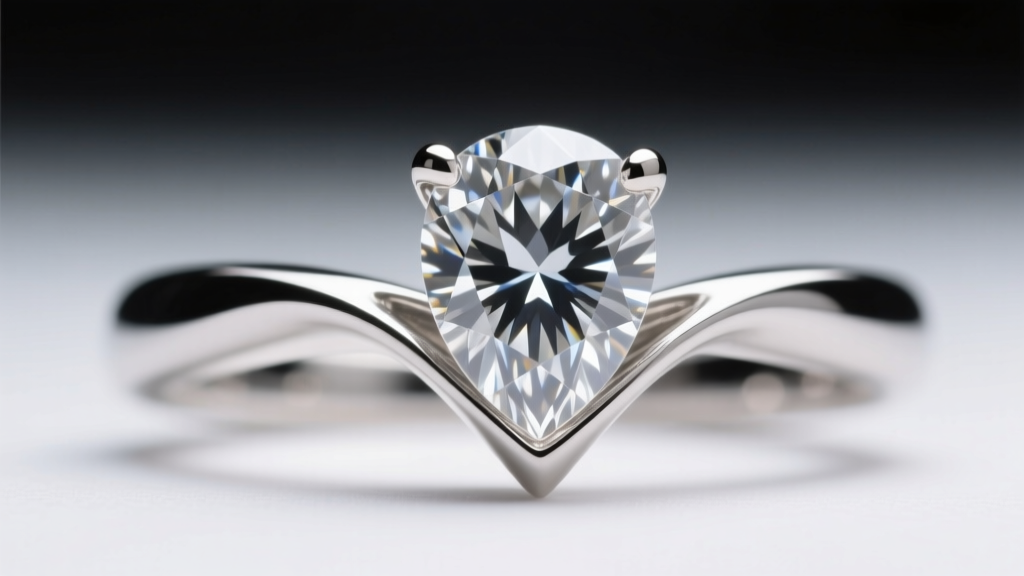
| 4-Prong with V-Tips | High | Very High | Pear, Marquise, Princess |
| Full Bezel | Maximum | Moderate | Cushion, Emerald, Round |
| Tension Setting | Low (Not Recommended) | Maximum | Round Brilliant |
Prong Dimensions and Tolerances
Jewelers must use specific wire gauges for large stones. A standard 0.7mm prong is insufficient for a 5-carat stone. Master jewelers will mill prongs from 0.9mm to 1.2mm platinum wire, tapering them at the tip to minimize metal visibility while maintaining a thick, structural base. For pear and marquise shapes, V-prongs are non-negotiable to protect the fragile points from chipping upon impact.
Chain Metallurgy and Tensile Strength
A common and costly mistake is pairing a heavy, large diamond pendant with a delicate, lightweight chain. The chain must support not only the static weight of the pendant but also the lateral torque applied when the necklace shifts on the collarbone.
According to industry analyses featured in JCK Online, the structural integrity of the chain links and the clasp mechanism are the most frequent points of failure in high-carat necklaces. For a pendant weighing between 4 and 8 grams (including the metal setting), the chain must meet strict metallurgical requirements.
Recommended Chain Profiles
- Franco Chains: Featuring a V-shaped, tightly woven link structure, Franco chains offer exceptional tensile strength and resist kinking. A minimum width of 2.5mm is required for large pendants.
- Wheat (Spiga) Chains: The braided, multi-directional links distribute weight evenly, preventing localized stress fractures.
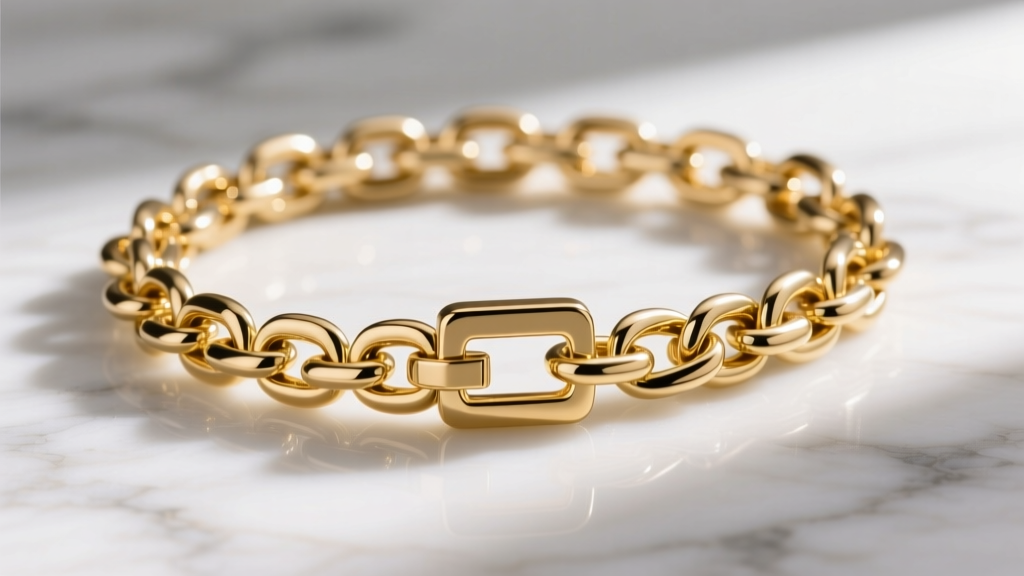
- Cuban Links: While heavier, a solid 18k yellow gold Cuban link provides a robust, masculine, or bold aesthetic that easily supports 10+ carat center stones.
Clasp Engineering
Standard spring-ring clasps are entirely inadequate for large diamond necklaces. The internal spring mechanism is prone to fatigue and failure. Instead, utilize a Hidden Box Clasp equipped with a secondary safety mechanism, such as a figure-8 wire latch or a double-click push-button release. This ensures that even if the primary box tongue loosens over time, the secondary latch prevents the necklace from parting.
Pricing Matrices and Value Retention in 2026
The pricing for a large diamond necklace is heavily dictated by the origin of the stone and the precision of its cut. Below is a generalized pricing matrix for natural, GIA-graded round brilliant diamonds set in platinum, reflecting early 2026 market averages.
| Carat Weight | Color / Clarity | Cut Grade | Estimated Retail Range (USD) |
|---|---|---|---|
| 3.00 - 3.49 ct | G / VS1 | Excellent | $45,000 - $65,000 |
| 5.00 - 5.49 ct | F / VS2 | Excellent | $120,000 - $180,000 |
| 7.00 - 7.99 ct | E / VVS2 | Excellent | $350,000 - $500,000+ |
Note: Lab-grown equivalents of these exact specifications currently trade at a 75% to 85% discount compared to their natural counterparts, though they do not hold the same long-term collector value.
Maintenance and Prong Wear Diagnostics
Owning a large diamond necklace requires a rigorous maintenance schedule. The oils from the skin, cosmetics, and environmental dust accumulate rapidly under the pavilion of a large stone, blocking light and making a D-color diamond look dull and gray.
The 10x Loupe Inspection
Every six months, the setting must be inspected under 10x magnification. Look for 'galloping'—a phenomenon where the diamond spins slightly within the basket, indicating that the prong seats have worn down. Additionally, check the gallery wire (the horizontal metal ring connecting the prongs) for micro-fractures.
Ultrasonic Cleaning Warnings
While ultrasonic cleaners are excellent for removing grime from platinum and natural diamonds, they are highly destructive to fracture-filled or laser-drilled diamonds. The high-frequency vibrations can expand existing fissures or dislodge glass-like fillers used to mask internal cracks. Always verify the GIA report for clarity enhancement treatments before submerging a large diamond necklace in an ultrasonic bath. For treated stones, a gentle soak in warm water with a mild, ammonia-free dish soap and a soft baby hairbrush is the only safe cleaning method.
'A large diamond necklace is not merely an accessory; it is a feat of micro-engineering. The beauty of the stone is entirely dependent on the metallurgical integrity of the vessel that holds it.' — Master Bench Jeweler
By prioritizing structural security, precise gemological grading, and heavy-duty chain metallurgy, you ensure that your large diamond necklace remains a secure, brilliant, and enduring legacy piece for decades to come.


