How to Layer a Purple Crystal Necklace: Step-by-Step
Learn how to perfectly layer a purple crystal necklace with our step-by-step guide, covering material hardness, chain lengths, and neckline pairing.

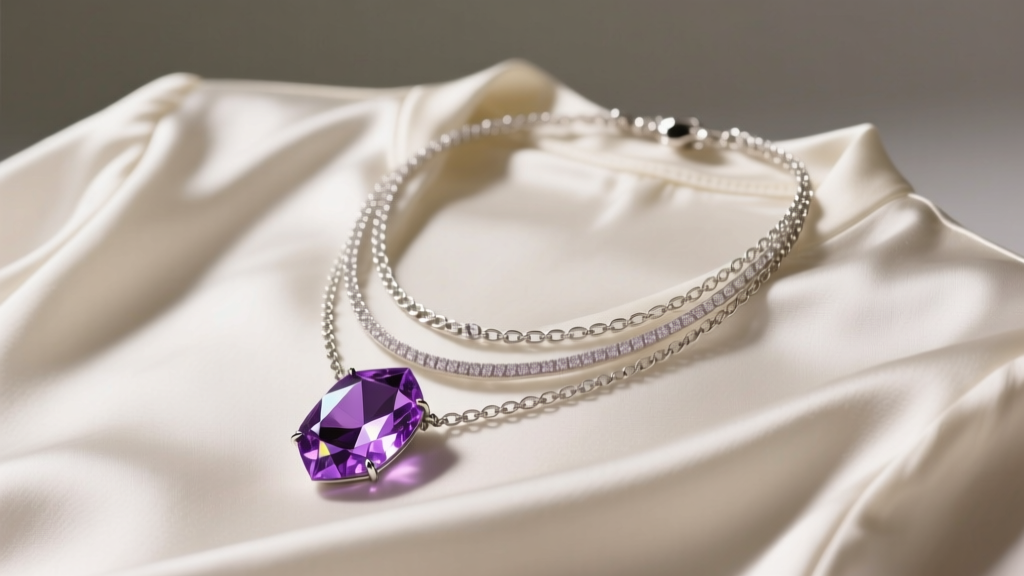
Mastering the art of layering requires more than just throwing multiple chains around your neck. As we move through 2026, the trend has shifted heavily toward intentional, mixed-texture stacking, with the purple crystal necklace emerging as a definitive focal point. Whether you are working with a deep violet tanzanite, a banded sugilite, or a classic faceted amethyst, integrating a purple crystal pendant into a layered stack requires an understanding of metal weights, chain weaves, and gemstone hardness. This step-by-step guide will walk you through the exact mechanics of building a balanced, damage-free layered necklace stack.
The Material Science: Knowing Your Purple Crystals
Before you begin layering, you must understand the physical properties of your center stone. Layering chains of varying weights and materials can cause micro-abrasions if harder metals or gemstones constantly strike softer crystals. According to the Gemological Institute of America (GIA), the Mohs Hardness Scale dictates how resistant a gemstone is to scratching. When building a stack, your purple crystal should ideally be the hardest stone in the ensemble, or protected by a bezel setting.
| Purple Crystal | Mineral Family | Mohs Hardness | Layering Vulnerability |
|---|---|---|---|
| Amethyst | Quartz | 7.0 | Low; can be scratched by diamond or sapphire chains. |
| Tanzanite | Zoisite | 6.5 - 7.0 | Moderate; perfect cleavage makes it prone to chipping. |
| Sugilite | Cyclosilicate | 6.0 - 6.5 | High; avoid layering with heavy, sharp-edged chains. |
| Charoite | Silicate | 5.0 - 6.0 | Very High; requires protective bezel or wire-wrap settings. |
When layering a purple crystal necklace with metallic chains, ensure that the accompanying chains do not feature sharp, unpolished links (like raw box chains) that could act like a file against softer stones like charoite or sugilite over time.
Step-by-Step: The 3-Piece Layering Formula
The most visually pleasing and structurally sound layered necklace stack follows a strict three-piece formula. This method prevents tangling and ensures each piece occupies its own visual tier.
Step 1: The Base Chain (14-16 Inches)
Your first layer sits at the collarbone and acts as the anchor. For a purple crystal stack, opt for a delicate 1.0mm to 1.2mm cable or rolo chain in either 14k gold fill or solid 925 sterling silver. The clasp should be a 5mm lobster clasp for security. This chain should have no pendant, or at most, a 2mm metallic bead. The purpose of this layer is to provide a subtle metallic frame that leads the eye downward toward the main event.
Step 2: The Purple Crystal Focal Point (18-20 Inches)
This is where your purple crystal necklace takes center stage. The pendant should hang precisely in the hollow of the throat or just below the collarbone. If your crystal is set in a prong setting, ensure the bail (the loop that holds the pendant) is wide enough to accommodate a 1.5mm to 2.0mm chain. A snake chain or a wheat chain works beautifully here, as their smooth, continuous surfaces reflect light and contrast with the organic or faceted texture of the purple gemstone.
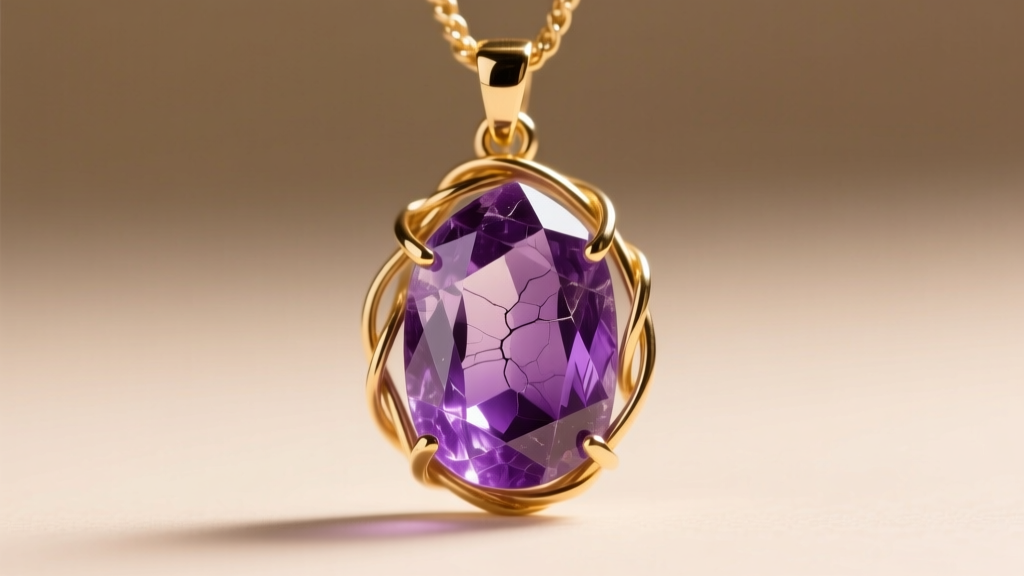
Step 3: The Textural Anchor (22-24 Inches)
The final layer drops to the upper chest and provides visual weight. To avoid competing with the purple crystal, choose a chain with a distinctly different texture. If your focal pendant is on a smooth snake chain, use a 2.5mm paperclip link chain or a beaded chain for the third tier. This layer should be left bare or feature a very subtle, opaque gemstone (like a small onyx or moonstone bead) that complements rather than distracts from the purple hue above it.
Neckline Pairing Guide for 2026
A perfectly layered stack can be ruined if it clashes with your garment's neckline. The interplay between fabric and metal is critical for high-end styling.
- The Deep V-Neck: The ideal canvas for a 3-piece stack. The V-shape naturally frames the descending lengths of the chains, drawing the eye directly to the purple crystal pendant resting at the apex of the neckline.
- The Crew Neck: Keep the stack tighter. Shorten the base chain to 14 inches (choker length) and the focal purple crystal to 16 inches. Drop the third layer entirely to prevent the chains from tangling in the fabric's ribbing.
- The Sweetheart Neckline: Pair your purple crystal necklace with a single, delicate 18-inch chain. The ornate shape of the sweetheart bodice requires negative space; a heavy stack will look cluttered and compete with the dress's architecture.
- The Oversized Button-Down: Wear the shirt unbuttoned to the sternum. Use a heavier 20-inch box chain for the base, a large raw amethyst or tanzanite pendant at 22 inches, and a 26-inch lariat-style chain to elongate the torso.
Cleaning and Charging Protocols
Maintaining the optical clarity and energetic integrity of your purple crystals requires specific care routines. Never use ultrasonic cleaners on tanzanite, sugilite, or charoite. The high-frequency vibrations can cause internal fracturing, especially in tanzanite, which has perfect cleavage. The American Gem Trade Association (AGTA) recommends using only lukewarm water and a mild, phosphate-free dish soap for these delicate stones.
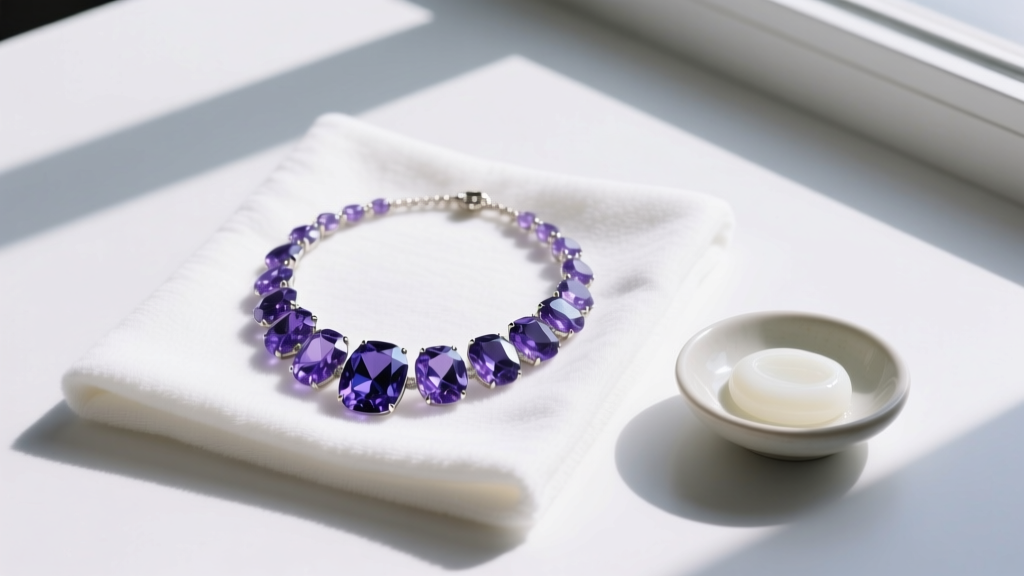
To clean your layered stack, prepare a solution of one part mild soap to ten parts distilled water. Submerge the chains and the crystal pendant for exactly three minutes. Use a soft-bristled baby toothbrush to gently sweep away sebum and lotion buildup from beneath the gemstone's pavilion (the bottom facets). Rinse with distilled water to prevent hard water spots, and dry immediately with a lint-free microfiber cloth. For those who observe crystal healing traditions, purple stones like amethyst and sugilite benefit from being placed under indirect moonlight to 'recharge' their color and energetic properties, avoiding direct sunlight which can cause prolonged UV exposure to fade the purple hue over time.
Final Styling Tips
When wearing a purple crystal necklace in a layered stack, always put your jewelry on after applying cosmetics, perfumes, and hairsprays. The alcohol and aerosolized chemicals in these products can degrade the polish of softer stones like charoite and strip the rhodium plating off sterling silver chains. By following this precise, step-by-step framework, you ensure that your purple crystal remains the undeniable star of your ensemble, safely secured and perfectly proportioned for any occasion.


