How to Layer and Style a Phases of the Moon Necklace
Learn how to layer, style, and care for your phases of the moon necklace with our step-by-step guide on chain lengths, metal grades, and neckline pairings.

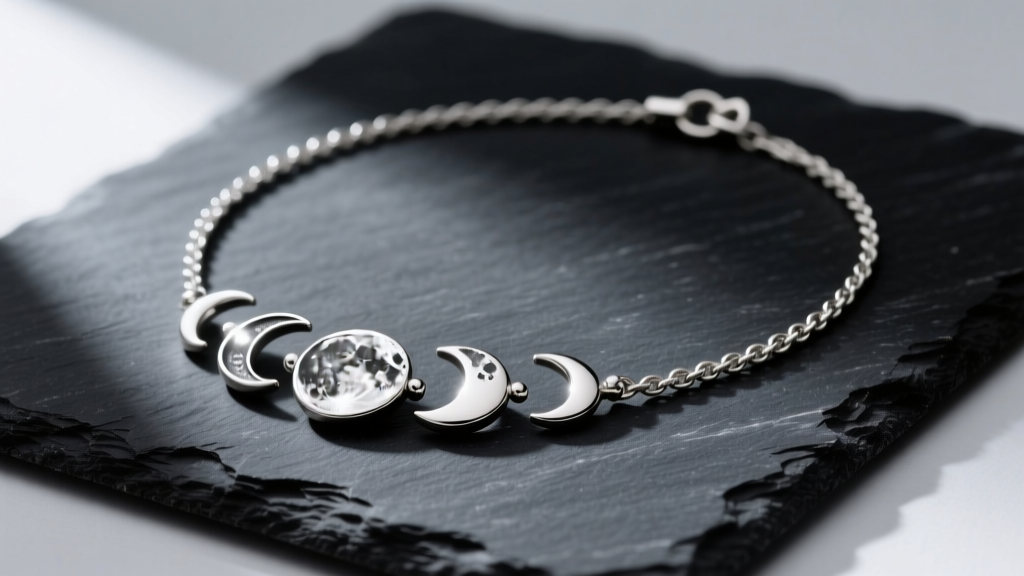
The celestial jewelry trend has evolved far beyond simple star and moon charms. Today, a meticulously crafted phases of the moon necklace serves as a sophisticated anchor piece in any fine jewelry collection. Whether your pendant features a horizontal bar detailing the lunar cycle or a vertical drop of mother-of-pearl inlays, styling this specific motif requires an understanding of proportion, metal grades, and layering mechanics. This comprehensive, step-by-step guide will teach you how to build a flawless necklace stack, troubleshoot common clasp issues, and preserve the intricate oxidized details of your lunar jewelry.
The Anatomy of a Celestial Pendant
Before you begin layering, it is crucial to understand the materials that dictate how your necklace will drape and age. High-quality lunar pendants typically rely on two distinct decorative techniques to illustrate the moon's shadows and craters:
- Oxidized Sterling Silver: The crevices of the moon phases are intentionally exposed to sulfur to create a dark, antique contrast against polished 925 sterling silver. This requires a rhodium plating on the high-polish areas to prevent widespread tarnishing.
- Vitreous vs. Cold Enamel: Premium pieces use vitreous enamel (fired glass powder) for the dark lunar phases, offering a scratch-resistant, glassy finish. Budget-friendly options use cold enamel (epoxy resin), which is prone to yellowing and chipping over time. Always check the manufacturer specifications before purchasing.
According to the Silver Institute, authentic 925 sterling silver contains 92.5% pure silver and 7.5% alloy (usually copper) for structural integrity. When buying gold-toned versions, insist on 14k gold vermeil, which the FTC mandates must have a minimum of 2.5 microns of gold plated over a sterling silver base, ensuring your pendant won't flake after a few months of wear.
Step 1: Selecting the Anchor Chain
The chain you choose for your phases of the moon necklace dictates both its durability and its visual weight. Because lunar pendants are often horizontally oriented and moderately heavy, flimsy chains will snap or tangle.
Chain Weave Recommendations
Avoid box chains or snake chains for this specific pendant style. Box chains can pull fine hair, and snake chains easily kink if the horizontal pendant catches on a sweater. Instead, opt for a 1.2mm to 1.5mm standard cable chain or a 1.5mm rolo chain. Cable chains provide excellent flexibility, allowing the horizontal moon bar to lay flat against the collarbone without flipping upside down.

Step 2: The 3-Tier Layering Formula
A phases of the moon necklace shines best when it acts as the mid-level anchor in a three-tier stack. The goal is to create a cascading visual effect that draws the eye downward without the chains tangling into a single knot. Follow this exact length and weight distribution framework:
| Tier | Chain Length | Chain Style & Gauge | Pendant Type & Drop Size |
|---|---|---|---|
| Tier 1 (Top) | 14 to 15 inches | 1.0mm Satellite Chain | 3mm Solitaire Gemstone (e.g., Moonstone or Pearl) |
| Tier 2 (Anchor) | 16 to 17 inches | 1.5mm Cable Chain | Phases of the Moon Bar (approx. 1.5" wide) |
| Tier 3 (Base) | 20 to 22 inches | 2.0mm Rolo or Paperclip Chain | Vertical Celestial Drop or Plain Gold Teardrop |
By maintaining a minimum two-inch gap between each chain length, you prevent the clasps and jump rings from catching on one another. If your moon phase pendant is exceptionally wide (over two inches), push your Tier 3 chain down to 24 inches to ensure the bottom pendant rests below the edges of the lunar bar.
Step 3: Matching Necklines to Lunar Layouts
The horizontal geometry of a phases of the moon necklace interacts differently with various necklines. Here is how to style it based on your outfit:
- The Crew Neck: A 16-inch moon phase chain will sit awkwardly on top of a tight crew neck. Instead, lengthen the chain to 18 inches so the lunar bar rests just below the fabric hem, or layer it over a ribbed turtleneck using a 20-inch cable chain.
- The V-Neck or Wrap Dress: This is the ideal canvas. The horizontal line of the moon phases perfectly bisects the vertical plunge of a V-neck. Use the 3-tier formula here, ensuring the bottom pendant mimics the V-shape of the dress.
- Off-the-Shoulder / Boat Neck: Opt for a choker-length (14-inch) moon phase necklace. The horizontal pendant will beautifully mirror the exposed collarbones and the horizontal line of the garment.
Troubleshooting Tangles and Clasp Slippage
One of the most common complaints with celestial jewelry is the clasp sliding to the front of the neck. Because a phases of the moon necklace features a wide, front-heavy pendant, the chain is pulled forward, dragging the lightweight clasp with it.
The Fix: Replace the standard 4mm spring ring clasp with a 5mm or 6mm lobster clasp. The added weight of the lobster clasp acts as a natural counterbalance at the nape of your neck. Alternatively, you can purchase a silicone necklace clasp cover or a small magnetic counterweight bead that grips the chain at the back of the neck, keeping the moon pendant perfectly centered on your chest.
Step 4: Cleaning and Preserving Oxidized Details
The darkened shadows that give the phases of the moon necklace its depth are usually achieved through intentional oxidation. Aggressive cleaning methods will strip this patina, leaving you with a flat, featureless piece of metal.
The Jewelers of America strongly advises against using ultrasonic cleaners, silver dip solutions, or baking soda pastes on oxidized or enameled jewelry. Ultrasonic vibrations can shatter vitreous enamel, while chemical dips will instantly remove the dark oxidized contrast in the lunar craters.
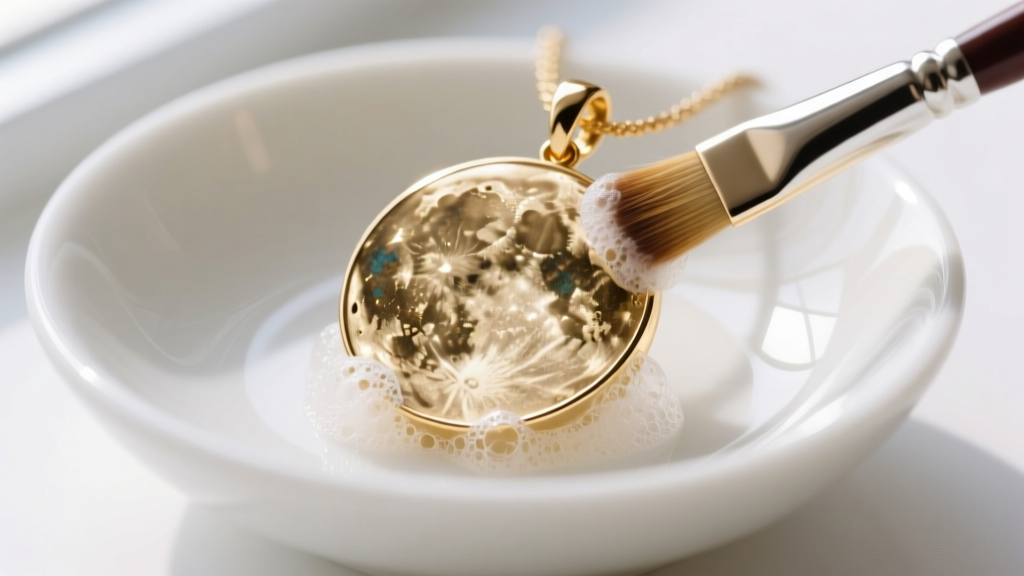
The Safe Cleaning Protocol
- Mix the Solution: Combine three drops of phosphate-free, mild dish soap (like Dawn) into one cup of lukewarm distilled water. Avoid hard tap water, which can leave mineral deposits in the intricate moon engravings.
- Soak Briefly: Submerge the necklace for no more than three to five minutes to loosen body oils and lotion buildup.
- Agitate Gently: Use an extra-soft, baby-hair toothbrush to gently sweep across the surface. Do not scrub deep into the crevices; you only want to clean the raised, polished surfaces of the moon phases.
- Dry Thoroughly: Pat dry with a lint-free microfiber cloth. Use a hairdryer on the 'cool' setting to blow water out of the tiny jump rings and chain links, preventing hidden moisture from causing chain corrosion.
By following these precise material selections, layering formulas, and maintenance protocols, your phases of the moon necklace will remain a striking, tangle-free centerpiece in your jewelry rotation for years to come. Understanding the mechanics of your jewelry transforms it from a simple accessory into a curated element of your personal style.