Length of Necklace Chart: Budget and Value Assessment Guide
Use our length of necklace chart to assess budget and value. Learn how chain length, weight, and style impact pricing and maximize ROI.

Introduction: Why Length Dictates True Jewelry Value
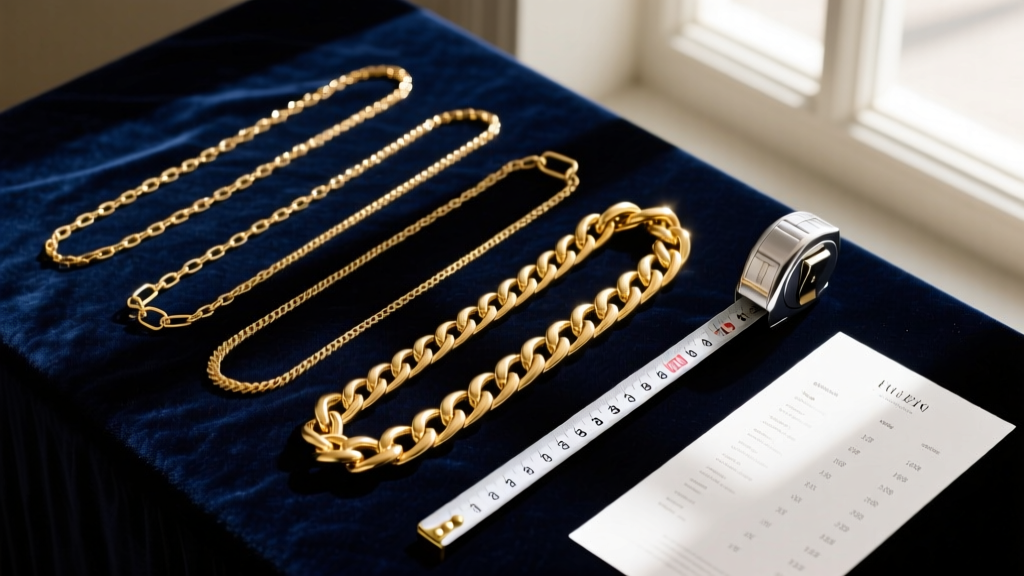
When shopping for fine jewelry, most buyers focus on the pendant's carat weight or the metal's purity stamp. However, the foundational architecture of the piece—the chain length—is often the most significant driver of both aesthetic impact and financial cost. Understanding a comprehensive length of necklace chart is not just a stylistic exercise; it is a critical budget and value assessment tool. As precious metal markets continue their upward trajectory in 2026, the difference between a 16-inch choker and a 24-inch opera-length chain can represent a 60% to 150% price variance, depending on the gauge and link style.
This guide decodes the hidden economics of necklace lengths. We will explore how to calculate the true 'price-per-inch' of your jewelry, why longer chains demand heavier structural gauges, and how to use standard length charts to maximize your budget without sacrificing durability or style.
The Core Length of Necklace Chart & Base Pricing Tiers
Before assessing value, you must understand the industry-standard measurements. The jewelry industry categorizes necklace lengths into distinct tiers, each serving a specific anatomical and stylistic purpose. However, from a value perspective, each tier also carries a baseline weight multiplier.
Below is a standard length of necklace chart mapped against the estimated weight and base retail multiplier for a standard 2.0mm 14k solid gold cable chain. This data provides a baseline for assessing whether a retailer's pricing is fair.
| Length Category | Inches | Est. Weight (2mm 14k Gold) | Base Price Multiplier | Best Neckline Pairing |
|---|---|---|---|---|
| Collar | 12" - 14" | 2.8g - 3.2g | 1.0x (Base) | Open V-neck, Off-shoulder |
| Choker | 15" - 16" | 3.4g - 3.8g | 1.15x | Crew neck, Scoop neck |
| Princess | 17" - 18" | 4.0g - 4.5g | 1.35x | Almost all standard tops |
| Matinee | 20" - 24" | 5.2g - 7.0g | 1.8x - 2.2x | Business attire, Turtlenecks |
| Opera | 28" - 36" | 9.5g - 14.0g+ | 3.0x - 4.5x | Evening wear, High necklines |
Note: Multipliers are based on the raw material cost of a 16-inch chain. Labor costs and clasp hardware remain relatively fixed, meaning longer chains benefit from a slightly lower 'per-inch' labor markup, even though the total material cost skyrockets.
Structural Integrity: The Hidden Cost of Longer Lengths
A common misconception among budget-conscious buyers is that a 30-inch chain should simply cost 1.87 times more than a 16-inch chain of the exact same millimeter thickness. In reality, this is physically impossible for fine jewelry. According to manufacturing standards outlined by Jewelers of America, tensile stress increases exponentially with chain length.
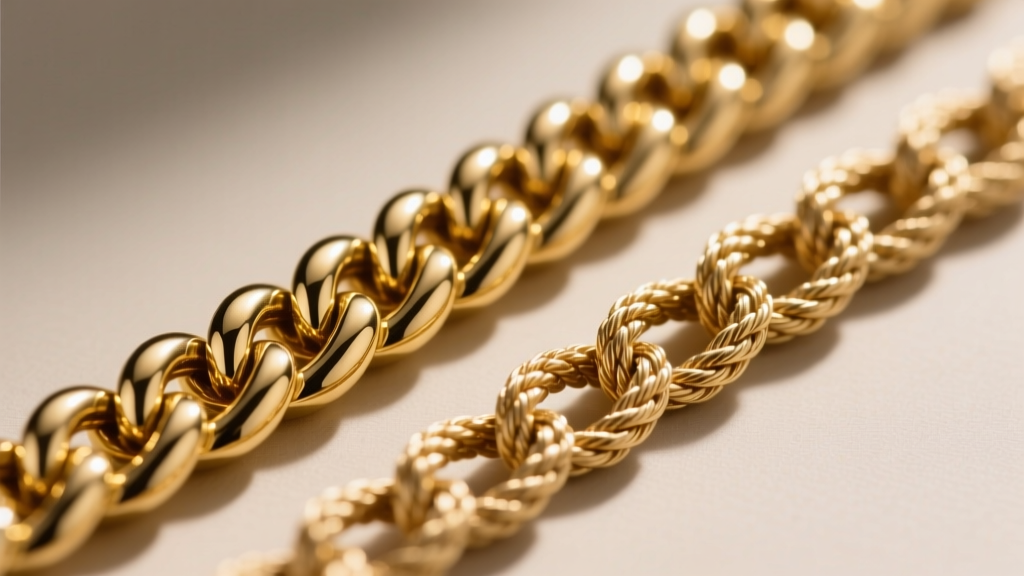
If a jeweler were to craft a 30-inch chain using a delicate 1.2mm gauge, the chain would inevitably snap under its own weight or the moment a lightweight pendant is attached. Therefore, as you move down the length of necklace chart into the Matinee and Opera tiers, the minimum viable gauge thickness must increase.
- 16-inch chains can safely be crafted in 1.0mm to 1.5mm gauges.
- 22-inch chains require a minimum of 1.8mm to 2.2mm to prevent kinking and snapping.
- 30-inch chains demand 2.5mm to 3.5mm gauges for structural viability.
This structural requirement means that when you size up in length, you are not just paying for more gold; you are paying for thicker gold. A 3mm 14k gold chain weighs nearly triple that of a 1.5mm chain per inch. This is the primary reason Opera-length chains carry such a massive premium on the market.
The 'Price-Per-Inch' Formula for Smart Buyers
To truly assess the budget and value of any necklace, you must strip away the marketing and calculate the melt value versus the retail markup. This E-E-A-T framework allows you to determine if a jeweler is charging a fair premium for their craftsmanship.
Step 1: Calculate the Melt Value
First, find the current spot price of gold (or silver). Let us assume a 2026 baseline of $2,100 per troy ounce for 24k gold. One troy ounce equals 31.1 grams.
- 24k Gold per gram = $67.52
- 14k Gold (58.3% pure) per gram = $39.36
- 18k Gold (75.0% pure) per gram = $50.64
If the length of necklace chart indicates an 18-inch 14k gold rope chain weighs 6.5 grams, the raw melt value is exactly $255.84.
Step 2: Apply the Labor and Style Multiplier
The Gemological Institute of America (GIA) notes that metal purity and alloy composition affect malleability, which in turn affects manufacturing complexity. A simple machine-made cable chain carries a 1.5x to 2.0x retail multiplier over melt. However, complex styles like hand-soldered Byzantine or woven Foxtail chains carry a 3.5x to 5.0x multiplier due to the intense labor required.
If that 6.5g 14k rope chain is priced at $650, the multiplier is roughly 2.5x. This is a highly competitive, fair-market value for a durable, mid-weight chain in today's economy.
Budget Hacks: Maximizing Value Across the Chart
If your desired aesthetic requires a longer length but your budget is constrained to the Princess tier, there are several strategic workarounds that maintain high visual value without the Opera-tier price tag.
1. The Extender Chain Strategy
Instead of purchasing a 20-inch chain, buy a high-quality 16-inch chain and request a custom 4-inch extender link. This allows the piece to function as both a Choker and a Princess-length necklace. The cost of adding 4 inches of standard cable links is negligible (often under $40 in 14k gold), whereas buying two separate chains would cost hundreds more.
2. Hollow vs. Solid at Longer Lengths
For lengths exceeding 24 inches, the weight of solid gold becomes not only expensive but physically uncomfortable for the cervical spine. Hollow-tube gold chains (often seen in Cuban or Curb styles) offer the visual thickness of a 5mm solid chain at the weight and price of a 2mm solid chain. Warning: Hollow chains are prone to denting and cannot be easily repaired if crushed. They are best reserved for occasional evening wear rather than daily use.
3. Mixed Metal Layering
Layering is a dominant trend, but buying three solid 18k gold chains of varying lengths is a massive financial undertaking. A smart budget assessment involves anchoring your layer with one high-quality 14k or 18k gold chain at the 16-inch mark, and supplementing the 18-inch and 22-inch tiers with high-grade vermeil (thick gold plating over sterling silver) or oxidized sterling silver chains. This creates the visual depth of a maximalist stack while keeping 70% of your budget focused on the piece closest to your face.
Conclusion: Charting Your Financial Course
A length of necklace chart is far more than a styling guide; it is a roadmap for financial efficiency in fine jewelry acquisition. By understanding the structural necessities of longer chains, calculating the true price-per-inch, and leveraging smart hardware additions like extenders, you can curate a versatile, high-value collection. Always demand the exact gram weight from your jeweler before purchasing, and cross-reference it with the length and gauge to ensure your investment aligns with the true market value of the precious metals involved.


