The Life of a Showgirl Silver Necklace: Technical Guide
Explore the technical construction, material science, and conservation of heavy theatrical silver jewelry in our expert guide on showgirl necklaces.

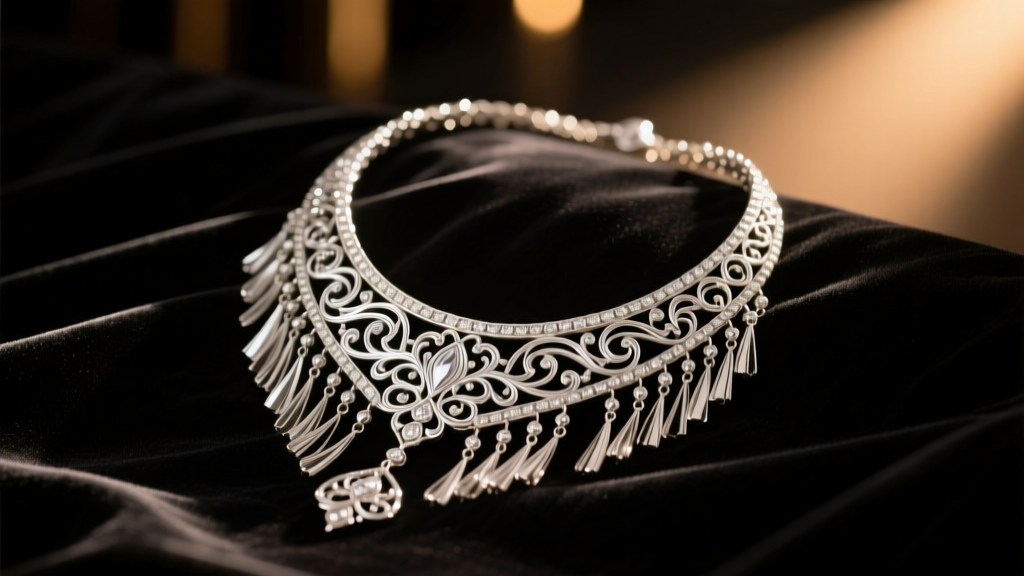
When we discuss the life of a showgirl silver necklace, we are not talking about delicate, everyday jewelry. Theatrical silver pieces—born from the glittering eras of the Ziegfeld Follies, mid-century Vegas revues, and modern high-fashion stage productions—are engineered for extreme visual impact, massive scale, and rigorous physical performance. Understanding the life cycle, material science, and structural demands of these heavy silver garments requires a deep dive into metallurgical engineering, dynamic load physics, and advanced conservation techniques. In 2026, as stage lighting technology and performance demands evolve, the technical specifications for crafting and maintaining these iconic pieces have become more precise than ever.
The Anatomy of Theatrical Silver: Beyond Standard 925
Standard 925 sterling silver (92.5% silver, 7.5% copper) is the baseline for most commercial jewelry, but it is fundamentally inadequate for the grueling environment of stage performance. The copper alloy in standard sterling is highly reactive to the sulfur and chlorides present in theatrical environments. To extend the life of a showgirl silver necklace, modern master silversmiths and theatrical costumers increasingly rely on Argentium silver (typically 935 or 960 grades).
Argentium replaces a portion of the copper with germanium. When exposed to oxygen, the germanium forms a transparent, self-healing layer of germanium dioxide on the surface. According to metallurgical data from Rio Grande Jewelry Supply, this layer drastically slows the formation of silver sulfide (tarnish). For a showgirl performing under intense, hot stage lights while sweating heavily, Argentium provides a crucial buffer, maintaining the high-reflectivity white shine required to catch spotlights without the constant need for abrasive polishing, which would eventually wear away intricate filigree details.
Furthermore, the sheer mass of these necklaces dictates the wire gauge and link construction. A typical showgirl collar or fringe necklace can weigh anywhere from 150 to over 350 grams. To support this weight without stretching, chains must be constructed from minimum 14-gauge (1.6mm) wire, with every single jump ring and link fully soldered. Machine-made, unsoldered links will inevitably pull apart under the kinetic stress of choreography.
Dynamic Load and Hardware: Why Standard Clasps Fail
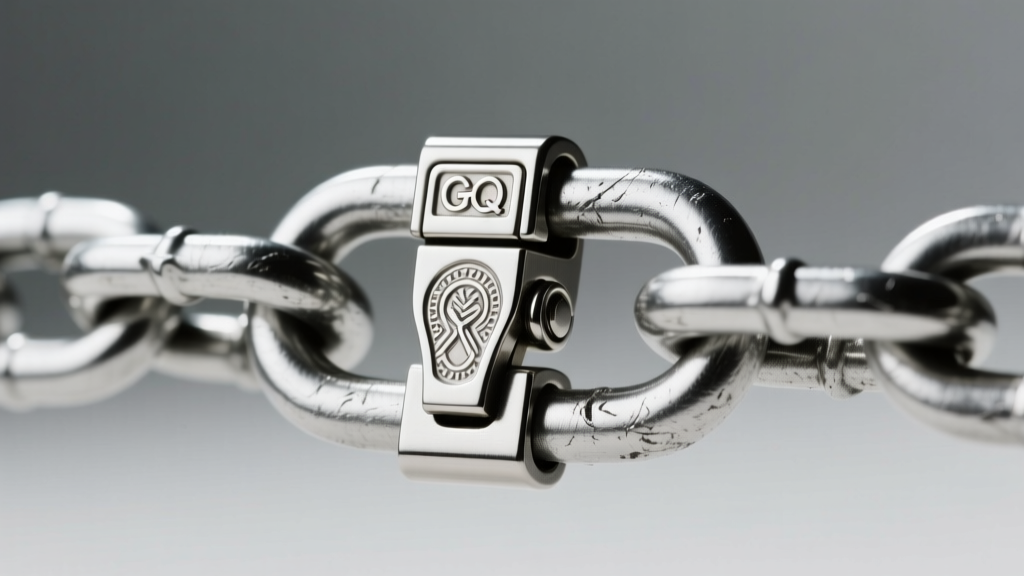
The most common point of catastrophic failure in heavy theatrical jewelry is the clasp. When a performer executes sharp choreography, a 250-gram necklace does not just rest on the clavicle; it generates significant dynamic load. A sudden stop or leap can momentarily multiply the gravitational force exerted on the clasp by a factor of three to five. Standard lobster claws, even heavy-duty 18mm variants, are prone to lever-arm failure or spring fatigue under these conditions.
| Clasp Type | Static Weight Limit | Dynamic Load Tolerance | Best Application |
|---|---|---|---|
| Standard Lobster (12mm) | 45g | Low | Lightweight pendants, non-performance |
| Heavy Lobster (20mm) | 120g | Medium | Chunky chains, low-impact wear |
| Double-Locking Box Clasp | 300g+ | High | Heavy showgirl collars, fringe necklaces |
| Neodymium Magnetic w/ Safety | 150g | Medium-High | Quick-change theatrical rigs |
For authentic, heavy-gauge showgirl pieces, the double-locking box clasp with a figure-eight safety catch is the industry standard. The box mechanism provides a mechanical interlock that cannot be pulled apart by linear tension, while the safety wire ensures that if the primary tongue fails, the necklace remains tethered to the performer, preventing loss and stage hazards.
The Chemical Warfare of the Stage: Sweat, Makeup, and Tarnish
The environment inside a theatrical costume is highly corrosive to precious metals. Human sweat contains water, sodium chloride (salt), urea, and lactic acid. When silver is exposed to chlorides in an acidic environment, it forms silver chloride, which appears as a dull, greyish-white film that is notoriously difficult to remove without mechanical abrasion. This is distinct from silver sulfide, the black tarnish caused by sulfur in the air or in certain stage makeup pigments (such as some iron oxides and theatrical sulfides used in special effects).
The Gemological Institute of America (GIA) notes that silver's reactivity makes it particularly vulnerable to these compounds. In the life of a showgirl silver necklace, the piece is routinely subjected to a cocktail of hairspray aerosols, spirit gum, and heavy foundation. If left uncleaned after a performance, these chemicals will pit the silver surface, leading to irreversible micro-corrosion in the crevices of repousse or stamped filigree work.
Advanced Cleaning Protocols for Complex Geometries
Because showgirl necklaces feature complex, three-dimensional geometries—often incorporating fringe, cascading leaves, or multi-tiered bibs—traditional polishing cloths are useless. They cannot reach the recessed areas and will leave behind microscopic lint that dulls the piece. Furthermore, ultrasonic cleaners, while effective for plain chains, pose a severe risk to showgirl pieces. The high-frequency cavitation can easily fracture tension-set stones, loosen glued components, or fatigue the soldered joints of delicate fringe elements.
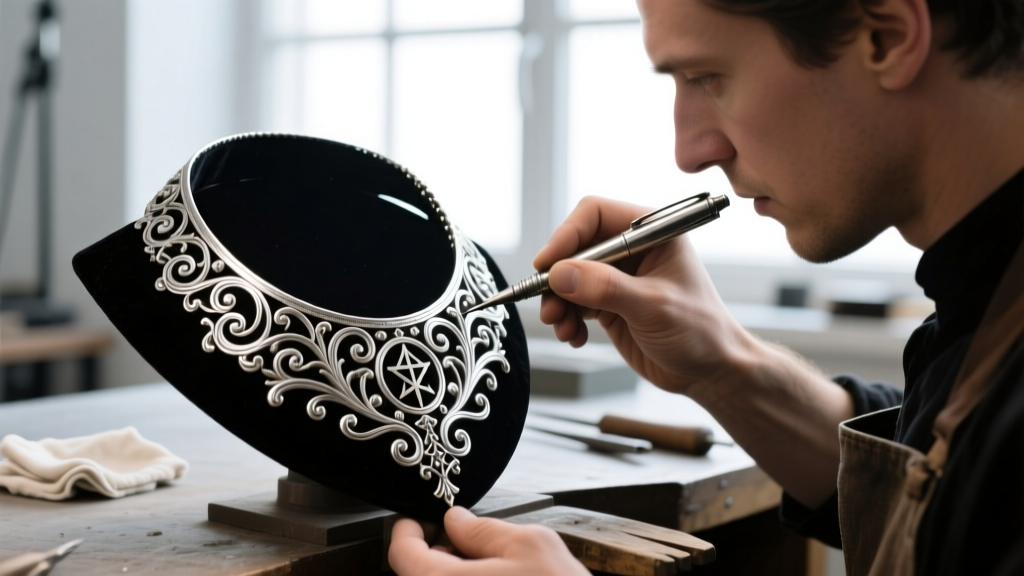
Instead, professional theatrical conservators utilize controlled electrolytic reduction. By submerging the necklace in a mild alkaline solution (such as sodium carbonate) and applying a low-voltage direct current, the tarnish is chemically converted back into pure silver without removing any base metal. For localized, heavy tarnish on intricate collars, silversmiths use specialized electrolytic cleaning pens, which allow for pinpoint reduction of silver sulfide without disturbing the surrounding patina or structural integrity.
Archival Storage and Rhodium Plating Lifespans
To achieve the blinding, diamond-like reflectivity required under modern 2026 LED stage arrays, many high-end showgirl silver necklaces are plated with rhodium, a platinum-group metal. However, rhodium plating is not permanent. On a standard ring, a 0.5-micron layer might last years. On a showgirl necklace subjected to the friction of heavy costumes, rapid temperature changes, and acidic sweat, even a thick 1.0-micron plating will wear through at the high-contact points (like the back of the neck and the clasp joints) within a single touring season.
When the necklace is not in use, archival storage is critical to preserving both the silver and the plating. The piece must be gently wiped with a microfiber cloth dampened with distilled water to remove all chloride and acid residues, then thoroughly dried. It should be laid completely flat in a tarnish-inhibiting Pacific cloth bag, interspersed with silica gel desiccant packets to control ambient humidity. Hanging a 300-gram showgirl necklace on a standard jewelry stand for long-term storage will cause gravity-induced creep, slowly elongating the links and warping the structural symmetry of the collar over time.
Ultimately, the life of a showgirl silver necklace is a testament to the intersection of heavy metallurgy and performance art. By respecting the material limits, utilizing advanced alloys like Argentium, engineering for dynamic load, and adhering to strict chemical conservation protocols, these spectacular pieces can survive decades of center-stage brilliance.


