Lessons From Mathilde From The Necklace: 2026 Pendant Trends
Explore the Mathilde from the necklace effect and how material literacy, lab-grown diamonds, and demi-fine pendants are reshaping 2026 jewelry trends.

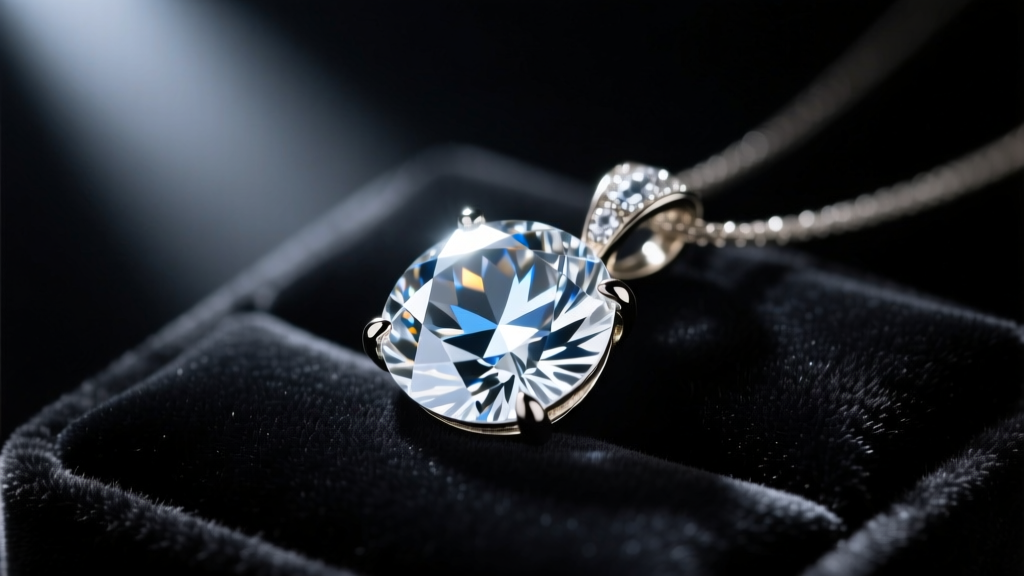
In Guy de Maupassant’s iconic 1884 short story, the tragic tale of Mathilde from the necklace serves as literature's most devastating cautionary tale about vanity, debt, and the perilous assumption of material value. Mathilde Loisel borrows what she believes to be a priceless diamond necklace, loses it, and spends ten grueling years in poverty to replace it with a real diamond piece costing 36,000 francs. The devastating twist? The original borrowed piece was merely paste—a high-end glass simulant worth a fraction of the cost. Today, as we navigate the complex landscape of 2026 jewelry trends, the Mathilde from the necklace phenomenon is more relevant than ever. It represents the ultimate lesson in material literacy, authenticity, and the shifting definitions of luxury in the modern pendant market.
The Literary Catalyst: Why Mathilde Matters in 2026
When we analyze the Mathilde from the necklace effect through a modern gemological lens, it highlights a critical failure in consumer education. Mathilde’s tragedy was not just her vanity; it was her inability to distinguish between a mined diamond and a leaded glass simulant (paste). In the late 19th century, paste jewelry was incredibly convincing to the untrained eye, designed to mimic the fire and brilliance of natural stones under candlelight. Fast forward to 2026, and the market is flooded with advanced simulants and synthetics—Cubic Zirconia (CZ), moissanite, and lab-grown diamonds (LGDs)—that can easily fool even seasoned jewelry enthusiasts if proper diagnostic tools are not used.
The modern consumer is no longer driven by the need to deceive society with hidden fakes, nor do they wish to be deceived. The 2026 pendant trend is defined by transparent luxury and intentional materiality. Buyers are actively rejecting the social pressures that doomed Mathilde, opting instead for pieces that offer verifiable quality, ethical sourcing, and transparent pricing.
The 36,000-Franc Mistake: A Modern Material Breakdown
To understand the magnitude of Mathilde’s error, we must adjust for inflation. The 36,000 francs she paid for the replacement diamond necklace in 1884 is equivalent to roughly $150,000 to $200,000 in today’s currency. That is the price of a high-clarity, multi-carat mined diamond pendant. However, what Mathilde from the necklace failed to realize is that the visual signature of a stone does not always correlate with its geological origin or its market price.
Below is a comparative breakdown of the materials that define the 2026 pendant market, illustrating how far we have come from the simple glass paste of the 1880s.
| Material | Refractive Index (RI) | Mohs Hardness | 2026 Avg Price (1ct Pendant) | Visual Signature |
|---|---|---|---|---|
| Paste Glass (Historical) | 1.50 - 1.70 | 5.0 - 6.0 | $20 - $50 | Dull luster, high scratch susceptibility, lacks deep fire. |
| Cubic Zirconia (CZ) | 2.15 | 8.0 - 8.5 | $30 - $120 | Excessive rainbow dispersion, glassy luster, soft facet edges over time. |
| Moissanite | 2.65 | 9.25 | $300 - $800 | Intense double refraction, fiery disco-ball effect, extremely durable. |
| Lab-Grown Diamond | 2.42 | 10.0 | $600 - $1,800 | Identical to mined; sharp facet junctions, crisp scintillation. |
| Mined Diamond | 2.42 | 10.0 | $3,500 - $8,000+ | Identical to lab; premium attached to geological rarity. |
According to the Gemological Institute of America (GIA), lab-grown diamonds possess the exact same chemical, physical, and optical properties as their mined counterparts. The only difference is their origin. This technological leap has completely disrupted the pendant market, allowing consumers to purchase a 2-carat, VS1 clarity solitaire pendant for under $2,000—a far cry from the financial ruin experienced in Maupassant’s tale.
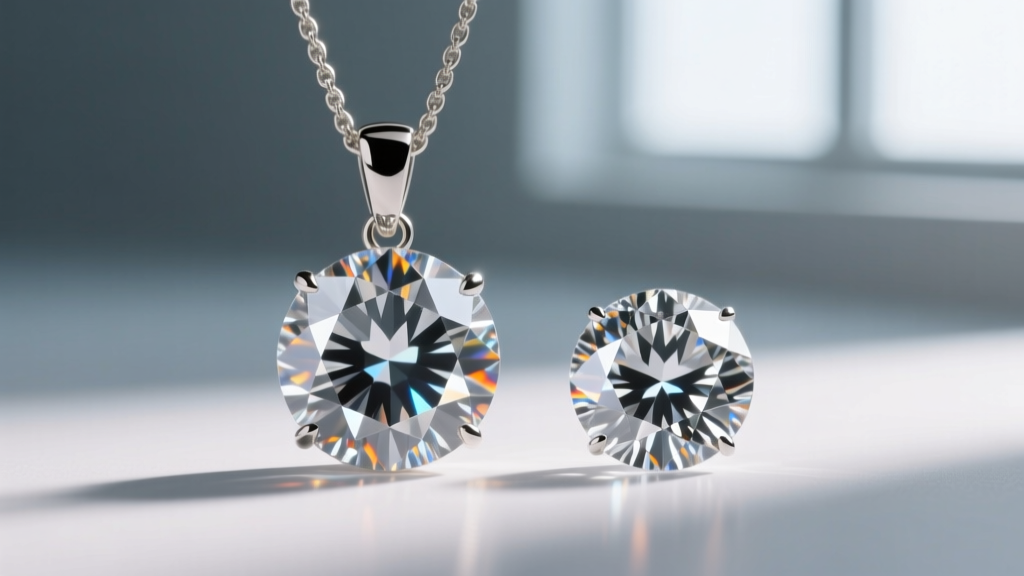
The 2026 Trend: Honest Luxury and Intentional Materiality
If Mathilde lived in 2026, her social anxiety regarding the perception of her wealth would likely be alleviated by the current cultural shift toward honest luxury. The stigma once associated with non-mined stones has entirely evaporated. Driven by Gen Z and Millennial buyers, the market now celebrates the origin story of a stone rather than hiding it. Wearing a lab-grown diamond pendant is no longer viewed as a compromise; it is a statement of environmental consciousness and financial pragmatism.
This shift has given rise to the Demi-Fine Dominance in the pendant category. Consumers are pairing high-quality lab-grown diamonds and moissanite with solid 10k and 14k gold chains, moving away from the traditional platinum settings reserved exclusively for mined stones. A 14k solid gold chain paired with a 1-carat lab-grown diamond pendant offers the perfect intersection of durability, luxury, and accessible pricing, typically retailing between $800 and $1,200.
The Psychology of the Pendant: Status vs. Self-Expression
The Bain & Company Global Diamond Report highlights a massive pivot in consumer psychology: jewelry is increasingly purchased for self-expression rather than pure status signaling. Mathilde’s desire to wear a diamond was entirely rooted in status and societal validation. Today, pendant trends favor personalized, meaningful designs—such as geometric lockets, birthstone-integrated pendants, and custom-engraved bar necklaces—where the material value is secondary to the emotional resonance of the piece.
How to Avoid Mathilde’s Fate: A Buyer’s Authenticity Framework
While we no longer rely on glass paste, the secondary and vintage jewelry markets are rife with misrepresented stones. To ensure you are paying the correct price for the exact material you are purchasing, modern buyers must employ a strict authentication framework. Here is how you protect yourself from a modern-day 36,000-franc mistake:
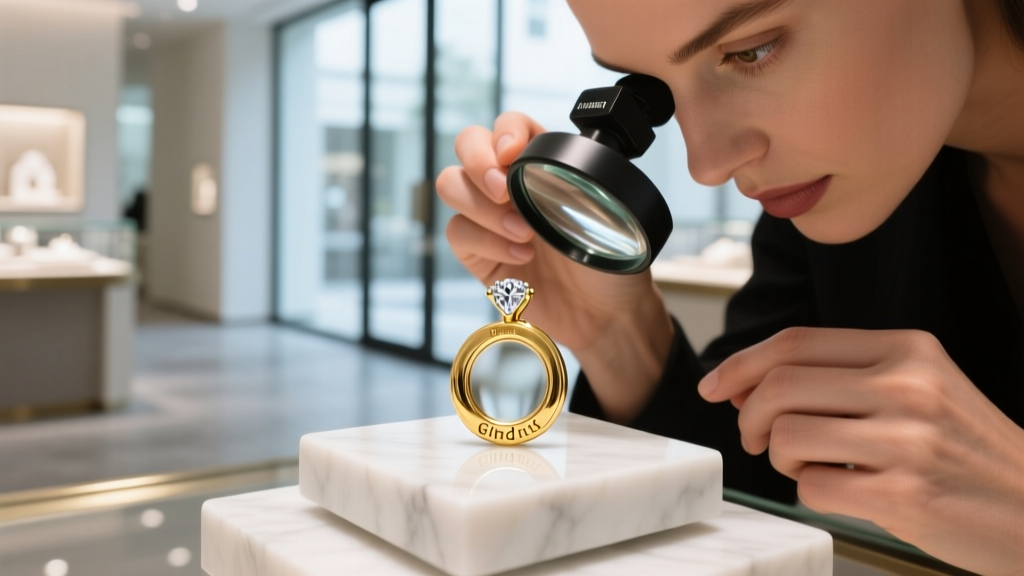
- The Girdle Inscription Check: Almost all certified lab-grown diamonds and moissanite stones over 0.15 carats are laser-inscribed on the girdle. Using a standard 10x jeweler’s loupe, inspect the edge of the stone. If you see an inscription reading 'LG' or 'Moissanite,' you have immediate proof of origin.
- Thermal Conductivity Testing: CZ and glass are thermal insulators, while diamonds (both mined and lab) are exceptional thermal conductors. A basic diamond tester will instantly separate a diamond pendant from a CZ simulant. However, because moissanite is also a thermal conductor, you must use a multi-tester that checks electrical conductivity to separate moissanite from diamond.
- The Fog Test: If you lack professional tools, breathe heavily onto the stone. A real diamond will disperse the heat and moisture instantly, clearing up in less than a second. CZ and glass will hold the fog for several seconds due to their lower thermal conductivity.
- Demand the Certification: Never purchase a high-value pendant without a grading report from a reputable lab like GIA or IGI. The report number should match the laser inscription on the stone.
Redefining Value in the Pendant Market
The enduring legacy of the Mathilde from the necklace narrative is its stark warning against the conflation of perceived value and intrinsic reality. In 2026, the jewelry industry has finally democratized access to brilliance. Whether you are investing in a rare, vintage mined diamond locket or selecting a flawless, lab-created moissanite choker pendant, the key to modern luxury is material literacy.
By understanding the exact refractive indices, hardness scales, and market pricing of the stones we wear, we strip away the anxiety of deception. We no longer need to borrow our confidence, nor do we need to risk financial ruin to prove our worth. True style in the modern era is rooted in transparency, intentionality, and the quiet confidence of knowing exactly what rests against your skin.


