Light Pink Necklace Guide: Gemstone Grades & Settings
Discover the technical differences between morganite, pink sapphire, and kunzite for your light pink necklace. Expert gemological grading and setting advice.

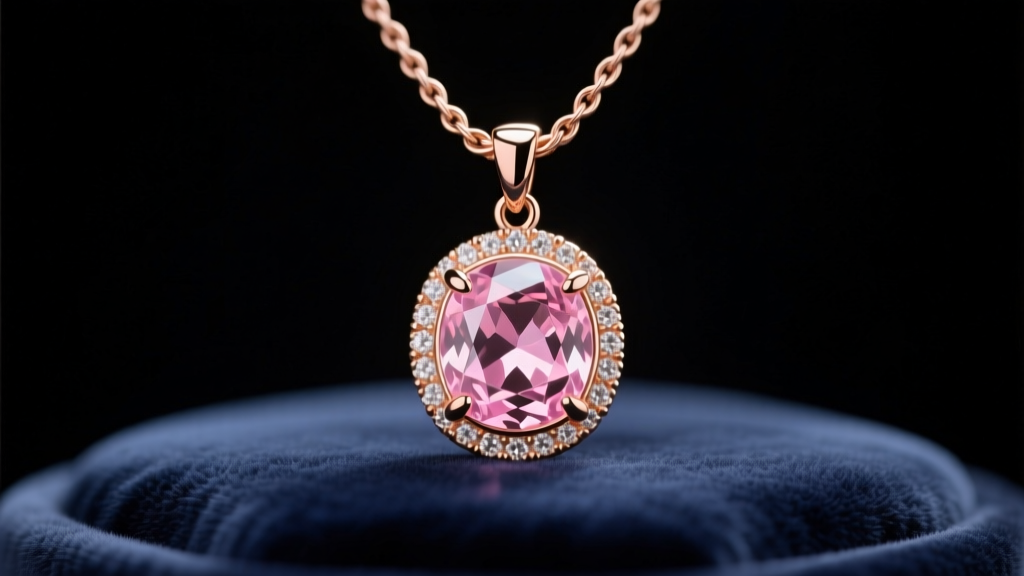
The allure of a light pink necklace transcends seasonal jewelry trends, anchoring itself as a sophisticated staple in modern gemological collections. However, the term 'light pink' encompasses a vast and technically diverse spectrum of minerals, each with distinct crystallographic properties, durability metrics, and optical behaviors. For the discerning collector or the meticulous jeweler, selecting the right stone for a pendant requires moving beyond superficial color matching and understanding the underlying lattice structures, treatment histories, and setting vulnerabilities of these gemstones.
The Gemological Spectrum of Light Pink Stones
When sourcing a light pink necklace, the market is primarily dominated by four distinct mineral families. The color in these stones is driven by specific trace elements and structural anomalies within their crystal lattices. Morganite derives its hue from manganese (Mn2+ and Mn3+) ions substituting for aluminum in the beryl lattice. Pink sapphire, a variety of corundum, relies on chromium (Cr3+) traces, where lower saturation yields the coveted light pink rather than deep magenta. Kunzite, the pink variety of spodumene, also owes its color to manganese, but exhibits extreme pleochroism. Finally, pink spinel achieves its color through a combination of chromium and iron, offering single-refractive optical clarity that rivals sapphire.
| Mineral Variety | Mohs Hardness | Cleavage / Tenacity | Refractive Index (RI) | Standard Treatments |
|---|---|---|---|---|
| Morganite (Beryl) | 7.5 - 8.0 | Indistinct / Brittle | 1.577 - 1.583 | Heat (400°C to remove yellow tones) |
| Pink Sapphire (Corundum) | 9.0 | None / Parting | 1.762 - 1.770 | Heat, Beryllium Lattice Diffusion |
| Kunzite (Spodumene) | 6.5 - 7.0 | Perfect in 2 directions | 1.660 - 1.676 | Irradiation, Heat (unstable) |
| Pink Spinel | 8.0 | None / Conchoidal | 1.718 | Generally Unheated / Untreated |
Morganite vs. Pink Sapphire: Durability Metrics
A common misconception in jewelry design is treating the Mohs scale as linear. The jump from Morganite (7.5) to Pink Sapphire (9) does not represent a 20% increase in scratch resistance; it represents an exponential leap in absolute hardness. Corundum is roughly four times harder than beryl in terms of abrasive wear resistance. For a light pink necklace worn daily, this distinction is critical. Morganite pendants are highly susceptible to micro-abrasions along the facet junctions over years of wear, leading to a 'fuzzy' appearance that requires professional repolishing.
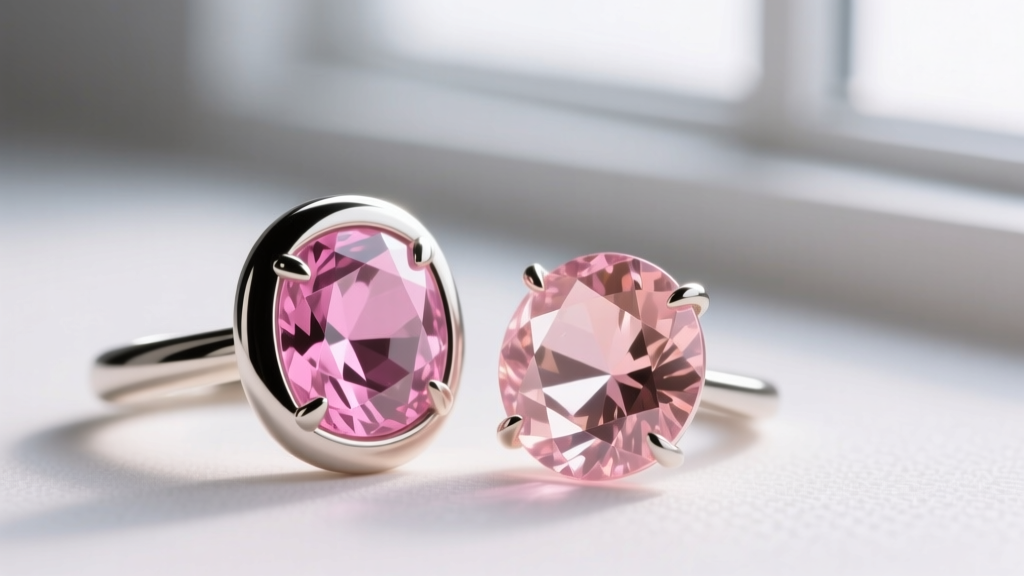
Furthermore, tensile strength and chipping risk must be evaluated. While sapphire lacks true cleavage, it does exhibit 'parting' along the rhombohedral planes, meaning a sharp impact directly to the girdle can still cause a fracture. Morganite, despite its indistinct cleavage, is notoriously brittle. Cutters often leave a thicker girdle on morganite to mitigate this, which can negatively impact the stone's light return if the pavilion depth is not mathematically optimized to compensate for the added weight.
The Beryllium Diffusion Factor in Corundum
When evaluating light pink sapphires, gemological disclosure is paramount. The introduction of beryllium lattice diffusion in the early 2000s revolutionized the corundum market. By introducing beryllium into the crystal lattice during high-temperature heat treatment, gem treaters can artificially induce or enhance pink and orange hues (creating padparadscha-like stones). A light pink necklace featuring sapphire must be accompanied by a report from a tier-one laboratory like the Gemological Institute of America (GIA) or AGL, explicitly stating whether beryllium diffusion is present, as this treatment drastically alters the stone's market valuation and long-term stability profile.
Chain Engineering: Gauge, Alloys, and Clasp Mechanics
The chain supporting a light pink pendant is not merely a delivery mechanism; it is an integrated metallurgical component that affects both the aesthetic harmony and the structural integrity of the piece. The hue of 'rose' or 'pink' gold is achieved by alloying pure yellow gold with copper and silver.
- 14k Rose Gold (58.5% Au, ~22.25% Cu, ~19.25% Ag): The higher copper content yields a more saturated, distinct pink/red hue. Metallurgically, the increased copper also raises the tensile strength and yield point of the alloy, making 14k chains more resistant to stretching and link deformation over time.
- 18k Rose Gold (75% Au, ~22.5% Cu, ~2.5% Ag): With less silver to temper the copper, and a higher gold base, 18k rose gold actually appears softer, more peach-toned, and less distinctly 'pink'. It is also a softer alloy, making it less ideal for heavy morganite pendants.
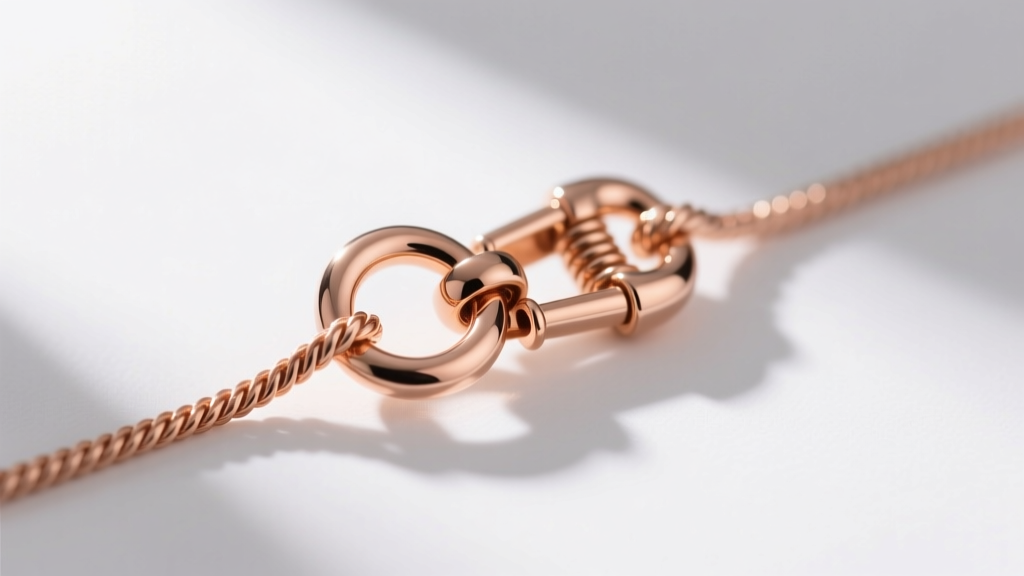
For pendants weighing between 3 and 8 carats, a chain gauge of 1.0mm to 1.2mm in a rope or cable link pattern is optimal. The clasp mechanics should feature a lobster claw with an internally reinforced spring and a fully soldered jump ring. Open jump rings, even when tightly closed by hand, will eventually pull apart under the pendulum-like kinetic stress of a necklace swinging during daily movement.
Prong vs. Bezel: Securing Pleochroic and Fragile Stones
Setting a light pink gemstone requires adapting the metalwork to the specific cleavage planes and optical axes of the mineral. Kunzite is perhaps the most technically demanding stone in this color category. According to mineralogical data from Mindat.org, spodumene possesses perfect cleavage in two directions. This means that standard four-prong settings exert localized pressure that can easily cleave the stone in half during the setting process or upon impact.
Expert Setter's Directive: Never use standard V-prongs on the sharp corners of an emerald-cut kunzite. The stone must be secured using a full bezel or a specialized semi-bezel setting that distributes pressure evenly along the girdle, avoiding point-stress on the cleavage planes entirely.
Conversely, pink spinel and sapphire are isotropic (single refractive) and lack cleavage, allowing for delicate, minimalist prong settings that maximize light entry from the crown. Morganite, which is highly included with liquid-filled fissures, requires the setter to avoid placing prongs directly over internal tension points, which could cause the stone to shatter under the pressure of the pusher tool.
Sourcing and Certification Standards
Procuring a high-caliber light pink necklace demands rigorous documentation. For pink sapphires and spinels, origin determination can significantly impact value, with Burmese and Sri Lankan stones commanding premiums. However, for morganite, origin is less critical than color saturation and clarity grading. Always ensure that the pendant's center stone is accompanied by a grading report that details not just the identity of the stone, but the exact nature of any thermal or irradiation treatments applied. By prioritizing gemological data over mere visual appeal, you ensure that your light pink necklace remains a structurally sound and optically brilliant heirloom for decades to come.


