How to Choose and Style the Perfect Men's Sword Necklace
Discover how to choose, style, and care for a men's sword necklace. Learn about metals, chain pairings, and lengths for the perfect everyday look.


The Enduring Appeal of the Men's Sword Necklace
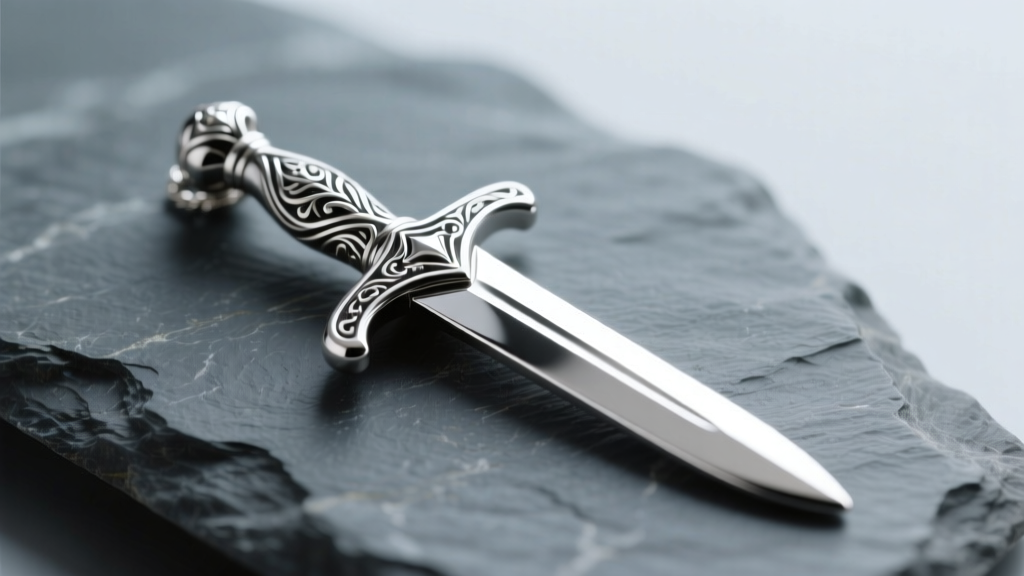
Historically, swords were not merely weapons; they were profound symbols of knighthood, honor, protection, and authority. According to the Metropolitan Museum of Art, the sword has held a unique ceremonial and spiritual significance across nearly every major civilization, from the Roman gladius to the Japanese katana. Today, the men's sword necklace translates this rich heritage into a versatile, modern accessory. Whether you are drawn to the minimalist geometry of a concealed blade or the ornate detailing of a medieval broadsword pendant, choosing the right piece requires an understanding of materials, proportions, and chain mechanics.
This beginner-friendly guide will walk you through the exact specifications you need to know to select a sword necklace that fits your lifestyle, budget, and personal aesthetic.
Decoding Blade Orientation and Symbolism
Before selecting a metal, consider the direction the blade points when worn. This is a subtle detail that carries distinct symbolic weight in jewelry design:
- Point Up (Ascending): Represents active protection, courage, spiritual ascent, and readiness. It is the most common orientation for men's sword pendants, aligning with the traditional way a sword is drawn from a scabbard.
- Point Down (Descending): Symbolizes grounding, peace, the end of a conflict, and the release of energy. A downward-pointing sword is often chosen by those who view the pendant as a talisman for inner calm rather than outward strength.
Material Grades: Which Metal Suits Your Lifestyle?
The metal of your sword pendant dictates its weight, durability, maintenance requirements, and price. According to the Federal Trade Commission's Jewelry Guides, understanding metal hallmarks and grades is essential to avoid purchasing low-quality alloys that may cause skin irritation or tarnish rapidly.
| Metal Grade | Price Range | Durability & Weight | Maintenance Level |
|---|---|---|---|
| 316L Surgical Steel | $20 - $50 | Heavy, highly scratch-resistant, hypoallergenic | Low (Soap and water) |
| 925 Sterling Silver | $60 - $150 | Medium weight, softer (prone to dents), classic luster | High (Requires regular polishing) |
| Grade 5 Titanium | $80 - $200 | Ultra-lightweight, virtually indestructible, matte finish | Very Low (Wipe clean) |
| Solid Bronze/Brass | $30 - $70 | Heavy, develops a natural dark patina over time | Medium (Can oxidize skin) |
Expert Recommendation: If you want a piece you can wear in the shower, at the gym, and in the ocean without worrying about rust or tarnish, 316L Surgical Steel or Grade 5 Titanium are your best options. Reserve 925 Sterling Silver for smart-casual or formal occasions where a high-polish luster is desired.
Chain Pairings and Clasp Mechanics
A sword pendant is only as good as the chain that holds it. Because sword pendants often feature intricate hilts, crossguards, or elongated blades, the chain must complement the geometry without snagging. As noted in Kay Jewelers' chain education guide, the link structure drastically alters the drape and strength of the necklace.
Best Chain Styles for Sword Pendants
- Box Chain (2mm - 4mm): Features square, geometric links that mirror the structured lines of a sword blade. It is highly durable and slides smoothly through pendant bails.
- Rope Chain (3mm - 5mm): Twisted links create a textured, vintage aesthetic that pairs beautifully with ornate, historical sword replicas (like claymores or rapiers).
- Curb Chain (4mm+): Flat, interlocking links that lay flush against the chest. Best for heavy, oversized broadsword pendants that require maximum tensile support.
Don't Ignore the Clasp
Heavy metal sword pendants will easily snap a standard spring-ring clasp. Always ensure your chain is equipped with a lobster clasp (preferably 10mm or larger) or a toggle clasp for chains thicker than 4mm. If the pendant weighs more than 15 grams, consider a chain with a soldered jump ring at the clasp connection point to prevent accidental unhooking.
Sizing and Proportions: Finding the Right Drop
The length of the chain and the size of the sword pendant must be balanced. A massive 3-inch broadsword on a tight 18-inch chain will look disproportionate and feel choking, while a tiny 1-inch dagger on a 30-inch chain will get lost in your shirt.
The Men's Length Matrix
- 20 Inches (Collarbone): Ideal for minimalist 'dagger' or 'stiletto' pendants under 1.5 inches in length. Sits just above the crewneck line of a t-shirt.
- 22 Inches (Mid-Chest): The universal sweet spot for men's sword necklaces. Accommodates standard 2-inch to 2.5-inch sword pendants perfectly, allowing them to rest on the upper chest without interfering with collarbones.
- 24 Inches (Sternum): Reserved for heavy, oversized statement pieces (3+ inches) or layering over thick garments like flannels and knitwear.
Styling Your Sword Necklace
Integrating a sword necklace into your daily wardrobe requires an understanding of contrast and layering.
Style Rule: Let the sword be the focal point. If your pendant features heavy detailing or gemstone accents on the hilt, keep the rest of your jewelry minimal. A simple leather band watch or a plain signet ring is all you need.
Casual Streetwear: Pair a matte black titanium sword pendant on a 22-inch box chain with a heavyweight cotton t-shirt and a denim jacket. The dark metal contrasts sharply with lighter fabrics.
Smart Casual: Opt for a polished 925 sterling silver rapier or foil pendant on a thinner 2mm rope chain. Wear it unbuttoned at the collar of a crisp Oxford shirt. The silver adds a refined, subtle edge to office-appropriate attire.
Advanced Layering: To layer a sword necklace, use the 'Rule of Three'. Start with a 18-inch simple bead chain (like black onyx), add your 22-inch sword necklace as the centerpiece, and finish with a 24-inch plain silver curb chain to frame the look.

Maintenance: Keeping the Edge Sharp
Proper care ensures your pendant retains its detail and structural integrity over decades of wear.
- For Steel and Titanium: These metals are virtually maintenance-free. Simply wash them with warm water and mild dish soap once a month to remove body oils and environmental grime. Dry with a microfiber cloth.
- For Sterling Silver: Silver reacts with sulfur in the air and sweat, leading to tarnish. Store your silver sword necklace in an anti-tarnish ziplock bag when not in use. Polish it monthly using a dedicated jeweler's rouge cloth to restore the high-shine finish on the blade edge.
- For Bronze and Brass: These metals will develop a dark, oxidized patina. If you prefer the shiny, new look, you will need to polish them frequently with a brass-specific cleaner (like Brasso). If you prefer the rugged, ancient look, simply let them age naturally, but apply a thin coat of clear nail polish to the inside of the pendant bail to prevent green oxidation on your skin.
Final Thoughts
A men's sword necklace is more than just a piece of metal; it is a wearable artifact that projects confidence, resilience, and a respect for history. By carefully selecting the right metal grade for your lifestyle, matching it with a structurally sound chain, and adhering to proper proportional sizing, you can secure a pendant that serves as a lifelong signature piece in your wardrobe. Whether you choose the modern invincibility of Grade 5 Titanium or the timeless elegance of 925 Sterling Silver, your sword is ready to be drawn.


