Linked Heart Necklace Buying Guide: What to Look For
Discover what to look for in a linked heart necklace. Our expert buying guide covers metal grades, chain types, and how to avoid common flaws.

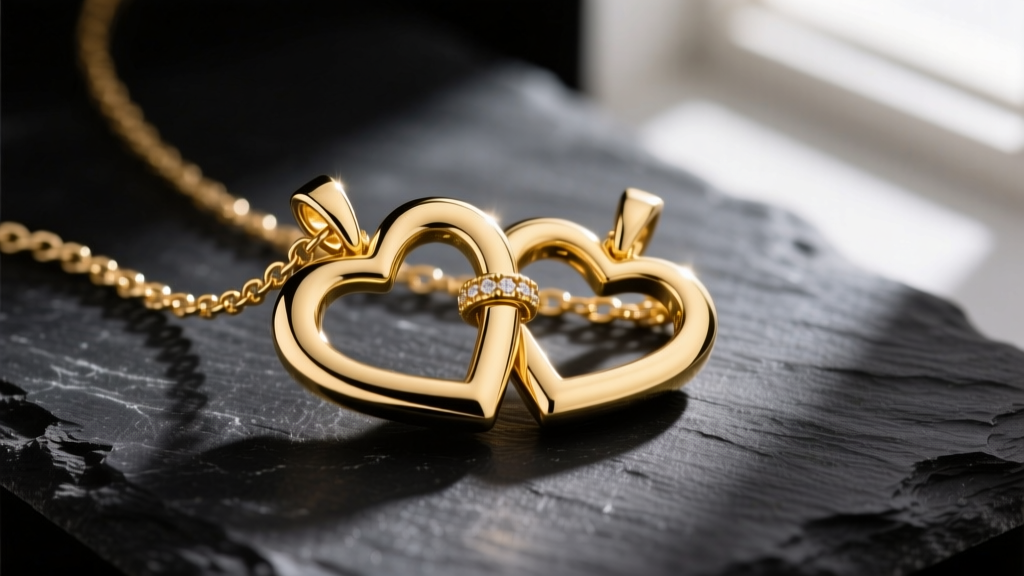
The linked heart necklace remains one of the most enduring symbols of connection, affection, and personal style. However, the jewelry market in 2026 is saturated with mass-produced, flimsy iterations that tangle, tarnish, and break within months of wear. As a staple piece meant for daily rotation, it requires a discerning eye to separate fine jewelry from disposable fashion accessories. Whether you are investing in solid 14k gold or seeking high-quality vermeil, understanding the structural integrity and material science behind a linked heart necklace is crucial. This comprehensive buying guide will walk you through the exact specifications, metal grades, and engineering details you need to evaluate before making a purchase, ensuring your investment stands the test of time.
The Engineering of Interlocking Hearts
When evaluating a linked heart necklace, the first point of inspection is the pendant's anatomy. There are two primary manufacturing methods for interlocking hearts: cast-as-one and multi-piece assembly.
Cast-as-One vs. Multi-Piece Assembly
Cheap manufacturers often use a 'cast-as-one' method, where the two hearts are molded together in a fixed position. While this prevents the hearts from separating, it results in a rigid, unnatural look that lacks the fluid movement of genuine interlocking pieces. Conversely, a high-quality linked heart necklace features multi-piece assembly. Each heart is cast or stamped individually, then manually looped through the other and carefully closed. This allows the hearts to lay flat against the collarbone and move independently. When inspecting a multi-piece pendant, check the seam where the second heart was closed. It should be virtually invisible, with no burrs, sharp edges, or visible soldering marks that could snag on delicate fabrics.
Material Grades and Metallurgical Durability
The longevity of your necklace is entirely dependent on its metallurgical composition. According to the Gemological Institute of America (GIA), understanding gold alloys and silver compositions is vital for predicting how a piece will react to skin chemistry and environmental factors over time.
| Metal Type | Composition | Tarnish Risk | Avg. Price Range (2026) |
|---|---|---|---|
| 925 Sterling Silver | 92.5% Silver, 7.5% Copper | High (Requires polishing) | $45 - $120 |
| 14k Solid Gold | 58.5% Gold, 41.5% Alloy | None (Ideal for daily wear) | $280 - $650 |
| 18k Solid Gold | 75% Gold, 25% Alloy | None (Prone to scratching) | $450 - $900 |
| Gold Vermeil | 925 Silver base, 2.5µm+ Gold | Low (If plating is thick) | $110 - $220 |
Expert Note on Vermeil: The Federal Trade Commission (FTC) Jewelry Guides mandate that for a piece to be legally sold as 'vermeil' in the United States, it must have a sterling silver base and a gold plating of at least 2.5 microns. Many fast-fashion brands sell 'gold plated' jewelry that is only 0.5 microns thick over a brass base, which will wear off in weeks. Always demand the micron thickness specification from the jeweler before purchasing a vermeil linked heart necklace.
Chain Selection and Clasp Mechanics
The pendant is only half the equation; the chain dictates the necklace's drape, durability, and resistance to tangling. Because interlocking hearts have multiple loops and curves, they are highly susceptible to catching on chain links.
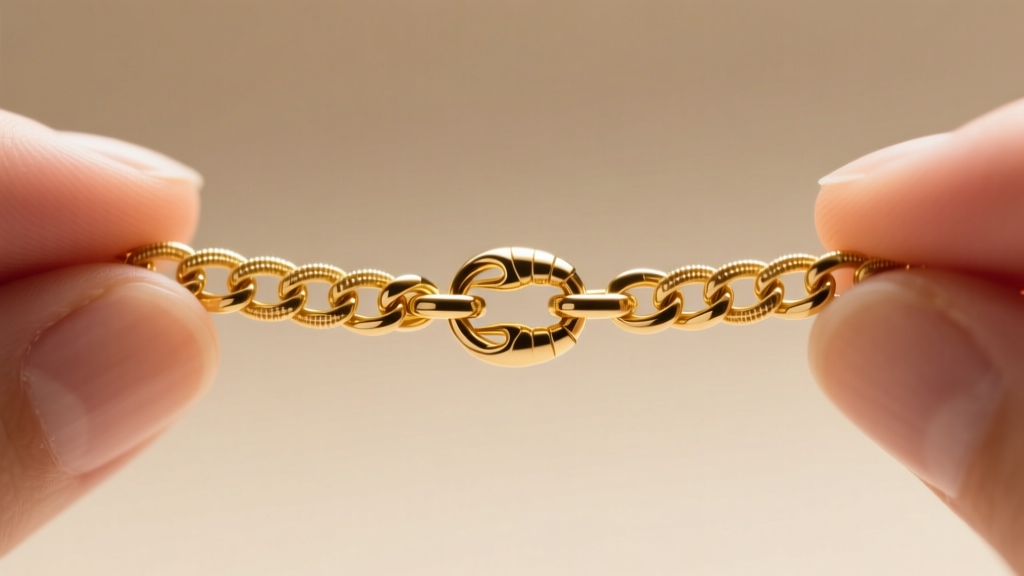
Optimal Chain Styles
- Box Chains (0.9mm - 1.2mm): The undisputed champion for interlocking pendants. The smooth, flat geometric links prevent the heart loops from catching, and the structural integrity of a 1.2mm box chain can easily support a 5-gram pendant without stretching.
- Cable Chains: A classic choice, but you must ensure the links are soldered shut. Unsoldered cable links will pull apart under the dynamic weight of a swinging pendant.
- Chains to Avoid: Rope chains and herringbone chains. The intricate grooves in rope chains act like velcro to the loops of a linked heart pendant, causing endless frustration and potential damage to the gold plating.
Clasp Hardware
Never accept a spring ring clasp on a fine jewelry piece. Spring rings rely on a tiny internal coil spring that frequently fails, and the small loop is difficult to manipulate. Insist on a lobster claw clasp. A high-quality lobster clasp features a forged lever mechanism that provides a secure, satisfying snap and offers a larger surface area for attaching the jump ring, significantly reducing the risk of accidental loss.
Common Failure Points and Quality Control
Even the most beautiful linked heart necklace is useless if it breaks. During our quality control assessments, we look for three specific failure modes that plague poorly manufactured necklaces:
- The Pendant Jump Ring: The jump ring connecting the interlocking hearts to the chain is the highest stress point on the entire necklace. If this jump ring is merely pushed shut with pliers, the gap will eventually pull apart. Solution: Ensure the jump ring is soldered shut or features a flush-cut, interlocking closure.
- Pendant Separation: In multi-piece hearts, the loop of the secondary heart can warp over time if the metal gauge is too thin. If the metal is under 1mm thick, the hearts will eventually slip out of each other. Look for a solid, three-dimensional feel rather than hollow, stamped sheet metal.
- Clasp Tangling: If the chain is too lightweight relative to the clasp, the necklace will constantly flip around, leaving the clasp resting at the front of your neck. A proper counterweight balance between the pendant, chain, and clasp is a hallmark of premium jewelry design.
Proportions, Sizing, and Layering Dynamics
The visual impact of a linked heart necklace relies heavily on its scale and how it interacts with your neckline. The current trend in 2026 leans toward delicate, micro-pendants for everyday wear, while larger, chunkier hearts are reserved for statement layering.

Dimensional Sweet Spots
For a pendant meant to be worn daily, the ideal heart width is between 12mm and 15mm. Anything smaller loses the interlocking detail, while anything larger than 20mm begins to look like costume jewelry and adds unnecessary weight that pulls on the cervical spine over a 12-hour wear period.
Length and Layering
A 16-inch chain with a 2-inch extender is the industry standard, allowing the pendant to sit perfectly in the suprasternal notch (the hollow of the throat). If you plan to layer your linked heart necklace, pair it with a 14-inch pearl choker or a 20-inch heavy paperclip chain. Ensure there is at least a 3-inch length differential between layered necklaces to prevent the metal clasps from grinding against each other and causing premature wear.
2026 Pricing Benchmarks and Brand Valuations
Understanding what you should actually pay prevents you from overpaying for brand names or underpaying for suspicious quality. Here is a realistic breakdown of what a high-quality linked heart necklace should cost based on current precious metal markets:
- Entry-Level Fine (925 Silver): $50 - $90. You should expect a polished finish, a sturdy box chain, and anti-tarnish rhodium plating.
- Mid-Tier (Vermeil / Gold Filled): $120 - $180. Look for brands that explicitly state a 3-micron gold plating thickness over a solid silver base.
- Investment Grade (14k Solid Gold): $350 - $600. At this price point, the gold weight should be clearly listed (typically between 2.5g and 4.5g total weight). You are paying for the intrinsic value of the gold and the artisan craftsmanship of the interlocking assembly.
By focusing on metallurgical transparency, structural engineering, and precise proportions, you can confidently select a linked heart necklace that is not only deeply meaningful but built to last a lifetime of daily wear.


