Long Black Bead Necklace Value Guide: Onyx vs. Glass
Discover the true value of a long black bead necklace. Compare onyx, spinel, and glass pricing, stringing costs, and authentication tips.

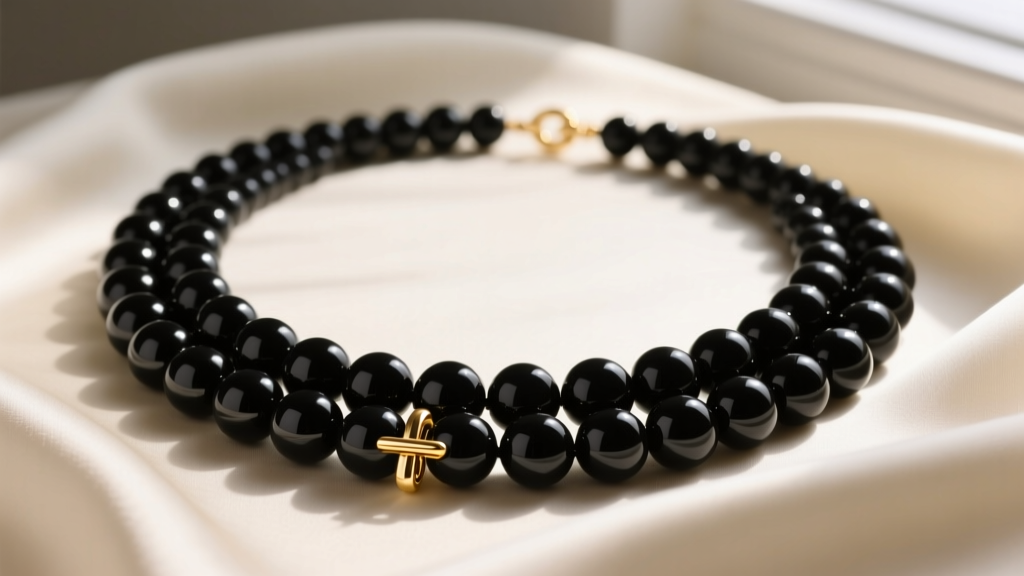
The Anatomy of Value in Long Black Bead Necklaces
The long black bead necklace is an undisputed staple of versatile jewelry design. Whether styled as a 30-inch opera-length strand or a 45-inch rope that can be doubled, its aesthetic appeal is timeless. However, the modern market is saturated with extreme price variances that confuse even seasoned collectors. You can find a long black bead necklace priced at $18 on a fast-fashion marketplace, while a seemingly identical piece at a boutique might command $350. As a buyer in 2026, understanding where your money actually goes is critical. The discrepancy rarely lies in the visual design; instead, it is hidden in the mineralogical composition of the beads, the structural integrity of the stringing material, and the metallurgical grade of the hardware. This guide deconstructs the true value of black bead necklaces, helping you distinguish between genuine gemological investments and overpriced costume jewelry.
The Material Hierarchy: Gemstones vs. Imitations
To accurately assess the budget and value of any black beaded strand, you must first identify the base material. The market generally divides these necklaces into three distinct tiers, each with vastly different durability profiles and value retention rates.
Tier 1: Genuine Onyx and Black Spinel (The Investment Tier)
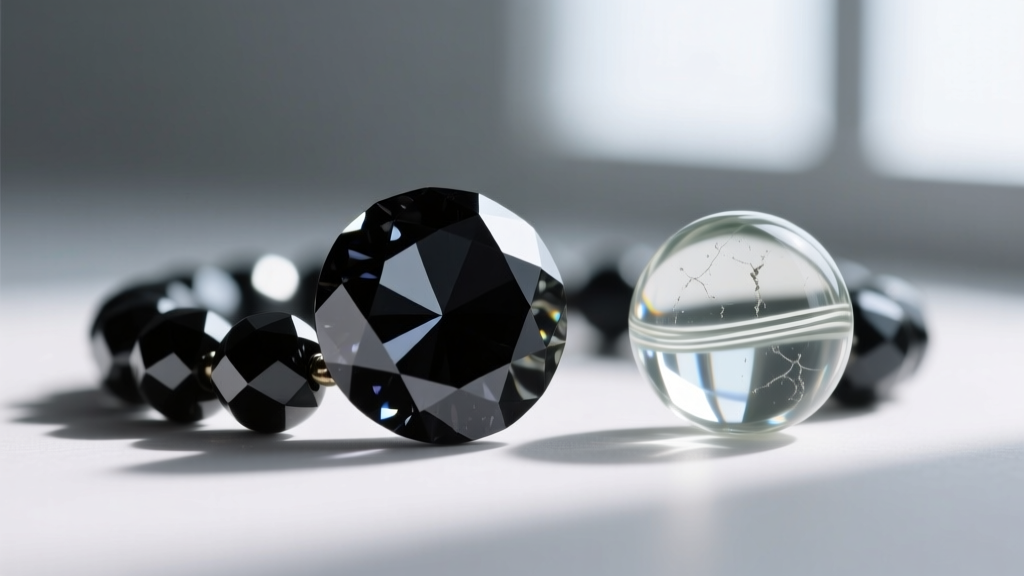
Black onyx (a banded chalcedony) and black spinel are the premier materials for high-end black bead necklaces. According to the Gemological Institute of America (GIA), natural black onyx is incredibly rare; most commercial onyx is actually gray agate that has been permanently treated with a sugar and sulfuric acid solution to achieve a deep, uniform black. This treatment is universally accepted in the gem trade and does not diminish the stone's structural integrity. Onyx ranks at a 7 on the Mohs hardness scale, making it highly resistant to scratching. Black spinel, ranking at an 8, offers a higher refractive index, resulting in a sharper, more glass-like luster when faceted. A long strand of genuine 8mm spinel or onyx beads carries substantial weight (often exceeding 200 grams for a 32-inch strand) and retains its polish for decades.
Tier 2: Obsidian, Jet, and Hematite (The Organic & Volcanic Tier)
Obsidian (volcanic glass) and Jet (fossilized wood) are historically significant materials. Jet is exceptionally lightweight and warm to the touch, but it ranks a mere 2.5 to 4 on the Mohs scale, meaning it will scratch and dent if knocked against a table. Obsidian, while beautiful, is prone to conchoidal fracturing—meaning a dropped necklace can result in severely chipped beads. Hematite, an iron oxide mineral, is heavy and features a metallic luster, but it can be brittle and is susceptible to rusting if exposed to moisture over time.
Tier 3: Dyed Glass, Howlite, and Plastic (The Fast Fashion Tier)
The vast majority of budget-friendly black bead necklaces are manufactured from molded glass or dyed howlite. Glass beads are often mass-produced in molds, leaving a visible seam line along the equator of the bead. Dyed howlite (a naturally white, porous mineral) is submerged in black chemical dyes. Over time, exposure to skin oils, perfumes, and UV light will cause the dye to bleed or fade, revealing a sickly grayish-blue undertone. These materials possess near-zero resale value and represent a sunk cost rather than an investment.
2026 Pricing Matrix: What Should You Actually Pay?
When evaluating a long black bead necklace (specifically a standard 30-inch opera length featuring 8mm round beads), use the following matrix to determine if the asking price aligns with the material reality. Prices reflect the current market for well-crafted, securely strung pieces.
| Material | Mohs Hardness | Avg. Weight (30") | Fair Market Price Range | Value Retention |
|---|---|---|---|---|
| Molded Glass / Plastic | 5.5 / N/A | 120g - 140g | $15 - $40 | None (Costume) |
| Dyed Howlite | 3.5 | 150g - 170g | $25 - $60 | Low (Fades) |
| Obsidian / Hematite | 5.0 - 6.5 | 180g - 210g | $60 - $120 | Moderate |
| Treated Black Onyx | 7.0 | 200g - 230g | $110 - $250 | High |
| Natural Black Spinel | 8.0 | 210g - 240g | $280 - $600+ | Very High |
The Hidden Value Destroyers: Stringing and Hardware
A common mistake buyers make is assessing only the beads while ignoring the infrastructure holding them together. The failure rate of budget necklaces is overwhelmingly tied to poor stringing and cheap clasps. If you are paying over $100 for a long black bead necklace, you must demand high-tier construction.
Stringing Materials and Failure Modes
Cheap necklaces are strung on elastic cords or thin, single-strand nylon. Elastic degrades rapidly when exposed to the oils in human skin, becoming brittle and snapping without warning. Nylon stretches under the heavy weight of 8mm stone beads, leading to unsightly gaps between the beads over time. A high-value necklace will be strung on either 49-strand stainless steel micro-wire (such as Beadalon .018-inch) for unknotted designs, or individually knotted using Griffin 100% natural silk cord (size #3 or #4 for 8mm beads). French knotting or Japanese silk knotting ensures that if the strand breaks, you only lose a single bead rather than the entire necklace.
Clasp Metallurgy
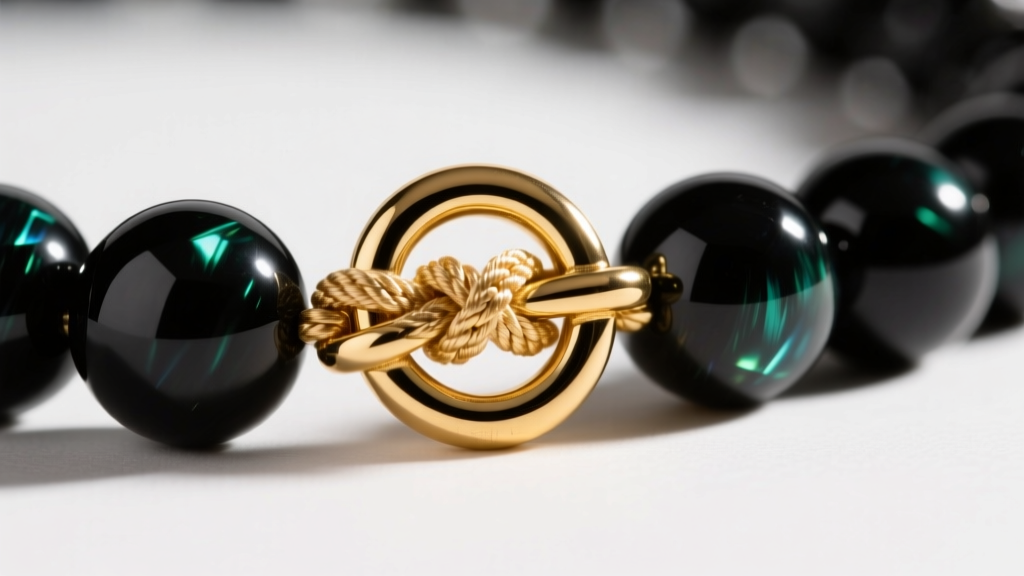
The clasp is the primary stress point of an opera-length necklace. Budget pieces utilize hollow, plated brass lobster clasps that easily bend open under the 200+ gram weight of a stone strand, leading to loss. For genuine gemstone strands, look for solid 14k gold-filled or sterling silver toggle clasps, or heavy-duty magnetic clasps with neodymium cores encased in solid metal. Gold-filled hardware contains a thick outer layer of karat gold mechanically bonded to a brass core, offering decades of wear without flaking, unlike vermeil or gold-plated alternatives which will quickly expose the base metal beneath.
Field Testing: How to Authenticate Without a Lab
When shopping in person or evaluating a vintage estate piece, you can perform several non-destructive tests to verify the value of a black bead necklace.
- The Thermal Conductivity Test: Genuine gemstones (onyx, spinel, obsidian) possess high thermal conductivity. When pressed against your cheek or the inside of your wrist, they will feel distinctly cold and take several seconds to warm to your body temperature. Glass and plastic will feel room temperature or warm up almost instantly.
- The Loupe Inspection: Use a 10x jeweler's loupe to examine the drill holes. In dyed howlite or dyed agate, you will often see a concentration of dark dye pooling in the microscopic fractures near the drill hole. Genuine, uniformly black spinel will show clean, sharp drill holes with no color bleeding.
- The Weight and Sound Test: Gently tap two beads together. Glass emits a high-pitched, sharp "clink." Genuine onyx and spinel produce a deeper, denser "clack" due to their higher specific gravity and internal crystalline structure.
Expert Appraisal Note: If you inherit or purchase a vintage long black bead necklace that feels exceptionally light, do not assume it is plastic. It may be genuine Whitby Jet. According to the Victoria and Albert Museum's archives on Jet, this fossilized wood was highly prized in Victorian mourning jewelry. While soft, genuine antique Jet holds significant historical and collector value that far exceeds modern glass imitations.
Final Verdict: Where to Spend and Where to Save
If your goal is pure, temporary trend-chasing, a $25 dyed glass or howlite long black bead necklace serves its purpose. However, from a strict budget and value assessment perspective, the sweet spot for the modern buyer lies in the $120 to $200 range. At this price point, you secure a strand of permanently treated, high-polish black onyx, strung on knotted silk or 49-strand wire, finished with gold-filled hardware. This tier provides the luxurious, heavy drape and light-reflecting luster of fine jewelry, ensuring the piece remains a functional, elegant staple in your wardrobe for decades without the steep premium attached to rare, natural black spinel.


