Choosing a Necklace: White Metal Properties Compared
Compare platinum, white gold, and sterling silver for your next white necklace. Expert insights on hardness, pricing, and long-term durability.

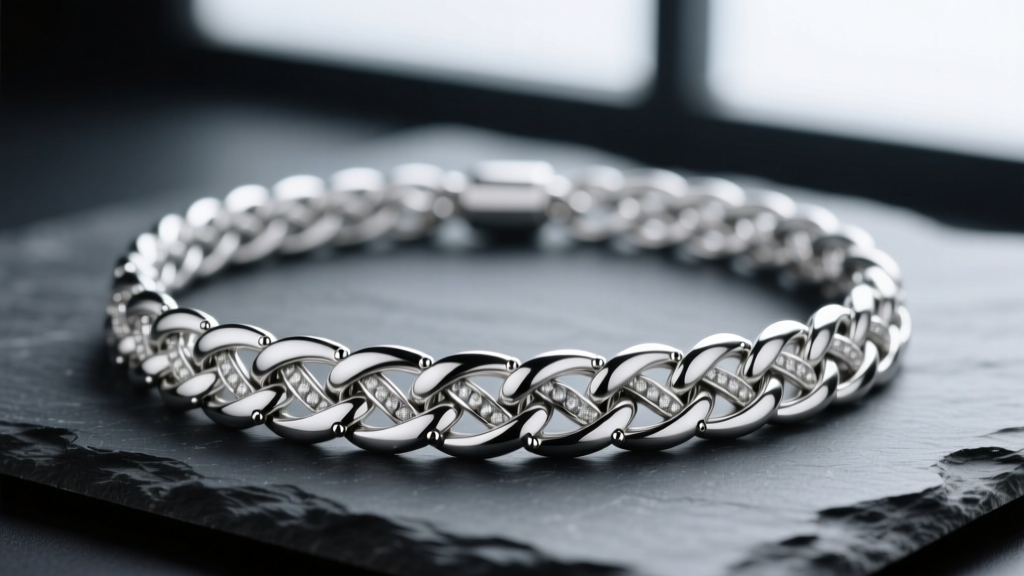
The Allure of the White Necklace: Beyond the Surface
When curating a fine jewelry collection, a white metal necklace serves as the ultimate versatile anchor. However, the term 'white' encompasses a vast spectrum of metallurgical realities. A piece that looks identical in a display case can behave drastically different over a decade of daily wear. The visual similarity between platinum, white gold, and rhodium-plated silver often masks profound differences in density, tensile strength, and long-term maintenance requirements.
As a buyer in 2026, understanding the material science behind your jewelry is no longer optional; it is essential for protecting your investment. This guide strips away the marketing veneer to compare the exact metallurgical properties, failure modes, and structural integrity of the three dominant white metals used in modern necklace manufacturing.
Metallurgical Deep Dive: Platinum, White Gold, and Silver
Platinum (950 Pt): The Indestructible Standard
Platinum is a naturally white, dense transition metal. In fine jewelry, it is typically alloyed to 950 purity (95% platinum, 5% ruthenium or iridium) to maintain its hypoallergenic properties while achieving workable hardness. According to the Platinum Guild International, platinum's unique molecular structure means that when it is scratched, the metal is merely displaced, not lost. Over time, this displacement creates a soft, matte finish known as a 'patina,' which many collectors prize, though it can be polished back to a high mirror shine.
With a Vickers Hardness (HV) of roughly 125-135 and a density of 21.45 g/cm³, a platinum chain will feel substantially heavier and more robust than its gold or silver counterparts. It is the undisputed king of prong security for pendant settings, as the metal's high tensile strength resists pulling and deformation.
White Gold (14k vs. 18k): The Rhodium Illusion
Gold in its natural state is yellow. To create a white necklace from gold, pure 24k gold must be alloyed with white metals like nickel, palladium, or manganese. 14k white gold contains 58.5% pure gold, while 18k white gold contains 75%. Because these alloys still retain a faint yellowish or brownish-grey tint, the jewelry industry relies on electroplating a microscopic layer of rhodium (a platinum-group metal) over the surface to achieve a brilliant, reflective white finish.
The Gemological Institute of America (GIA) notes that rhodium plating typically ranges from 0.1 to 0.5 microns in thickness. This plating is not permanent. Furthermore, white gold alloyed with nickel can cause contact dermatitis in roughly 10-15% of the population once the rhodium barrier wears thin, exposing the base alloy to the skin.
Sterling Silver (925): The High-Maintenance Classic
Sterling silver is an alloy of 92.5% pure silver and 7.5% copper. The copper is necessary to provide structural integrity, as pure silver is far too soft for chain links. However, this copper content is also the metal's Achilles' heel. When exposed to sulfur compounds in the air, cosmetics, or human sweat, the copper reacts to form silver sulfide, manifesting as black tarnish.
With a Vickers Hardness of only 60-70 HV, sterling silver is highly malleable. While this makes it excellent for intricate, artisan-crafted pendants, it makes silver chains highly susceptible to stretching and link deformation under the weight of heavy pendants.
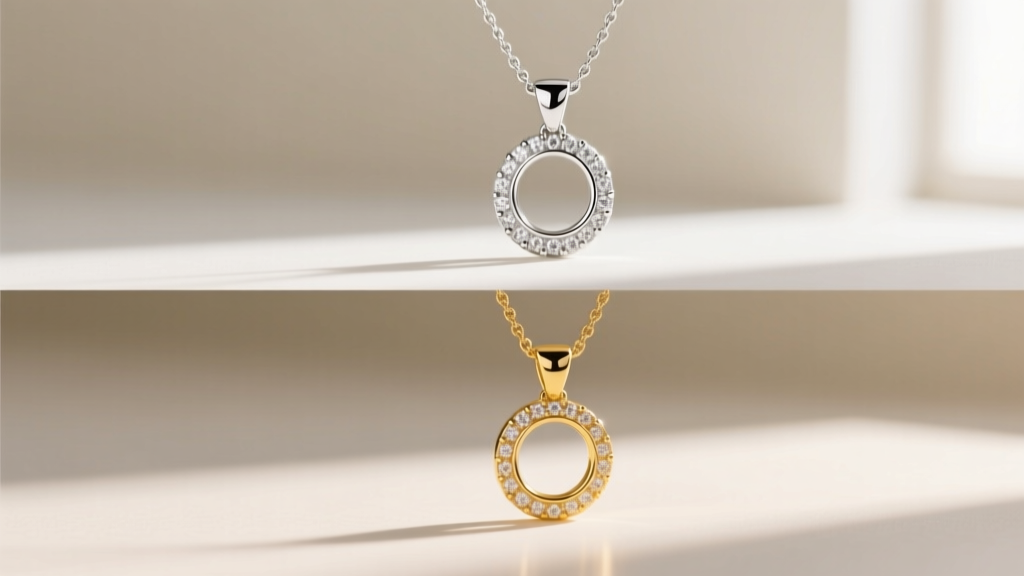
Comparative Data: Hardness, Density, and Pricing
To make an informed decision, you must look at the raw data. The following table compares the physical properties and estimated market costs for a standard 18-inch, 2mm cable chain necklace across the three white metals.
| Material | Purity / Alloy | Vickers Hardness (HV) | Density (g/cm³) | Est. Price (18' 2mm Chain) | Maintenance Level |
|---|---|---|---|---|---|
| Platinum | 950 Pt (5% Ru/Ir) | 125 - 135 | 21.45 | $1,800 - $3,200+ | Low (Optional polishing) |
| 18k White Gold | 75% Au (Pd/Ni alloy) | 130 - 150 | 15.20 | $900 - $1,400 | High (Re-plating every 1-3 yrs) |
| 14k White Gold | 58.5% Au (Ni/Pd alloy) | 140 - 160 | 13.50 | $500 - $850 | High (Re-plating every 1-3 yrs) |
| Sterling Silver | 92.5% Ag (7.5% Cu) | 60 - 75 | 10.36 | $40 - $120 | Very High (Frequent polishing) |
Real-World Failure Modes and Troubleshooting
Understanding how these metals fail in the real world is critical for troubleshooting and longevity. Here are the most common structural issues encountered by jewelers and bench technicians:
- White Gold Rhodium Stripping: The highest friction points on a necklace—the clasp mechanism, the jump rings, and the bottom drape where it rubs against the sternum—will lose their rhodium plating first. This results in a patchy, yellowish-grey appearance. Solution: Budget $50-$150 every two years for professional re-plating, or opt for a palladium-based white gold alloy which has a naturally whiter base color and shows wear less obviously.
- Sterling Silver Link Stretching: If you hang a heavy pendant (over 15 grams) on a delicate 1mm silver chain, the constant kinetic pulling will cause the bottom jump rings to oval and stretch, eventually leading to chain failure. Solution: Always pair heavy pendants with thicker gauge silver chains (minimum 2.5mm) or upgrade the bottom jump ring to soldered platinum or steel.
- Platinum Micro-Scratching (Patina): While platinum doesn't lose metal, its surface will accumulate micro-scratches from contact with harder materials (like ceramic mugs or glass). Solution: Embrace the patina for a vintage, matte look, or have a jeweler use a high-speed buffing wheel with rouge compound to restore the mirror finish.
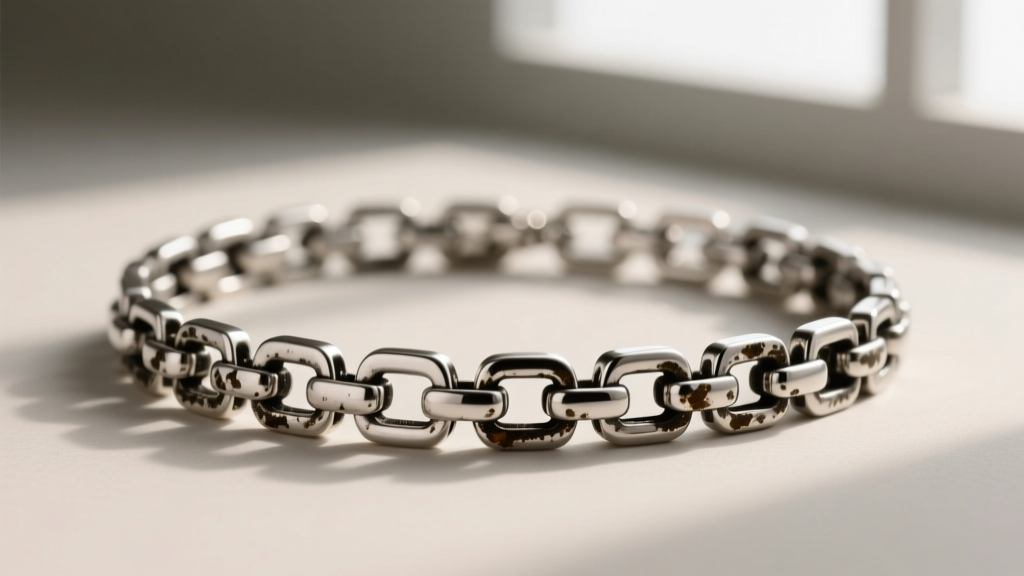
Chain Styles and Structural Integrity
The structural integrity of a white necklace is dictated not just by the metal, but by the chain weave. Manufacturing experts at Rio Grande emphasize that the geometry of the chain dictates its tensile strength.
Cable and Rolo Chains: These consist of simple interlocking oval or round links. In sterling silver, these are highly prone to pulling apart if snagged. In platinum, however, the sheer density of the metal makes even a delicate 1.2mm cable chain remarkably secure.
Curb and Figaro Chains: The links are flattened and interlock tightly against the skin. This geometry distributes weight more evenly, making them excellent choices for 14k and 18k white gold, as the flat surfaces minimize the high-friction wear points that strip rhodium plating.
Box Chains: Composed of square, interlocking links. While visually striking, box chains are notorious for kinking. If a kinked silver or white gold box chain is forcefully pulled, the links will permanently deform and weaken. Platinum box chains resist this deformation far better due to the metal's high yield strength.
Final Verdict: Matching Metal to Lifestyle
There is no single 'best' white metal; there is only the right metal for your specific lifestyle and budget. If you are purchasing a heavy, diamond-set pendant intended for daily, generational wear, Platinum (950) is the only logical choice. Its upfront cost is justified by zero plating maintenance and unmatched structural security.
If you desire the bright, mirror-like reflectivity of rhodium but have a moderate budget, 14k or 18k White Gold is ideal, provided you accept the ongoing maintenance cycle of re-plating. For fashion-forward, seasonal layering pieces where budget is the primary constraint, Sterling Silver remains a brilliant option, so long as you commit to regular anti-tarnish storage and avoid wearing it in chlorinated pools or sulfur-rich hot springs.


