Long Cross Pendant Necklace Metals: A Property Guide
Discover the best metals for a long cross pendant necklace. We compare durability, tarnish rates, and pricing for sterling silver, gold, and titanium.

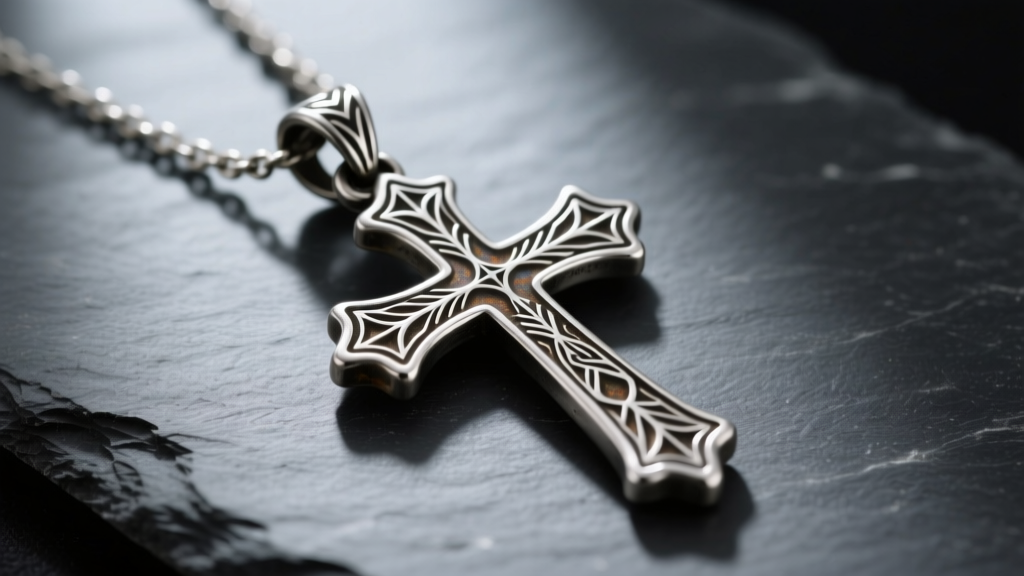
The Physics of the Long Cross Pendant Necklace
When selecting a long cross pendant necklace, most buyers focus entirely on the aesthetic—whether they prefer a minimalist gothic bar, an ornate crucifix, or a modern geometric interpretation. However, from a metallurgical and structural engineering perspective, a long cross presents unique physical challenges that standard coin or gemstone pendants do not. A typical long cross ranges from 50mm to over 100mm (2 to 4 inches) in vertical drop. This elongated shape fundamentally alters the center of gravity, turning the pendant into a pendulum.
Every time you move, the elongated mass of the cross swings, generating kinetic energy that transfers directly upward into the bail (the loop connecting the pendant to the chain). This creates severe friction and leverage stress at the exact point where the metal of the bail rubs against the metal of the chain. If the metal alloy is too soft, or the bail wire gauge is too thin (anything under 1.2mm is highly risky for a heavy long cross), the bail will literally saw itself in half over time. Understanding the material properties of your jewelry is not just about avoiding skin allergies; it is about structural longevity.
Material Deep-Dive: Precious vs. Alternative Metals
The jewelry market in 2026 offers a wider array of wearable alloys than ever before, but each comes with distinct trade-offs in hardness, density, and chemical reactivity. Let us break down the most common metals used for elongated pendants.
Sterling Silver (925) & Rhodium Plating
Sterling silver is an alloy consisting of 92.5% pure silver and 7.5% copper. Pure silver is far too malleable (Vickers Hardness of roughly 25 HV) to hold the structural integrity required for a long cross pendant. The addition of copper increases the hardness to approximately 65 HV, but it introduces a major vulnerability: tarnish. The copper reacts with sulfur compounds in the air and on human skin, creating black silver sulfide.
To combat this, modern manufacturers apply a rhodium plating (usually 0.5 to 1.5 microns thick). While rhodium is incredibly hard and highly reflective, it is a surface treatment. On a long cross pendant necklace, the constant friction at the bail will inevitably wear through the rhodium layer, exposing the raw sterling silver beneath. If you choose sterling silver, ensure the bail is reinforced or easily replaceable by a jeweler.
Solid Gold (14k vs. 18k) & The Hardness Paradox
There is a common misconception that higher karat gold is universally "better" for jewelry. When dealing with the heavy leverage of a long cross pendant, 14k gold is often metallurgically superior to 18k gold. According to data from the Gemological Institute of America (GIA), 18k gold (75% pure gold) has a Vickers Hardness of roughly 125 HV. In contrast, 14k gold (58.5% pure gold) is alloyed with higher percentages of copper, silver, and zinc, pushing its hardness to approximately 150 HV to 170 HV, depending on the exact alloy mix.
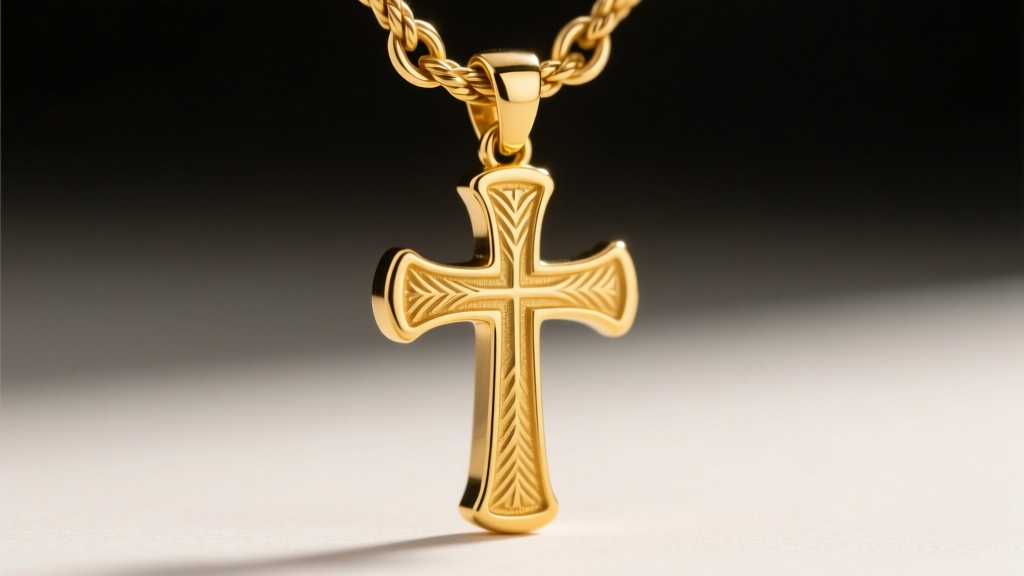
This 20% increase in hardness makes 14k gold significantly more resistant to the friction-wear caused by the pendulum effect of an elongated cross. Furthermore, 14k gold offers superior tensile strength, meaning if the pendant catches on clothing, the bail is less likely to bend open and drop the piece compared to the softer 18k alternative.
Grade 5 Titanium & Surgical Steel (The Modern Alternatives)
For those seeking maximum durability without the premium price tag of solid gold, aerospace-grade metals have become incredibly popular. Grade 5 Titanium (Ti-6Al-4V) boasts an astonishing Vickers Hardness of 350 HV. It is completely impervious to tarnish, highly resistant to scratching, and entirely hypoallergenic. However, titanium's extreme hardness is a double-edged sword: if the bail breaks or deforms, it cannot be easily soldered by a traditional bench jeweler. It usually requires specialized laser welding or complete CNC milling of a replacement part.
316L Surgical Steel is another robust alternative. It is highly resistant to corrosion and very affordable, but it is significantly denser (heavier) than titanium. A 4-inch solid steel cross can become uncomfortably heavy on the cervical spine during all-day wear.
Comparative Data: Hardness, Weight, and Wear
To make an informed decision, it helps to view these materials through a strictly quantitative lens. The table below outlines the core physical properties relevant to elongated pendants.
| Metal Alloy | Vickers Hardness (HV) | Density (g/cm³) | Tarnish Resistance | Bail Wear Rate (High Friction) |
|---|---|---|---|---|
| 925 Sterling Silver | 65 - 75 | 10.36 | Low (Requires Rhodium) | High (Friction exposes raw metal) |
| 14k Yellow Gold | 150 - 170 | 13.50 | Excellent | Low (Highly wear-resistant) |
| 18k Rose Gold | 125 - 135 | 15.20 | Excellent | Moderate (Softer alloy) |
| Grade 5 Titanium | 340 - 360 | 4.43 | Absolute | Negligible (Extreme hardness) |
| 316L Surgical Steel | 150 - 190 | 8.00 | Very High | Low (But heavy on the chain) |
Note: Density directly impacts the kinetic force exerted on the chain. A denser metal requires a thicker, more robust chain to prevent snapping.
Chain Pairing: Supporting the Lever Effect
The material of your long cross pendant necklace dictates the type of chain you must pair it with. The pendulum swing of a 3-inch cross will easily kink and destroy a delicate snake chain or a thin herringbone chain. The leverage applied to the links during sudden movements can warp soft metals.
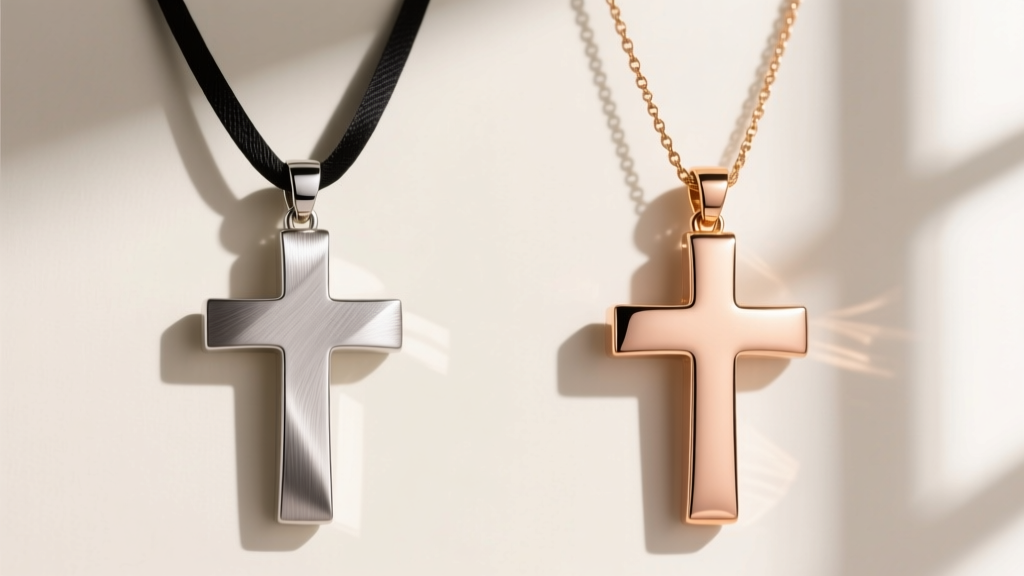
- For Solid Gold & Silver Crosses: Opt for a 2.0mm to 3.0mm Box Chain or Wheat Chain. These styles feature interlocking geometric links that distribute kinetic stress evenly and resist kinking. Resources like Rio Grande consistently recommend wheat chains for heavy, elongated pendants due to their high tensile strength and fluid drape.
- For Titanium & Steel Crosses: Because these pendants are often worn in streetwear or alternative fashion contexts, heavy 3.5mm to 5.0mm Cuban Link or Rope chains are appropriate. Ensure the clasp is a lobster claw with a minimum 12mm spring mechanism, as the weight of a steel cross will easily pull apart a standard spring-ring clasp.
Maintenance Protocols by Metal Type
Proper maintenance extends the life of the bail and preserves the finish of the cross itself. Avoid generic "dip" cleaners, which can strip intentional oxidation (patina) from gothic or vintage-style long crosses.
- Sterling Silver: Use a treated microfiber polishing cloth. Pay special attention to the bail; if you see black residue on the cloth, the rhodium plating has worn through. Take it to a jeweler for a re-plating before the underlying copper begins to pit.
- 14k/18k Gold: Clean with a soft baby toothbrush, warm water, and a drop of mild dish soap. Ultrasonic cleaners are generally safe for solid gold crosses unless they feature tension-set gemstones or porous materials like turquoise or opals inlaid into the design.
- Titanium & Steel: These require almost zero chemical maintenance. A simple wipe-down with isopropyl alcohol will remove skin oils and environmental grime. Avoid bleach, which can cause localized pitting in surgical steel over prolonged exposure.
Final Verdict: Which Metal Suits Your Lifestyle?
Choosing the right material for a long cross pendant necklace requires balancing budget, aesthetic preference, and an understanding of physical wear. If you prioritize heirloom longevity and traditional prestige, 14k solid gold offers the perfect intersection of value, hardness, and corrosion resistance. If you prefer a darker, edgier aesthetic and do not mind periodic maintenance, oxidized sterling silver remains a timeless choice. Finally, for an active lifestyle where the jewelry will be subjected to sweat, friction, and impact, Grade 5 Titanium is virtually indestructible, ensuring your pendant outlasts the chain it hangs upon.


