Long Necklace Troubleshooting: Stop Tangling & Breakage
Discover expert troubleshooting for long necklace tangling, chain breakage, and clasp failures. Learn material-specific fixes and layering hacks.

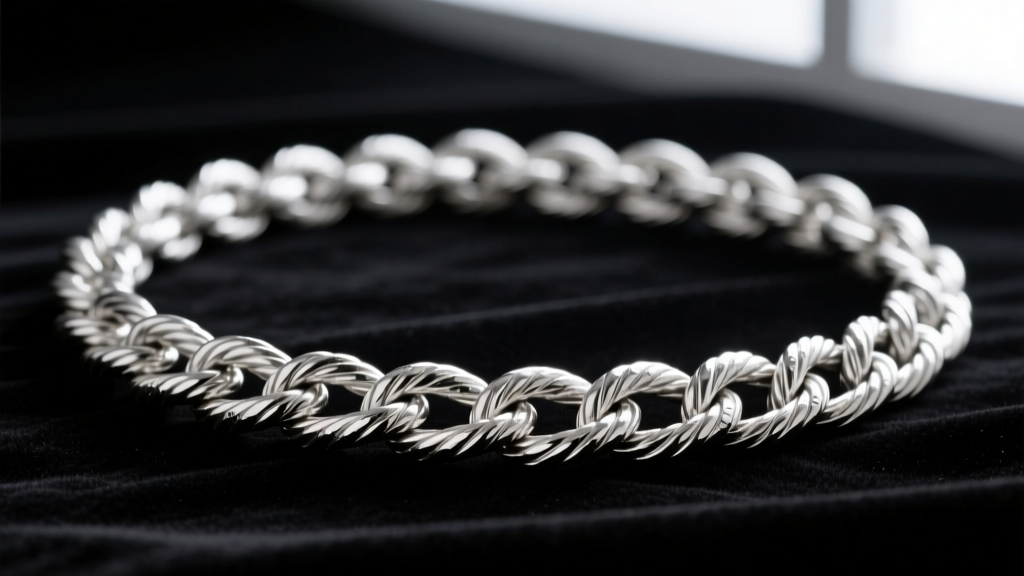
The Physics of the Tangle: Why Long Chains Knot
There is a distinct mechanical frustration that accompanies wearing extended chains. When evaluating a necklace, long necklace styles (typically ranging from 28 to 36 inches in opera or lariat lengths) present unique structural challenges that shorter collar or princess lengths simply do not face. The phenomenon you experience when pulling a hopelessly knotted chain from your jewelry box is not just bad luck; it is a documented principle of topology and physics.
According to research on the spontaneous knotting of agitated strings, chains exceeding 18 inches have a dramatically increased probability of forming complex knots when subjected to minor movement. The excess length provides the necessary slack for the ends to weave through the center loops. To troubleshoot this, we must first understand the friction coefficients of your specific chain profile and how to manipulate the hardware to prevent these topological nightmares.
Chain Link Profiles and Friction Coefficients
Not all long chains tangle equally. The geometry of the link dictates how easily it catches on itself or surrounding fabrics. Here is a breakdown of common profiles and their tangling risks:
- Box Chains: Featuring smooth, square links with high articulation. These have a low friction coefficient and are the least prone to severe knotting. However, their rigid geometry makes them susceptible to permanent denting if crushed.
- Rope Chains: Twisted links that mimic the look of a rope. The high surface texture creates immense friction. While beautiful, a 30-inch rope chain is a magnet for snagging on knitwear and tangling upon itself.
- Snake Chains: Tightly joined rings that form a smooth, flexible tube. They possess zero articulation between individual 'links,' meaning they do not tangle in the traditional sense. Instead, they suffer from a worse fate: permanent kinking if bent past their structural tolerance.
- Cable Chains: The classic oval link. Moderate friction, but if the gauge is too thin (under 1.0mm), the links can easily warp and lock into one another under the weight of a heavy pendant.
Troubleshooting Common Long Necklace Failures
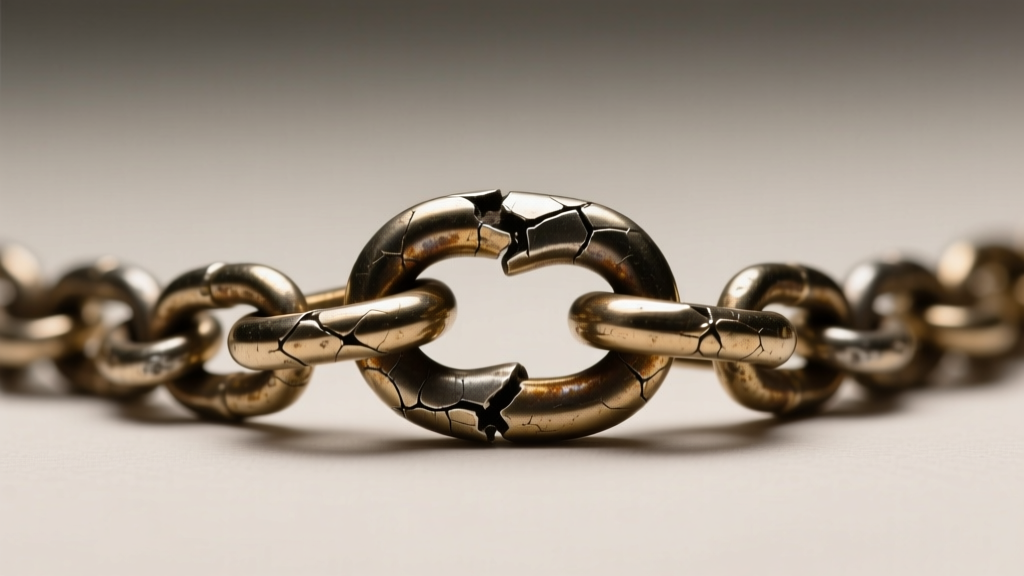
Beyond tangling, extended chains endure unique stress vectors. The pendulum effect of a long chain swinging against the body places disproportionate strain on the clasp assembly and the bail. Below are the most frequent failure modes and their precise troubleshooting protocols.
1. The Slipping Clasp Dilemma
Standard 5mm spring ring clasps are notoriously inadequate for long, heavy chains. The weight of the chain pulls the clasp to the front of the neck, and the tiny lever mechanism often catches on clothing, pulling the clasp open. The Fix: Upgrade to a 12mm neodymium magnetic clasp with a silicone safety catch. Alternatively, if you must keep the existing clasp, slide a 2mm inner-diameter silicone O-ring (Shore A durometer 50) over the jump ring before closing the clasp. This creates a high-friction seal that prevents the lever from accidentally depressing.
2. Link Stretching and Work Hardening
Sterling silver (925) is highly susceptible to work hardening. When a long silver chain is repeatedly pulled or snagged, the metal's crystal lattice structure deforms, becoming brittle. You will notice the links near the clasp elongating from perfect ovals into stretched teardrops before eventually snapping. The Fix: Inspect the first three links on either side of the clasp monthly. If elongation exceeds 15% of the original link width, have a jeweler replace the end segments. For a permanent solution, upgrade the chain's terminal links to 14k gold or platinum, which possess higher tensile ductility.
3. Pendant Bail Wear
On a 32-inch chain, a pendant travels a significant distance, acting as a sliding weight. This constant friction acts like a saw against the inside of the bail (the loop connecting the pendant to the chain). A 1.5mm gold chain can easily saw through a thin sterling silver bail in under six months. The Fix: Line the inside of the pendant bail with a micro-thin layer of UV-cured jewelry resin, or have a jeweler solder a hardened platinum 'wear tube' inside the bail to absorb the friction.
Material-Specific Repair & Maintenance Guide
When a long chain inevitably breaks, the repair methodology depends entirely on the metallurgy. As of 2026, laser welding has become the industry standard for complex repairs, but traditional torch soldering remains relevant for specific alloys. The Jewelers of America recommends consulting certified bench jewelers for structural chain repairs rather than attempting at-home fixes with superglue or soft solders, which compromise the chain's tensile integrity.
| Material | Standard Gauge | Common Failure Mode | Repair Method | Avg 2026 Cost |
|---|---|---|---|---|
| Sterling Silver (925) | 1.2mm - 2.0mm | Work-hardened link snapping | Torch Soldering (Silver paste) | $25 - $40 |
| 14k Yellow Gold | 0.9mm - 1.5mm | Link stretching / Bail wear | Laser Welding (Precise heat) | $45 - $75 |
| Platinum (950) | 1.0mm - 1.8mm | Clasp jump ring shearing | Laser Welding (Pt wire feed) | $65 - $110 |
| Titanium (Grade 5) | 1.5mm - 3.0mm | Clasp mechanism failure | Component Replacement (Cannot weld) | $30 - $50 |
For those dealing with a kinked snake chain—a notoriously difficult repair—do not attempt to pull the kink apart with pliers. This will separate the tight rings and ruin the chain. Instead, lay the chain flat on a steel bench block, place a piece of parchment paper over the kink, and gently roll a smooth steel burnishing tool or a miniature rolling pin over the area. This realigns the interlocking rings without tearing them. For severe kinks, the Gemological Institute of America (GIA) advises professional laser re-fusing, as the structural memory of the metal has been permanently altered.
Advanced Layering: Preventing the Knot Matrix
Layering multiple long chains is a staple of contemporary styling, but wearing three 24-to-30-inch chains simultaneously guarantees a tangled mess within hours. The friction between the different metal surfaces creates a knot matrix that is nearly impossible to undo without breaking a link.
The 2-Inch Rule and Spacer Clasps
To successfully layer long chains, you must adhere to the strict 2-inch minimum differential rule. If your base chain is 24 inches, the next must be at least 26 inches, and the third 28 inches. This prevents the pendants from colliding and the links from interlocking at the same vertical axis.
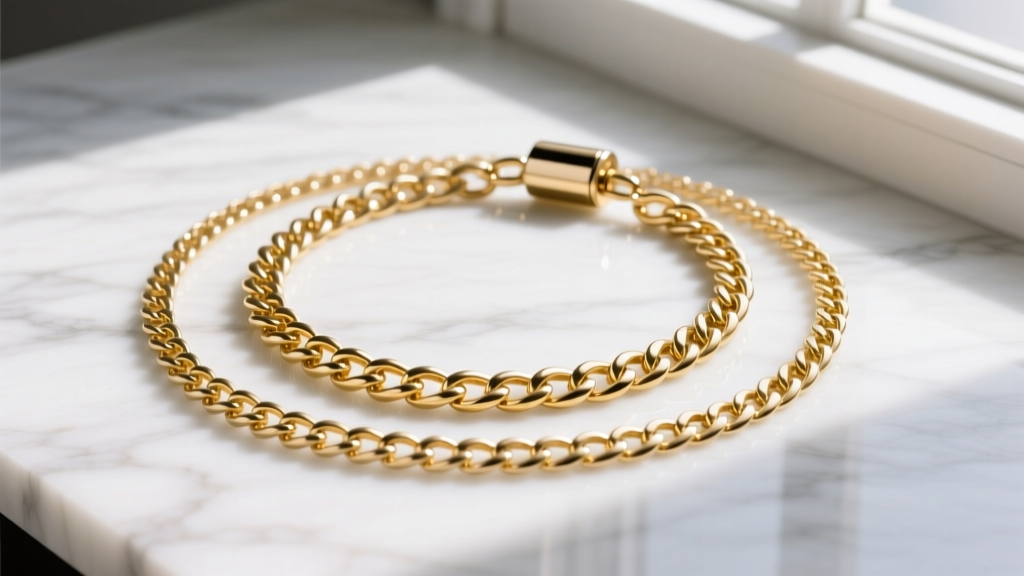
However, the ultimate troubleshooting tool for layering is the magnetic spacer clasp. This ingenious hardware piece features a single magnetic closure at the back of the neck, which then splits into three or four separate jump rings spaced about an inch apart. By anchoring all your long chains to a single, unified starting point at the nape of the neck, you eliminate the independent movement that causes tangling. When purchasing a spacer clasp, ensure the internal magnets are N52-grade neodymium to support the combined weight of multiple long gold or silver chains without popping open during wear.
Storage Protocols for Extended Lengths
How you store your long chains is just as critical as how you wear them. Never toss an opera-length chain into a communal jewelry box. The agitation of opening and closing the drawer will trigger the spontaneous knotting physics mentioned earlier. Instead, utilize the 'straw threading' method for travel: unclasp the chain, thread one end through a standard plastic drinking straw, and reclasp it. The rigid straw prevents the chain from bending enough to form a loop, making tangling physically impossible. For at-home storage, hang long chains individually on velvet-lined hooks with a minimum of 3 inches of lateral clearance between each piece to prevent airborne dust and static from binding them together.
Conclusion
Troubleshooting a long necklace requires moving beyond aesthetic considerations and treating your jewelry as a mechanical system. By understanding the friction profiles of different chain links, upgrading inadequate clasps with silicone O-rings or neodymium magnets, and respecting the metallurgical limits of your chosen material, you can enjoy the dramatic drape of extended chains without the daily frustration of untangling knots. Implement these structural upgrades and storage protocols to ensure your longest pieces remain as flawless as the day you acquired them.


