Pearl Necklace Silver Hardware: Alloys, Clasps & Care
Explore the technical details of pearl necklace silver hardware. Compare Argentium vs. sterling alloys, clasp mechanisms, and stringing methods.

The Metallurgy of Silver Findings in Pearl Jewelry
When evaluating high-end pearl necklace silver hardware, the specific alloy composition dictates the longevity, tarnish resistance, and structural integrity of the piece. While pearls are organic gems requiring gentle handling, the silver findings that secure them must endure decades of mechanical stress and environmental exposure. Understanding the metallurgical differences between standard sterling, Argentium, and fine silver is critical for both jewelers and informed collectors.
Sterling Silver (925) vs. Argentium Silver
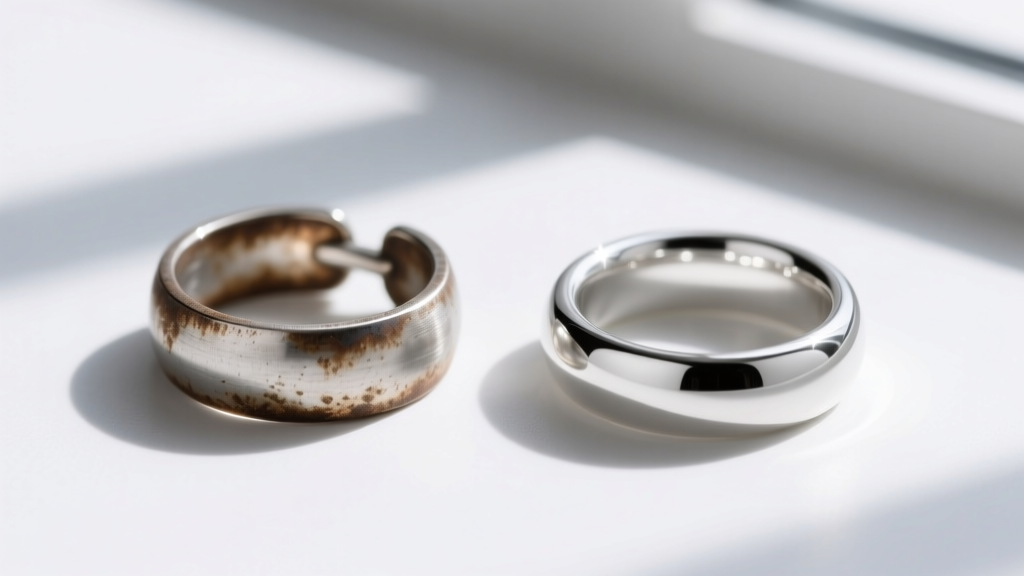
Traditional sterling silver is an alloy consisting of 92.5% silver and 7.5% copper. The copper provides necessary tensile strength, raising the Vickers hardness from 25 HV (fine silver) to approximately 65 HV. However, this copper content is precisely what makes standard sterling prone to oxidation and firestain during soldering, as well as rapid tarnishing when exposed to atmospheric sulfur.
In modern pearl necklace silver designs, many master stringers and bench jewelers have pivoted to Argentium silver. Argentium replaces a portion of the copper with germanium. This modification creates a transparent, self-healing germanium oxide layer on the surface, making it highly tarnish-resistant. Furthermore, Argentium 935 or 960 can be precipitation-hardened, achieving a Vickers hardness of up to 120 HV without becoming brittle. This makes Argentium clasps vastly superior for heavy, multi-strand pearl collars that exert significant torque on the clasp mechanism.
Fine Silver (999) Limitations
Fine silver (99.9% pure) is entirely immune to copper-induced tarnish and is exceptionally malleable. However, its low yield strength makes it entirely unsuitable for functional clasp components or jump rings. Fine silver is strictly reserved for decorative elements, such as delicate bezel wire used in pearl pendant settings or ornamental filigree caps that do not bear structural loads.
Clasp Mechanics: Security vs. Aesthetics
The clasp is the single most critical point of failure on any strand of pearls. A broken clasp or compromised jump ring can result in the catastrophic loss of dozens of matched, graduated gems. Selecting the right pearl necklace silver clasp requires balancing ease of use with mechanical security.
The Fishhook Pearl Clasp
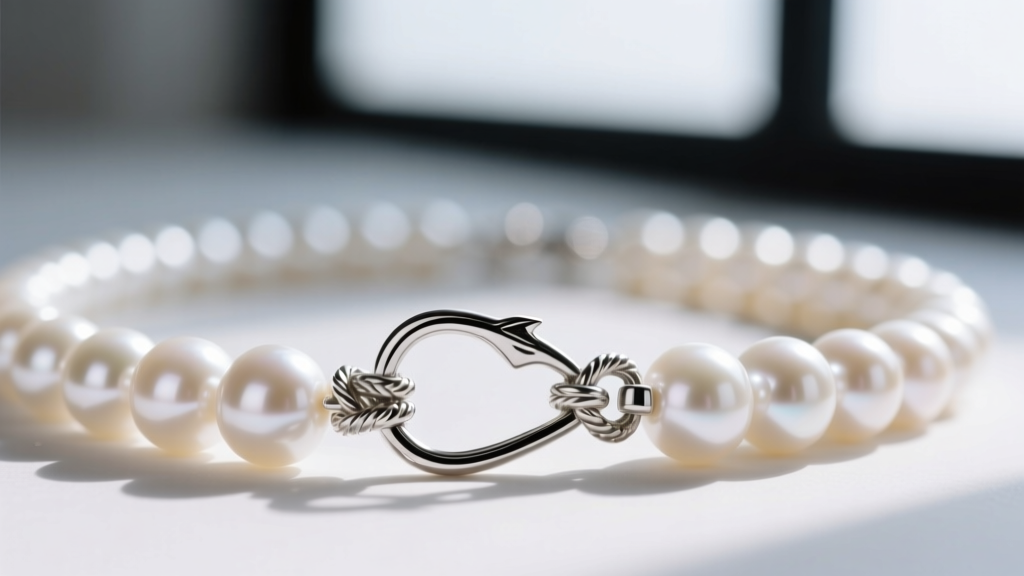
The fishhook clasp (often called a pearl clasp) is the industry standard for single-strand Akoya and South Sea pearl necklaces. It features a slim, elongated oval housing that conceals a curved hook. To open it, the user must push the hook inward and lift it upward, disengaging it from the internal catch. While highly secure and aesthetically seamless, it requires two-handed operation, which can be frustrating for users with limited dexterity. From a manufacturing standpoint, high-quality fishhook clasps are cast or die-struck with a reinforced internal safety latch to prevent accidental depression.
Box Clasps with Figure-8 Safety Catches
For multi-strand pearl necklaces or heavy baroque pearl ropes, a box clasp is mandatory. The box clasp utilizes a V-shaped tongue that compresses as it slides into a receiving box, snapping into place. Because the tongue can compress over time due to metal fatigue, a secondary security mechanism—typically a figure-8 safety wire or a side-safety latch—is essential. When inspecting a box clasp, ensure the tongue is made of spring-hardened silver and that the safety catch engages with a definitive click.
| Clasp Type | Best Application | Security Level | Dexterity Required |
|---|---|---|---|
| Fishhook | Single-strand, 6-9mm pearls | High | Moderate (Two hands) |
| Box with Safety | Multi-strand, heavy collars | Very High | Low (One hand possible) |
| Lobster Claw | Everyday wear, pendants | Moderate-High | High (Requires pinching) |
| Magnetic | Accessibility needs | Low-Moderate | Very Low |
Stringing Methods: Wire, Silk, and Silver Bead Tips
The interface between the organic pearl and the metallic silver hardware is a zone of high friction and chemical vulnerability. How the silk or wire terminates into the silver clasp dictates the lifespan of the necklace.
French Wire (Gimp) and Jump Ring Gauges
When stringing pearls on silk, the thread must pass through a silver jump ring to attach to the clasp. If the bare silk rubs directly against the silver, the microscopic saw-tooth edges of the drilled hole in the jump ring will sever the silk fibers within months. To prevent this, jewelers use French wire (also known as gimp)—a tightly coiled, hollow metal spring. A 0.4mm to 0.6mm silver or gold-filled French wire is threaded onto the silk, creating a smooth, protective metal sleeve over the jump ring.
The jump rings themselves should be fabricated from 18-gauge or 20-gauge half-hard sterling or Argentium silver. Dead-soft jump rings will easily pull open under the weight of a heavy South Sea pearl strand, while hard-drawn rings are too brittle to be opened and closed securely without snapping.
Clamshell Bead Tips vs. Direct Knotting
Historically, silver clamshell bead tips (or bead ends) were used to hide the starting and ending knots of the silk thread. The knot sits inside the silver "clamshell," which is then squeezed shut, and the hook on the clamshell attaches to the jump ring. However, modern master stringers often abandon bead tips in favor of direct knotting through a heavy soldered silver ring, securing the final knot with a micro-drop of flexible cyanoacrylate adhesive and burning the tail. This eliminates the mechanical hinge of the bead tip, which is a known failure point in vintage pearl necklace silver assemblies.
Maintenance and Chemical Vulnerabilities
Caring for a pearl necklace requires navigating the conflicting chemical needs of calcium carbonate (the pearl) and silver alloys. According to the Gemological Institute of America (GIA), pearls rank between 2.5 and 4.5 on the Mohs hardness scale and are highly sensitive to acids, heat, and ultrasonic vibrations.
The Danger of Silver Dips
Commercial liquid silver cleaners (silver dips) rely on thiourea and strong acids to instantly strip tarnish from silver. Submerging a pearl necklace in these solutions will permanently etch the nacre of the pearls, destroying their luster and causing irreversible chalkiness. Furthermore, ultrasonic cleaners, which are safe for bare silver chains, will shatter pearls with internal fractures or thin nacre.
Safe Cleaning Protocols
To clean the silver hardware without damaging the pearls, use a localized approach. Apply a small amount of non-abrasive silver polishing cream (specifically formulated without harsh ammonia) to a microfiber cloth, and carefully rub only the silver clasp and jump rings, avoiding contact with the adjacent pearls. For routine maintenance, wiping the silver findings with an anti-tarnish treated cloth after each wear will remove skin oils and atmospheric sulfur before they can initiate the oxidation process. Store the necklace flat in a low-humidity environment, ideally with anti-tarnish silica strips, but never in an airtight plastic bag that traps the pearls' necessary ambient moisture.
Pricing and Sourcing Benchmarks
When sourcing replacement hardware or commissioning a custom pearl necklace silver clasp, expect to pay a premium for precision engineering. A standard cast sterling silver fishhook clasp typically retails between $15 and $30. However, a precision-machined, Argentium silver box clasp with dual figure-8 safety catches and integrated diamond accents can easily range from $150 to $400. Investing in high-grade findings from reputable suppliers like Rio Grande ensures that the metallurgical integrity of the clasp matches the generational value of the pearls it secures.


