The lost necklace stardew fans crave: Real oceanic gem dupes
Discover the real-world gemstones and metals behind the lost necklace stardew fans love. Compare aquamarine, pearl, and water-resistant chains.

The Stardew Valley Connection: Lore Meets Gemology
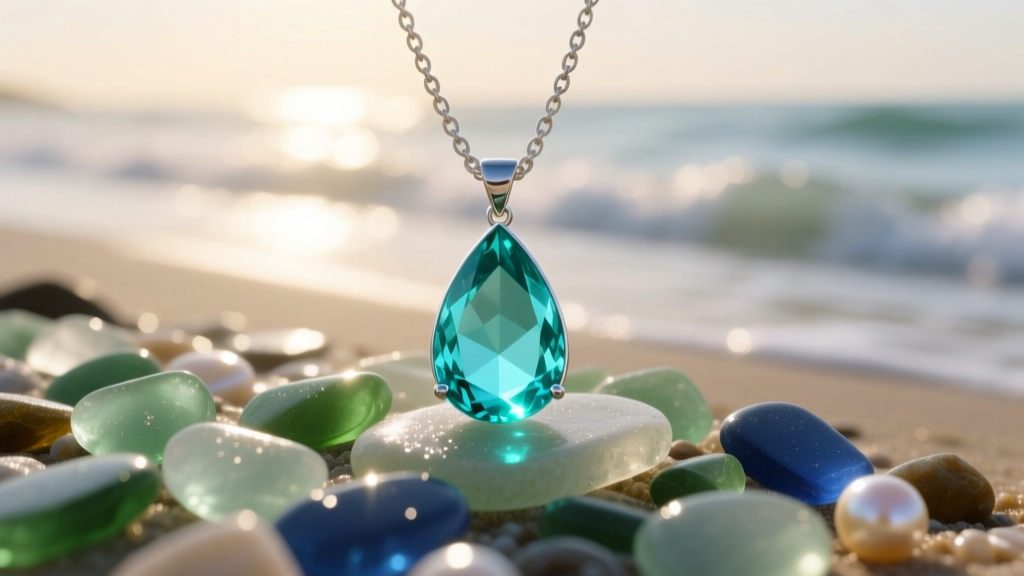
In the beloved farming simulation game, the lost necklace stardew players find washed up on the beach is a simple quest item belonging to Caroline. Visually, the in-game sprite depicts a delicate teardrop or round oceanic-blue gemstone suspended on a simple metallic chain. While the game treats it as a generic plot device, jewelry enthusiasts and gamers alike often wonder: what would this pendant actually be made of in the real world? More importantly, if you wanted to commission or buy a real-life dupe of this iconic oceanic treasure, which materials could survive actual exposure to water, sweat, and the elements?
Translating pixel art into physical jewelry requires a deep understanding of mineralogy and metallurgy. An 'oceanic' pendant implies exposure to moisture, salt, and variable temperatures. To create a functional, everyday-wear replica of the lost necklace stardew fans adore, we must evaluate gemstones not just for their blue-green hues, but for their Mohs hardness, specific gravity, and chemical stability. Below, we break down the exact material properties required to bring this fictional seaside treasure into reality.
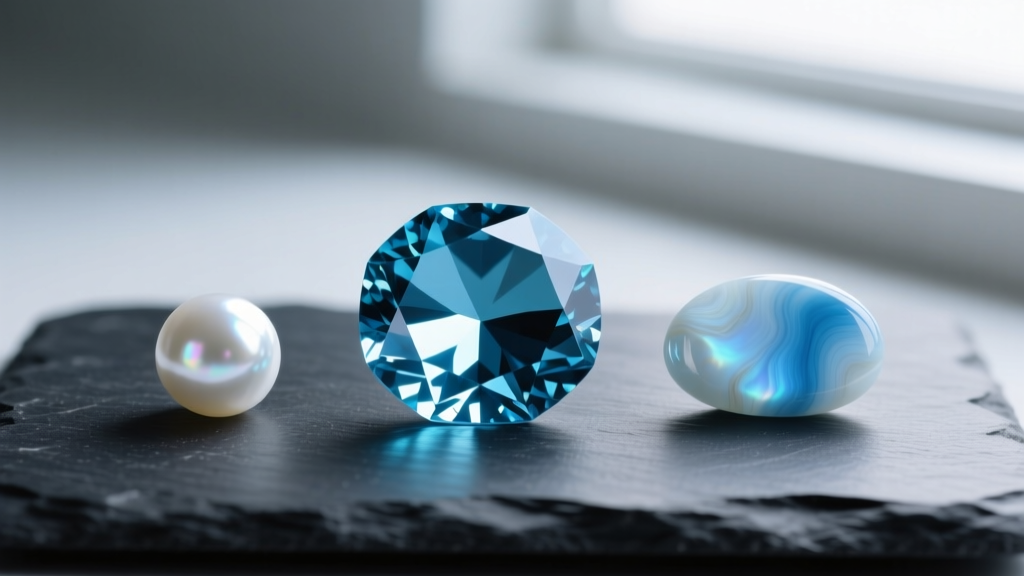
Centerpiece Materials: Aquamarine vs. Pearl vs. Larimar
The visual signature of Caroline's necklace is a cool, aquatic color palette. Three real-world gemstones perfectly capture this aesthetic, but their physical properties vary wildly. Choosing the right one depends entirely on your lifestyle and how much 'ocean' your jewelry will actually encounter.
Aquamarine (The Durable Beryl Choice)
Aquamarine is the blue to blue-green variety of beryl, colored by trace amounts of iron. With a chemical formula of Be3Al2Si6O18, it is a highly durable silicate mineral. On the Mohs scale, aquamarine ranks between 7.5 and 8, making it exceptionally resistant to scratching from everyday dust and debris (which contains quartz at a 7). According to the GIA Aquamarine Guide, most commercial aquamarine is heat-treated to around 400°C to remove greenish-yellow tints, resulting in the pure, stable oceanic blue seen in high-end jewelry. Its specific gravity of 2.68 means it has a satisfying, substantial weight when cut into a teardrop cabochon or faceted pear shape.
Cultured Saltwater Pearl (The Authentic Oceanic Choice)
If the necklace was truly lost in the ocean, a saltwater pearl is the most lore-accurate material. Pearls are organic gems composed primarily of aragonite (a calcium carbonate polymorph) held together by conchiolin. However, their Mohs hardness is a mere 2.5 to 4.5. While they possess the ultimate oceanic pedigree, pearls are highly vulnerable to acids, chlorine, and even prolonged exposure to human sweat. The GIA Pearl Description notes that the nacre layers can easily pit or dissolve if subjected to harsh chemicals. A pearl dupe requires meticulous care and should never be worn while swimming or showering.
Larimar (The Rare Caribbean Alternative)
Larimar is a rare blue variety of pectolite found exclusively in the Dominican Republic. Its striking blue coloration is caused by copper inclusions substituting for calcium in the crystal lattice. Ranking at 4.5 to 5 on the Mohs scale, larimar is relatively soft and requires a protective bezel setting. Furthermore, the Mindat Mineral Database indicates that pectolite can be sensitive to prolonged ultraviolet light, meaning a larimar pendant left on a sunny beach towel could gradually fade over several years.
Gemstone Property Comparison Matrix
| Material | Mohs Hardness | Water/Salt Resistance | Price Range (per ct) | Best Setting Type |
|---|---|---|---|---|
| Aquamarine | 7.5 - 8.0 | Excellent | $100 - $500+ | Prong or Bezel |
| Saltwater Pearl | 2.5 - 4.5 | Poor (Organic) | $50 - $300 (whole) | Peg / Cup Setting |
| Larimar | 4.5 - 5.0 | Moderate | $20 - $150 | Full Bezel |
Chain Metallurgy: Surviving the Elements
A pendant is only as strong as the chain that holds it. If your lost necklace stardew replica is meant to mimic a treasure recovered from the sea, the chain must resist oxidation, tarnish, and chloride corrosion.
Sterling Silver (925) vs. Rhodium Plating
Sterling silver is an alloy of 92.5% silver and 7.5% copper. While it matches the visual aesthetic of the in-game sprite, the copper content makes it highly susceptible to tarnishing when exposed to sulfur in the air and saltwater. To mitigate this, modern jewelers flash-plate sterling silver with rhodium, a platinum-group metal that provides a brilliant, non-tarnishing barrier. However, once the rhodium wears off (typically after 1-2 years of daily wear), the underlying silver will rapidly oxidize if exposed to oceanic environments.
316L Marine-Grade Stainless Steel
For the ultimate water-resistant chain, 316L stainless steel is the undisputed champion. Unlike standard 304 steel, 316L contains 2-3% molybdenum, an alloying element that drastically increases resistance to chloride pitting and saltwater corrosion. It is hypoallergenic, incredibly dense, and costs a fraction of precious metals. A 316L cable chain paired with an aquamarine pendant creates a virtually indestructible, waterproof piece of jewelry that perfectly honors the 'lost at sea' theme.
Platinum 950
If budget is not a constraint, Platinum 950 (95% platinum, 5% ruthenium or iridium) offers a naturally white, hypoallergenic, and eternally durable chain. Platinum does not tarnish, rust, or corrode in any natural environment on Earth. Its high density ensures that a delicate-looking 1.2mm wheat chain can easily support a heavy 10-carat aquamarine teardrop without risking structural failure.
Setting Engineering and Daily Maintenance
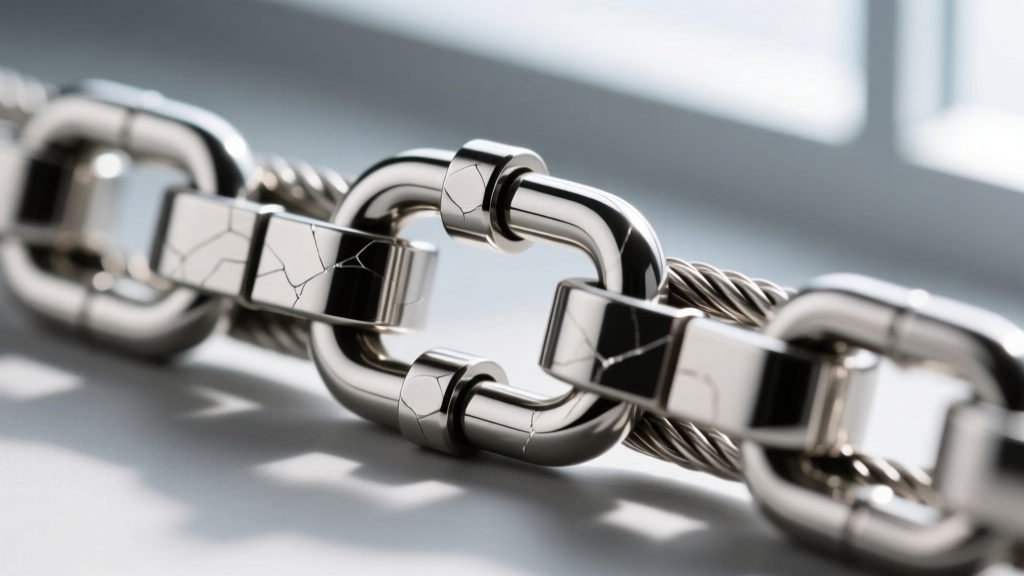
The way the gemstone is secured to the bail dictates its longevity. For a pendant inspired by a rugged, oceanic discovery, the setting must protect the stone's most vulnerable points.
'In the game, the Lost Necklace is a simple quest item. In the real world, an oceanic teardrop pendant requires a masterful balance of Mohs hardness, specific gravity, and chemical stability to survive the elements.'
Bezel vs. Prong Settings
While prong settings maximize light return in faceted aquamarines, they leave the gemstone's girdle exposed to impacts. If you are wearing your pendant to the beach or hiking near water, a full bezel setting is mandatory for softer stones like larimar and pearl. A bezel wraps a continuous ribbon of metal around the stone's perimeter, protecting the edges from chipping and preventing sand or salt crystals from becoming trapped beneath the stone.
Daily Wear Survival Checklist
- Avoid Ultrasonic Cleaners: Never use high-frequency ultrasonic cleaners on pearls or larimar. The vibrations can fracture internal inclusions and shatter organic nacre layers. Stick to a soft, damp microfiber cloth.
- Rinse After Saltwater Exposure: Even if you are wearing a 316L steel chain and an aquamarine stone, always rinse the entire pendant in distilled water after swimming in the ocean. Salt crystals drying on the metal can eventually cause micro-abrasions.
- Check the Bail Loop: The bail (the loop connecting the pendant to the chain) experiences the most friction. Inspect the interior of the bail every six months for thinning, especially if using a softer silver chain against a harder steel or platinum clasp.
- Thermal Shock Prevention: Aquamarine can be sensitive to extreme, sudden temperature changes. Avoid wearing your pendant in a hot sauna followed immediately by a plunge into freezing ocean water, as this can induce internal stress fractures.
Final Thoughts on the Ultimate Dupe
Recreating the lost necklace stardew players remember so fondly is a brilliant exercise in practical jewelry design. By pairing a bezel-set, heat-treated aquamarine teardrop with a 316L marine-grade stainless steel chain, you achieve a piece that is not only visually faithful to the beloved game's aesthetic but also engineered to withstand the very ocean it was supposedly pulled from. Understanding the intersection of digital lore and real-world material science ensures your jewelry remains a lasting treasure, rather than a fleeting seasonal accessory.


