Lucky Brand Turquoise Necklace Guide: Genuine vs Simulated Stones
Discover the material properties of your Lucky Brand turquoise necklace. Compare genuine, stabilized, and simulated stones with our expert gemology guide.

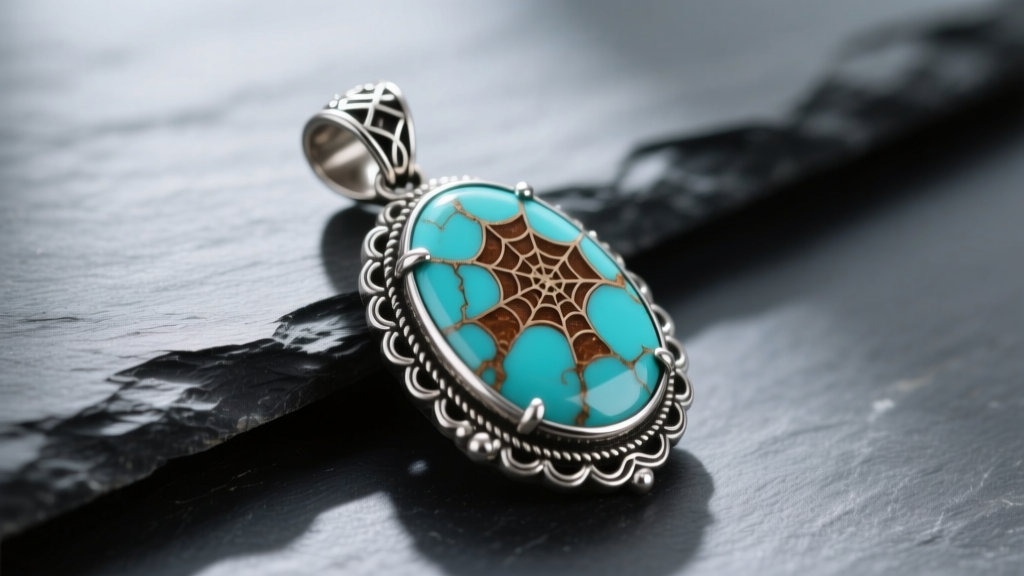
The Allure of Turquoise in Boho-Chic Jewelry
The enduring appeal of the classic lucky brand turquoise necklace lies in its ability to bridge the gap between vintage Southwestern heritage and modern boho-chic fashion. Turquoise has been a cornerstone of ornamental jewelry for over six millennia, prized for its striking blue-to-green hues and intricate matrix patterns. However, as the demand for these iconic pieces has surged through 2026, the market has become saturated with a complex spectrum of materials ranging from rare, untreated natural gems to highly engineered simulants. Understanding the exact material properties of your necklace is not just a matter of curiosity; it dictates how the piece will age, how it should be maintained, and its intrinsic value.
When evaluating turquoise jewelry, consumers often assume that any blue, opaque cabochon is a natural, unaltered stone. In reality, the gemological landscape is far more nuanced. Over 90% of the turquoise on the commercial market has undergone some form of enhancement to improve its durability and color stability. To truly appreciate your jewelry, we must deconstruct the materials, treatments, and metallurgical findings that comprise these iconic necklaces.
Decoding the Stone: Genuine vs. Reconstituted vs. Imitation
Natural and Stabilized Turquoise
Natural turquoise is a hydrous phosphate of copper and aluminum, with a chemical formula of CuAl6(PO4)4(OH)8·4H2O. According to the Mindat.org Turquoise Mineral Data, it crystallizes in the triclinic system but is almost exclusively found in massive, microcrystalline forms. Its Mohs hardness ranges from 5 to 6, making it relatively soft and highly porous. Because of this porosity, untreated natural turquoise is highly susceptible to color alteration from skin oils, cosmetics, and environmental pollutants.
To combat this, the industry utilizes stabilization. This process involves submerging the porous rough in a clear epoxy resin or polymer under a vacuum, allowing the stabilizing agent to penetrate the microscopic pores. This does not add color; it merely hardens the stone, raising its effective durability and locking in its natural hue. A more advanced, high-end enhancement is the Zachery Treatment, which uses a proprietary potassium/sodium silicate solution to reduce porosity without introducing plastics, making the stone more resilient while retaining a natural feel.
Reconstituted Turquoise and Dyed Imitations
Reconstituted turquoise is created by binding natural turquoise dust and fragments with epoxy resins and dyes to form a solid block, which is then cut into cabochons. While it contains real turquoise material, its structural integrity and gemological value are vastly inferior to solid stone. More common in mid-tier fashion jewelry are outright imitations, primarily dyed howlite and magnesite. Howlite is a naturally white, highly porous borate mineral with a Mohs hardness of just 3.5. Its pronounced gray veining mimics turquoise matrix perfectly once dyed with copper-based blue pigments. Distinguishing between a stabilized genuine stone and a dyed howlite imitator is critical for proper care and valuation.
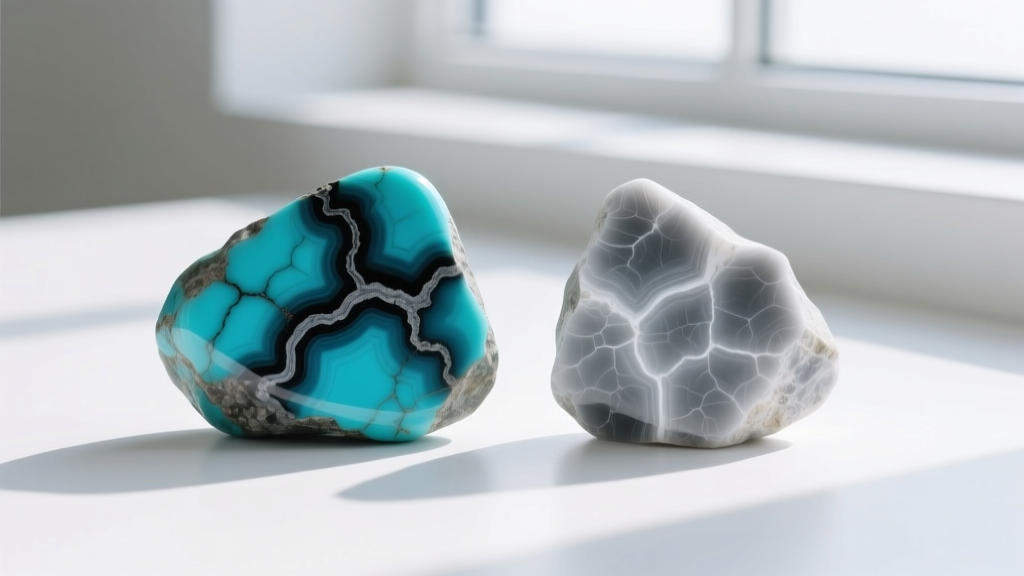
Material Properties Comparison Chart
To provide a clear framework for identifying the core materials used in turquoise-style pendants, refer to the gemological comparison table below. These metrics are standard in modern gemological testing and can help you assess the likely composition of your jewelry.
| Material Type | Mohs Hardness | Specific Gravity (SG) | Porosity & Treatment | Common Failure Modes |
|---|---|---|---|---|
| Natural (Untreated) | 5.0 - 6.0 | 2.60 - 2.90 | Highly porous; no additives | Color shifting from oils, scratching, chipping |
| Stabilized Turquoise | 5.5 - 6.5 | 2.70 - 2.95 | Low porosity; epoxy/polymer infused | Resin yellowing under UV, heat damage |
| Reconstituted | 4.0 - 5.0 | 2.40 - 2.60 | Zero porosity; heavy resin/dye binder | Chalking, dye fading, resin degradation |
| Dyed Howlite | 3.5 | 2.53 - 2.59 | Highly porous; artificially dyed | Severe scratching, dye bleeding with solvents |
| Dyed Magnesite | 3.5 - 4.5 | 2.98 - 3.02 | Moderate porosity; artificially dyed | Cleavage fracturing, dye transfer to skin |
Metals and Findings: What Holds the Stone?
The stone is only half the equation; the metallurgical properties of the chain and bezel settings determine the necklace's lifespan. Authentic vintage and high-end contemporary pieces typically utilize 925 Sterling Silver, an alloy comprising 92.5% pure silver and 7.5% copper. The copper provides necessary tensile strength but is also the culprit behind silver's tendency to tarnish when exposed to sulfur compounds in the air and skin.
To mitigate tarnish, many modern necklaces feature a micro-plating of rhodium over the sterling silver base. Rhodium, a platinum-group metal, is exceptionally hard and highly reflective. However, this plating is measured in microns (typically 0.75 to 1.0 microns for jewelry). Once this microscopic layer wears away at high-friction points like the clasp or the back of the pendant, the underlying copper-rich sterling silver will oxidize. Lower-tier fashion pieces may bypass precious metals entirely, opting for brass or zinc alloy bases plated with a silver-toned flash. These base metals are prone to 'dezincification' and verdigris (green oxidation) when the plating fails and the core metal reacts with acidic perspiration.
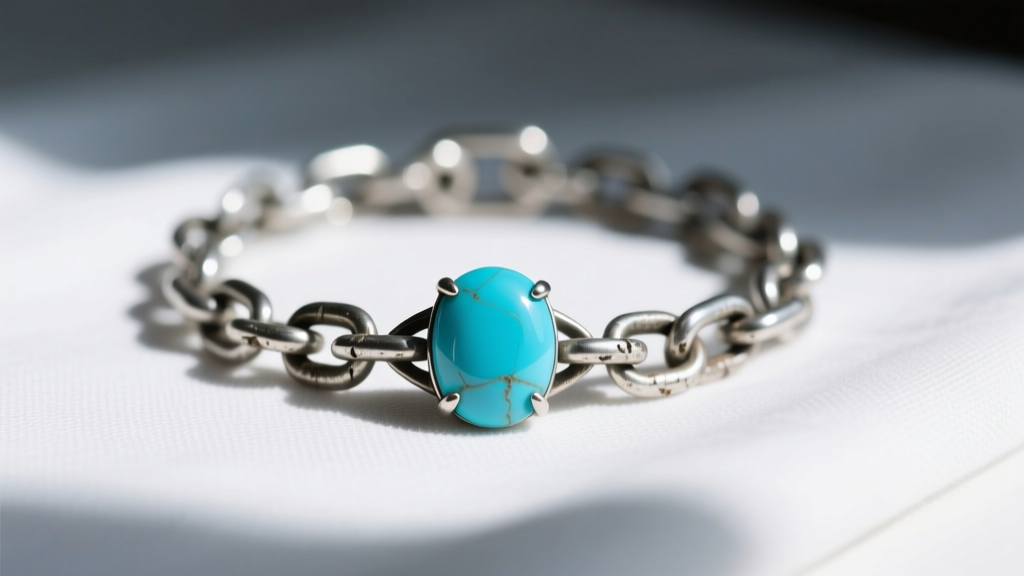
Care, Maintenance, and Failure Modes
Maintaining a turquoise necklace requires a strict adherence to material-specific protocols. The most common catastrophic failure mode for turquoise jewelry is the use of ultrasonic cleaners. The high-frequency acoustic cavitation generated by these devices will literally shatter natural turquoise along its microscopic fracture lines and can strip the polymer binders from stabilized stones, leaving them chalky and brittle.
Furthermore, chemical exposure is a severe threat. The Gemological Institute of America (GIA) explicitly warns that turquoise is highly sensitive to acids, alkalis, and even prolonged exposure to direct heat. Applying perfumes, hairsprays, or lotions while wearing the necklace will result in a gradual accumulation of chemical residue in the stone's matrix, leading to a permanent, muddy discoloration. For routine cleaning, use only a soft, lint-free microfiber cloth slightly dampened with distilled water. Never use commercial silver dips on the chain if the pendant is attached, as the thiourea compounds in silver dips will instantly etch and ruin the surface of the turquoise cabochon.
How to Verify Your Turquoise Necklace
If you are attempting to authenticate a vintage or secondary-market find, gemologists rely on a combination of visual inspection and non-destructive testing. Under a 10x jeweler's loupe, examine the matrix (the brown or black veining). In natural turquoise, the matrix lines are sharp, distinct, and vary in depth. In dyed howlite, the 'matrix' is often just the natural gray veining of the howlite trapping the blue dye, resulting in a blurred, unnatural transition zone where the blue pigment pools heavily in the cracks.
Another practical test involves the thermal conductivity and tactile feel of the stone. Natural turquoise and howlite are both relatively poor thermal conductors compared to glass or synthetic spinel imitations, meaning they will feel cool to the touch initially but warm up slowly. However, the definitive test for dyed stones is the acetone test. Applying a small drop of pure acetone to an inconspicuous area (like the back of the cabochon) with a cotton swab will lift the dye from howlite or magnesite, turning the swab blue, while leaving genuine or properly stabilized turquoise unaffected.
Expert Insight: When evaluating the long-term viability of a turquoise necklace, always inspect the bezel setting. Because turquoise lacks cleavage but is brittle, it relies entirely on the metal bezel for structural support. A bezel that is rolled too tightly over the crown of the cabochon can induce internal stress fractures over time, especially if the necklace is subjected to temperature fluctuations that cause the metal and the stone to expand and contract at different rates.


