Buying Guide: Men Wearing Pearl Necklace Styles & Sizing
Discover what to look for when buying a pearl necklace for men. Explore pearl grades, sizing, stringing materials, and styling tips.


The Renaissance of Masculine Pearl Jewelry
Once confined to the realm of classic womenswear, pearls have undergone a massive cultural shift. By 2026, the sight of men wearing pearl necklace designs has transitioned from avant-garde red carpet moments to a staple of modern masculine streetwear and tailored fashion. Icons like A$AP Rocky, Pharrell Williams, and Harry Styles have dismantled the gendered boundaries of jewelry, proving that the organic luster of pearls complements masculine aesthetics beautifully. However, buying a pearl necklace for a man requires a different approach than shopping for traditional feminine strands. You must consider proportion, hardware weight, stringing durability, and pearl variety. This comprehensive buying guide breaks down exactly what to look for when investing in masculine pearl jewelry.
Choosing the Right Pearl Type for Men
Not all pearls are created equal, and the variety you choose dictates the entire vibe of the piece. According to the Cultured Pearl Association of America, there are four primary types of cultured pearls, each offering a distinct aesthetic for menswear.
Tahitian Pearls: The Edgy Standard
Tahitian pearls are naturally dark, ranging from charcoal gray to deep black, often with striking peacock, aubergine, or pistachio overtones. Their moody color palette makes them the most popular choice for men. They typically range from 8mm to 14mm in diameter, providing a substantial, bold presence on the neck.
Freshwater Baroque: Rugged and Asymmetrical
For a more relaxed, organic look, baroque freshwater pearls are ideal. These pearls are non-spherical, featuring unique, irregular shapes that feel less formal and more rugged. They are also the most budget-friendly option, allowing for heavier, multi-strand layering without breaking the bank.
Akoya Pearls: The Classic High-Luster Choice
Akoya pearls are renowned for their mirror-like luster and perfectly round shapes. While traditionally associated with classic elegance, a single-strand Akoya necklace or a solitary Akoya pendant on a thick metal chain offers a striking contrast when paired with casual or streetwear garments.
South Sea Pearls: The Ultimate Statement
South Sea pearls are the largest and rarest, ranging from 10mm to 20mm. Their satiny luster and massive size command attention. Due to their high price point, they are usually reserved for luxury statement pieces or single pendants.
| Pearl Type | Size Range | Best Aesthetic | Avg. Price Range |
|---|---|---|---|
| Tahitian | 8mm - 14mm | Edgy, Dark, Peacock | $300 - $5,000+ |
| Freshwater Baroque | 6mm - 12mm | Rugged, Asymmetrical | $50 - $400 |
| Akoya | 6mm - 9mm | Classic, High-Luster | $150 - $2,500 |
| South Sea | 10mm - 20mm | Bold, Luxury, Statement | $1,000 - $20,000+ |
Sizing, Proportions, and Lengths
Proportion is critical when styling pearls for men. A strand of tiny 4mm pearls can easily look delicate and out of place, while massive 18mm pearls might feel costume-like unless carefully styled. For most men, a pearl diameter between 7mm and 11mm hits the sweet spot, offering enough visual weight to stand out against broader necklines and facial hair.
Length is equally important. The standard 16-inch choker length rarely works for male anatomy due to thicker necks and prominent Adam's apples. Instead, look for the following lengths:
- Princess Length (18 inches): Sits right at the collarbone. Ideal for wearing over a crewneck t-shirt or under an unbuttoned linen shirt.
- Matinee Length (20 to 22 inches): Falls at the upper chest. This is the most versatile length for men, perfect for layering over hoodies or pairing with casual button-downs.
- Opera Length (28 to 34 inches): Falls below the chest. Best reserved for high-fashion streetwear, double-wrapping, or layering with longer metal chains.
Stringing Materials and Hardware
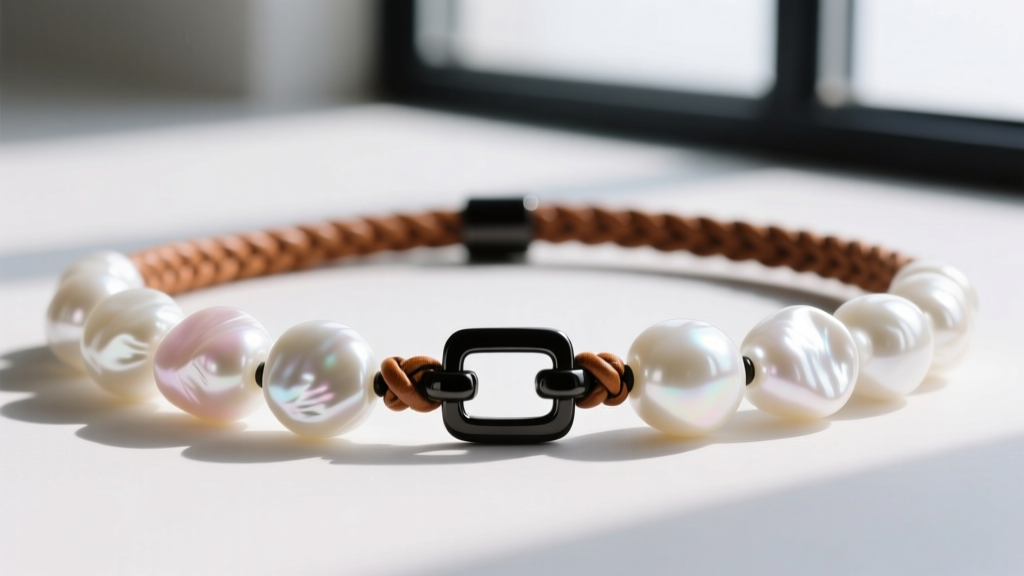
The material holding the pearls together drastically alters the necklace's durability and masculine appeal. Traditional pearl necklaces are strung on silk thread with individual knots between each pearl. While knots protect the pearls from rubbing together, silk stretches over time and degrades when exposed to sweat and water—two things inevitable in daily menswear.
For a more durable, masculine alternative, look for pearls strung on stainless steel wire or braided leather cords. Steel wire provides a modern, industrial edge and will never snap from tension or moisture. Leather cords, particularly in 3mm to 5mm thicknesses, offer a rugged, bohemian aesthetic that pairs exceptionally well with baroque freshwater pearls.
Do not overlook the clasp. Flimsy lobster clasps on thin chains detract from the piece. Opt for heavy-duty hardware in matte black stainless steel, brushed titanium, or solid 14k gold. Magnetic clasps or heavy toggle clasps are highly recommended for men, as they are easier to fasten with one hand and add a substantial, mechanical feel to the jewelry.
Evaluating Quality: Luster, Nacre, and Surface
When investing in fine jewelry, understanding quality metrics is essential. The Gemological Institute of America (GIA) evaluates pearls based on several factors, but for men's jewelry, luster and nacre thickness are paramount.
Luster
Luster is the sharpness and intensity of light reflecting off the pearl's surface. High-quality pearls will have a mirror-like luster where you can clearly see your reflection. Avoid pearls that look chalky, dull, or cloudy, as they lack the visual depth required to stand out in menswear styling.
Nacre Thickness
Nacre is the crystalline substance that forms the pearl. In bead-nucleated pearls like Tahitians and Akoyas, a thin layer of nacre (less than 0.8mm) can peel or flake off over time, exposing the dull shell bead underneath. Always ask the jeweler for nacre thickness specifications, especially when spending over $1,000 on a Tahitian strand.
The Tooth Test
If you are shopping in person and need to verify authenticity, use the tooth test. Gently rub the pearl against the biting edge of your front tooth. A real cultured pearl will feel distinctly gritty or sandy due to its microscopic crystalline structure, while a glass or plastic imitation will feel perfectly smooth.
Styling Pearls with Menswear
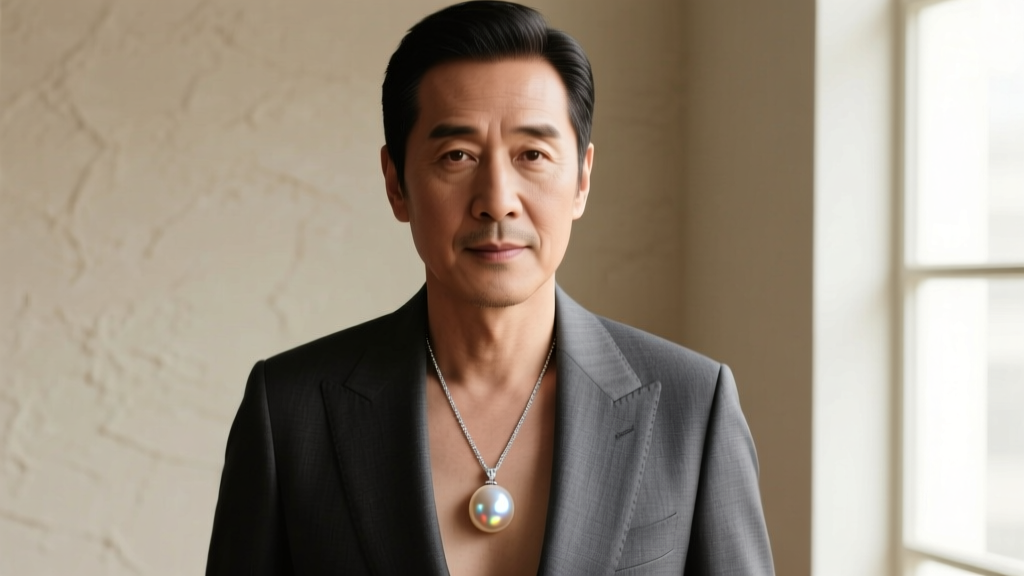
The key to pulling off pearls is contrast. The juxtaposition of organic, luminous pearls against rugged or highly structured menswear creates a compelling visual tension. Here are three foolproof styling frameworks for 2026:
- The Streetwear Layer: Pair a 20-inch baroque freshwater pearl strand with heavy silver Cuban link chains. The mix of organic shapes and industrial metal anchors the pearls in urban fashion.
- The Sartorial Contrast: Wear a single, large Tahitian pearl pendant on a thin black leather cord beneath a tailored charcoal suit and a crisp white t-shirt. It replaces the traditional necktie with something far more intriguing.
- The Resort Relaxed: A matte-finish 18-inch Akoya strand worn over an unbuttoned, short-sleeve linen camp-collar shirt. This channels a sophisticated, mid-century Riviera aesthetic.
Care and Maintenance
Pearls are organic gemstones, ranking only 2.5 to 4.5 on the Mohs hardness scale, making them highly susceptible to scratches and chemical damage. Never wear pearl necklaces to the gym, in the pool, or in the shower. Chlorine, salt water, and acidic sweat will rapidly degrade the nacre and eat away at the stringing materials.
Always follow the 'last on, first off' rule: put your pearls on after applying cologne, hairspray, and lotions, and take them off immediately when you get home. Store them flat in a soft cloth pouch—never hanging, as gravity will stretch the silk or wire over time. With proper care, a high-quality pearl necklace will remain a cornerstone of your wardrobe for decades.


